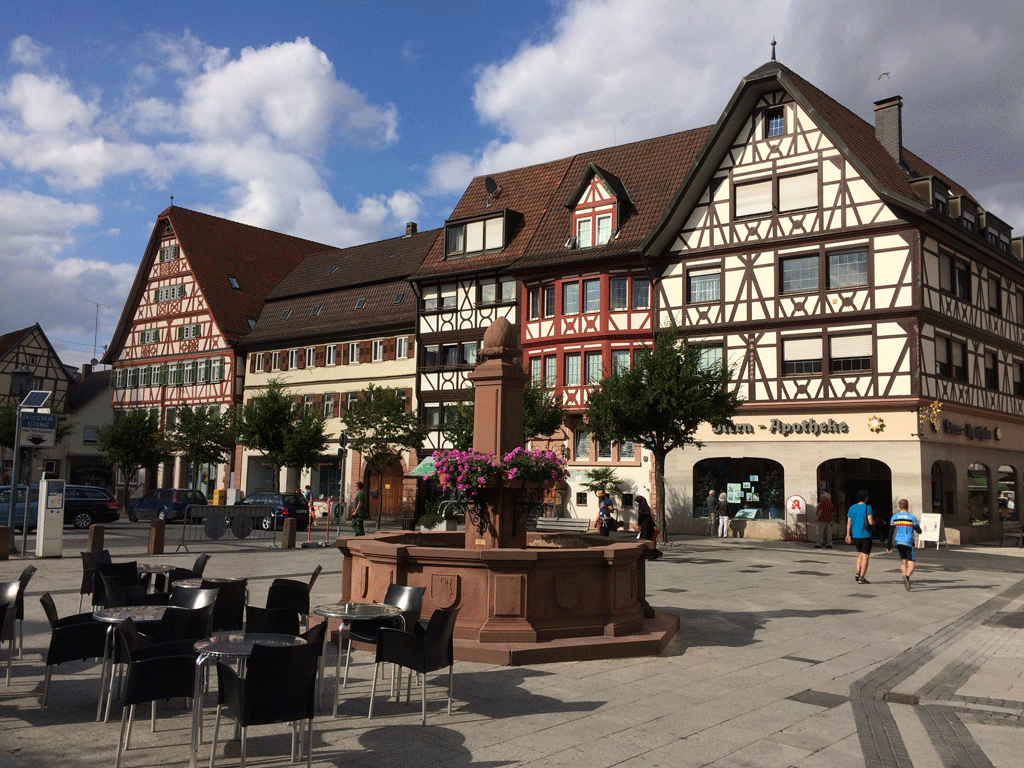
I see that I have not published a New Year post since 2021! Life has kept getting in the way.
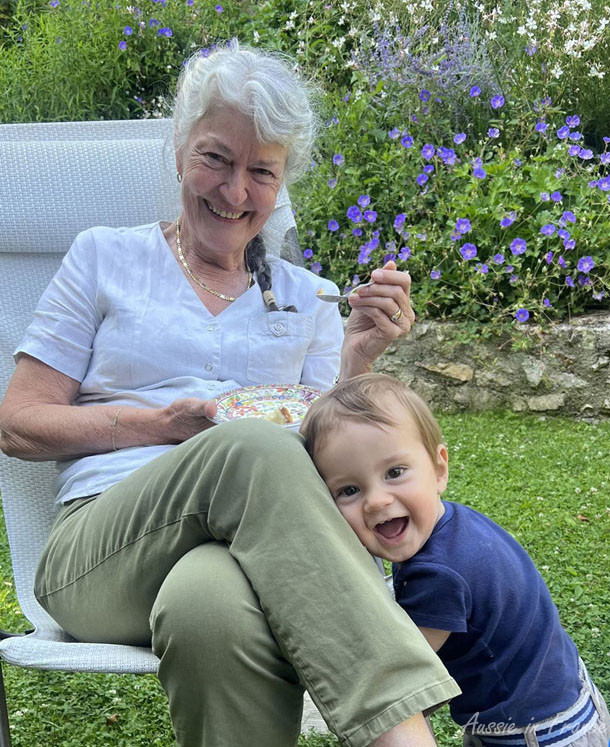
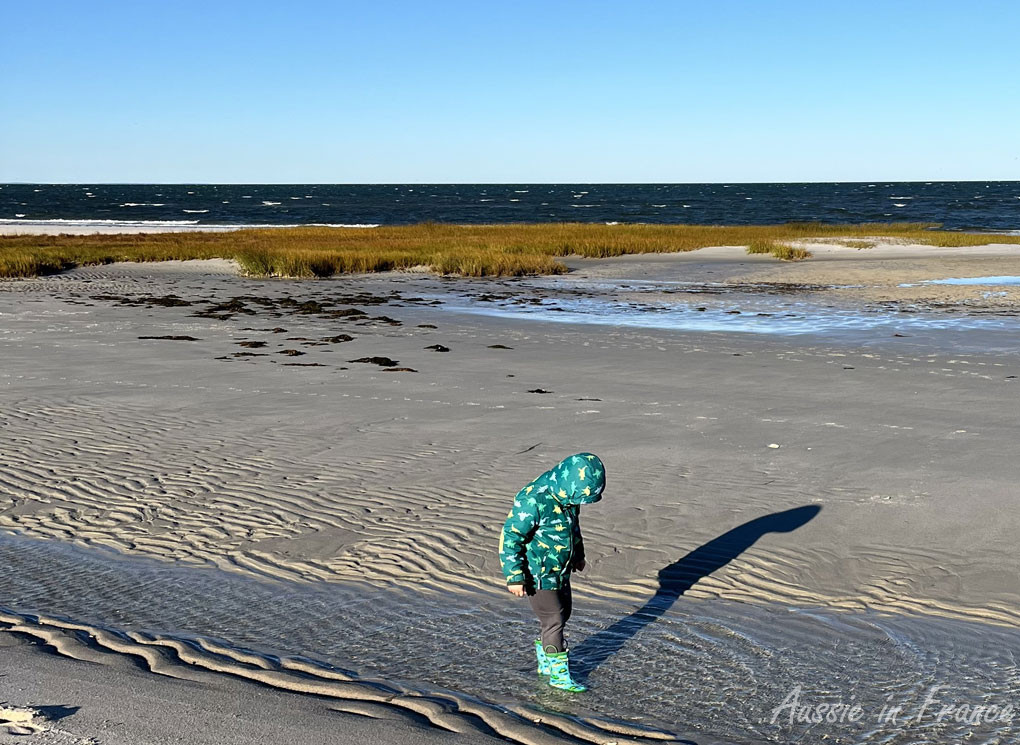
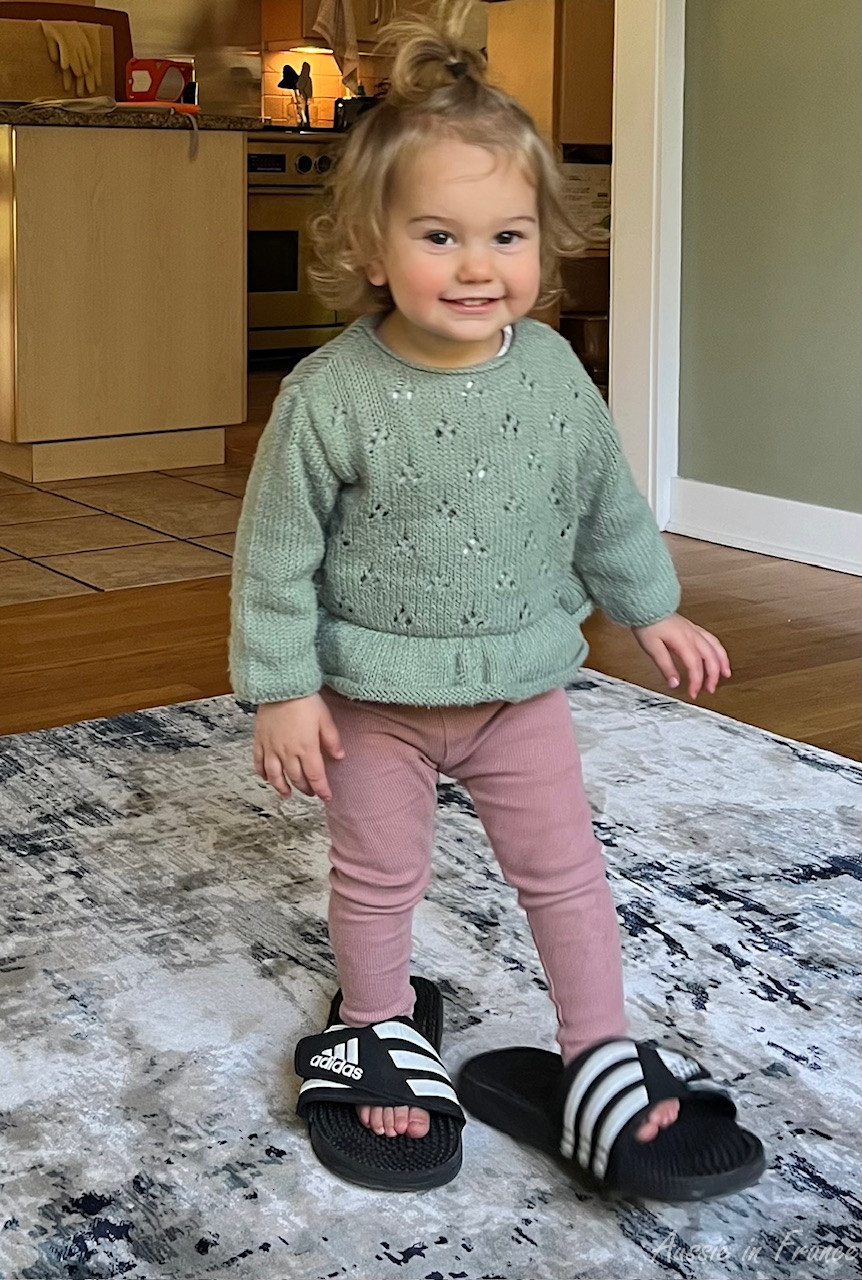
This, my first full year of retirement was very much focused on grandparenting with a 5-week visit in February/March from my baby Lucas and his mum, 3 weeks in Boston in April to visit my son, his Amercan wife and two children Eric (now 4) and Sophie (nearly 2). I was joined by Lucas and his parents for a week. Lucas and his mum came back to Blois at the end of July and stayed for 6 wonderful weeks! We then went back to Boston in October and looked after Eric in Cape Cod during his school holidays. We stayed a total of three weeks, during which time Lucas and his parents joined us for a week.
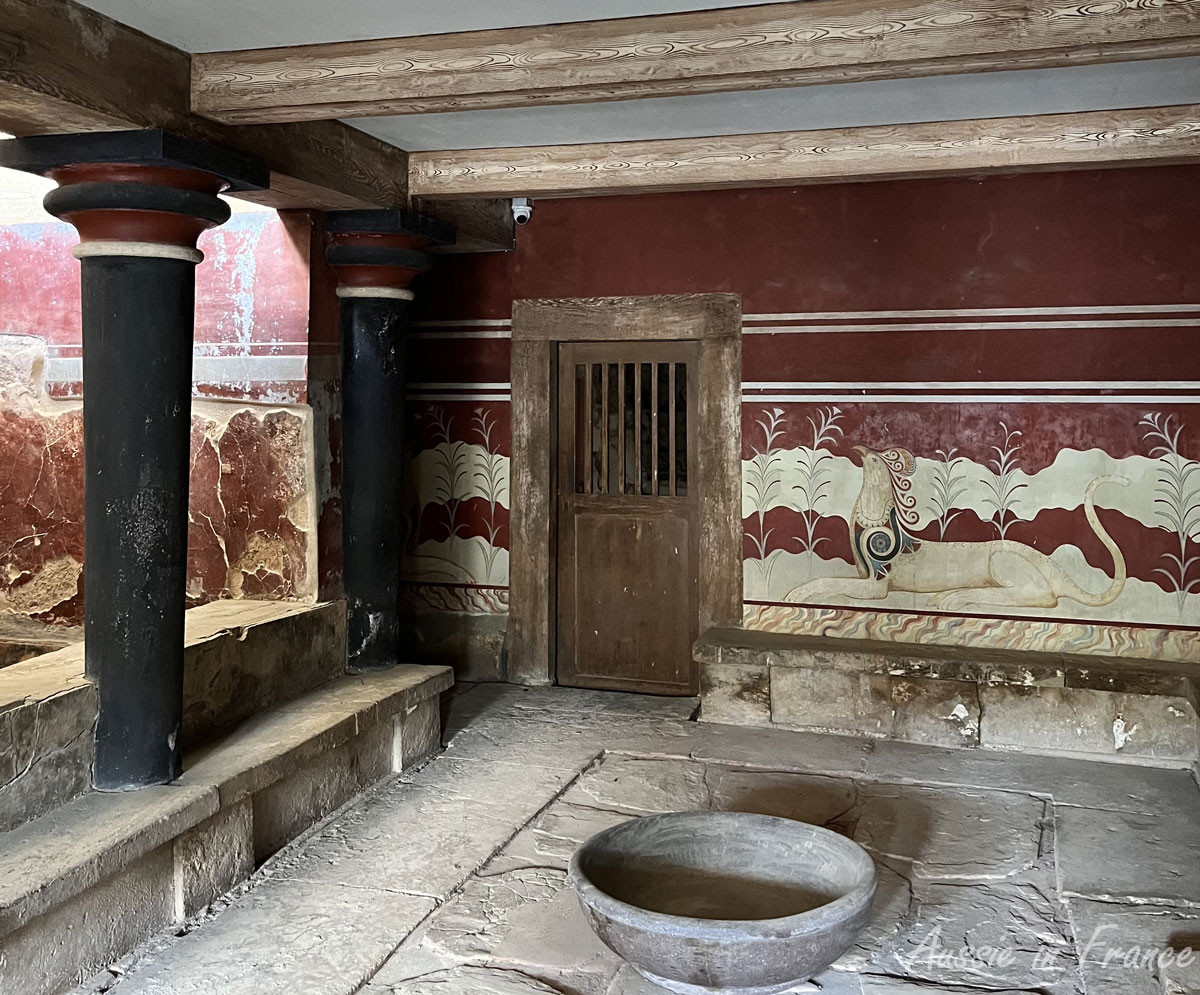
We still did some real travelling, starting with a week in Crete in February, where we took up from where we left off in February 2020, when we had to cut short our visit due to Covid. It was great to have a change of scenery and some sun but apart from the visit to Knossos, it seems that we had already seen the best of Crete the first time.
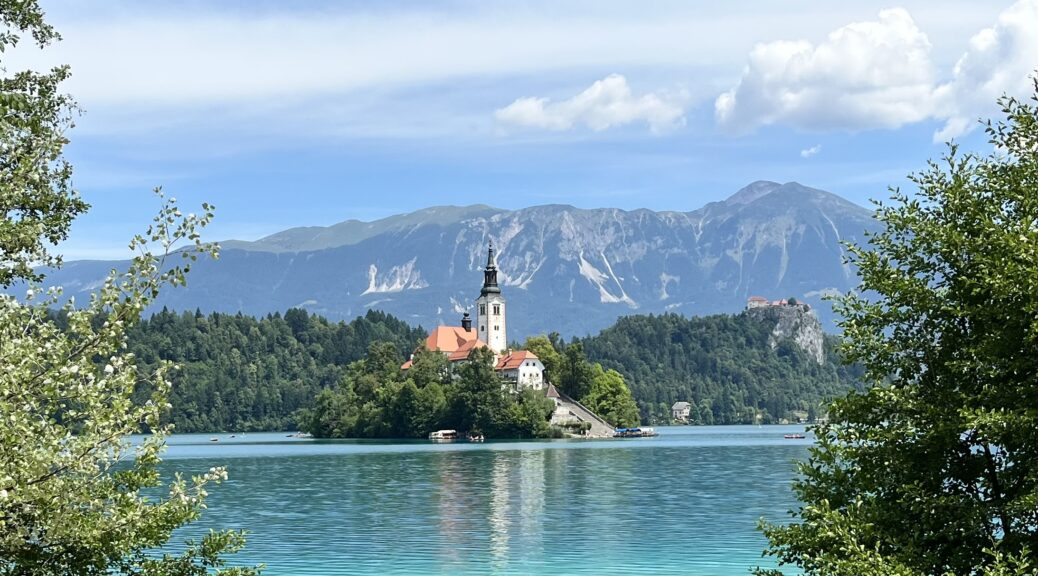
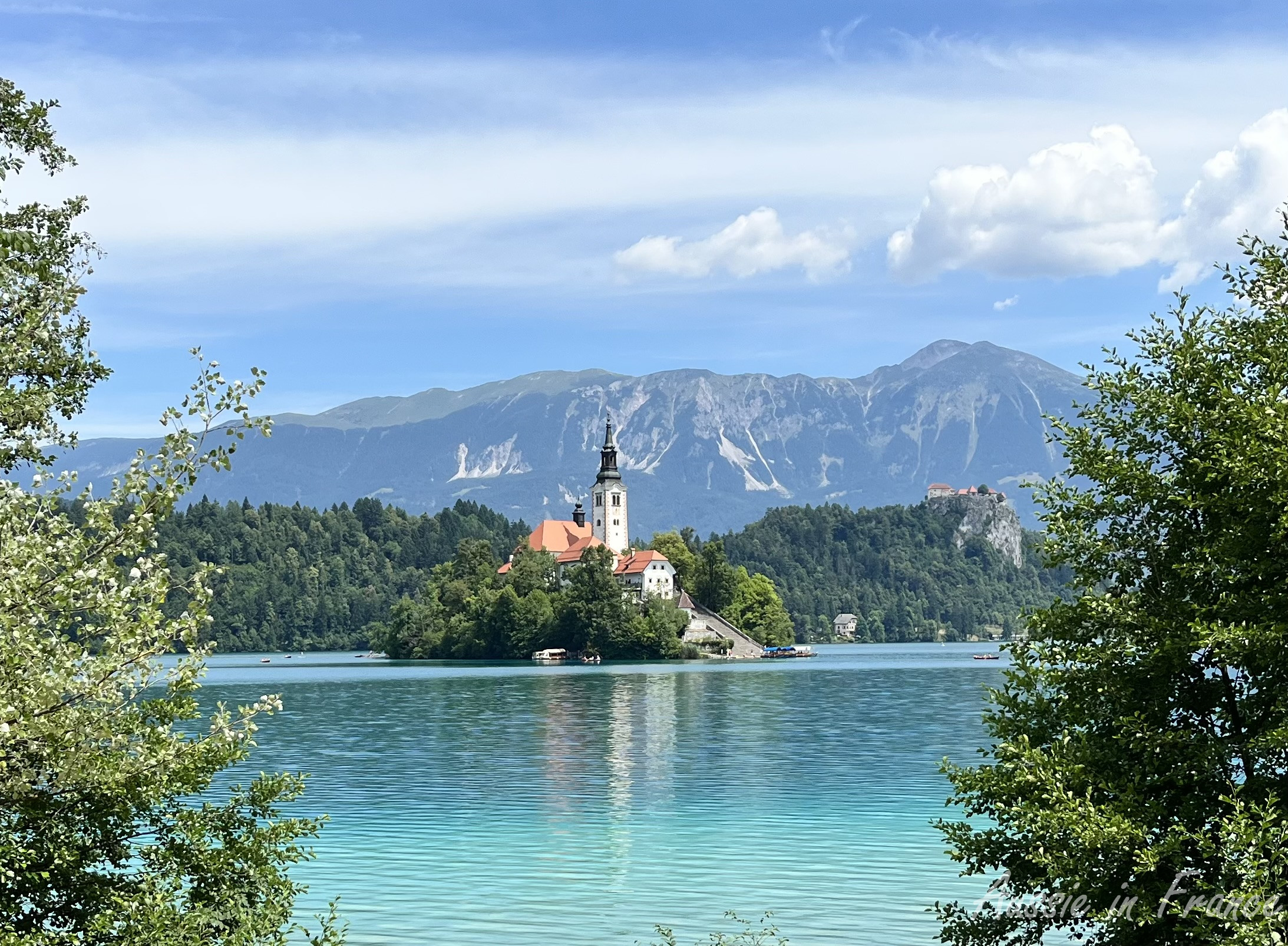
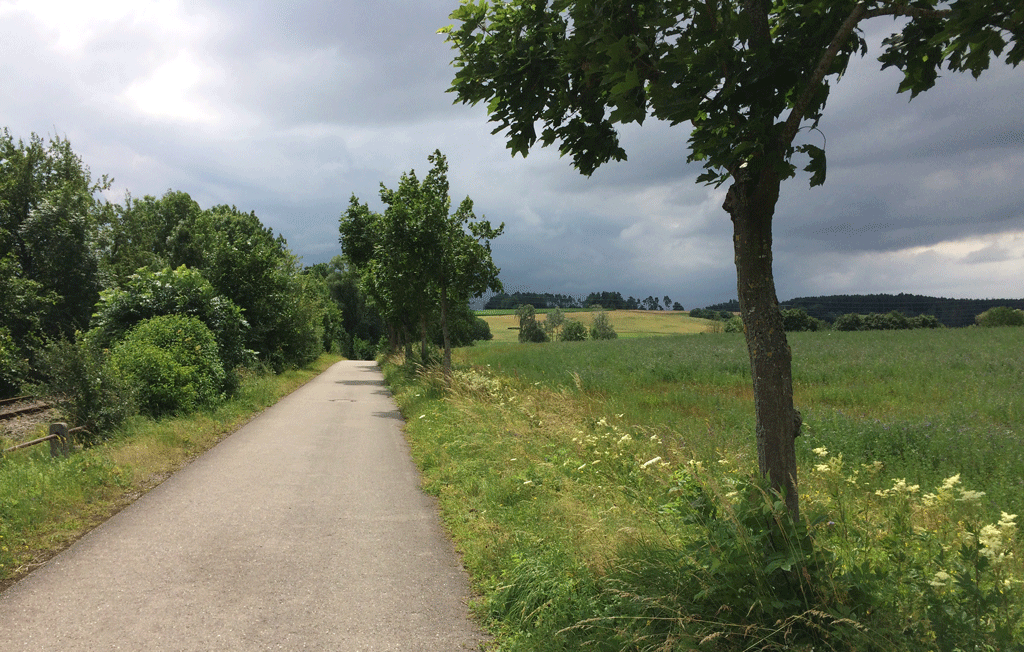
The end of June saw us heading off on our annual cycling holiday, with Lake Bled in Slovenia as the ultimate destination. We started in the Jura, followed by Lake Iseo in Italy and on to the Slovenian side of the peninsula of Istria (we had already been to Porec and Pula in Croatia on a previous trip). The weather was very very hot and we continued to have high temperatures throughout our stay. We restricted our cycling hours to the morning whenever possible. Fortunately we had air-conditioning in all the apartments we rented. We no longer stay in hotels, preferring this option with a 3 to 4 night stay each time. As we don’t like riding in the rain, we usually book the next accommodation on the second day of each stay. This may limit our choice, but we always suitable accommodation.
We had fond memories of Slovenia from our past trip fifteen years ago but it has now become a favourite tourist destination for Europeans and we were disappointed with the over-exploitation of the Lake Bled region. The lake itself, however, was picture-perfect and we had an apartment at the top end of the lake with a mountain and garden view. After visiting the Tomin Gorges, where we accidentally found ourselves in the middle of a marathon, we headed for Radece in the south east, on the Sava River, touted as having the country’s best cycling paths. Apart from the fact that we made the acquaintance of cvicek, a unique Slovenian red wine, which has a maximum alcohol content of 10 degrees and is always served chilled – perfect for the hot summer – and the best folk museum I have ever been to in Brezice, there was not much to see and the bike paths were way below German or Austrian standards, let alone Dutch!
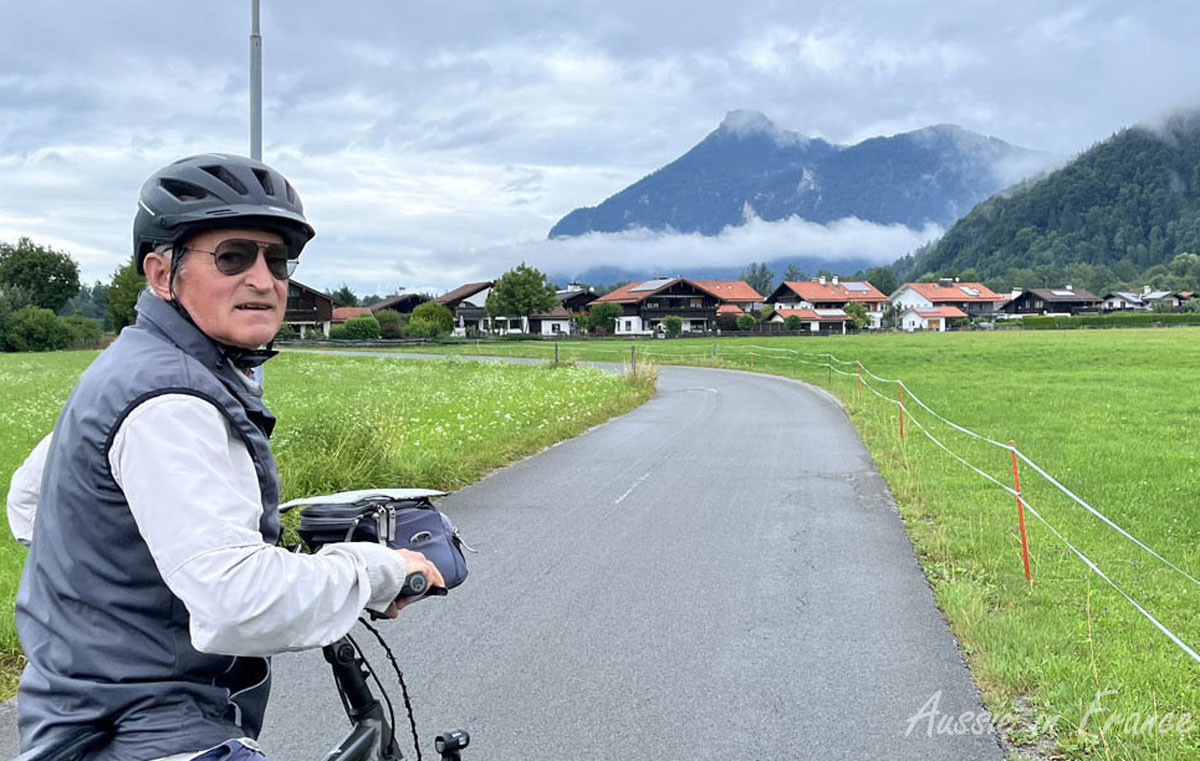
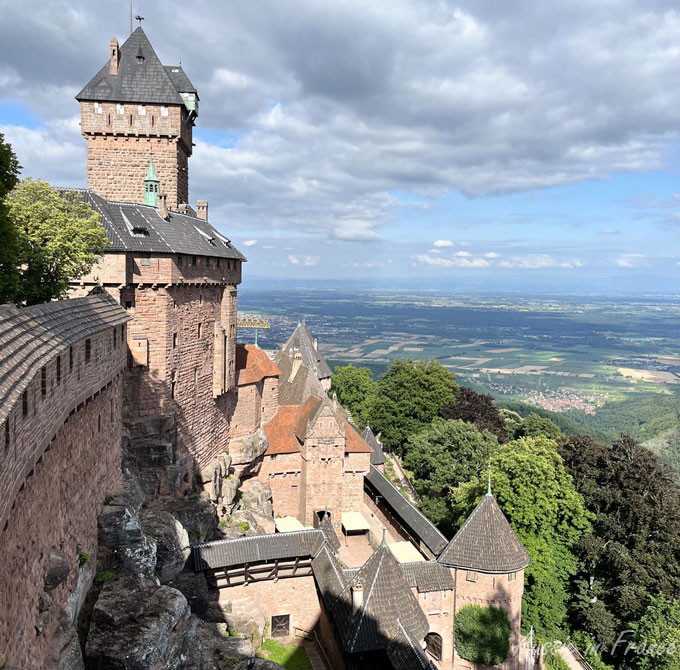
We left Slovenia and moved onto the Tyrol area of Austria. These were our best cycling days, drinking in the beautiful mountain vistas, painted houses and baroque churches. Even the many climbs did not diminish our appreciation of the region. Our last stop was near Selestat in Alsace, where we cycled through vineyards and visited the amazing castle of Haut-Koenigsbourg.
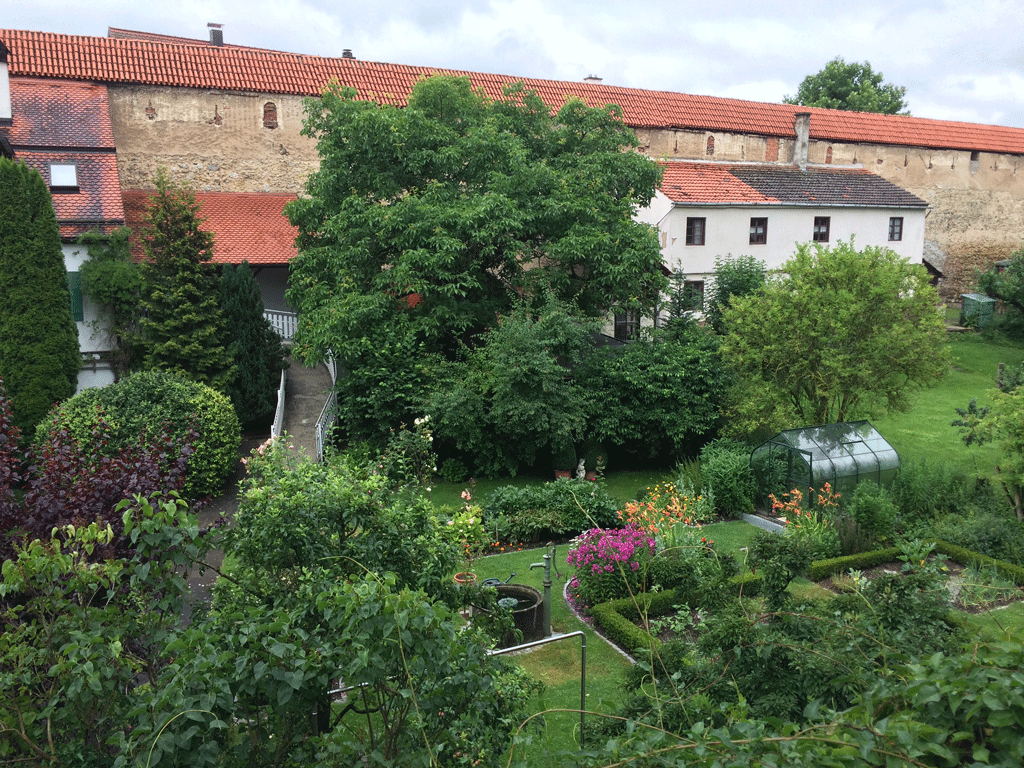
After the constant heat, we were delighted to come home to our beautiful garden!
We have continued to be active members of Home Exchange, mainly so that we can visit the family in the US. We stayed for the sixth time with Matt and Jery in Belmont, near Boston. My son now has a new home with a guest room so we will not be staying with them anyone. We will however be visiting them as they have become good friends. We also took Eric to a wonderful home exchange on Cape Cod for four days. We will be returning there in April.
Healthwise, we spent most of January at the physotherapist’s – JM for a back problem and me for a shoulder problem, but I did manage to avoid surgery thanks to shock waves and physiotherapy. Unfortunately, 2 days before we left Boston in October, I tripped over a root and landed with my shoulder on another root, dislocating it very painfully. It was put back in place in the E&R– a pain far greater than childbirth: – and only now, more than two months later, am I pain-free. At least it didn’t make the existing problem any worse and I do not need surgery as the Boston specialist predicted. As a result, I am making sure that I walk briskly for at least one hour a day and doing senior stabilizing exercises so that this will not happen again!! I do not recommend getting older …
Our plans for the coming year are a week in Athens in February, a month in New York and Boston in April/May, a cycling holiday somewhere in Europe in the summer (Ireland or Portugal perhaps), and another visit to the US in October. The summer choice is very restricted theses days as we have now cycled extensively in France, Germany, Italy, Spain, Austria, Belgium, the Netherlands, Denmark, Czech Republic, Poland, Slovakia, Hungary, Slovenia, Croatia and Romania. I don’t know how much longer we will be able to have this type of holiday, but we will keep going as long as our energy and health permit. We no longer cycle all day, every day, and our e-bikes definitely help but we still find this is the best way to get to know a country and its people outside the main tourist areas.
I would like to wish everyone a healthy, happy and fulfilling 2026.
It’s nearly mid-January and I have only just found the time to write this new year post. Even though we have up until the end of January in France to do so, it’s still better to wish people a happy new year within the first week of the month. But lack of time is the story of my life at the present. Working full-time as a freelance technical and legal translator (I am now certified with the courts as well), looking after a large house and garden, cycling in the warmer months and hiking in the winter seem to take up most of my time.
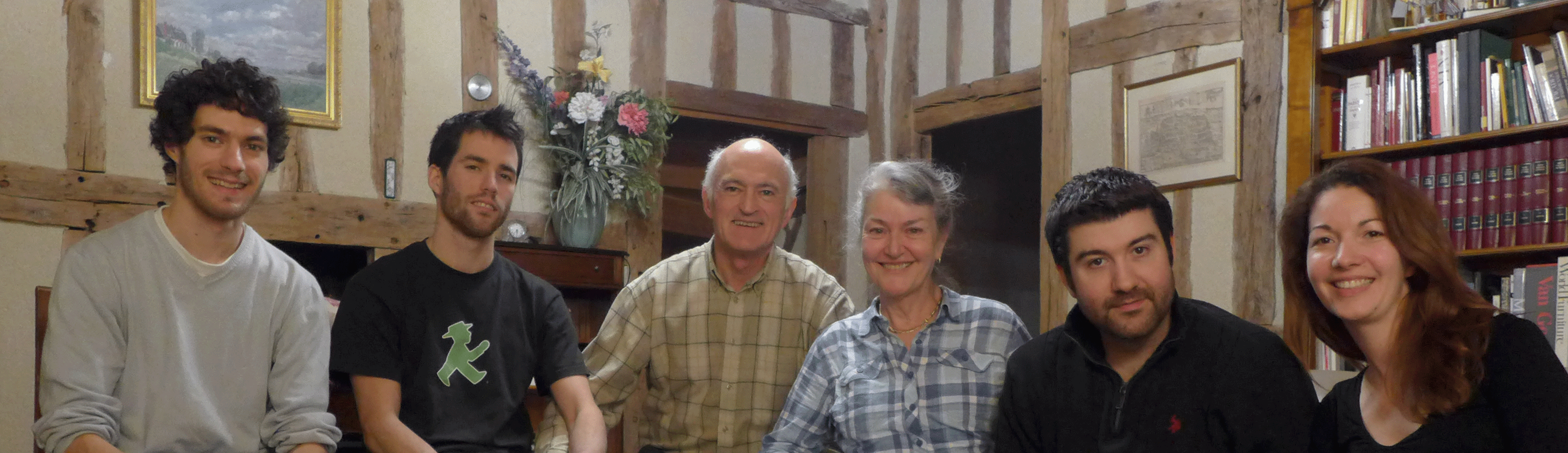
Jean Michel with his sons on the left and my son and daughter on the right
After a delightful Christmas with all our children – my son from Boston, my daughter from New York and Jean-Michel’s sons from Brest and Limoges – in addition to my brother,wife and three sons, from Sydney, we welcomed in the New Year in front of a blazing fire, with warm thoughts for all our family and friends.
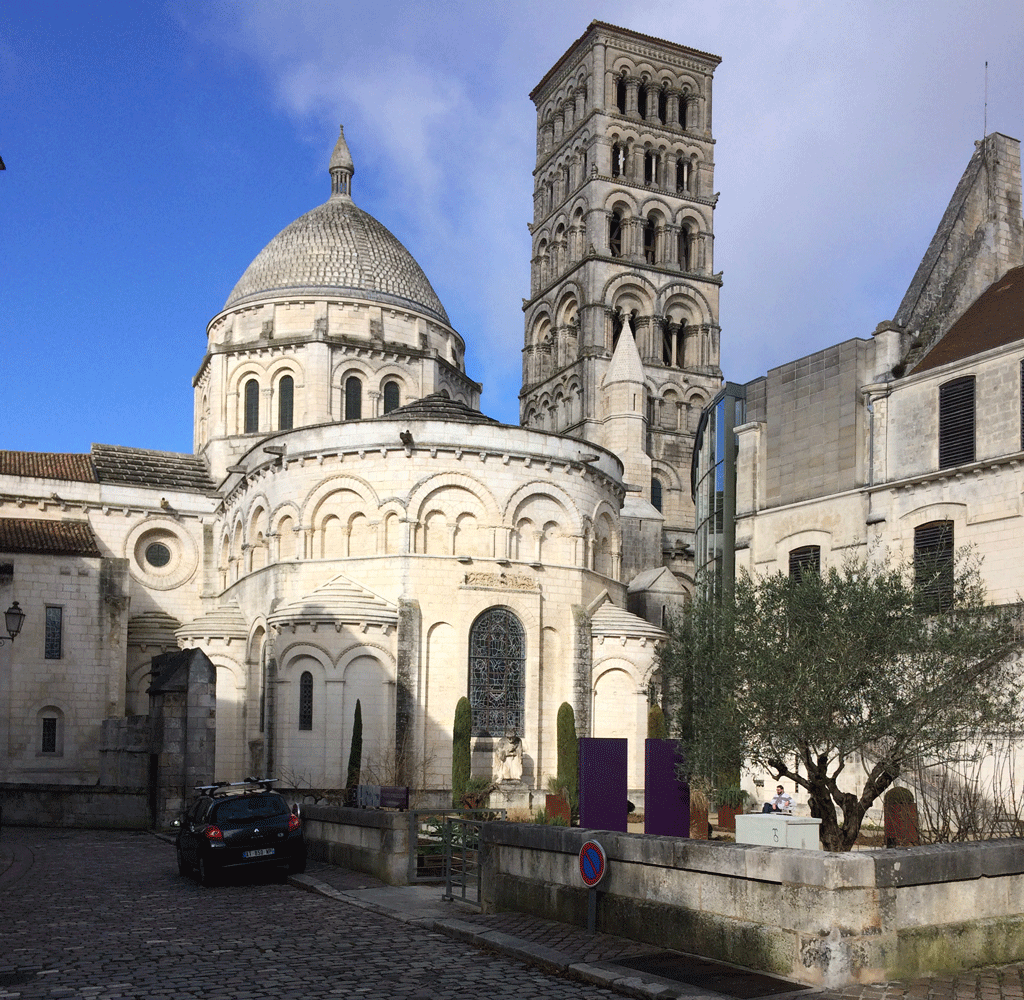
The cathedral in Angoulême
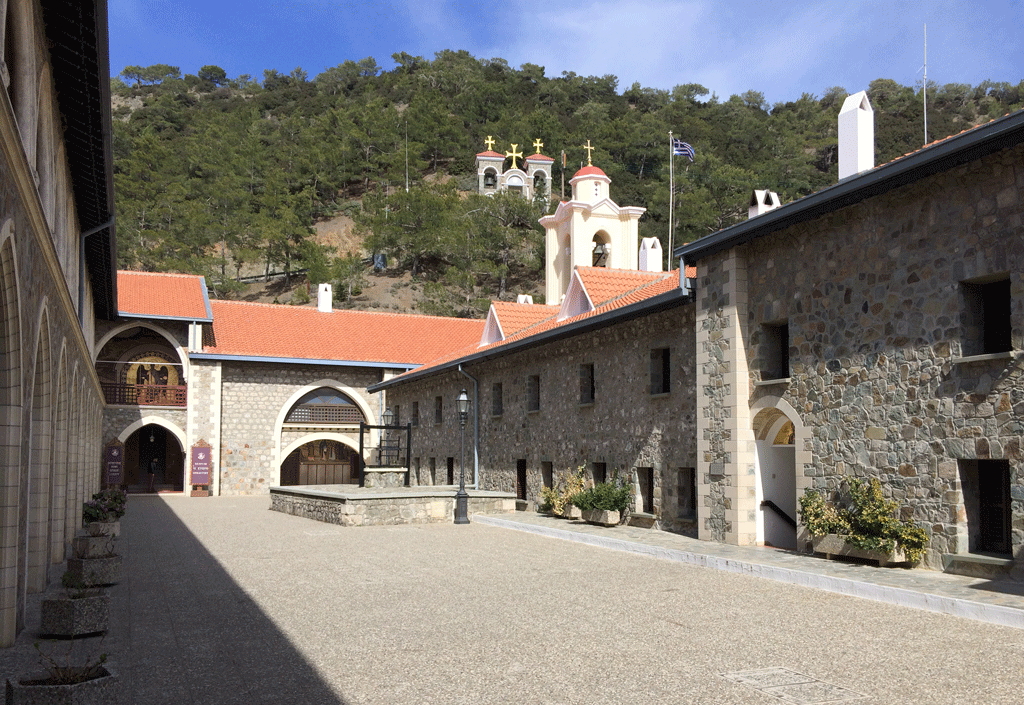
Travel-wise, 2017 was not quite as exciting as 2016 when we spent three months away altogether. However, we had a welcome short break and change of scenery in Angoulême at the beginning of February, followed by a most enjoyable week in Cyprus at the end of March with warm days and blue skies. We particularly liked the northern, Turkish part of the island with its wonderful painted monasteries.
Kykkos Monastery in northern Cyprus
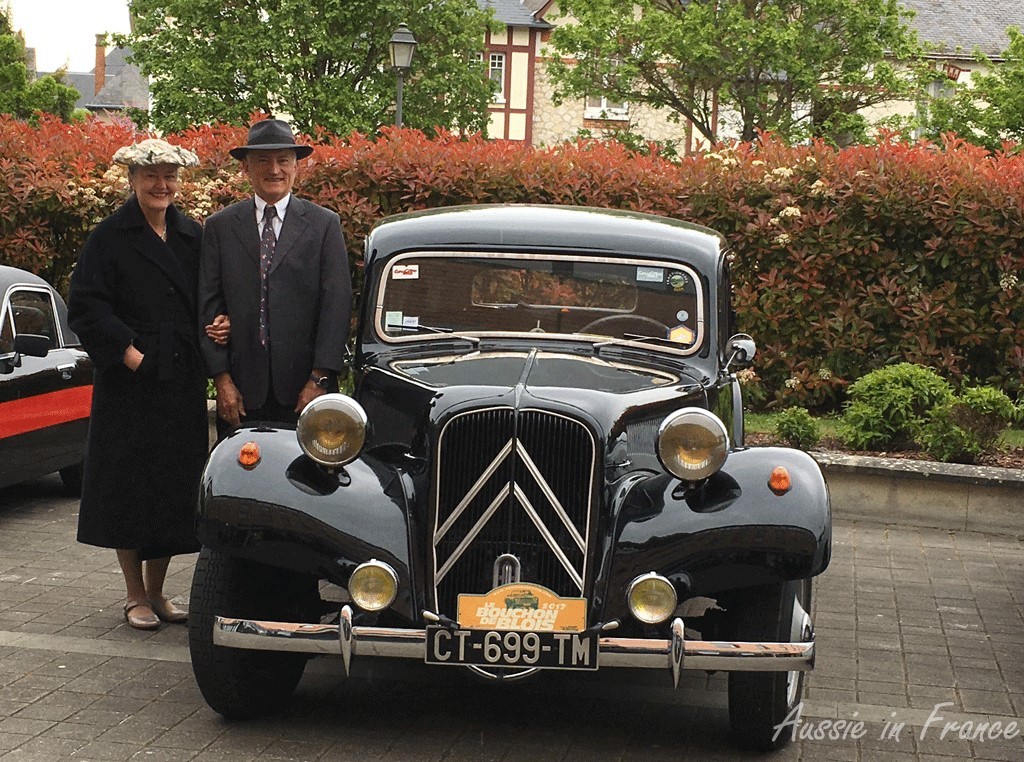
We came home to spring, always the best time of the year in the Loire Valley. In April we had a fun day in a vintage car traffic jam in Blois with our friends Susan and Simon who take visitors on tours of the Loire Valley in their 1953 Citroën Traction Avant. I checked out family photos of my baptism so we could dress the part.
Jean Michel and I dressed for the part
The end of April took us to the Médoc (a four-hour drive south) for another long weekend where we combined cycling with wine-tasting and a breath of sea air. Living in the centre of France means that we are well-placed for this type of excursion.
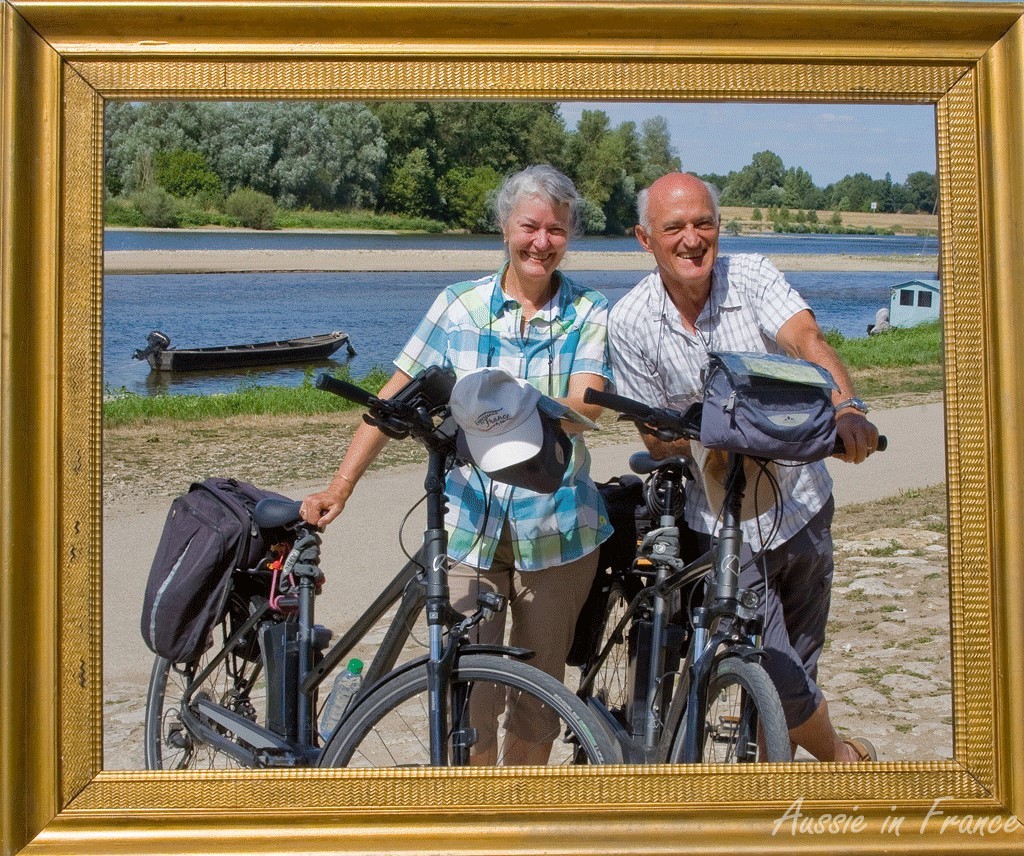
With our power bikes on the banks of the Loire
In May, we finally made the decision to invest in electrically-powered bikes for two reasons – to save our ageing knees and to free us from restrictions related to the lie of the land. Our plan was to go to Romania in June, a country we have avoided up until then due to its very hilly countryside. We were not disappointed. Jean Michel applied his usual thoroughness to choosing the right bikes for our needs and we can now go quite effortlessly up amazingly steep hills. In fact, I’m more worried going down but our disk brakes are reassuring.
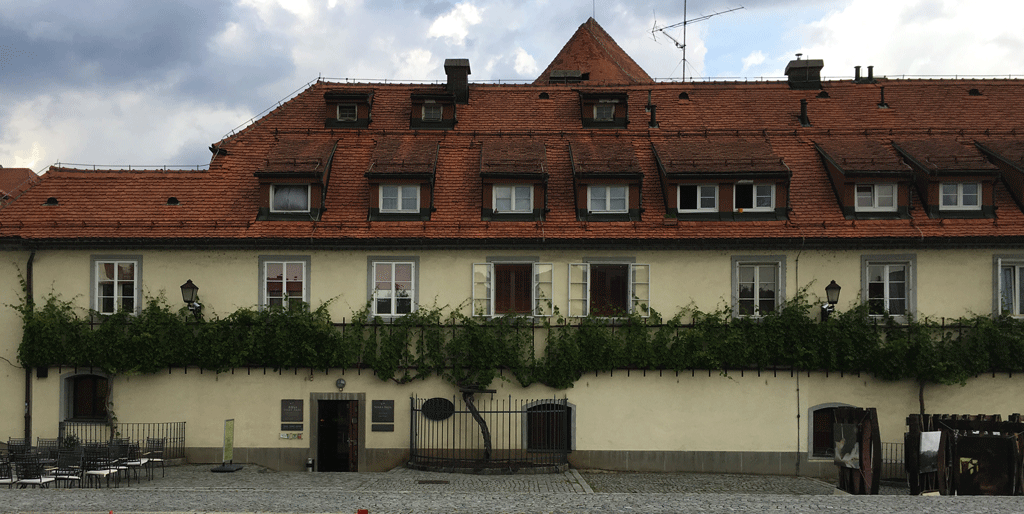
Said to be the oldest grape vine in the world – in Maribor, Slovenia
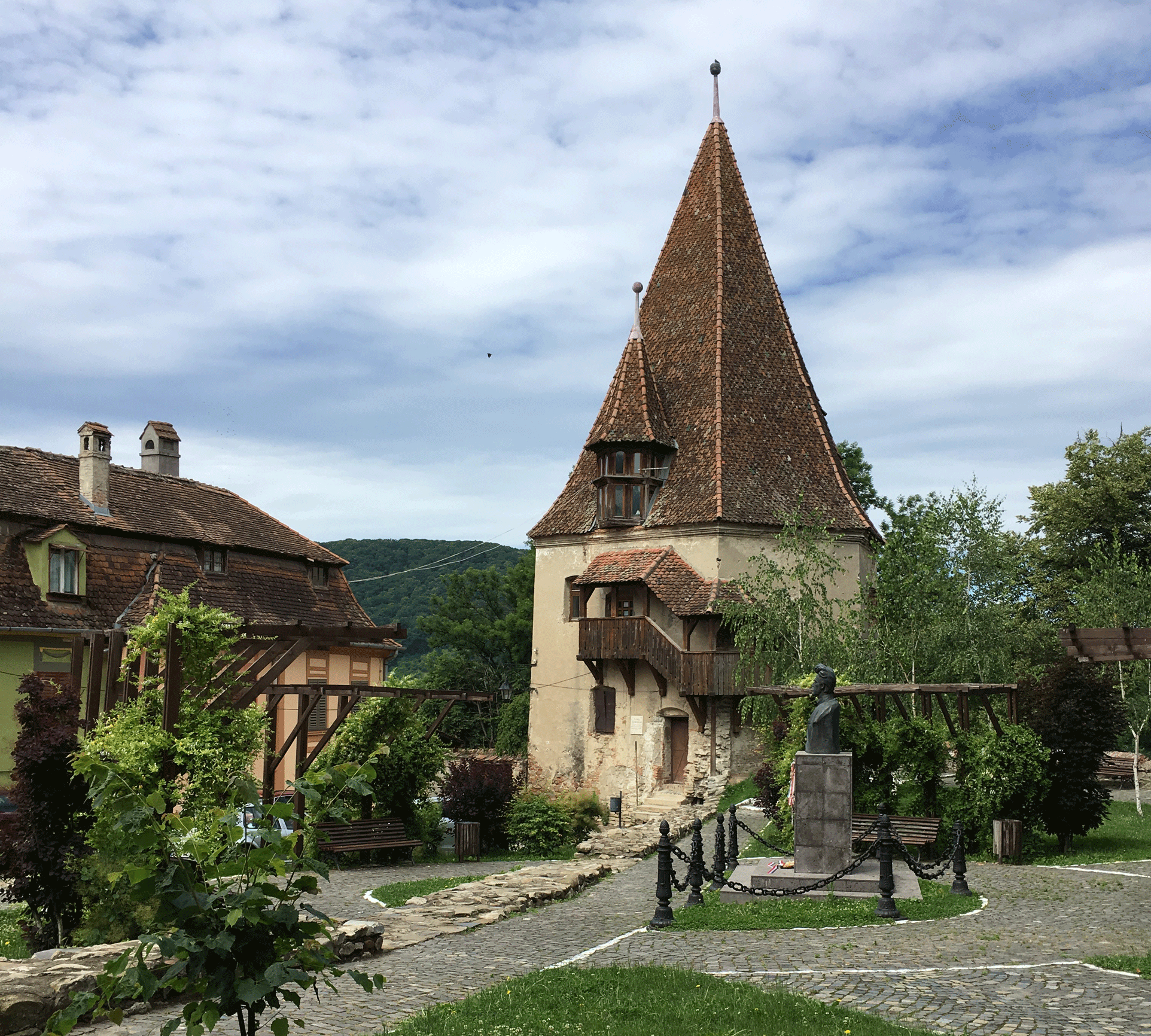
So, on 1st June, we left Blois with our bikes on the back of the car for a holiday that took us to Lake Iseo in the north of Italy, Maribor in Slovenia, where we tested our ability to scale new heights on our bikes, Eger in Hungary where we nearly got washed away in a freak flood, then Sighisoara in Romania, home of Dracula and sister city to Blois, which we used as centre to visit the fortified churches of Viscri and Biertan.
Sighisoara, home of Dracula and sister city of Blois
Suceava was the next port of call from which we cycled to many very beautiful painted churches, reminding us of our visit to Northern Cyprus. In Marmures, we stayed with a Romanian family where the head of the house spoke French and we learnt a lot about this still very backward part of the country with its beautiful wooden churches and friendly people.
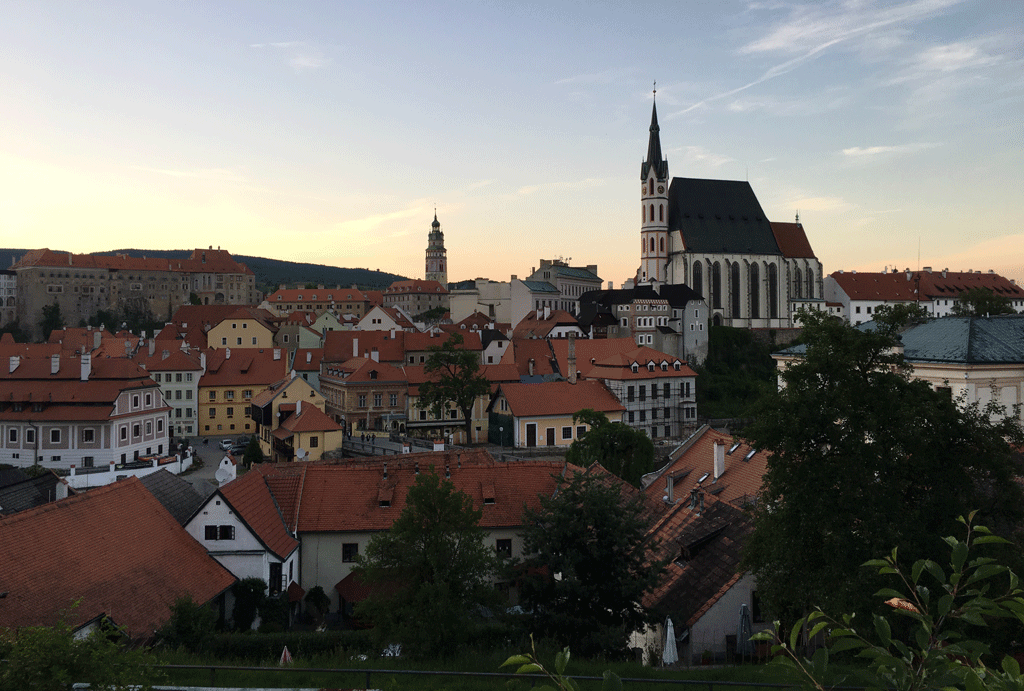
The wonderful town of Cesky Krumlov in Czech Republic
We then started on the road back to France, via Levoca in Hungary, then the absolutely enchanting village of Czesky Krumlov in Czech Republic where our hotel had a garden overlooking the castle, the perfect place for a picnic in the evening twilight after a hard day’s riding. We then stayed in Slavonice before crossing into Germany and discovering Burghausen with its marvellous hillside castle. It was good to be back in a country where I could at least read the signs!
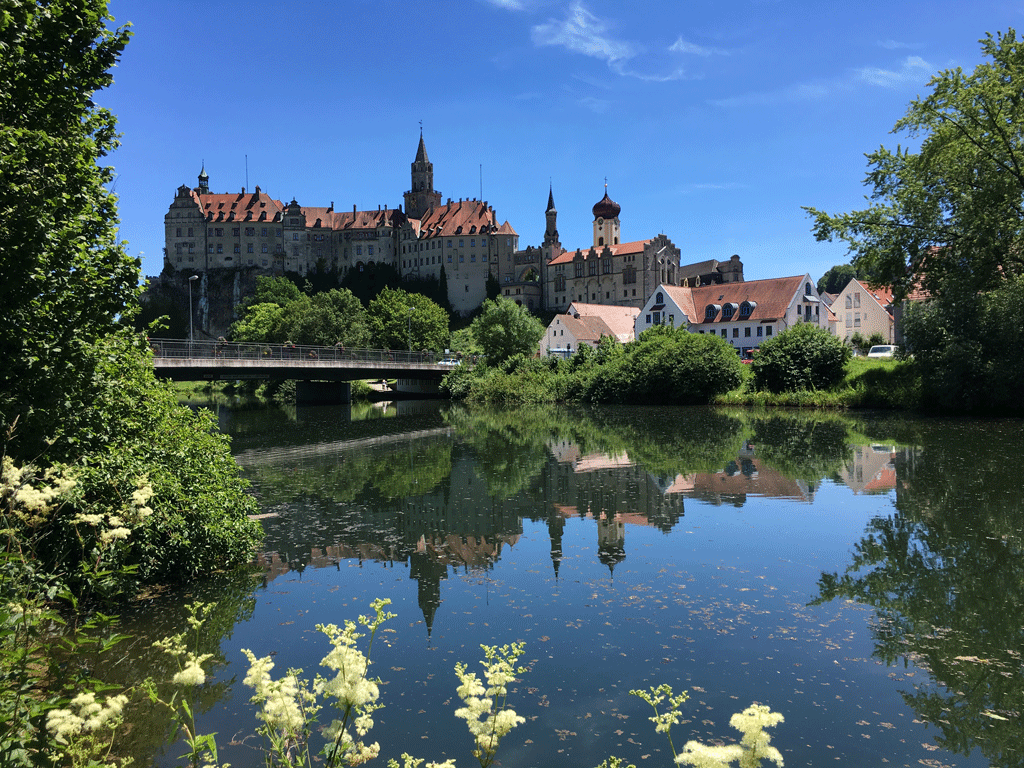
Sigmaringen on the Danube in Germany, near its source
To end our journey, we decided to return to our beloved Danube using the little village of Herbertingen as our base. Taking the train and cycling, we went as far as the source of the Danube at Donaueschingen.
View of Lake Iseo from the top of the hill
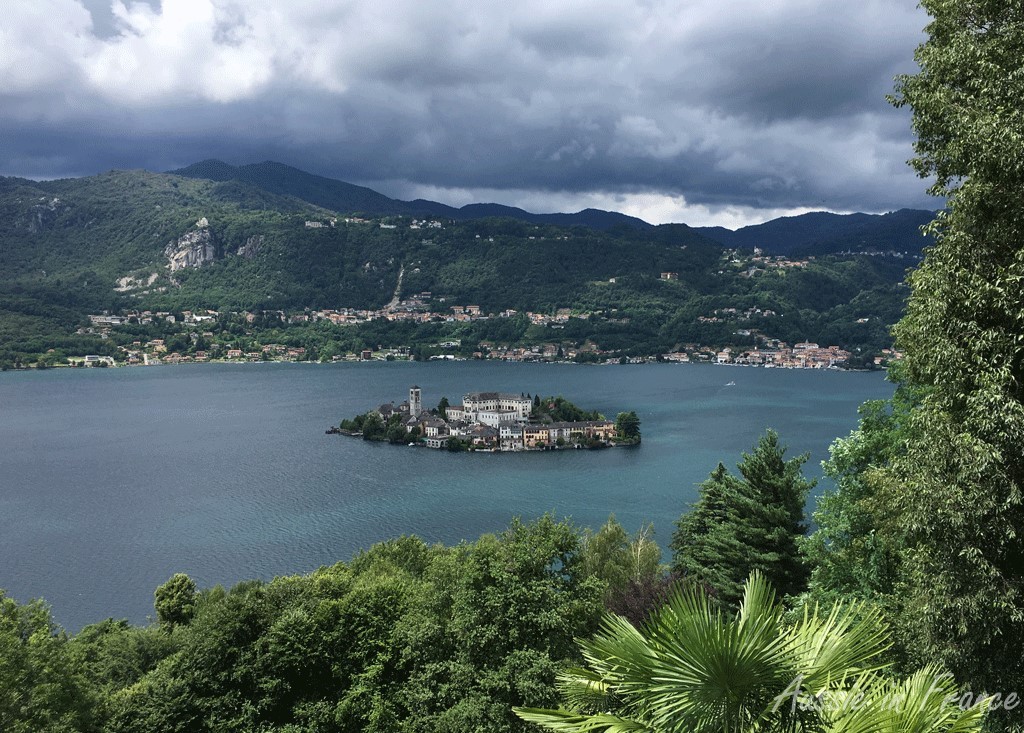
By the 28th June the weather was starting to deteriorate so we changed our initial plan to spend a couple of days in the Black Forest and went to Orta San Giulio in Italy instead where rain and shine alternated enough to let us ride around Lake Orta and up to the sanctuary of Madonna del Sasso, at an altitude of 700 metres! Once again, our power bikes proved their worth. We arrived home via Lyon on 2nd July, having been in eight coutries and covered 5,000 kilometers.
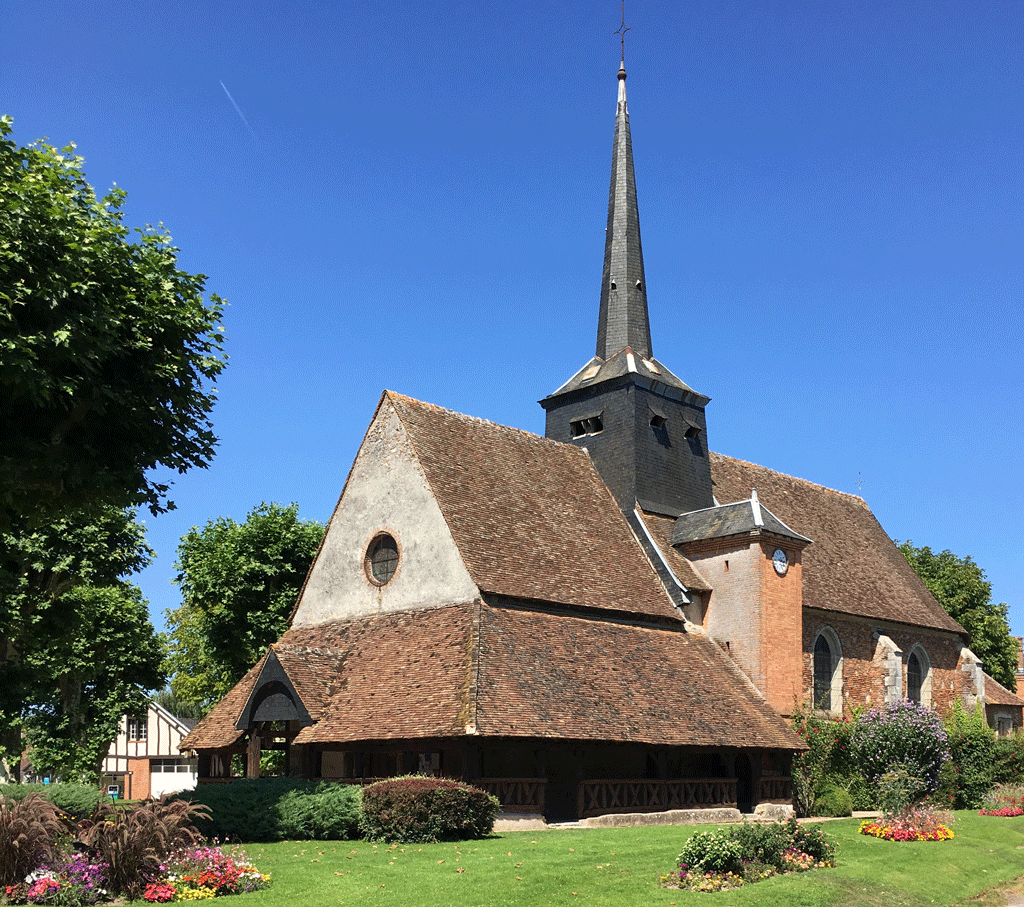
The church of Souvigny on one of our local bike rides
In July Jean Michel went walking in the Jura Mountains for 9 days with his sons while I stayed home and worked, looking forward to my retirement in June 2020 more than ever! I did discover a bike route into Blois that avoids the main road though. We then cycled as much as we could during the weekend and evenings until the weather turned too cold.
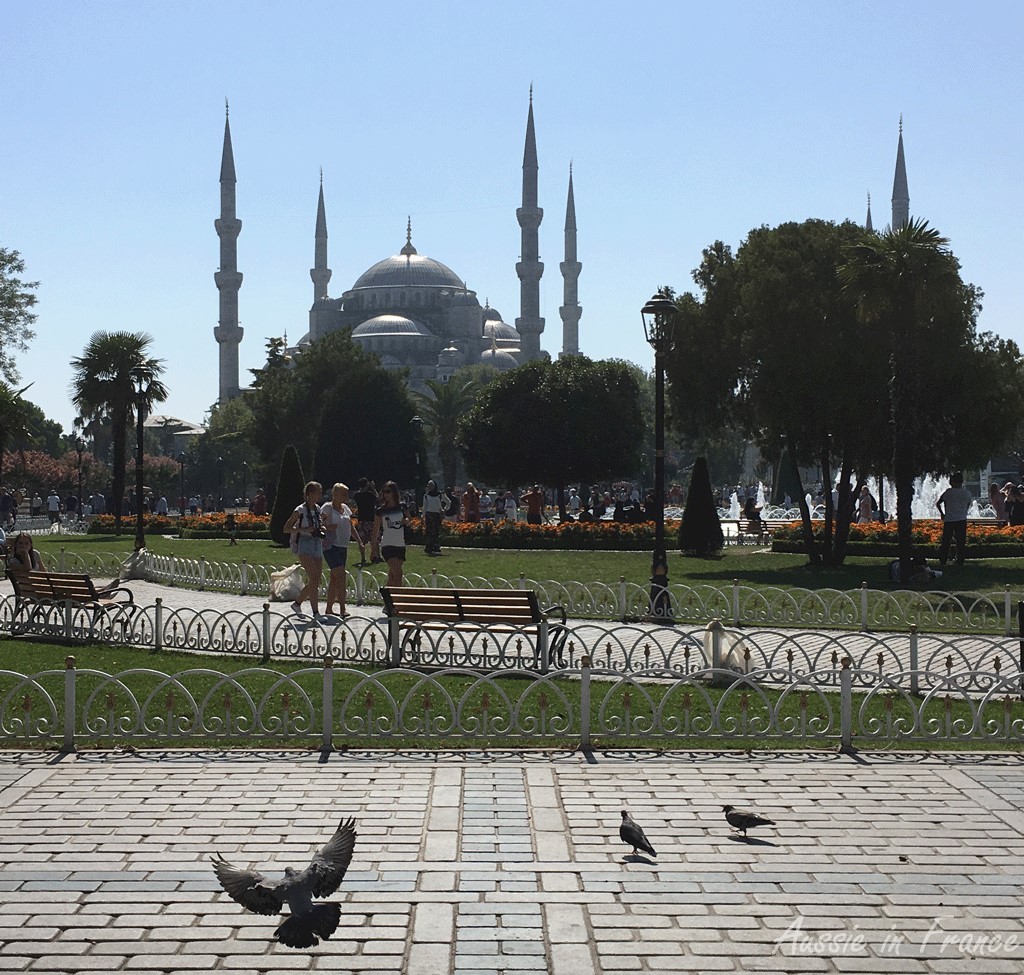
The blue mosque in Istanbul
September took us for a week to Istanbul which we loved. We rented an apartment just next to Galacta Tower which proved to be the perfect location. It had a quiet little balcony and small garden which provided well-earned rest after a day out in the busy streets of Istanbul. We often set out quite early to visit the sites to avoid the crowds.
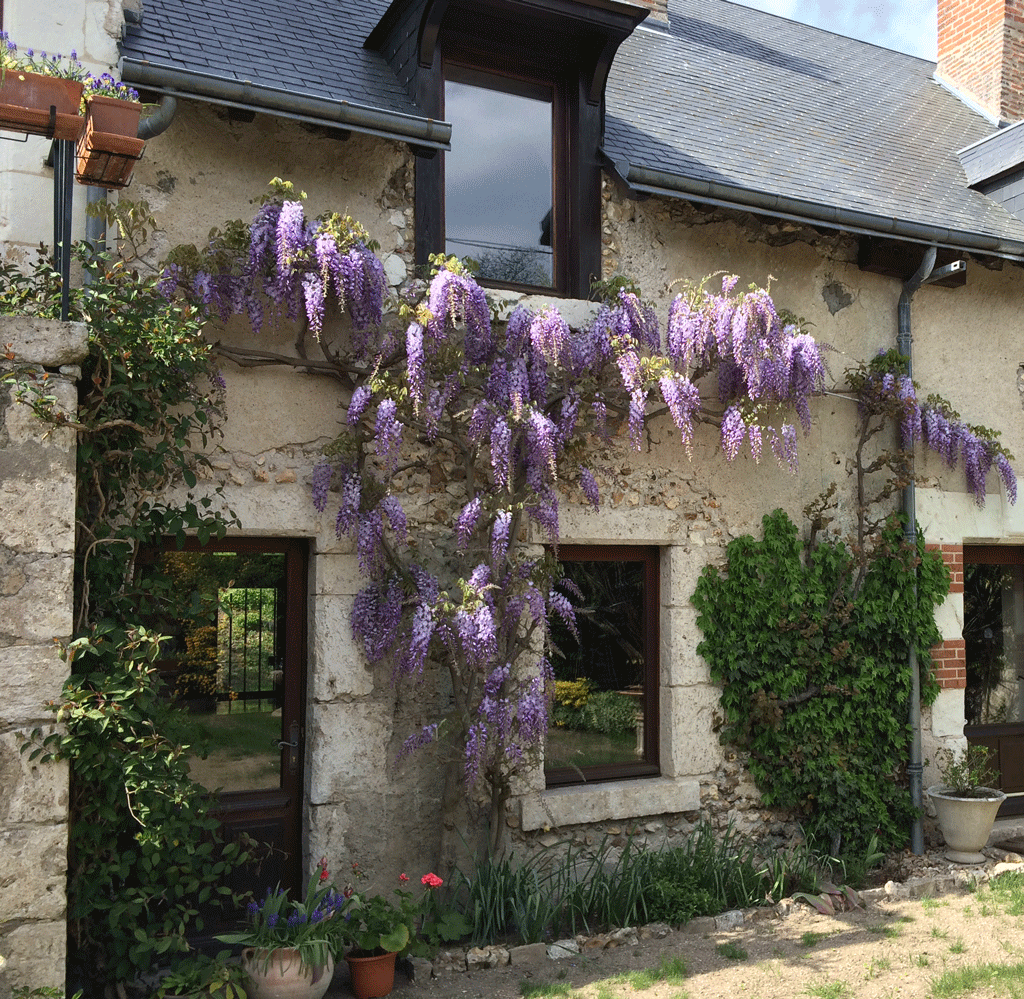
Our wisteria in spring
On the home front, our automatic watering system is up and running but we don’t quite have a mini Giverny as initially planned, mainly due to our clayey soil, but we are learning as we go.
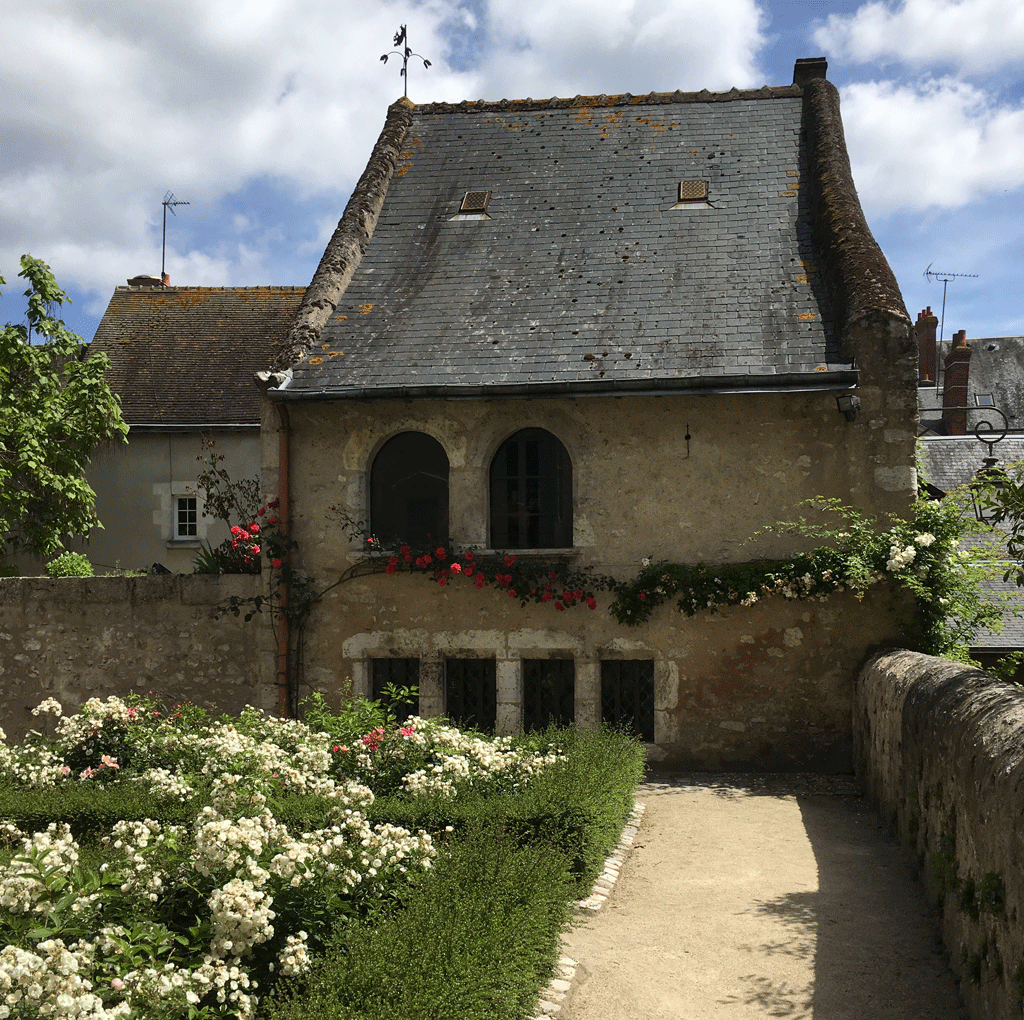
View from the garden of our new rental apartment in the historical part of Blois
Renovation of the studio flat I bought last year is making progress at last and should be ready for holiday accommodation this summer. We plan to offer an 18th century decorative experience with all modern conveniences. It is ideally located in the most historical part of Blois known as Puits Chatel and even has a little shared garden.
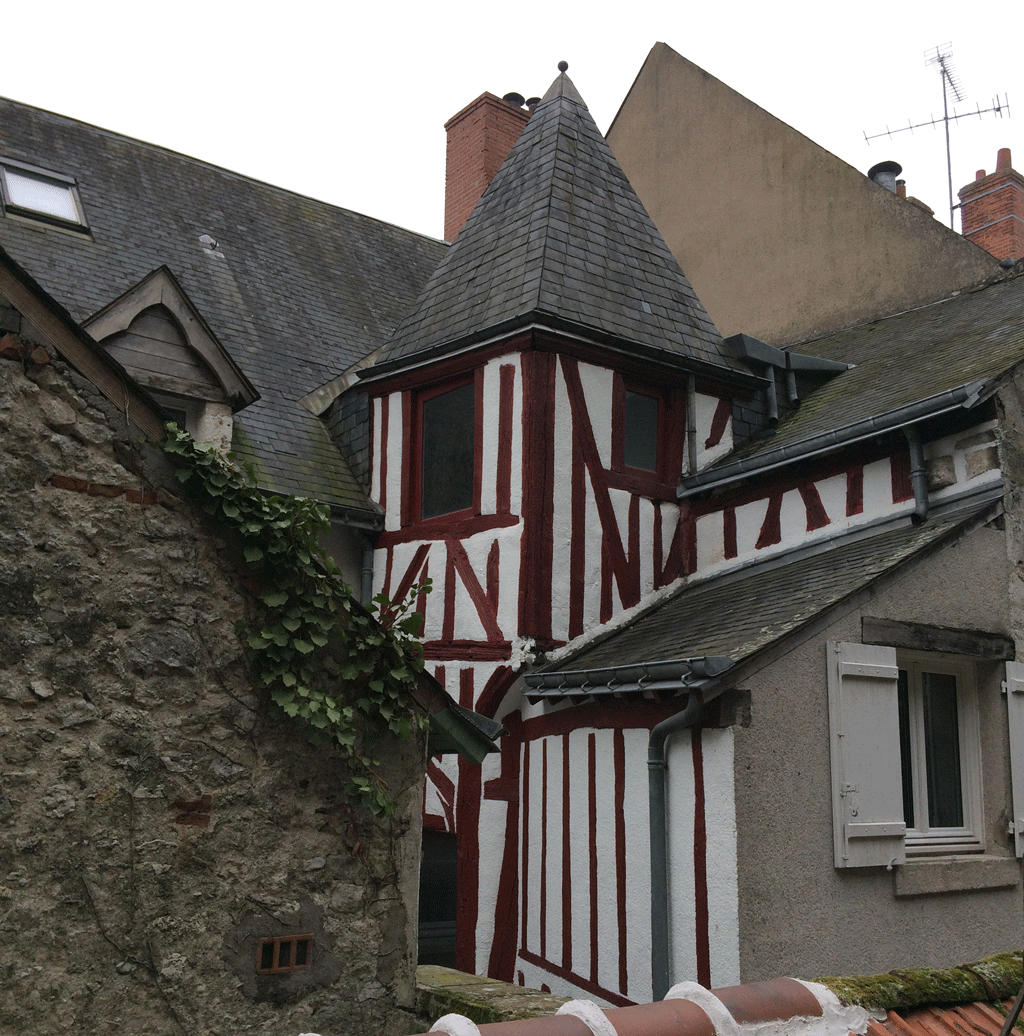
Typical house in the historical quarter of Blois near the rental apartment
I’m still keeping up with my daily photo on Loire Daily Photo even though Aussie in France is vitually at a standstill but I hope to be able to post more in the future, especially when I retire!
My children, Black Cat and Leonardo, live and work in New York or NYC as they say and are keen for me to visit but I’m a little reluctant as I was not impressed on my last trip (admittedly in 1980).
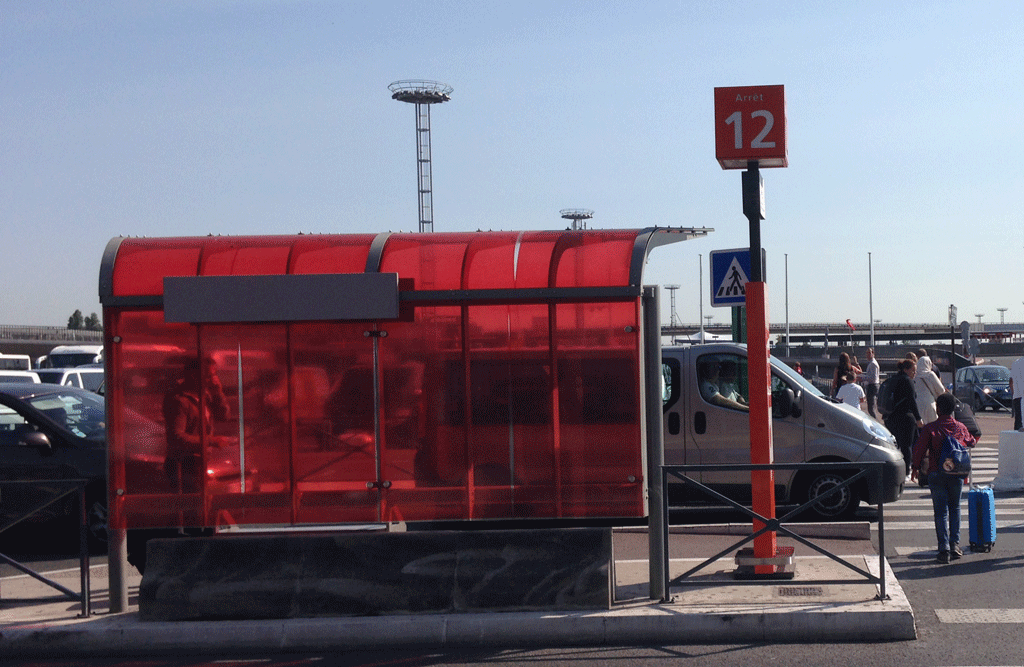
The shuttle stop for the Ibis Hotel at Orly Airport
We’ve chosen to leave from Orly which is only two hours by car from Blois so we park in the Ibis Hotel’s long-term parking lot in Rungis (near Orly Airport) at 72 euro for 12 days, which isn’t bad and certainly better than taking the train and metro. We don’t need to stay at the Ibis Hotel to park there. We organize it on-line with One Park.
We arrive at the hotel car park just before 11 am and by 11.30 am we are in the departure hall of Orly Ouest. There is a big sign saying navette (shuttle) outside the Ibis hotel but we first have to get (free) bus tickets from the supercilious hostess at the desk inside the hotel.
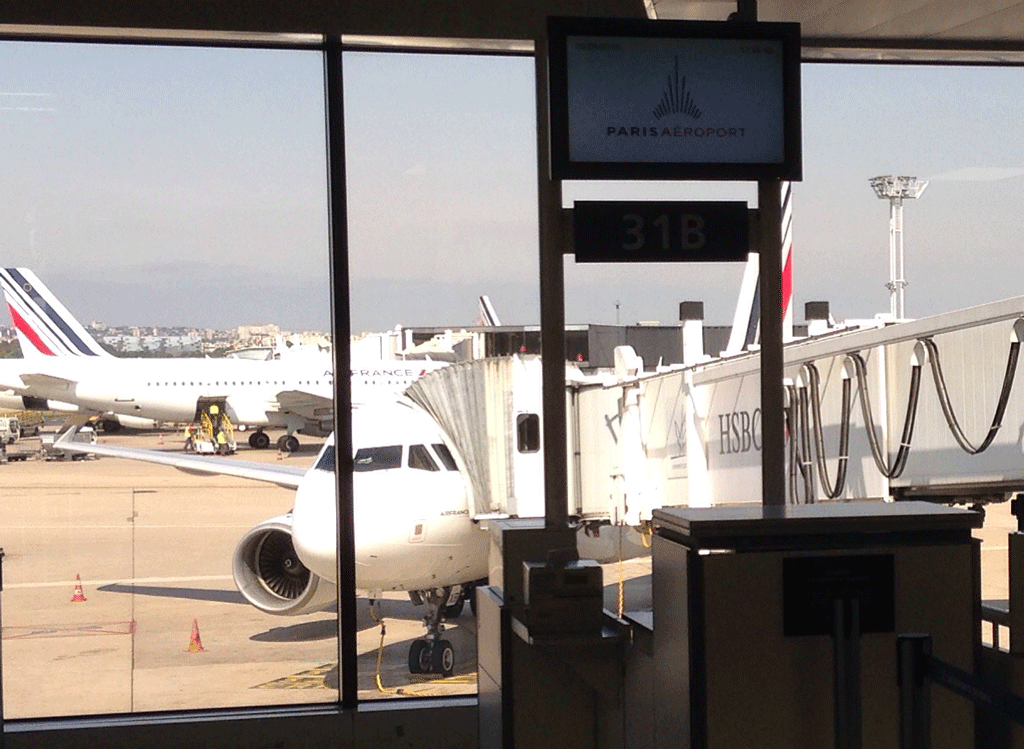
Inside Orly airport
As usual, we have bought our plane tickets through Opodo. Most of the flights between Orly and NYC go to Newark airport but Leonardo has reassured me that it’s quite convenient and Black Cat is ordering an Uber car on arrival. We’re flying economy with British Airways and the tickets were 525 euro return each.
When we get to the counter, we discover we haven’t reserved our seats and are in different rows. The somewhat flegmatic man behind the desk says he should be able to do something about it but we won’t know until we board to plane. In the end, it works out and we are able to sit together but right at the back of the aircraft where the engine noise is loudest.
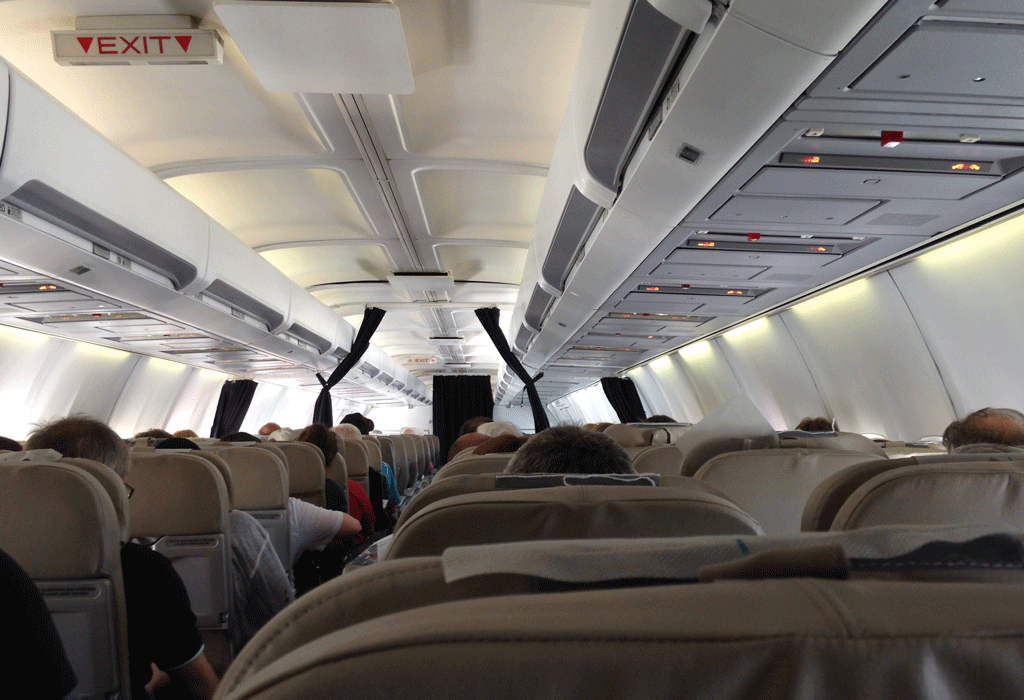
Inside the aircraft – NO screens of any sort
The first ten rows of our 757 are “biz bed” seats, with two recliner seats on each side of the aisle that look very comfy. Our economy seats are three to a side and not very roomy. What alarms me most is that there are no video screens in sight and it’s an 8-hour flight!
After take-off, the steward comes around with his trolley and hands out iPads and earphones! What an excellent idea – not to mention a great relief!
After our usual gin & tonic, a light meal, a couple of movies, a snack I could have done without and three episodes of Friends, we arrive at Newark Airport at 4 pm. It takes a while to go through police control because our finger and thumb prints have to be checked and our photos taken. We are travelling with our French electronic passports and an “authorization” obtained on-line in lieu of an entry visa. The officer checks the address I have written on the form. “Number 255, right?” he says, without looking at me. “Yes” I reply and his head shoots up. “But you’re not French, are you?” I laugh. “No, I also have an Australian passport.” Just one word and he knows I can’t possibly be French!
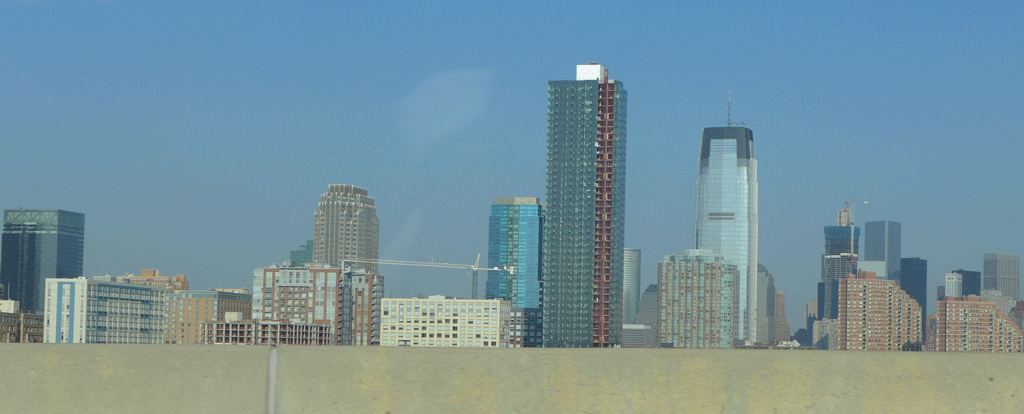
First view of New York from our Uber car
Our luggage is waiting for us so I log onto the free airport wifi and text Black Cat. She orders an Uber car and tells us where to meet him. It turns out we’re on the wrong level – we need to be downstairs on departure level. We soon find our car with Black Cat’s help. She has an Uber account so we don’t even have to worry about getting dollars to pay!
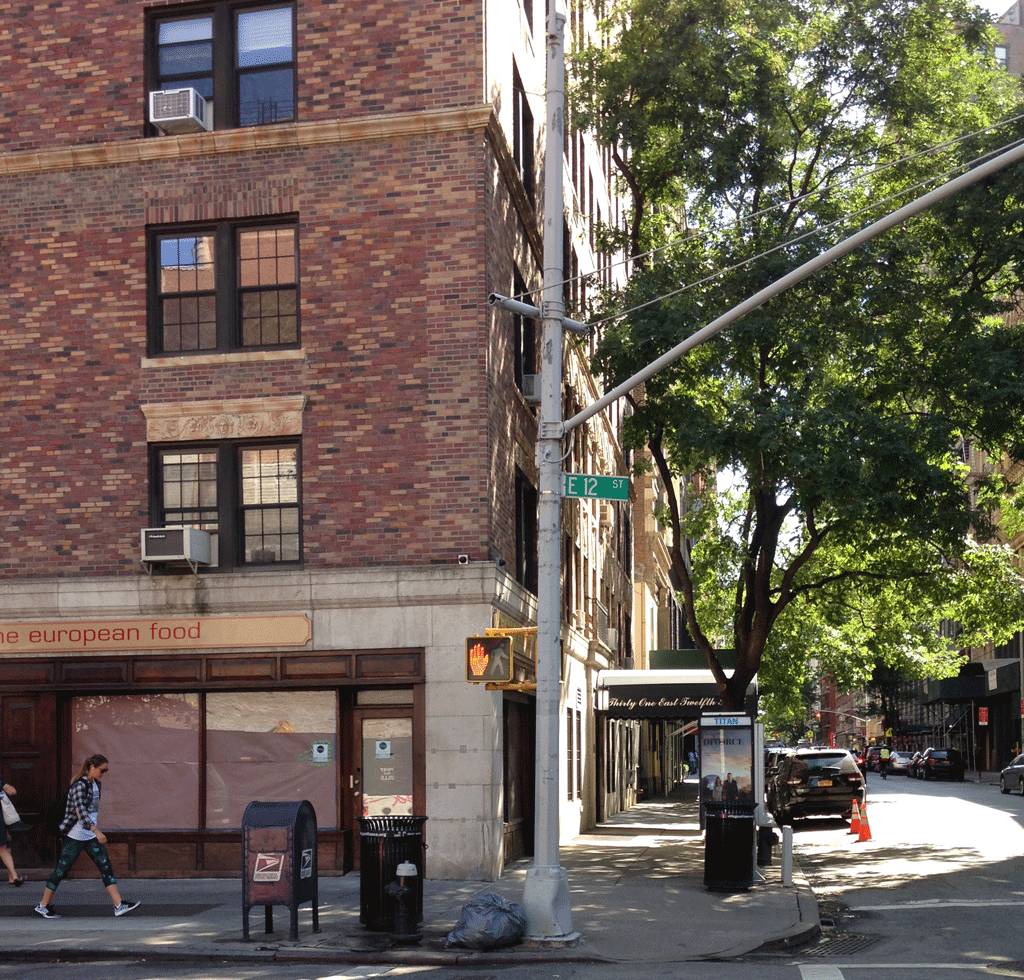
She is waiting for us at the other end of our journey, having organised for us to rent a friend’s flat just near Union Square while her friend is away. It turns out to be a perfect location, just 10 minutes’ walk from her own flat-share.
Our temporary apartment building near Union Square
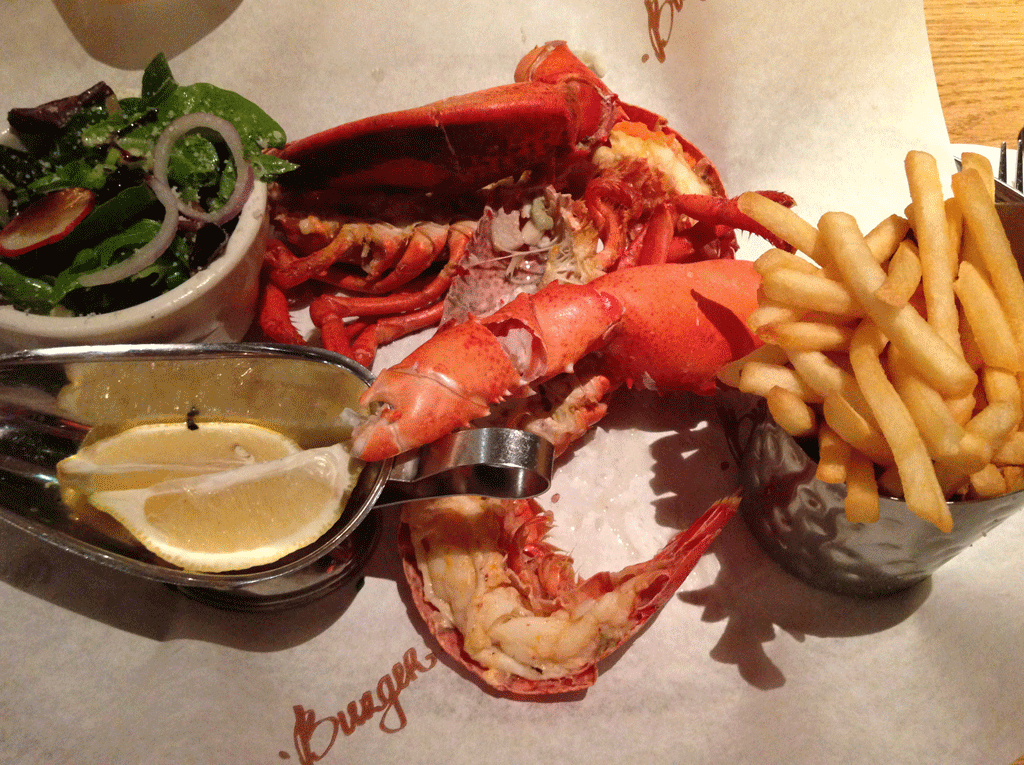
At 7.30 pm we meet up with Leonardo at Burger & Lobster where we each eat a whole steamed lobster, coleslaw and French fries for 20 dollars! The noise level is pretty high but the food is delicious. What a great way to begin our visit to New York City!
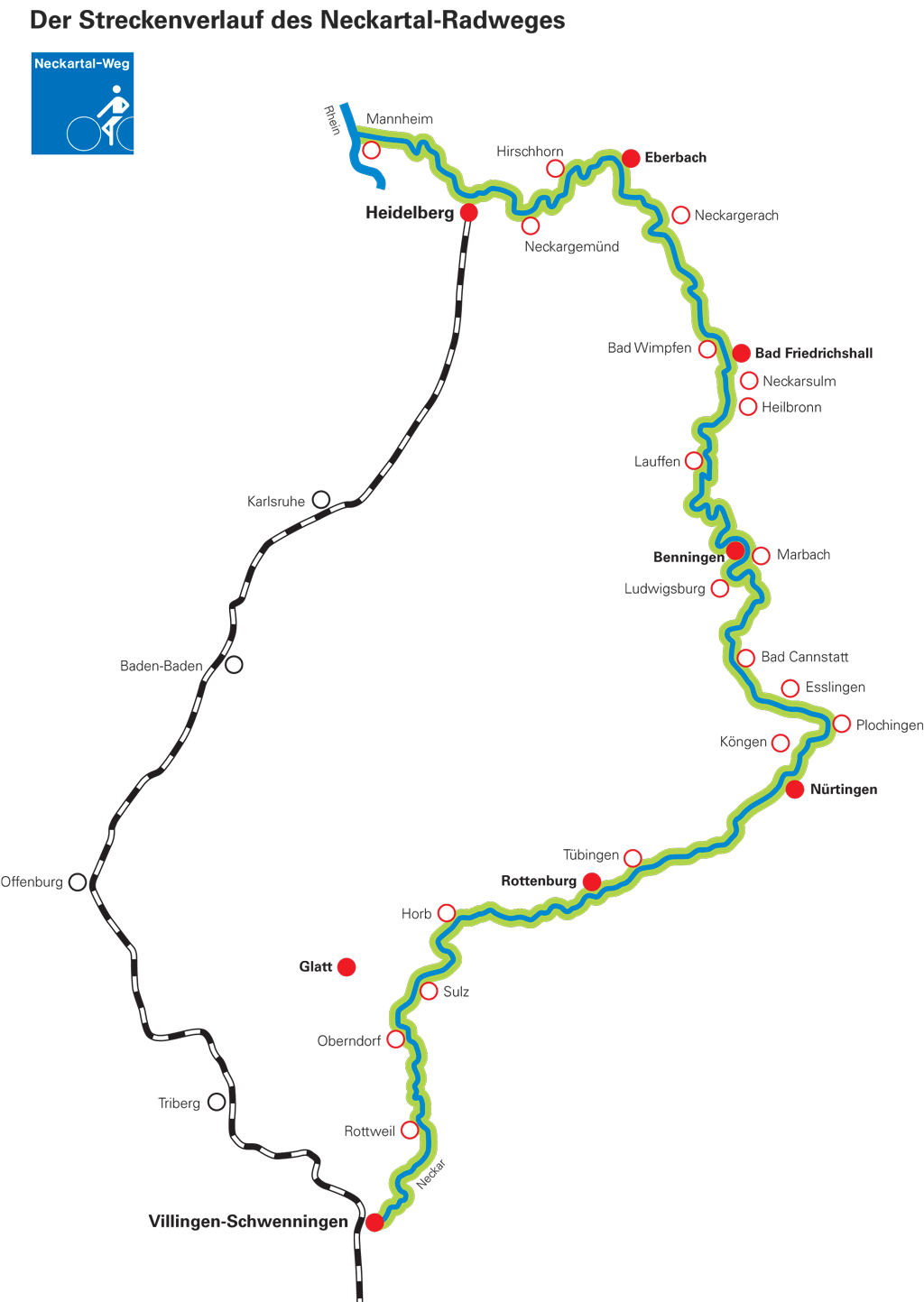
We have come to the end of our cycling tour of the Romantic Road and have a week left before we have to be back home in Blois. We look at the map to see where we can do some more exploring by bike. The Neckar river starts in Villingen-Schwenningen in the Black Forest and joins the Rhine in Mannheim. We manage to find a Bikeline map of the Neckar Valley and decide that Rottenburg am Neckar looks like a good base for four nights.
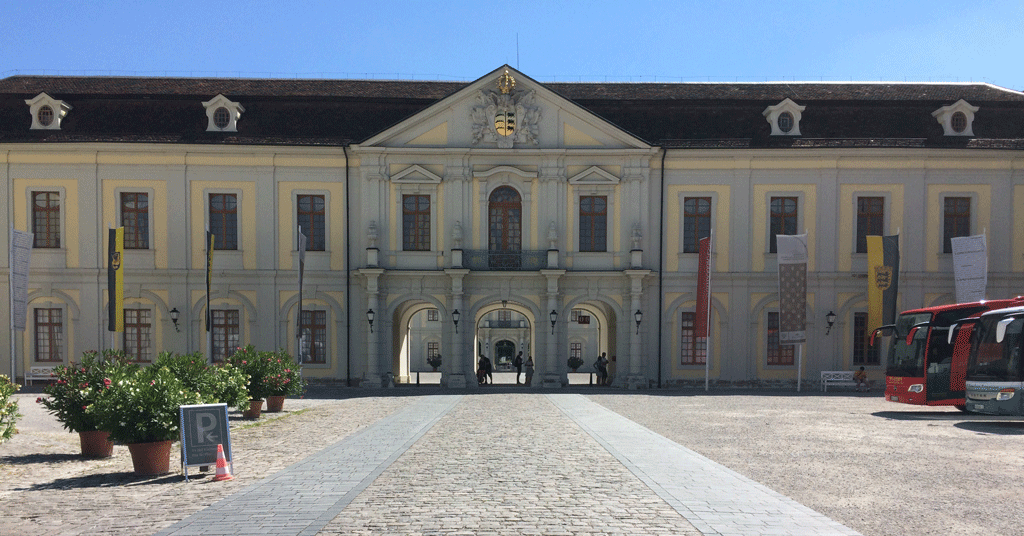
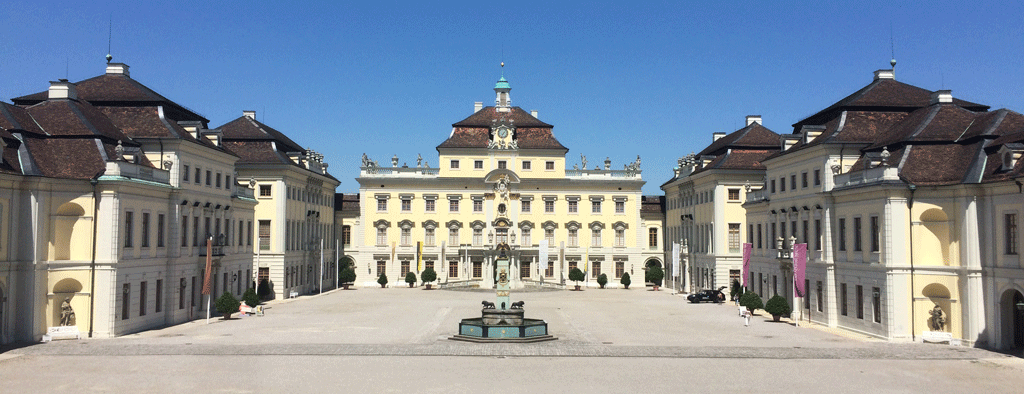
The main façade of Ludwigsburg Palace when you first see it
Ludwigsburg which is on the Neckar just north of Stuttgart looks like a good lunch stop. It has one of Germany’s largest Baroque palaces. It started off as a hunting lodge built by Ludwig of Württemberg at the beginning of the 18th century. Over the years it was expanded and improved until it became a royal residential palace.
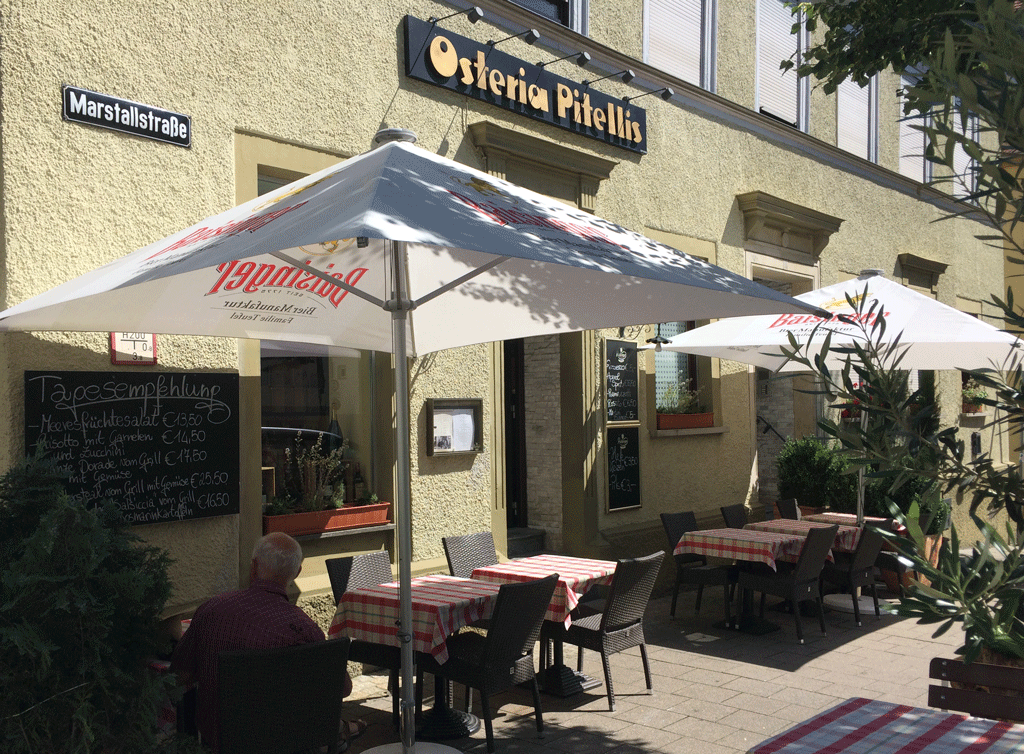
Cappuccino time
After parking in the covered carpark in the large shopping centre opposite the palace we have an excellent cappuccino in an Italian osteria where everyone speaks to us in Italian. When we arrive at the palace at about 11.30 am, we learn that we have to join a one-hour guided tour. The next one in English is at 1.30 pm, which is a little annoying. We buy our tickets at 7 euro a piece and decide to have lunch into the very extensive gardens. But the entry is another 8.50 euro each which sounds ludicrous so we go into the little town centre instead. The heat is excruciating by now.
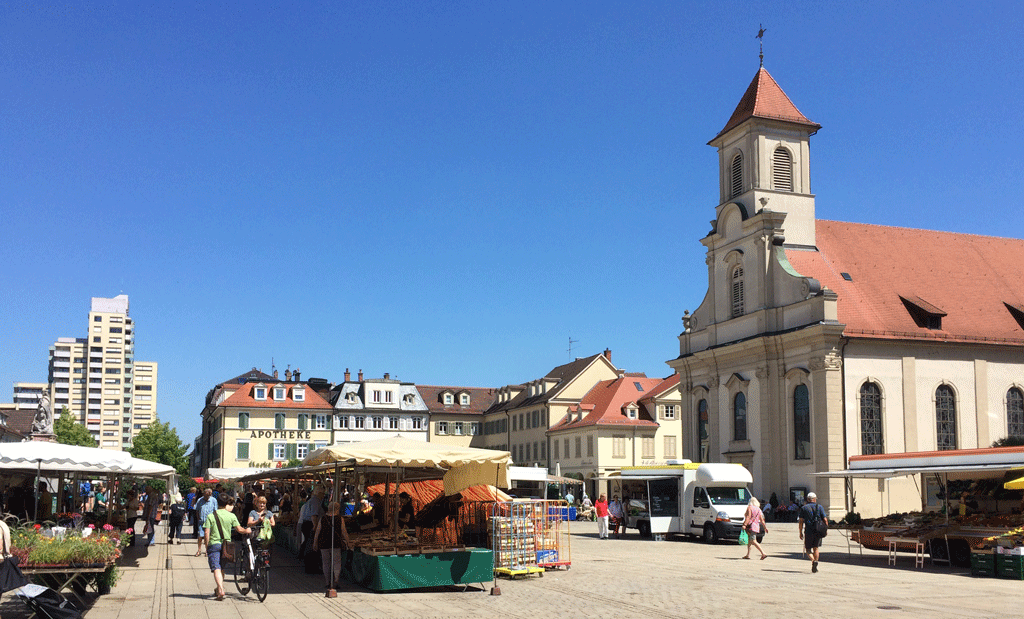
The marktplatz in Ludwigsburg on market day
There is a fresh market in the main square which only seems to have cafés and no restaurants but we eventually find one that serves salads and pasta and settle for that. Its main recommendation is that it is on the shady side of the square. We buy some tomatoes and fruit before we leave. The vendor’s daughter tells us that her cousin is going to Australia for a year.
The other side of marktpltaz showing the modern buildings behind
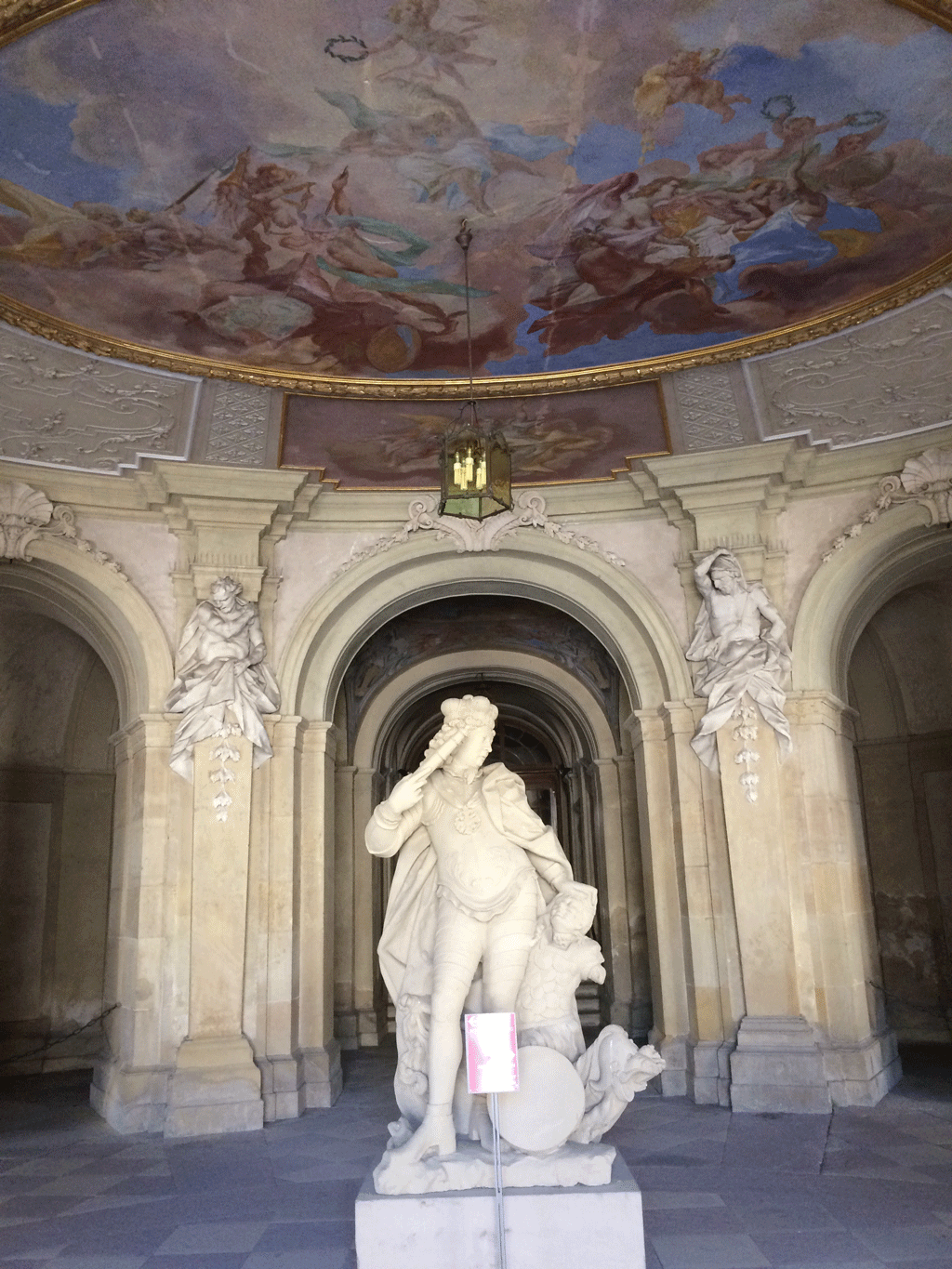
Our tour begins on time and our guide speaks good English and is very knowledgeable. Considering the time he spends on each room and in answering people’s questions, I don’t see how it can only take an hour. We can’t take photos, as usual, and Jean Michel has a description of the visit in French.
One of the baroque ceilings that still remains on the ground floor
The castle consists of 452 rooms and 18 buildings but we are only visiting the Queen’s rooms and theatre. The main building has a series of rooms that connect up and form an enfilade that is 150 metres long. During the Empire period, the Baroque décor was considered to be outdated and the beautiful ceilings painted over. We find this part very boring although I hear some other people saying how pretty it is.
The best view of the original building from the new wing
However, in the oldest part (the hunting lodge), the original Baroque decoration remains and is much livelier.
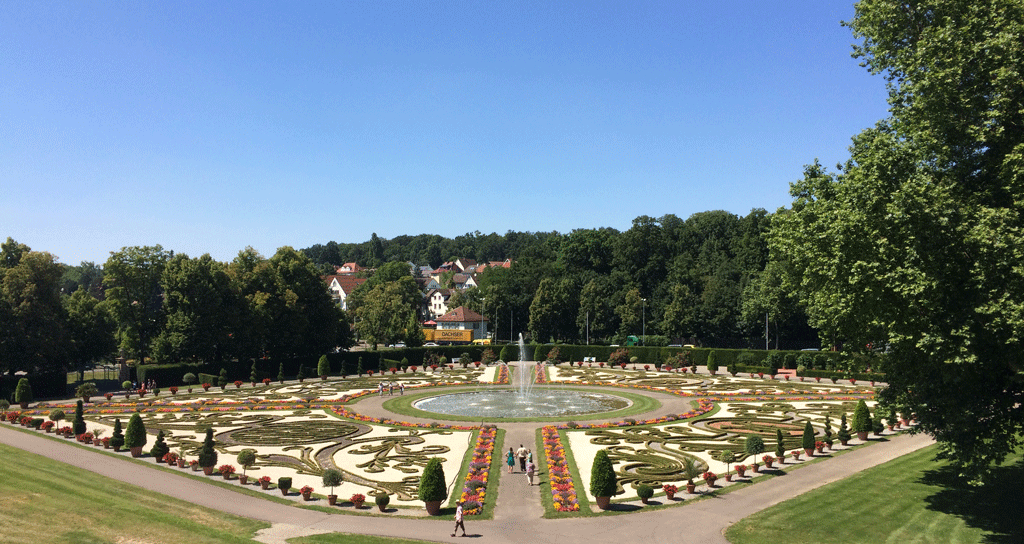
We are able to see the formal garden from the terrace of the palace. We learn that the gardens total 30 acres and are very beautiful. Maybe another time!
The formal gardens seen from the first floor of the original palace building
Although the Empire rooms seem very dull after all the Baroque and rococo we have been seeing along the Romantic Road, we still feel the visit is worthwhile.
Bike signs in Rottenburg – we are on a lot of bike routes!
Back in the car, we encounter a lot of road work along the way, something we have often experienced on the motorways in Germany. We get to Rottenburg around 5 pm and are looking forward to 3 days of cycling.
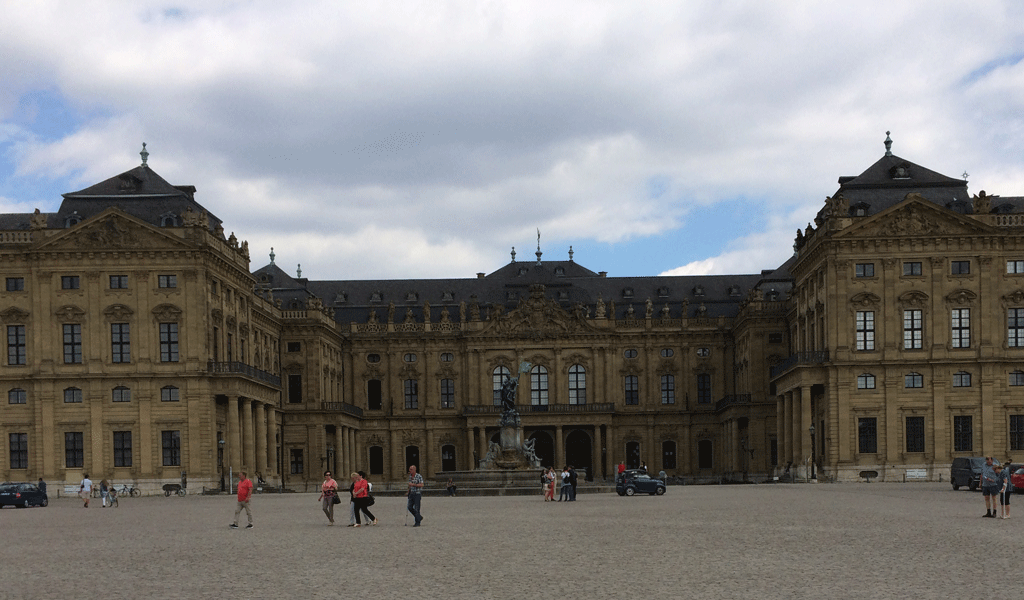
We’re on our way to Würzburg, at the northern tip of the Romantic Road, known for its wine and the former residence of the Würzburg prince-bishops, Unesco world cultural heritage site and one of the most important baroque palaces in Europe. The weather doesn’t look too bad but it’s only 15°C so we don’t know whether we will cycle or not. I am still feeling a little disgruntled after my poor night’s sleep.
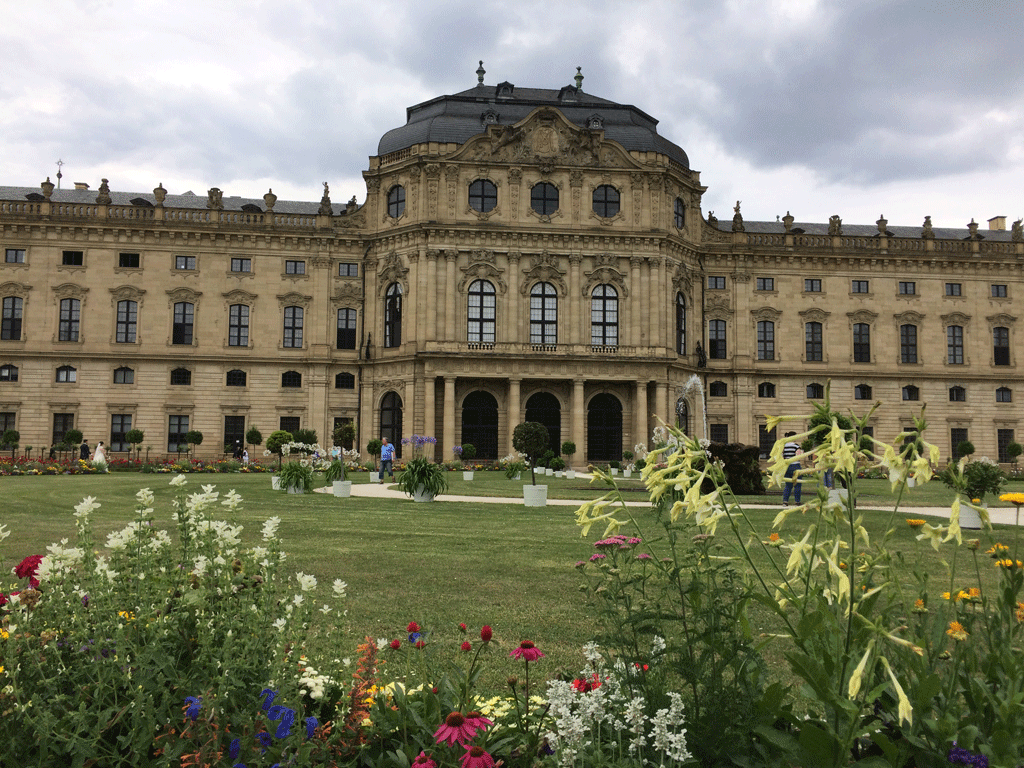
The façade of the Residenz
We ask the GPS to take us to the Residenz parkplatz and we’ll take it from there. We find it’s always best to visit popular monuments in the morning before they get too crowded. I suggest we take our photos of the façade after our visit because the sun is on the wrong side. We join the queue to visit the inside. It goes quickly and we are soon in the cloak room putting our phones and cameras in a locker as they are not allowed. We later see many people blatantly taking photos which we find surprising.
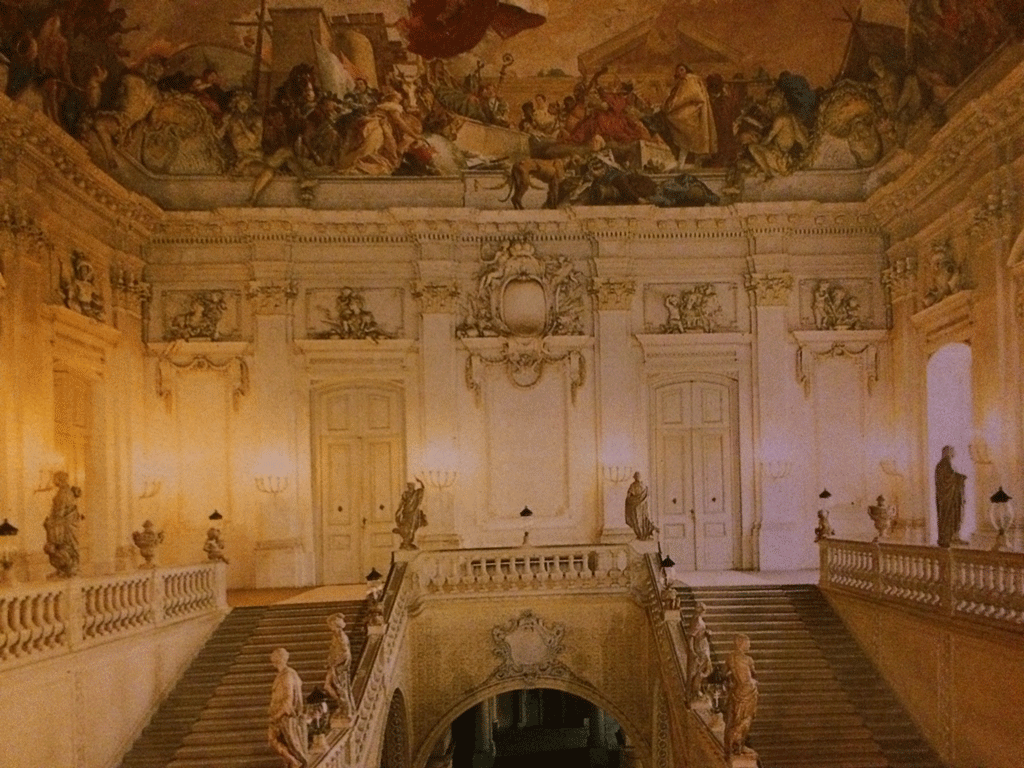
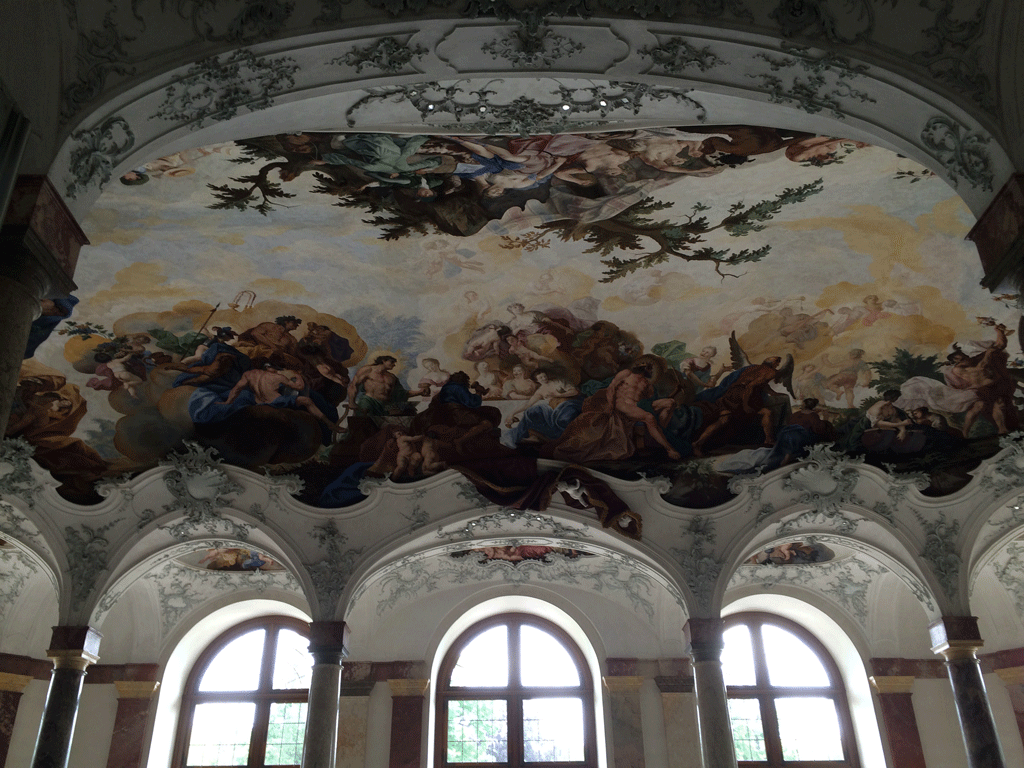
The fresco by Tiepolo, said to be the largest in the world
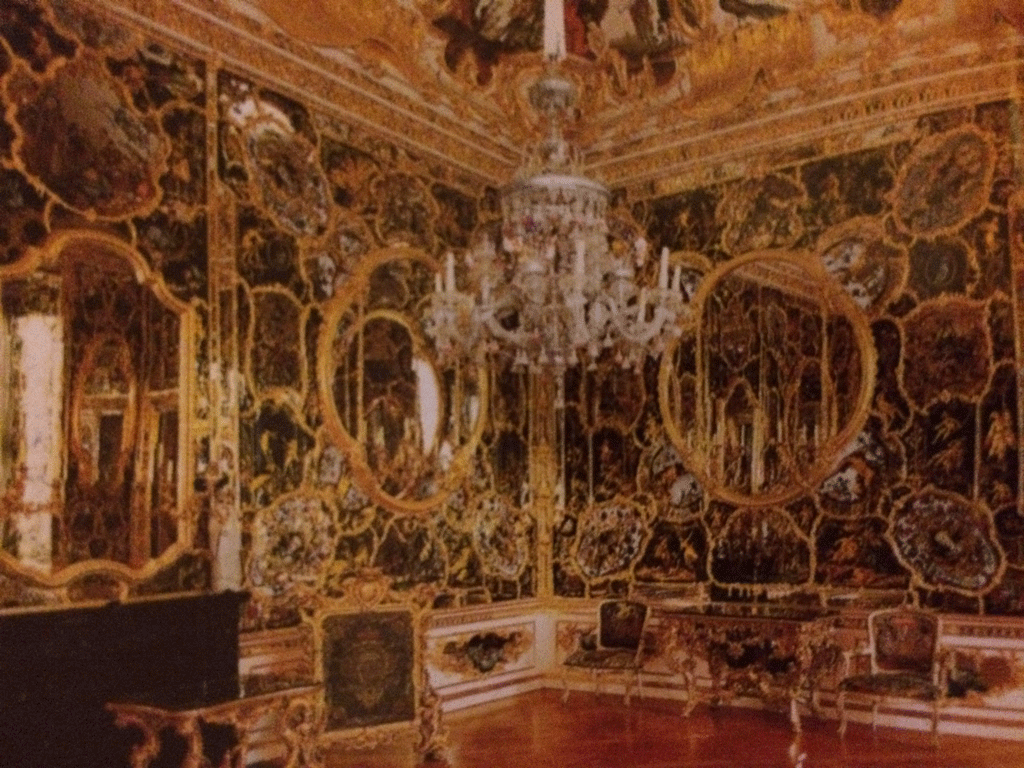
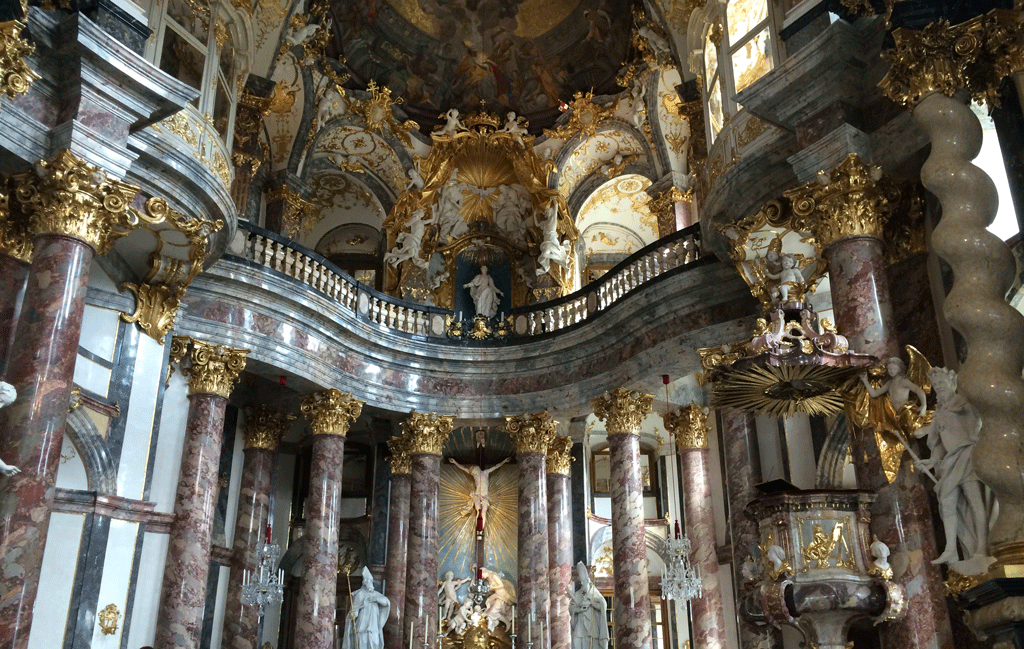
Admittedly, it is very frustrating not to be able to use our cameras. The Würzburg Residence is quite sumptuous, with the world’s largest fresco by Tiepolo, an amazing mirror cabinet and various other Baroque and rococo rooms. I’m including two photos from our guide book and hope the authors won’t mind.
The Hall of Mirrors in the Residenz
When we get to the end of the visit, Jean Michel says there are still some rooms we haven’t seen but we don’t know where there are. Then we see some people being let through a door which is closed after them. We ask the man who opened the door if we can go too. He explains that the rooms are only open during the week-ends to groups. However, if we wait for the next “house group”, we can go in with them. He goes off to find where they are up to and tells us they will be along in about 15 minutes.
The photo I managed to take in the Gartensaal
We join the group which has a German guide with a very loud, clear, grating voice and spends more than 5 minutes in each of the six rooms. We don’t understand a word, of course, but at least we have time to examine the rooms in detail. The cabinet of mirrors is especially intricate. We find it’s all terribly over the top but are glad to have seen it all.
We collect our belongings and I take a quick photo of the Gartensaal on the ground floor with its beautiful frescoes by Bossi. An official immediately calls out to me not to take photos. I can’t believe it. Not a word was said to the photographers upstairs!
The Residenz from the gardens
After a quick look around the gardens (there is a wedding in the baroque chapel so we can’t go in), we set off to visit the town.
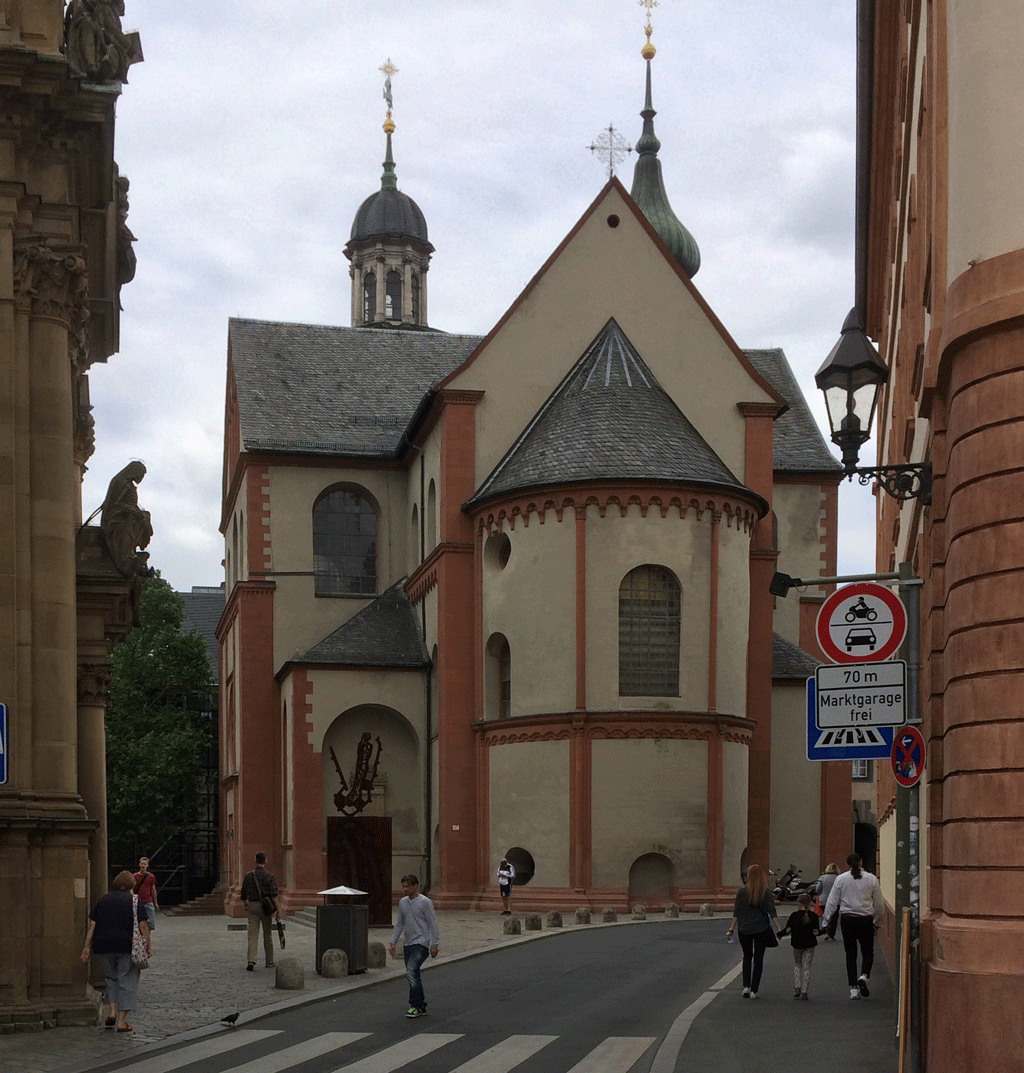
Dom Saint Killian
It’s quite disconcerting as there doesn’t seem to be a proper centre which can be explained by the fact that Würzburg was very severely bombed during the war.
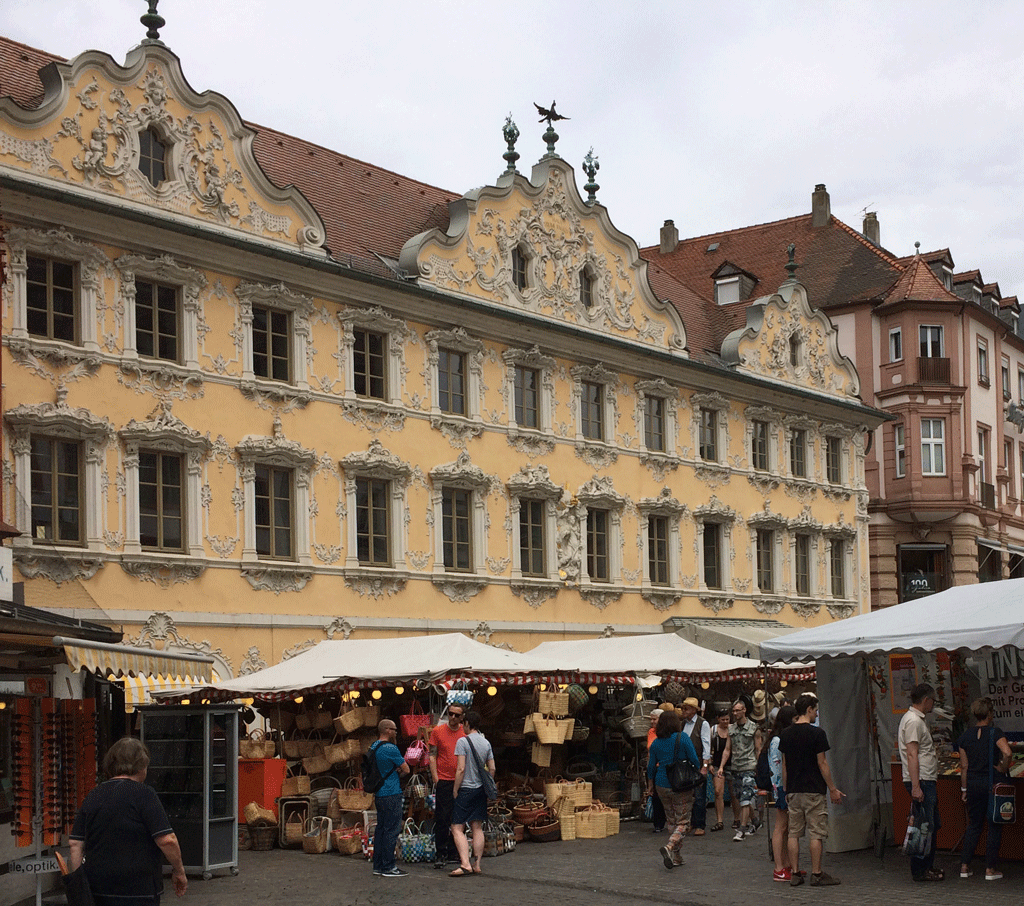
Falkenhaus on Marktplatz
There are a few historical buildings that has been restored, such as the Dom Saint Killian, Falkenhaus and Marienkapelle, but otherwise, most of the buildings are modern.
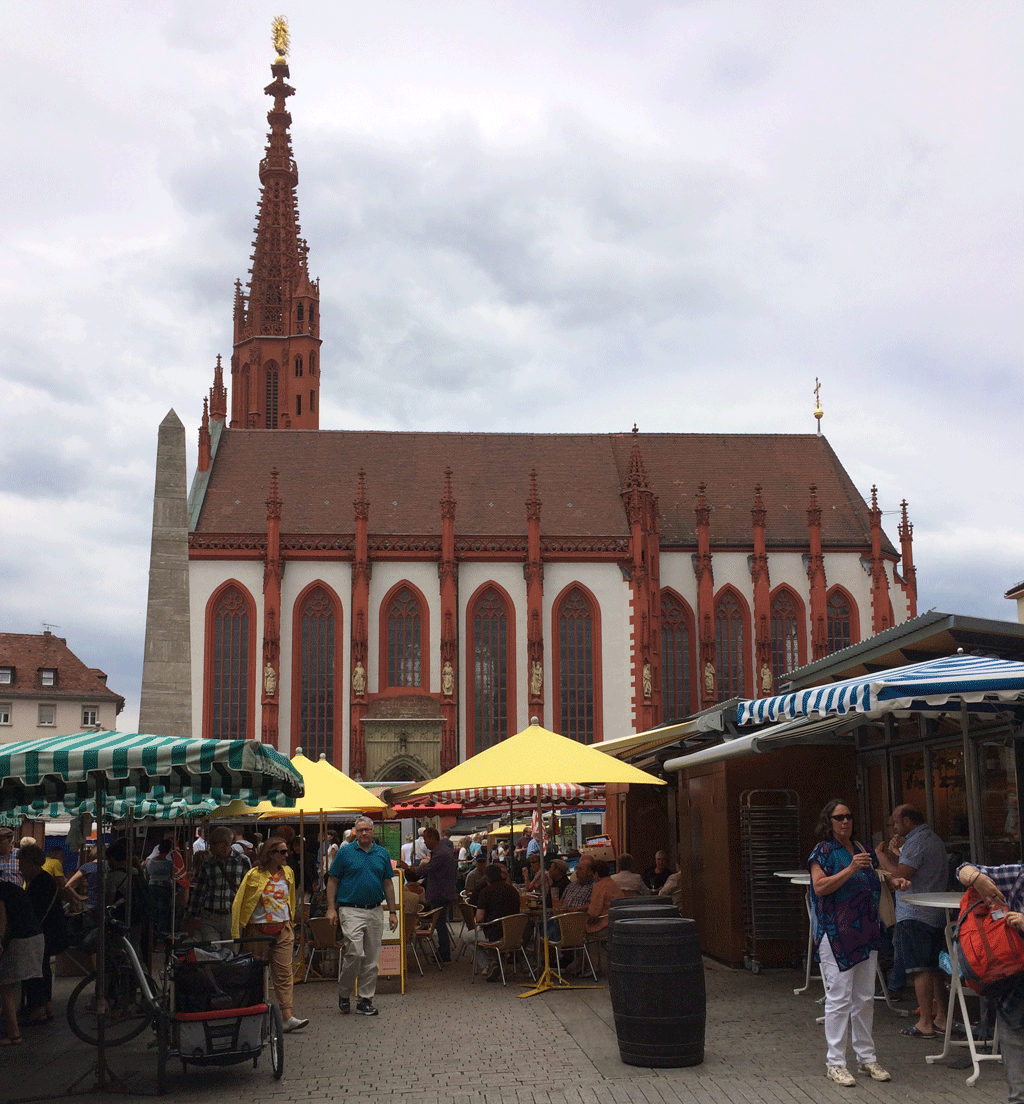
Marienkapelle on Marktpatz
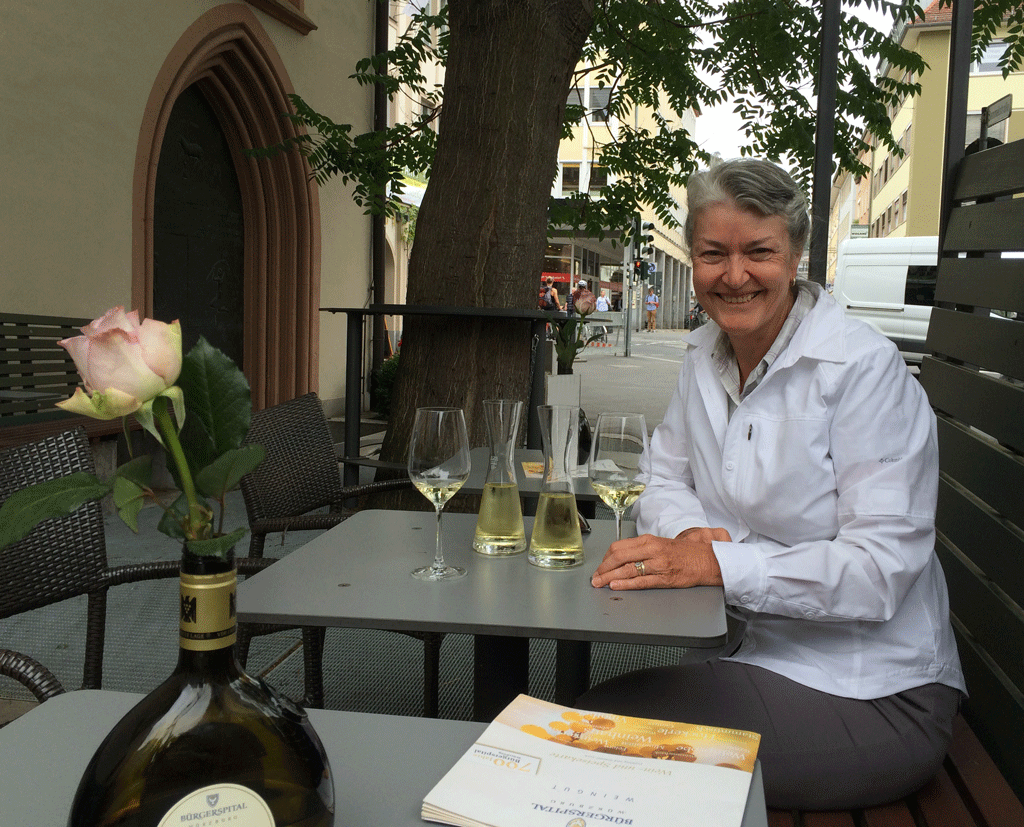
We arrive at Marktplatz which has lots of bratwurst (sausage) and chip stalls but we’d like a real meal. At Juliusspital a little further on, there is a restaurant in a large tree-shaded courtyard but it’s a little more sophisticated than what we are looking for. Just outside is a small shady Weingarten attached to a Weingut (cellar door), called Bürgerspital, which has homemade wild boar bratwurst so we have that with an excellent dry gewurztraminer. We are in the middle of a wine region, after all.
Enjoying a glass of gewurztraminer in the Bürgerspital Weingut with the wine in the foreground
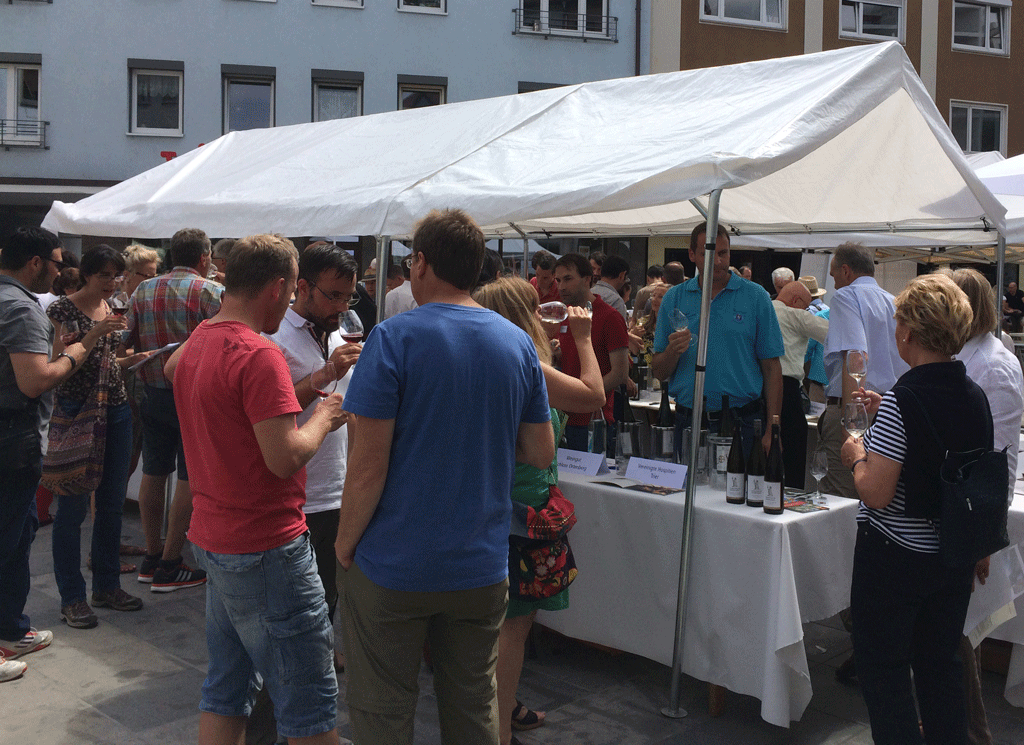
The gewurztraminer comes in a pretty bottle so we buy two to take home to Blois. We later learn that it is the typical bottle of the Würzburg area. As we go back through the marktplatz we see there is a wine tasting stall. We find out how it works – you pay 5 euro to rent a glass and can taste as many wines as you want. Among the whites, we try sylvaner, riesling, weissburgunder (pinot blanc), grauerbungunder (pinot griggio), muscatel and muller-thurgau, all German. Among the reds, we try saint-laurent and maréchal foch (Swiss) and lagrein (Italian from the south Tyrol). In case you are worrying, we do spit most of it out, but the fumes still go to your head.
Winetasting at a temporary stall
Enough wine-growers speak English or French for us to converse with them. No wine can be bought on-site. You can either order it on-line or visit the vineyard which makes the wine-tasting a very different event from those we have been to in France. When we give the glasses back, we are refunded 10 euro!
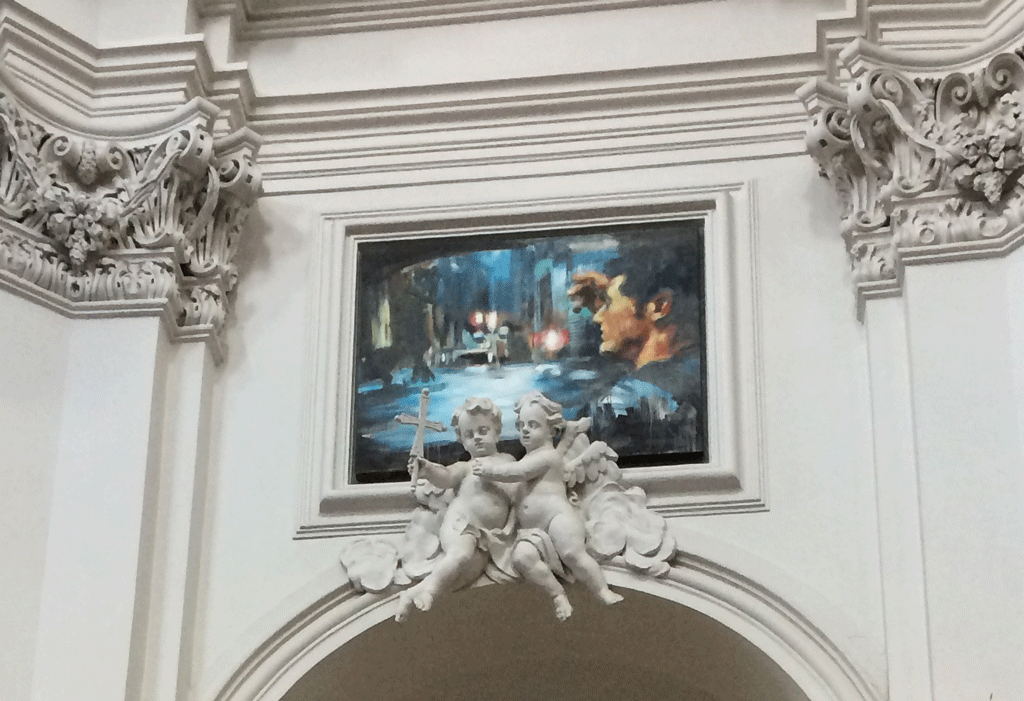
Modern take on rococo in the Neumünster cathedral
We visit a couple more baroque churches on the way back to the Residenz to visit the chapel now that the wedding is over. This time, there is no restriction on photos!
The Residenz chapel
By now, the clouds have come over well and truly and the temperature is not high enough for comfortable cycling – or for taken a decent photo of the Residenz – so we drive back to Tauberbishofsheim where we now have a more comfortable room but I have to sit on the steps leading up to the second floor halfway down the corridor to use the Internet.
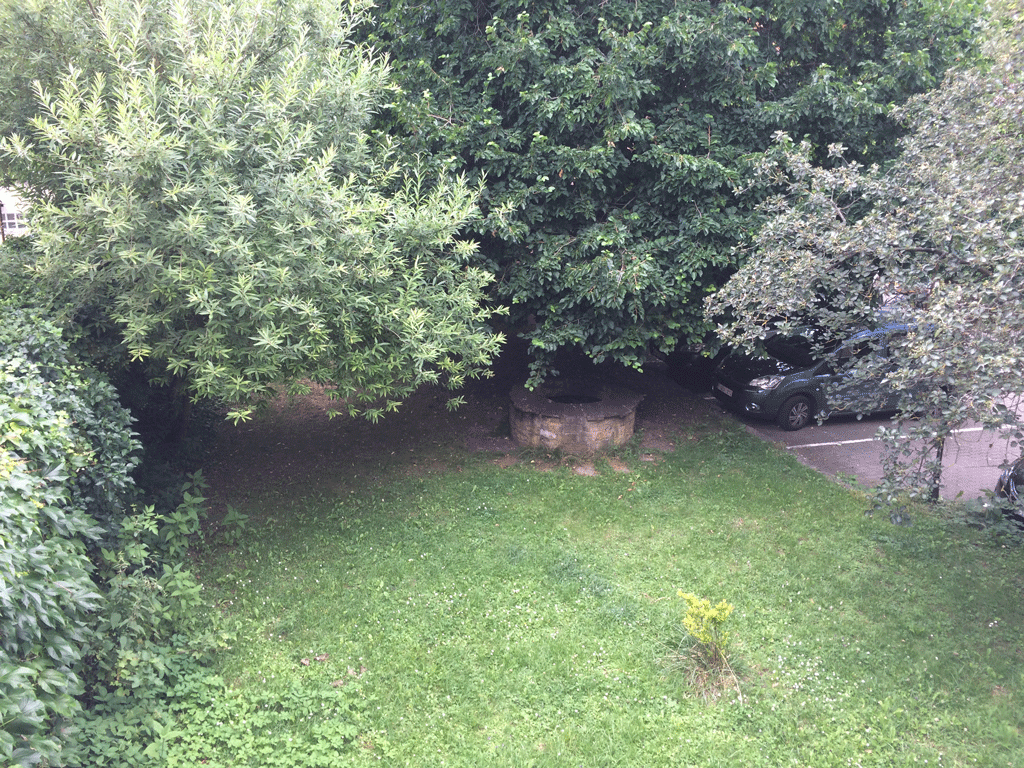
The “garden” view from our terrace. Nothing wonderful but it’s better than being inside a room.
After a picnic dinner on our terrace we go back to our favourite eis café and the helpful waiter greets us from afar with a hearty “Bonsoir”! Tomorrow, we are getting back on our bikes, come what may.
We have three memories of our visit to Rothenburg am der Tauber in 1999. We bought two beautiful handmade enamelled champagne glasses; we discovered Käthe Wohlfahrt’s Christmas shop; and we had an unforgettable chanterelle salad in a restaurant with a romantic flower garden.
Klingen Bastion in Rothenburg
We arrive in Rothenburg by car at 11.30 for a lunch stop as it is still too cold to be cycling. We immediately look for a parking lot outside the ramparts (we have now learnt it is pointless to go ito the centre) and pay for 3 hours, which seems plenty. There don’t seem to be too many people.
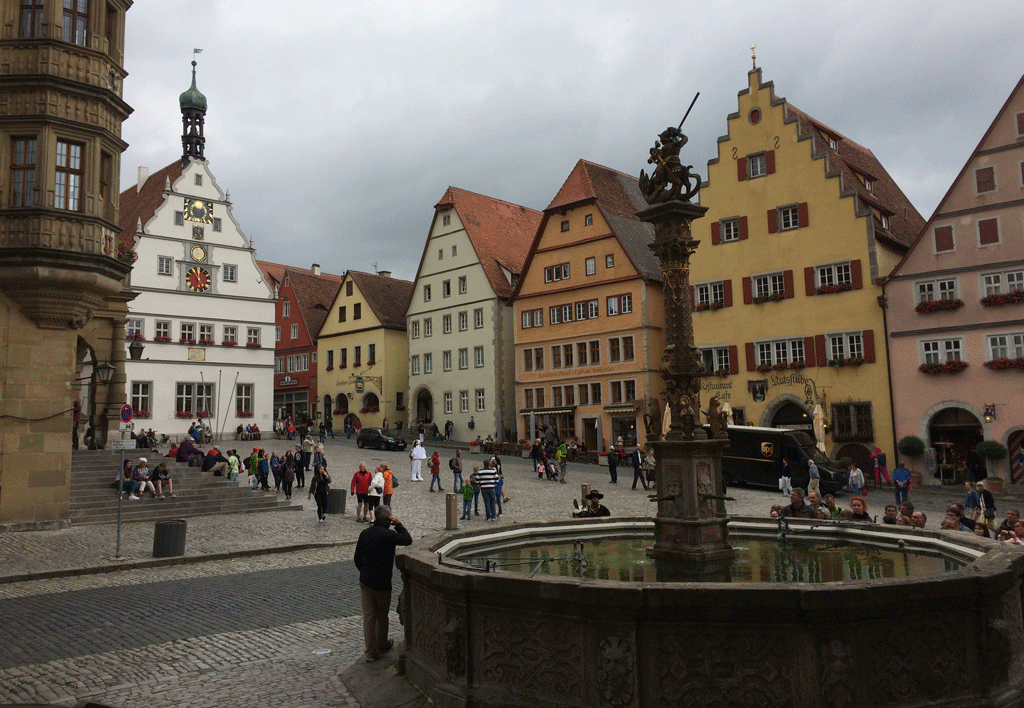
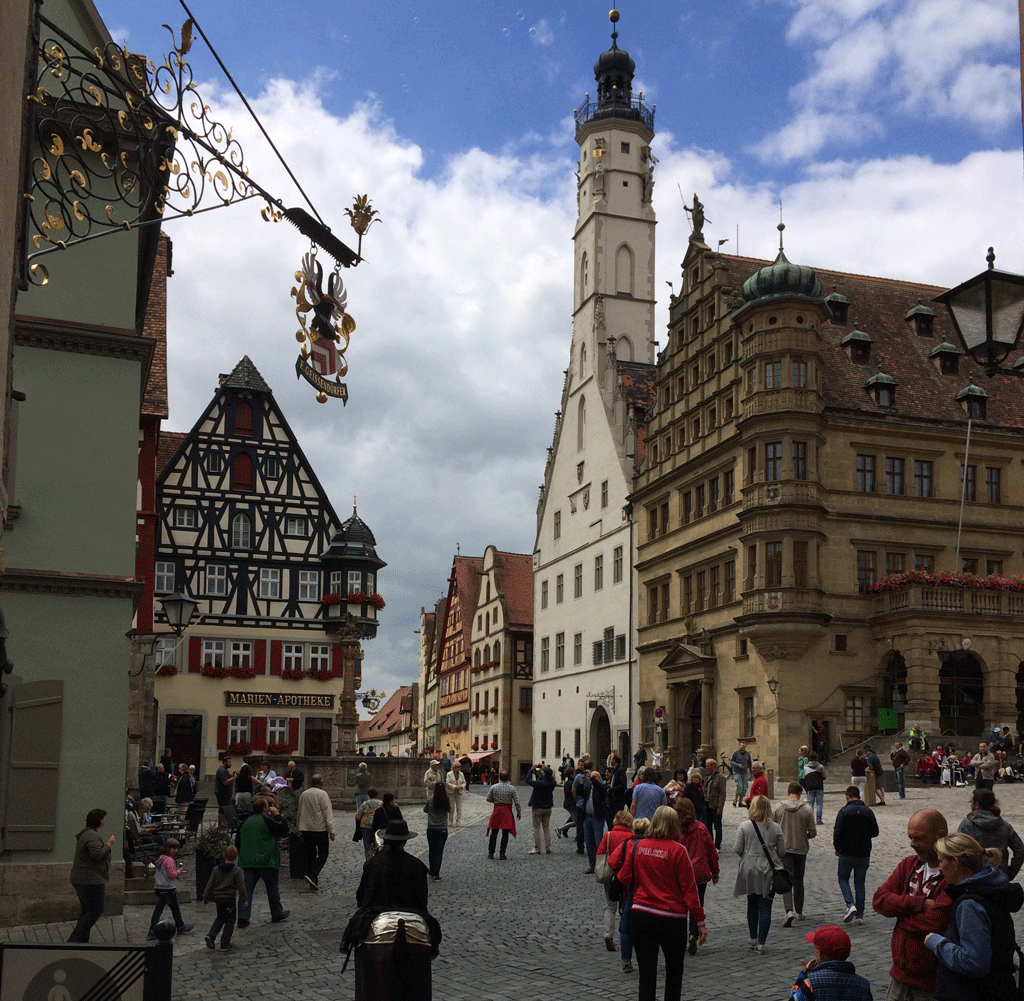
Markt Platz in Rothenburg
Rothenburg is a beautifully preserved mediaeval town with much larger public buildings than Dinkelsbühl. There are quite a lot of tourists but fewer than I expected.
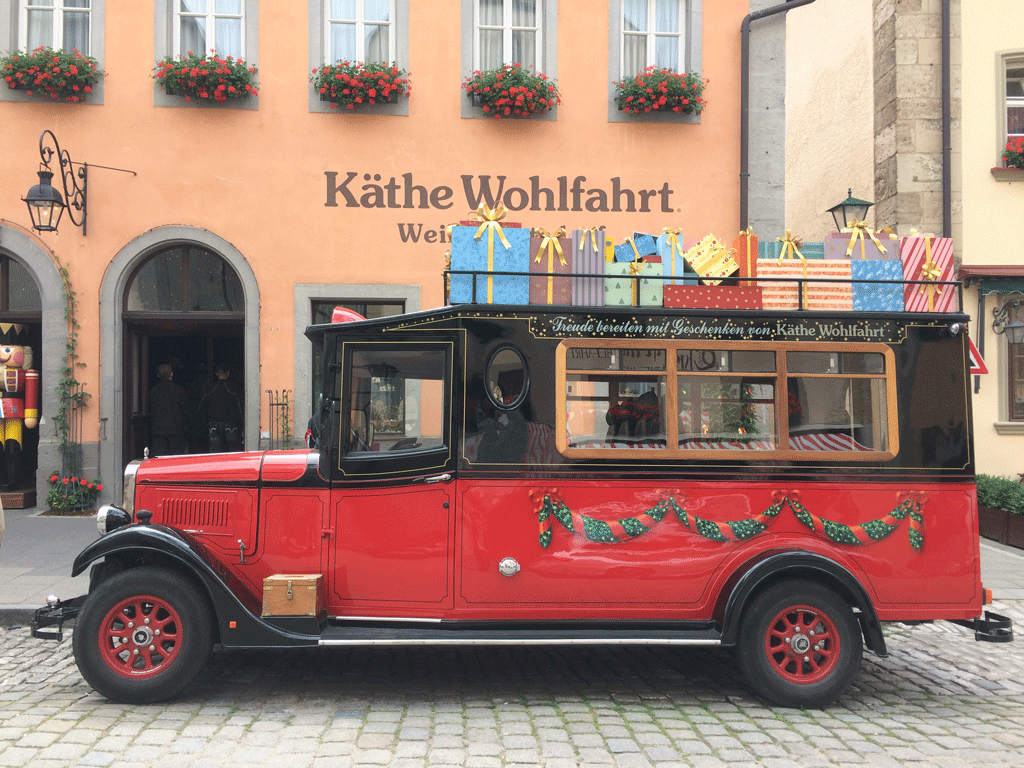
The oldy worldy car outside Käthe Wohlfahrt
We soon find Kathe Wolfhart’s shop – there is a large oldy-worldy vehicle parked outside – then head for the tourist office to get a map. There are two women in the tourist office: one is most unfriendly and the other is super-friendly, probably because she has to make up for her colleague! We buy a book in French on the Romantic Road that we regret not buying earlier, but this is the first time we have seen it.
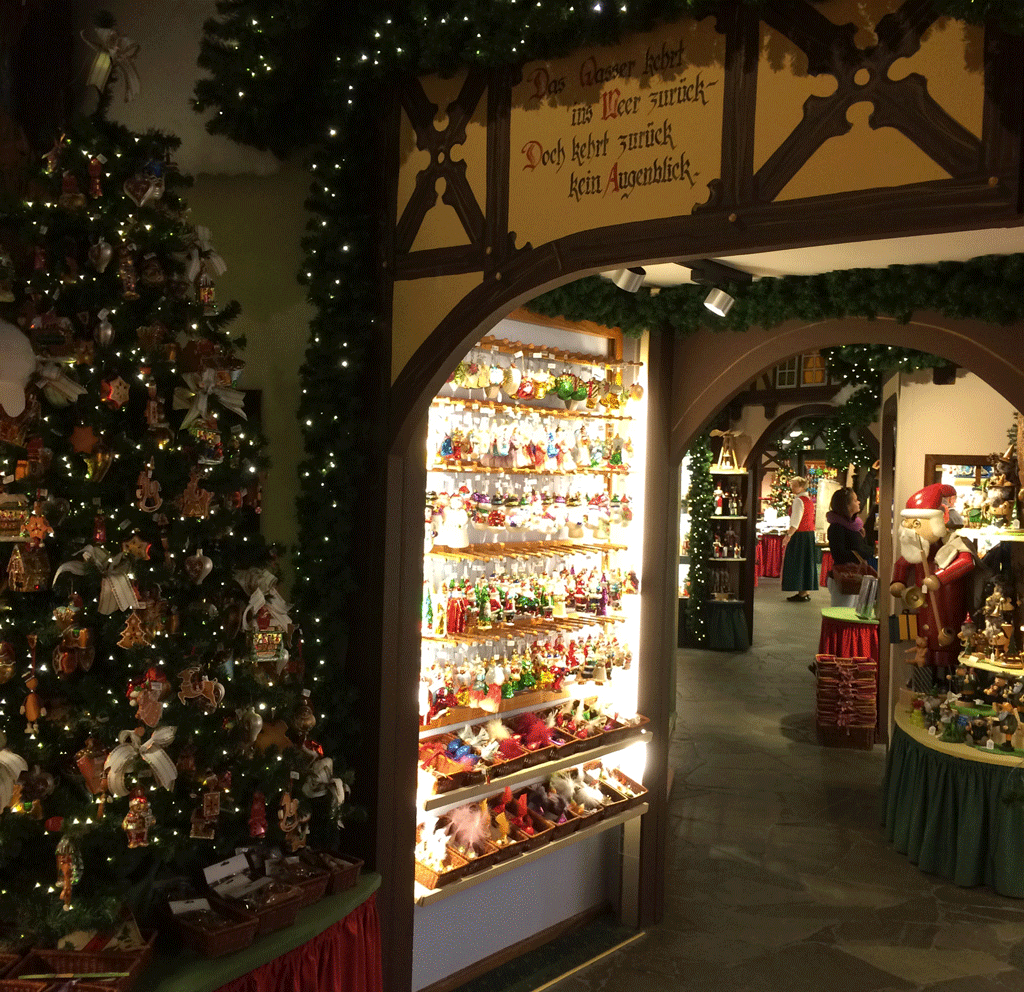
Inside the second store
After the tourist office, we go to Käthe Wohlfahrt’s first shop (opposite the oldy-worldly vehicle) and walk out again without buying anything. I even wonder how I could have been so enthusiastic the first time.
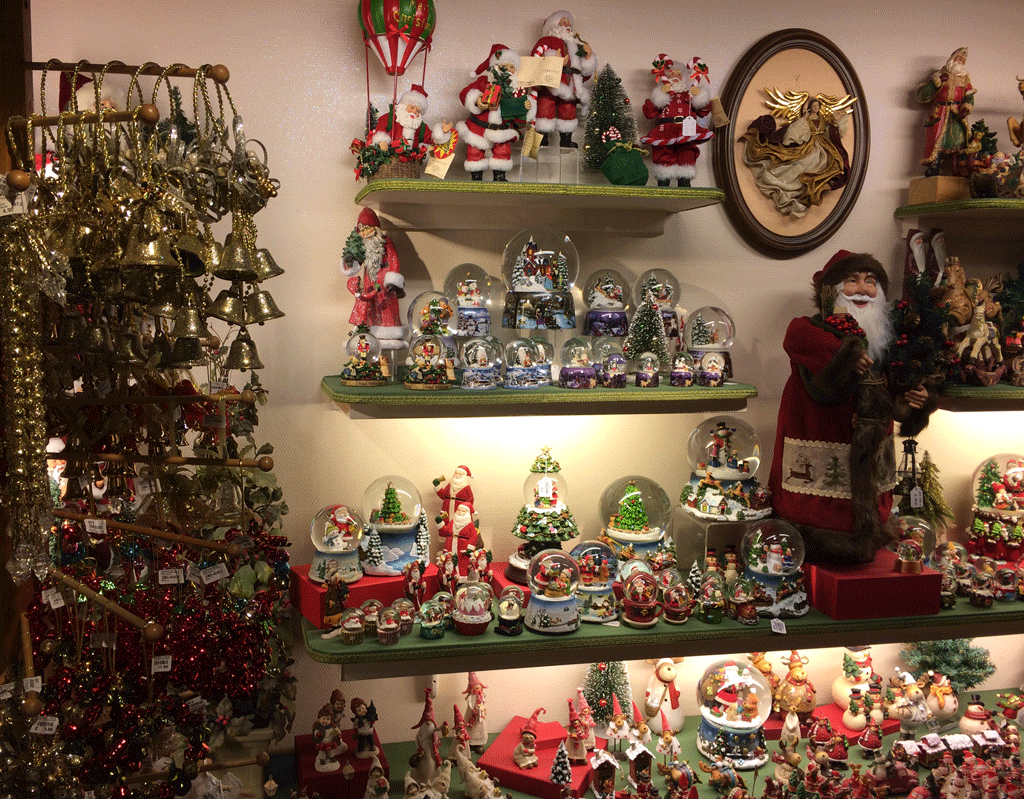
Rows and rows of decorations
Then we go into the second shop and the magic starts working! This is what I remember. There are decorations of every type and colour, every material and texture. Jean Michel picks up a shopping basket. It’s hard to resist, I have to admit. They pack the decorations carefully so they won’t break and we walk out with a large bag!
The surrounding countryside from the ramparts
Jean Michel is very worried however. Apart from Käthe Wohlfahrt’s shop, he has no memory of Rothenburg at all. I am reassured! I don’t remember it either, but that is much more usual. We don’t even remember the view from the ramparts.
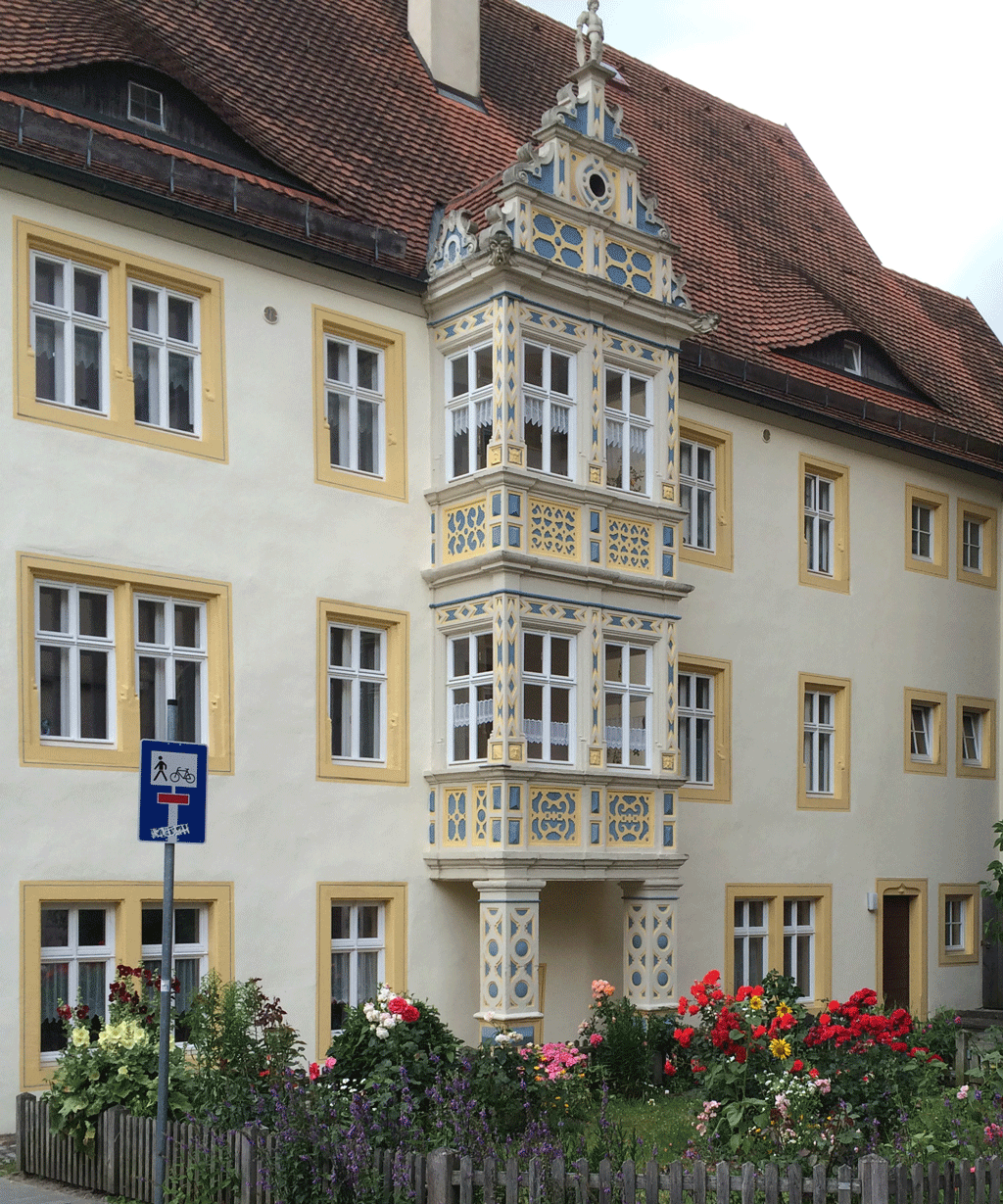
A painted oriel in Rothenburg
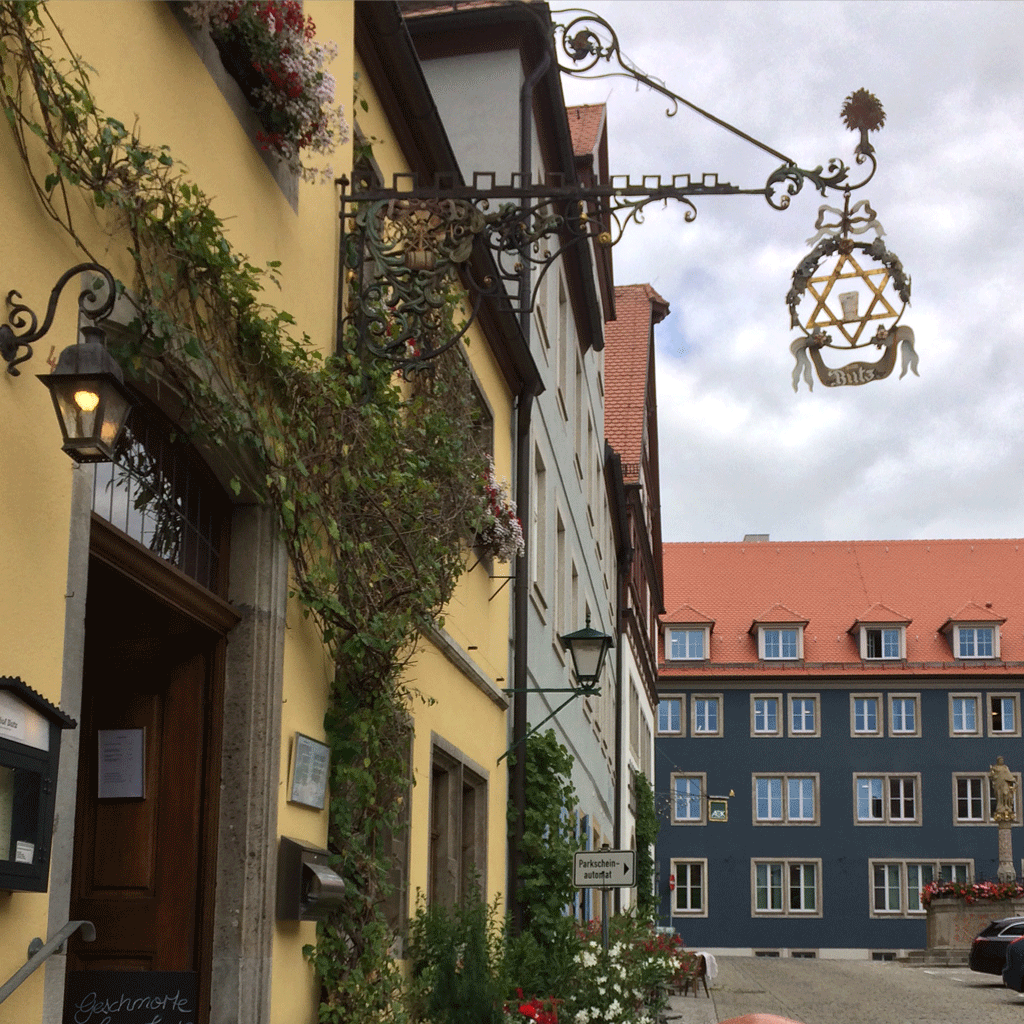
It’s now 1 pm and we are starting to get hungry. “Let’s find the restaurant with the flower garden”, says Jean Michel. We still haven’t found it about a half an hour later but we see a place called Gasthaus Butz in a quiet little square in the Jewish quarter that has fresh pfiffelingen (chanterelle mushrooms). We console ourselves by saying that maybe we would have been disappointed with our previous restaurant even if we’d found it! The waitress speaks good English and gives us an English menu. We order our pfiffelingen with Wiener Schnitzel for me and knuckle of pork for Jean Michel.
Gasthaus Butz where we have lunch
By the time we finish our lunch it’s 2 pm and we only have a ½ hour left on our parking ticket so we take a different route back to the car. We are surprised at how many people are now thronging the streets. We would have like to visit the water mill quarter but can only do so on foot and have had enough sightseeing for one day.
After lunch, the main square is considerably more crowded
We arrive in Tauberbishofsheim (the home of the bishops of the Tauber) at 3 pm and go straight to our hotel, Badischer Hof. I ring the bell and am eventually answered in German. I say who I am and wait. A very grumpy man eventually arrives. He gives us the key to number 35. We are supposed to have a large, airy “superior” room with a terrace and wifi. Only the wifi doesn’t work. We go back to reception and the even grumpier man explains that when a lot of people are using the internet, there is no connection. I have doubts.
The main square in Tauberbishofsheim, on the right of the rathaus
He says the hotel is full and he doesn’t have any other rooms. OK, we’ll have to find another hotel then, I say, knowing that there is nothing left in the area on booking.com. He then suggests a room without a terrace, but good Internet. We check it out. It’s smaller but looks OK. We take it.
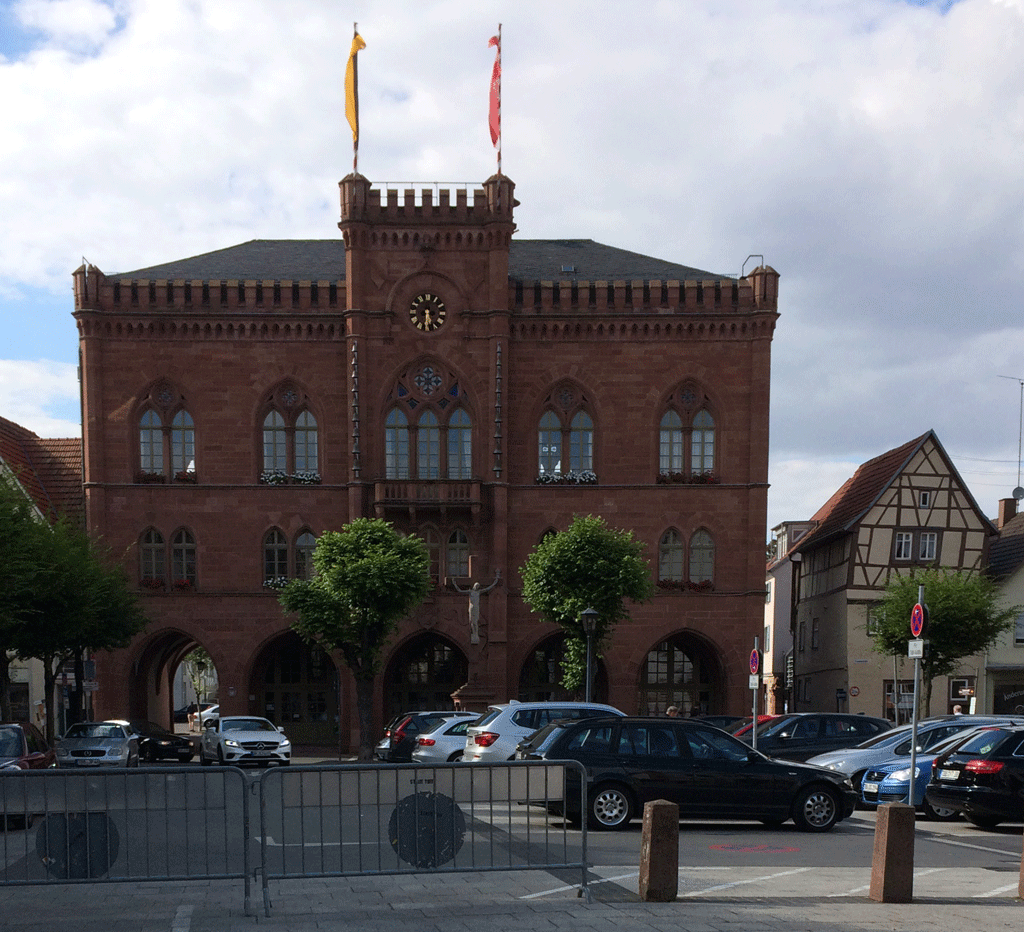
The rathaus in Tauberbishofsheim
After unpacking our things, we go to explore the little town and pick up some information from the tourist office. There is roadwork on the way but once we get into the centre, we find it quite attractive. The tourist office is closed of course but there are some free brochures in the entrance.
We need some fruit, vegetables and cheese for dinner so we look for a supermarket. Nothing. So I ask a waiter. He tells us there are five supermarkets, all outside the town. What a nuisance. We’ll have to take the car. As we are leaving however, I spy a “Natura” sign which turns out to indicate an organic supermarket. That is fine by us!
The Schlosshof in Tauberbishofsheim
Back in our hotel room, we realise that our room gives onto the main street and that, despite the double glazing, it is very noisy. What I don’t realise until we go to bed is that there is street lighting all night and the curtains are very thin. At no time during the night is the room dark. Also, the floor cracks and the person above us seems to walk around the room half the night.
I wake up totally unrested and determined to ask for another room. I have checked booking.com and there is nothing else available in the area within our budget, not surprising in a weekend in July. Breakfast is very disappointing with no eggs in sight. When the grumpy man asks us what we want to drink (tea or coffee), I ask for eggs, but am not sure if he has understood. He eventually brings us two hard-boiled eggs but I see that the Spanish people at the next table have fried eggs. Tomorrow, I’m asking for spiegel ei.
The other side of Schlosshof
When I go to reception, there is a much friendlier lady with a large onion in her hand. I explain my problem and she says she will see what we can do. In the end, as there is nothing else available, we opt to go back to the room with the balcony overlooking the garden because it’s away from the street, and go down into the reception area when we need to use wifi.
Tauberbishofsheim at night
The weather seems to be improving so we set off to Würzburg, on the northern end of the Romantic Road, in the hope that we might be able to do some cycling.
We arrive in Dinkelsbühl just as the sun comes out after very heavy rain following our visit to Augsburg and are absolutely delighted at our choice of a place to stay for 4 nights. Everywhere we look inside this walled city is a delight – except the parking! We find the Romantica Hotel Blauer Hecht (Blue Pike, hardly very romantic) and Jean Michel double parks outside while I get the key. We unload the car and park just outside the town gates, where there are several free car parks, only ten minutes away. We cycle back on our bikes and leave them in the hotel’s bike room.
Arriving in Dinkelsbühl – what a pity cars haven’t been banned from the centre!
Jean Michel is initially not very happy with our room on the second floor, which he says is too dark, but we can’t change it without paying the first night. This is very unlike him – I am usually the one who complains about hotel rooms. However, it’s spacious and has a table and chairs, armchair and sofa. It also has an excellent breakfast, the beds are comfortable and the floors don’t crack too much.
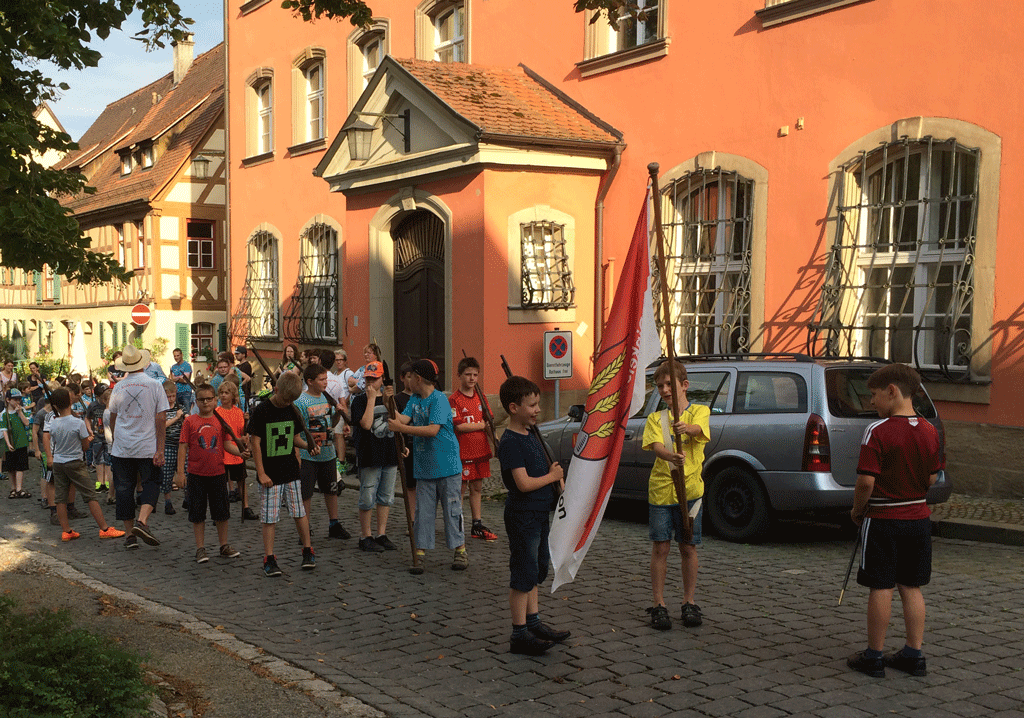
Children practising for the pageant
We are drawn into the street by activity and music outside our window. We learn that it is a practice run for the 10-day Children’s Festival starting on Friday, the day we are leaving. During the 30 Years War (1618 – 1648), many areas of Germany were destroyed, while the medieval city of Dinkelsbühl was spared because the children of Dinkelsbühl petitioned the Swedish colonel to grant them freedom. For the past 100 years or so Dinkelsbühl has celebrated the event with a festival during which the entire story is re-enacted.
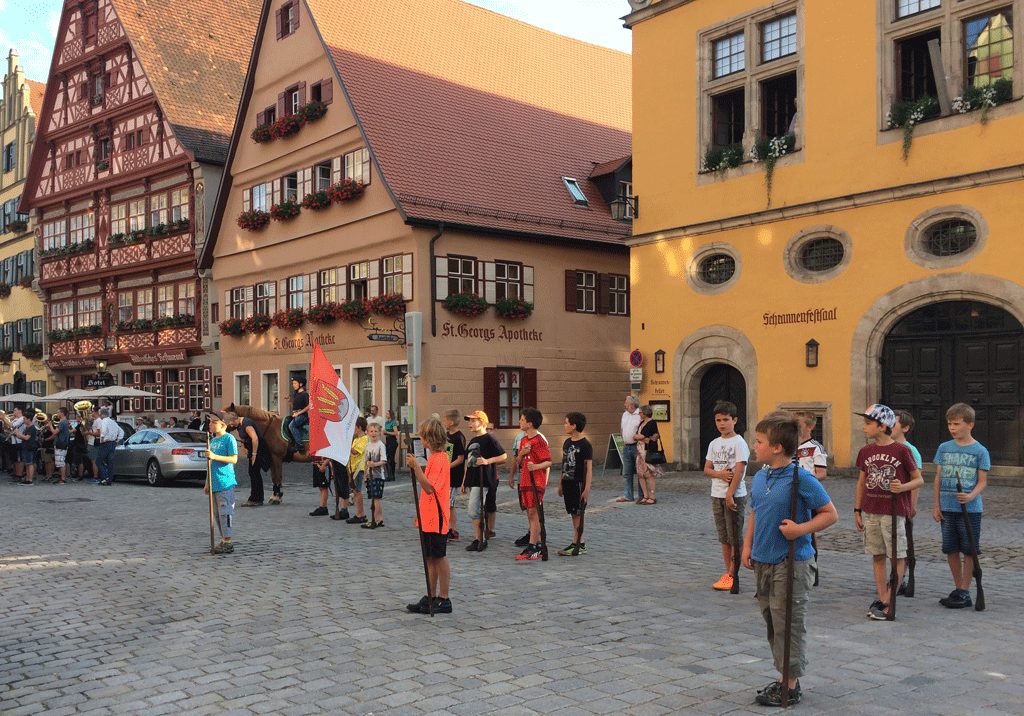
On the parade ground
While we are having a drink in the main square, we see another rehearsal with a child of about 8 or 9 on a horse obviously reciting a poem and calling out instructions to the other children around him. It must be quite spectacular when they are in costume but we are not sorry to be leaving before the festivities. I can imagine the crowds!
Lunch with the locals
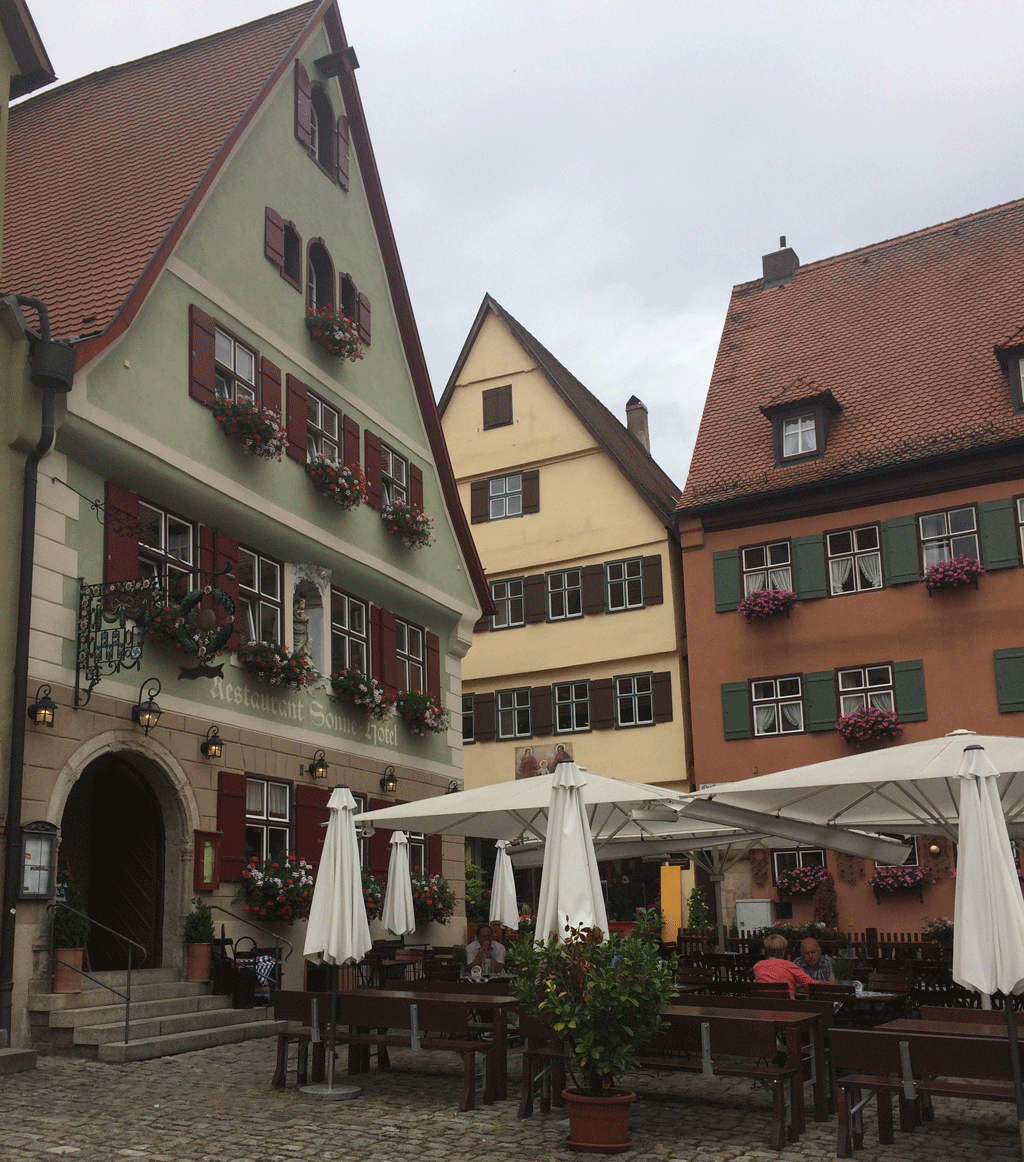
Next day is a true R&R day with no cycling at all. Jean Michel catches up with our travel journal and me with my blog. We have lunch with the locals – or so Jean Michel is convinced – at Zur Sonne in the Weinmarkt, tasting some local Franconian dishes – sausages and ravioli. Somehow, the rest of the day slips away. In the evening, we hear more practicing which we watch from our window.
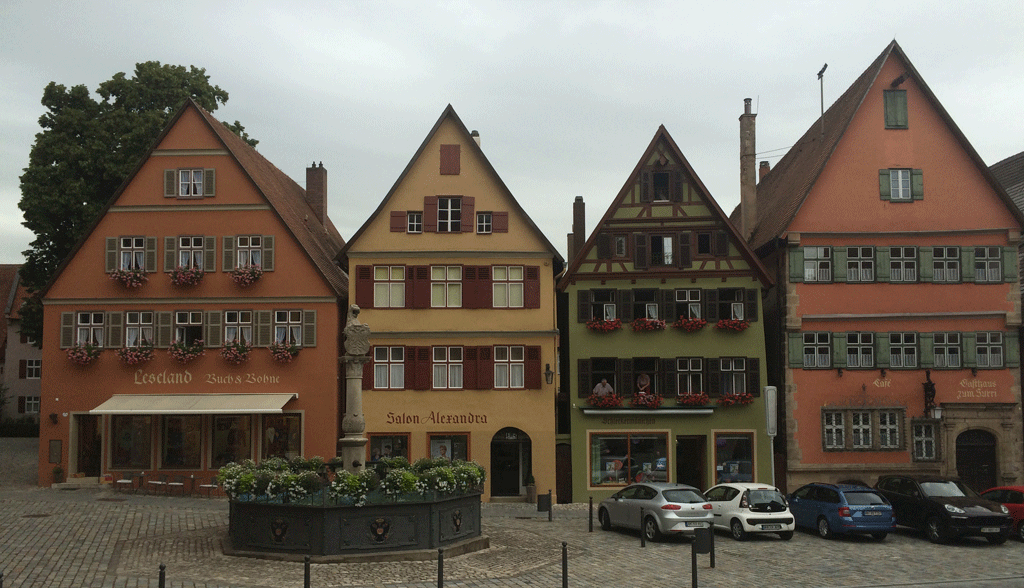
A typical row of houses in Dinkelsbühl
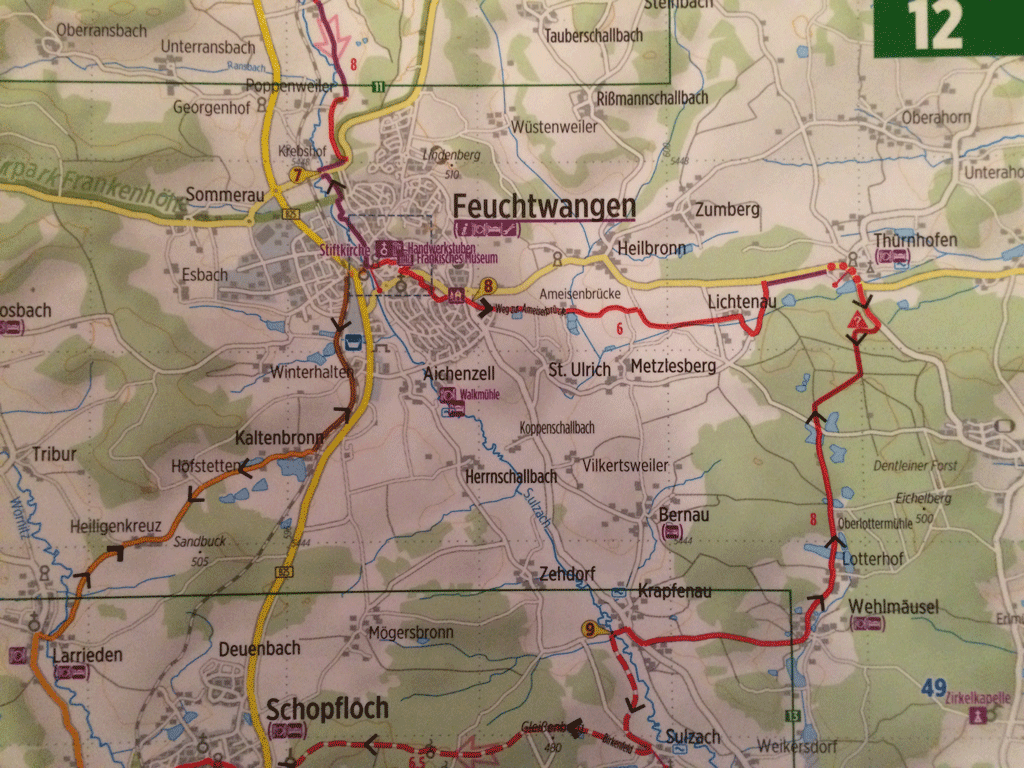
The following morning we check the weather report which does not look very promising. After temperatures of 30°C in Peiting, we won’t even top 20°C for the next few days. Rain is also predicted. We decide to cycle while we can and set out for the little town of Feuchtwangen after first riding around the ramparts of Dinkelsbühl.
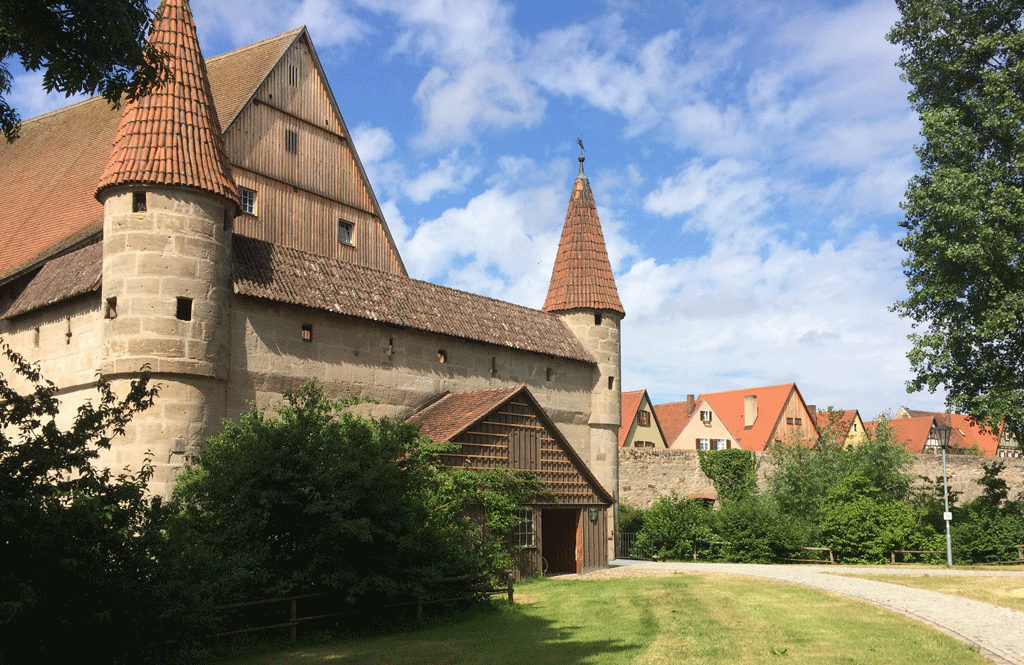
There are a total of 16 towers and we photograph them all. It really is the most delightful little town. I can fully understand why they keep up the children’s pageant every year. It would be very hard not to be attached to the history of this little gem of a town.
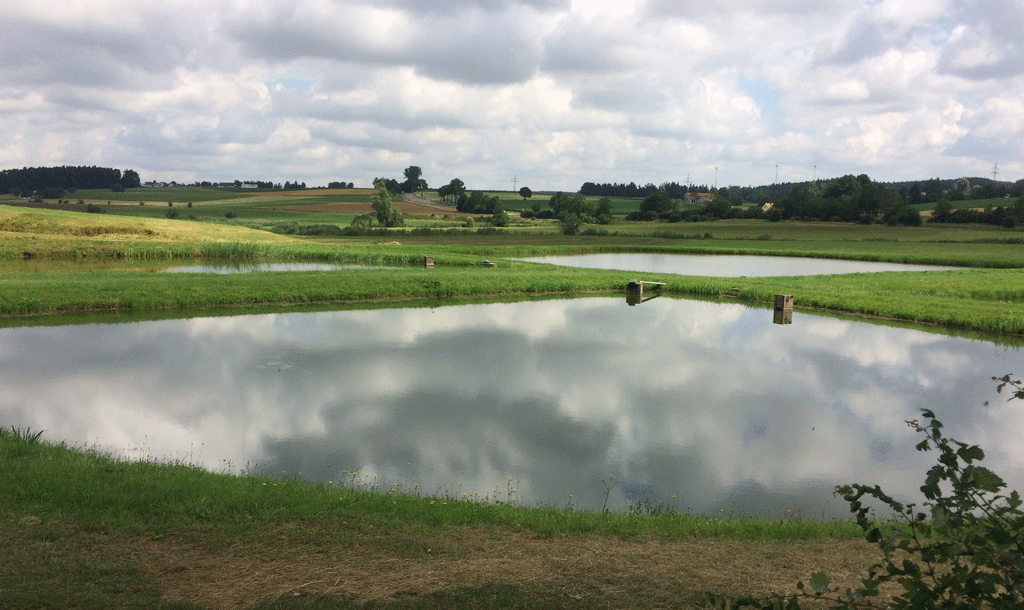
A former fish farm on the road out of Dinkels
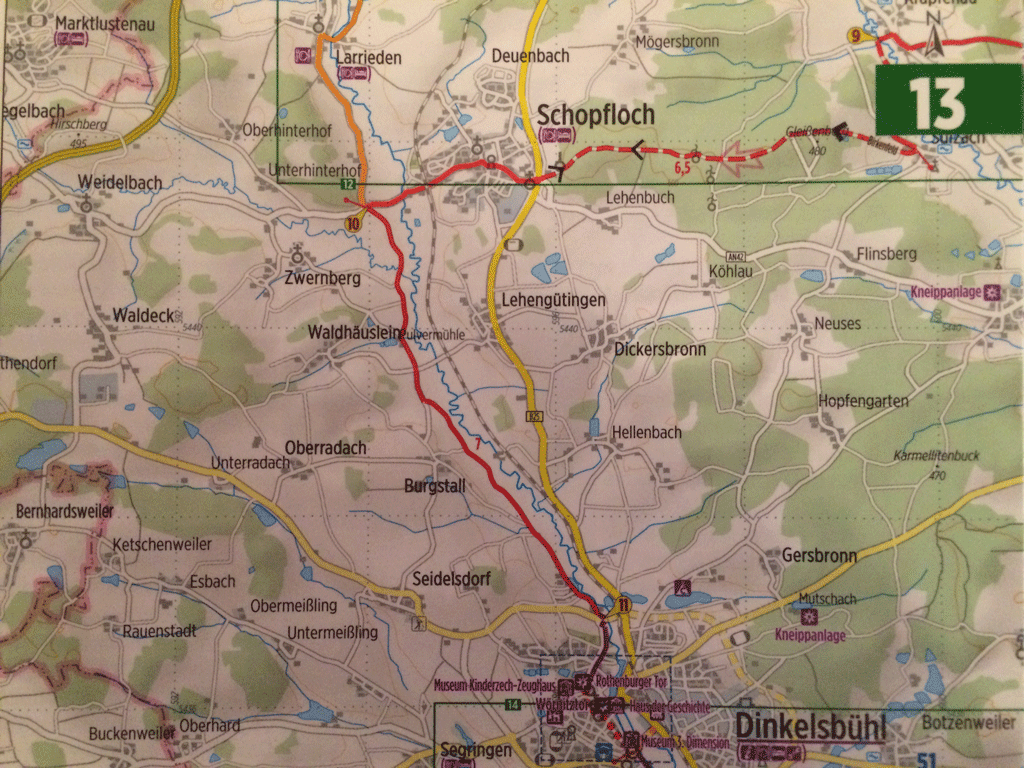
From Dinkelsbühl to Schopfloch, after going past what we assume were once fish farms, we constantly follow a deviation that takes us up hill and down dale with alarming frequency.
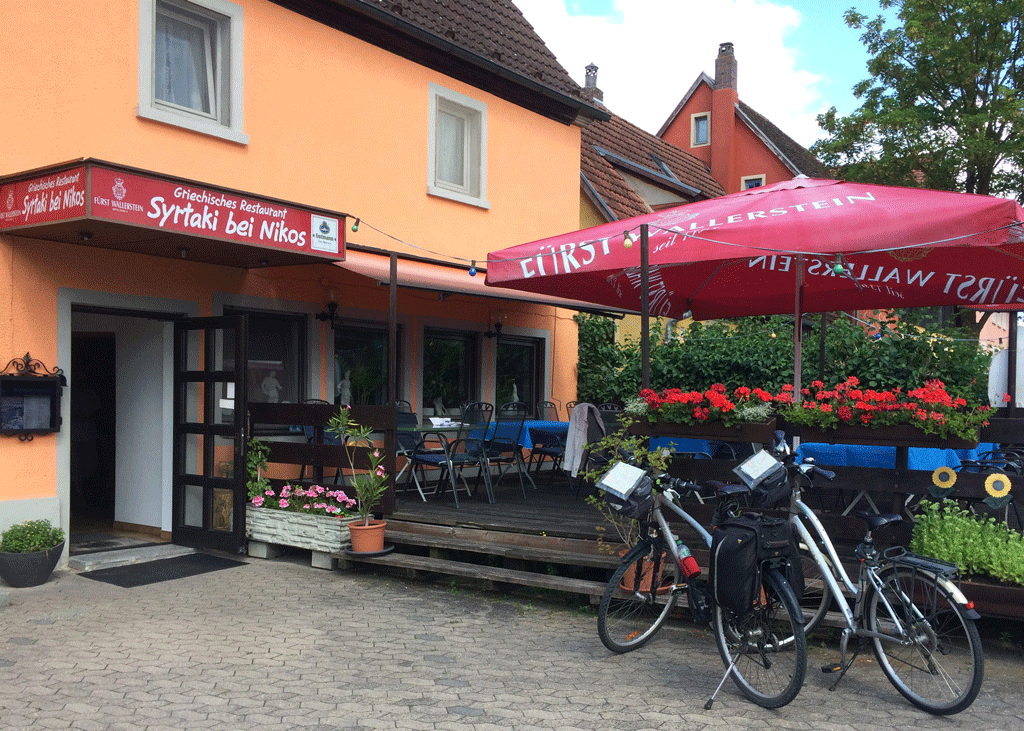
The Greek resstaurant in Lehengütingen where we have our cappuccino
We climb another hill up to Lehengütingen and I am getting desperate for a cappuccino. We only see a Greek restaurant. In Germany, these are second only to Italian restaurants in number. It doesn’t say “café” so I ask inside if a cappuccino is possible. A man talking on a cell phone nods, takes my order, makes the cappuccinos which are really excellent, brings them out with one hand and then gets the sugar, without stopping his conversation!
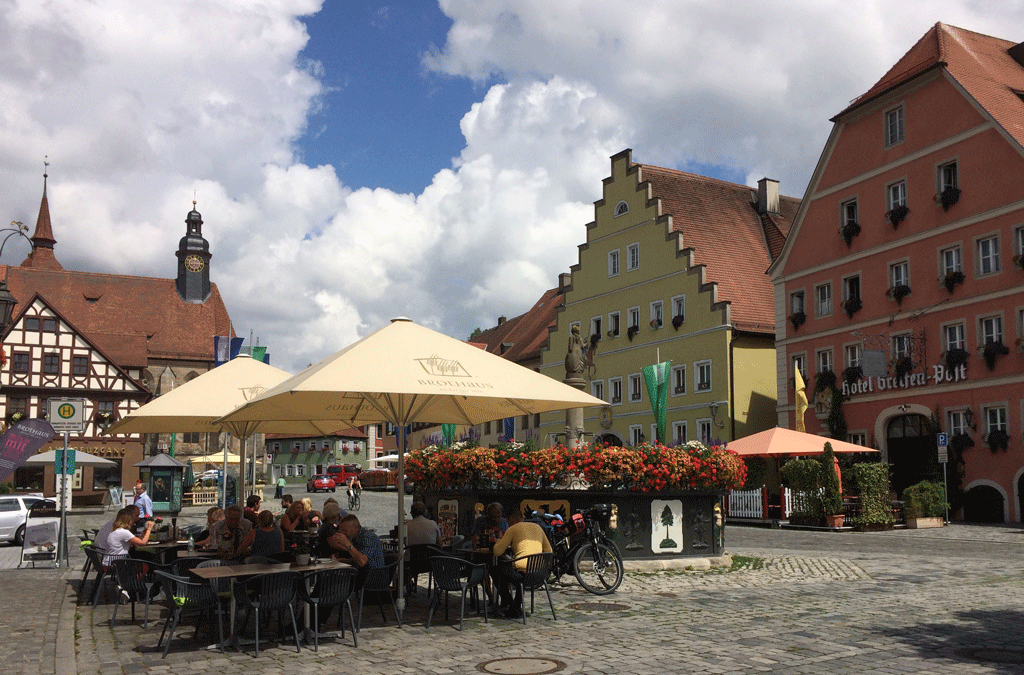
The main square in Feuchtwangen
Feuchtwangen proves to be a little town with a pleasant square and a bike shop where I at last manage to buy a decent bike stand.
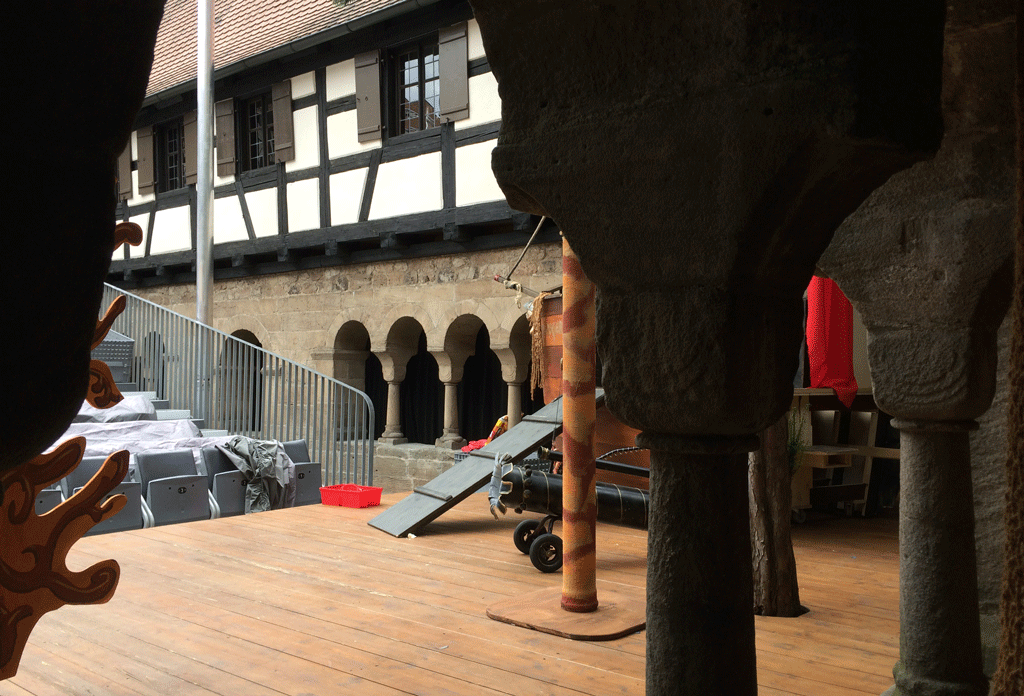
The cloister in Feuchtwangen that is now a childrens’ theatre
We visit the other sights, which mainly consist of a very sober evangelical church and a cloister that has been converted into a children’s theatre from what we can see.
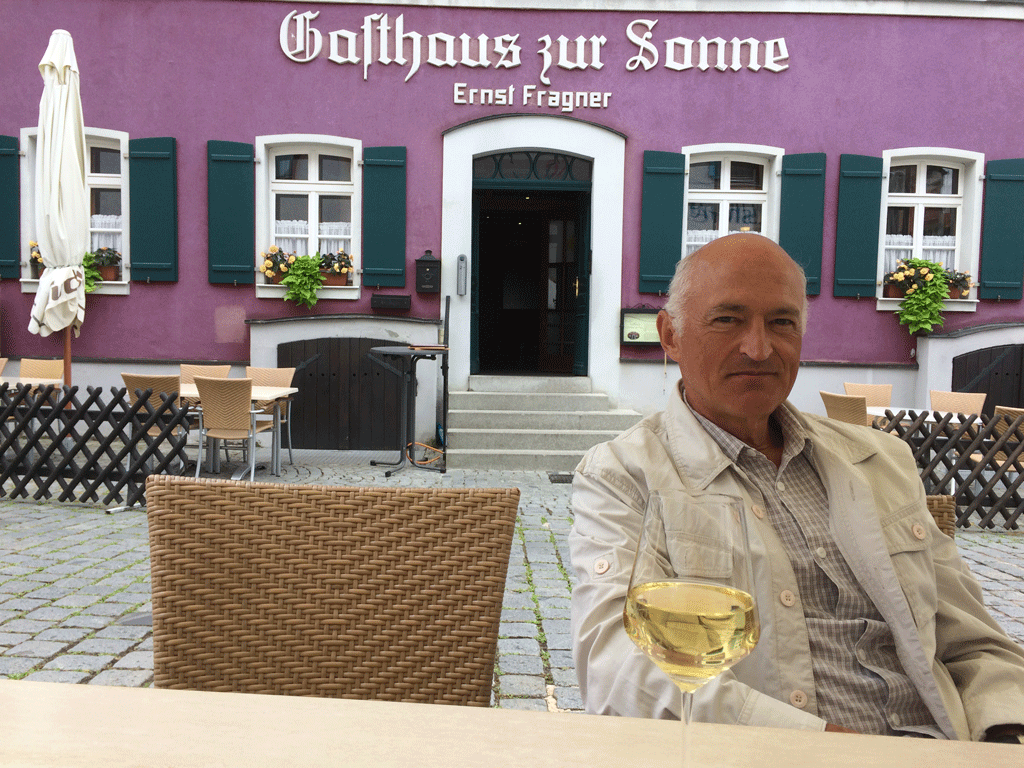
Having lunch at Gasthaus zur Sonne hoping it won’t rain
Our choice of lunch spot goes to Gasthaus sur Sonne (which roughly means sunny guesthouse) as the sky is getting increasingly overcast. We order schweineschnitzel as a pork variant of wiener schnitzel and are surprised by the quantity. I should have ordered the kleine version.
Riding home in the rain
The ride home takes us through rain, wind and sun. I put on my rain cape once but Jean Michel resists. By the time we get back, after cycling 32 kilometers and for 2 ½ hours, we are dry again thanks to our super-fast-drying sports clothes.
The clouds get darker
It is a depressing 10°C when we leave the hotel next day which excludes cycling. We are going to Nordlingen, which is 30 kilometers to the south, by car. We’re even wearing jeans, trainers and sweat shirts for the first time since we left Blois two weeks ago.
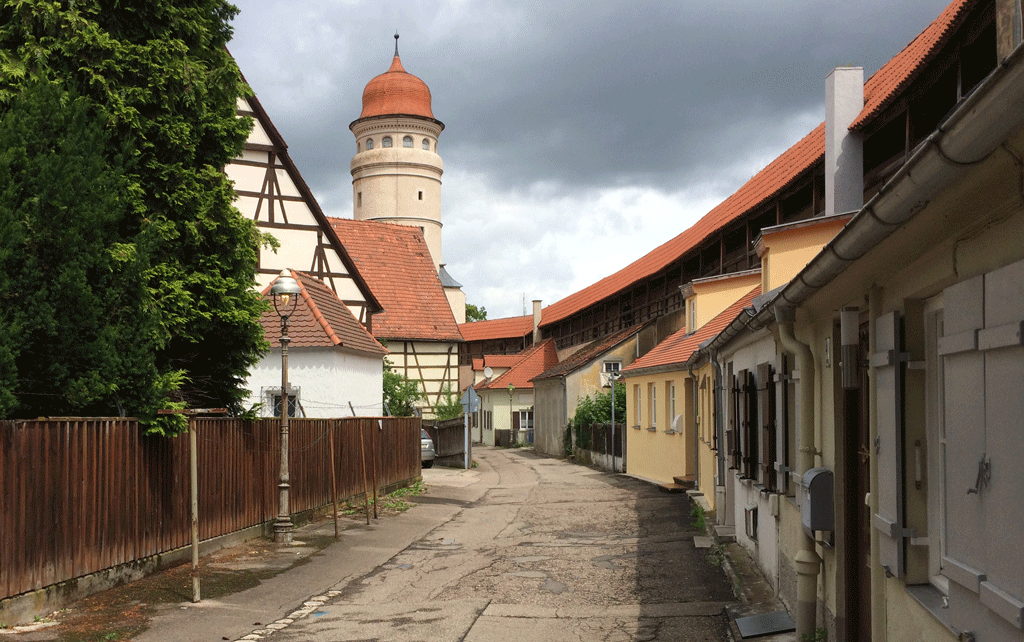
Gardens next to the ramparts in Nordlingen
When we get to Nordlingen, we know why we prefer to cycle into tourist towns. Traffic and parking are always a problem especially when there are ramparts. We soon leave the centre and find free parking outside the walls. Nordlingen is located in the middle of a meteorite crater and is completely surrounded by ramparts that you can walk right around.
The corn storehouse built at the beginning of th 16th century, now used to contain everything needed for the childrens’ pagent
We walk into the centre to the tourist office as usual, but I am cold so we warm up with some coffee in an Italian restaurant first. After that, we follow the very well signposted visit of the city which includes the Rathaus, the tanners’ district, several towers and various granaries. I find it much more interesting than Augsburg.
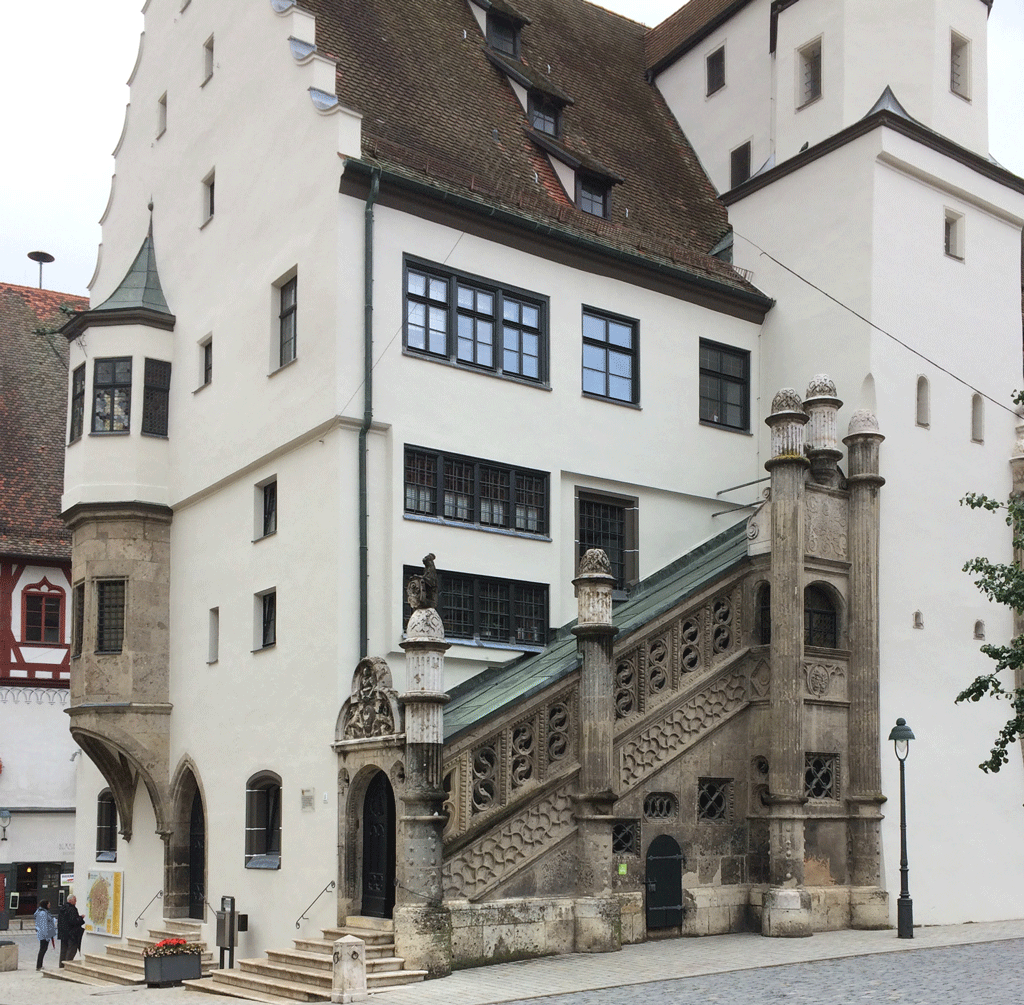
The town hall in Nordlingen with its Renaissance staircase
Houses built against the ramparts in Nordlingen
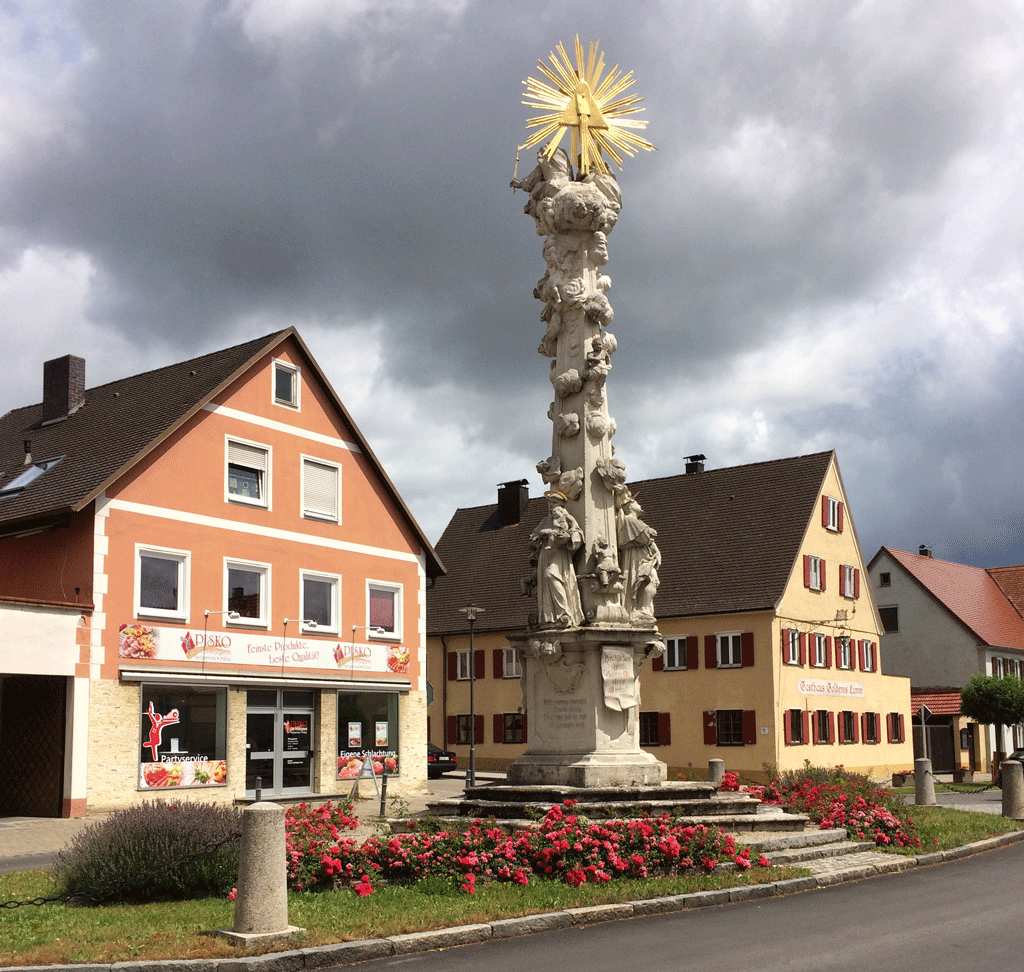
On the way home, we stop off at Wallerstein with its Plague Monument just as the sun comes out. As there is nothing else to see, we leave almost immediately.
The plague monument in Wallerstein
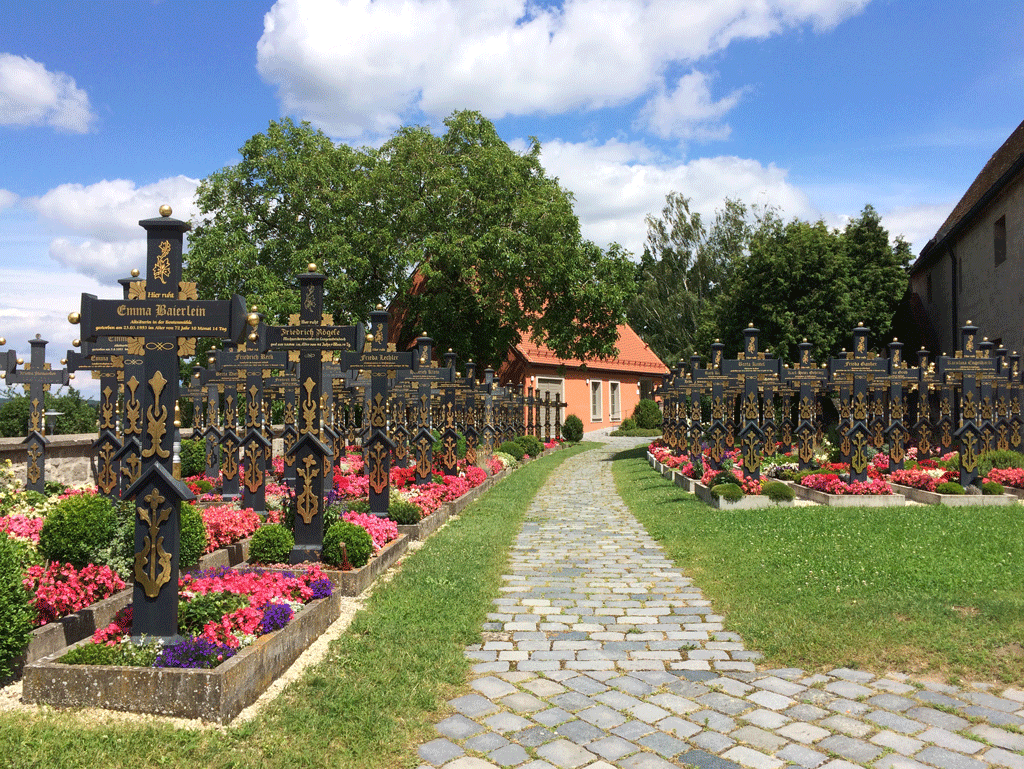
One of my most faithful blog readers, Barbara, has mentioned the cemetery in Segringen just outside Dinkelsbühl. We follow a sign that says Historischer Friedhof so I quickly consult my iPhone dictionary. Yes, Friedhof means cemetery. What we see in the Segringen Evangelical Lutheran cemetery is strange to us. All the tombs are exactly the same, with black and gold crosses. The person’s name, date of birth and death, profession and residence are inscribed on one side and what appears to be a religious quotation on the other. None of the tombs seem to be earlier than 1996.
The historical cemetery in Segringen
I later learn, thanks to Google translate because no explanations are available in either French or English, that the cemetery probably dates back to the early 1900s or perhaps mid-19th century. There are no family tombs and people are buried in sequential order; the current resting period is 20 years, which explains why the graves are all so recent.
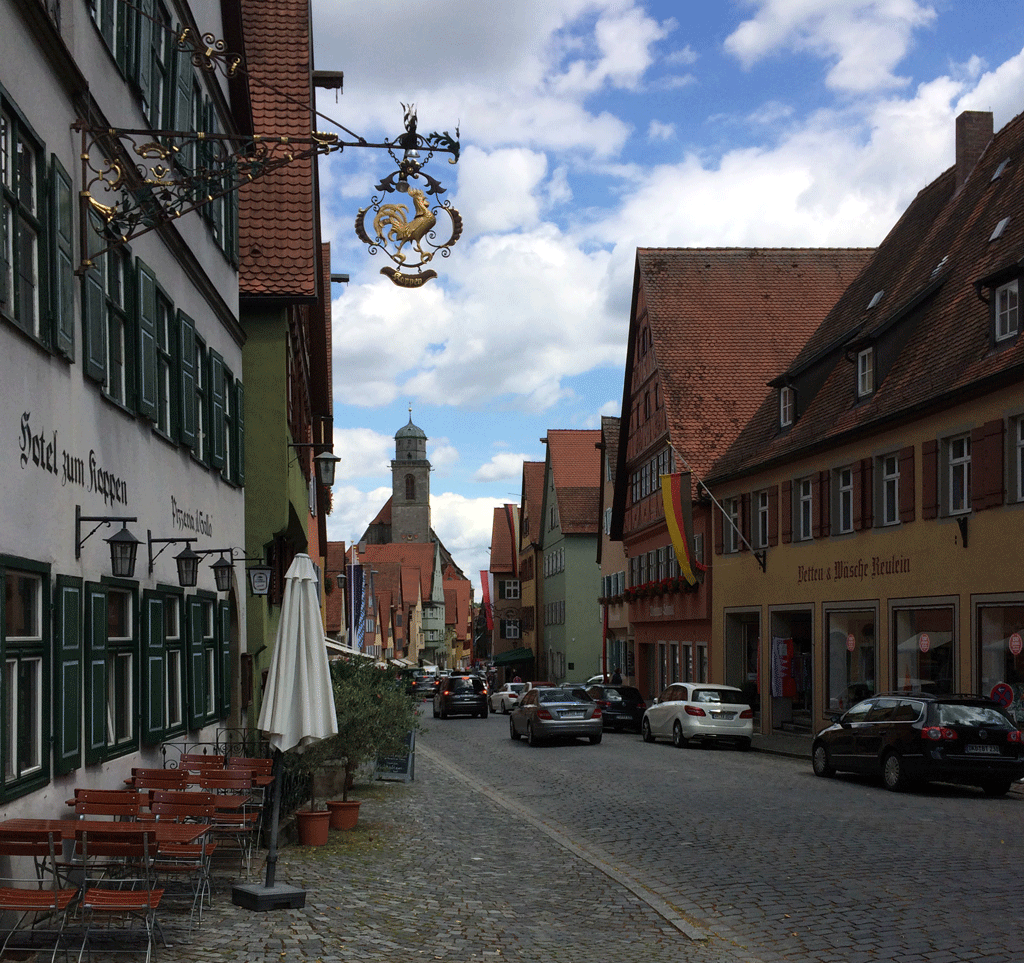
Hotel zur Koppen in Dinkelsbühl
When we get back to Dinkelsbühl, the sun is shining and it’s much warmer – 16°C – so we complete the official tour of the little town suggested by the tourist office (which is different in the French and English brochures) and discover there are quite a lot of things we haven’t seen. We have spent a very pleasant three days here and grown very fond of what art historians consider to be one of Germany’s best-preserved mediaeval towns.
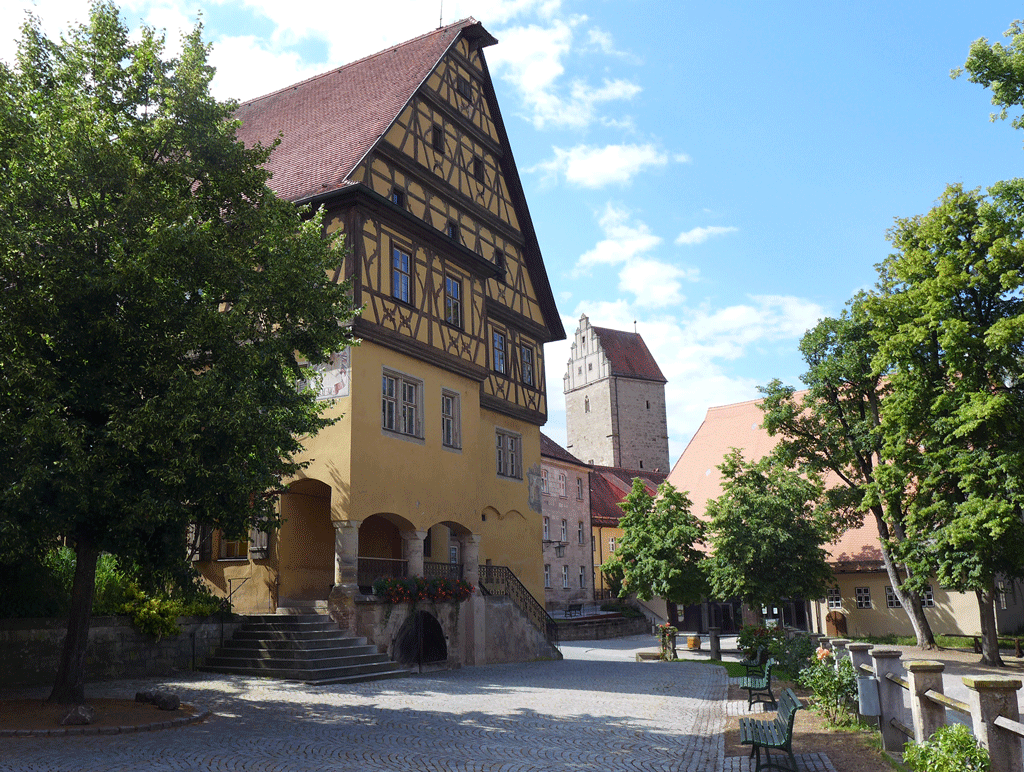
The almshouse founded in 1280 – you can see how well the area lends itself to historical re-enactments.
Tomorrow we’re going further north along the Romantic Road to stay in Tauberbischofsheim and will be stopping off to visit Rothenburg on the way. The weather is not brilliant – cloudy especially in the morning with a maximum of 19°C so I doubt we’ll be doing any cycling. After that, it’s supposed to improve. Let’s hope so!
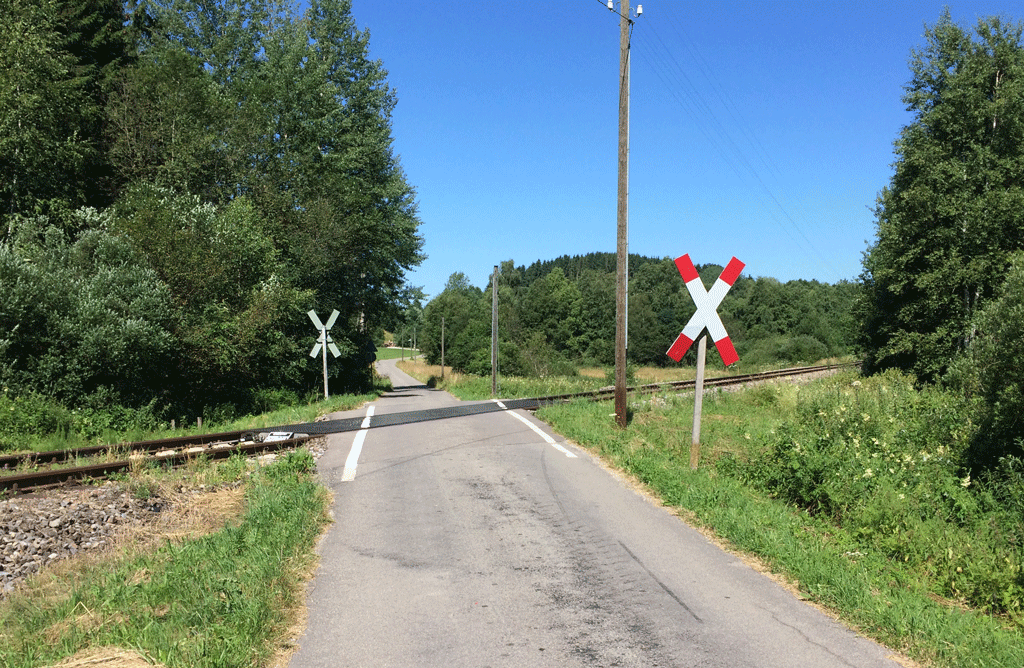
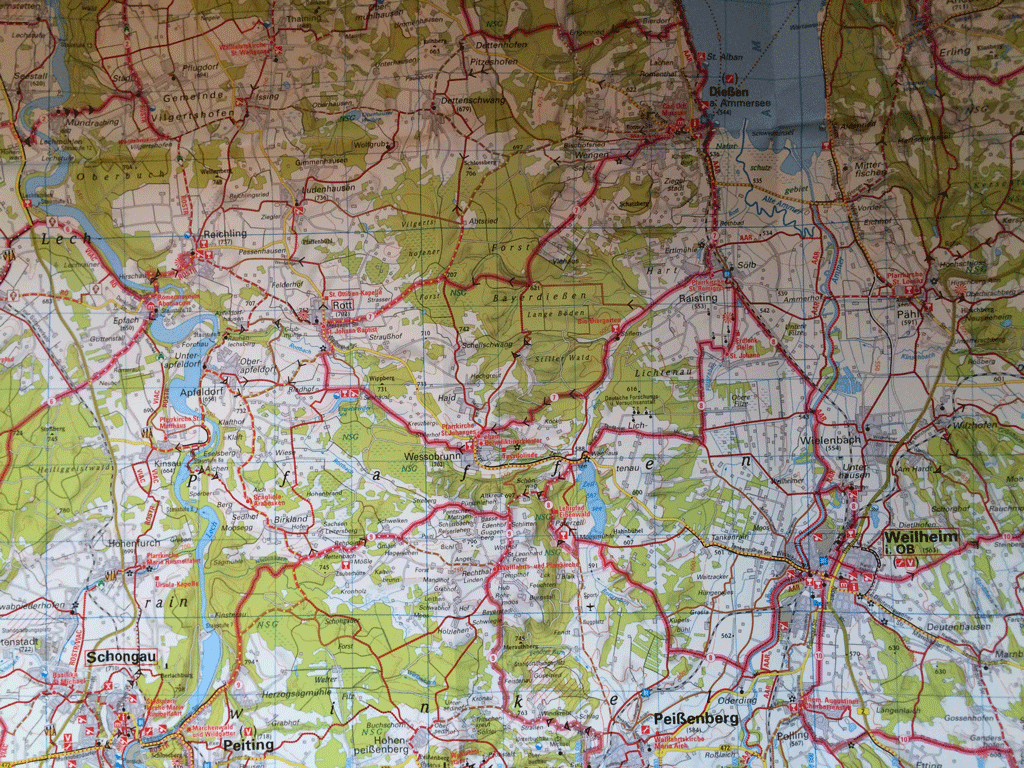
We set out early at 10.15 am on Sunday and see several locals in their Bavarian traditional clothing. We go to the front of the church hoping to see more of them but we’re too late! Today we are cycling to Diessen and coming back by train. It’s not exactly on the Romantic Road but it’s in the general area. Along the way, we notice several level crossings with no barriers whatsoever! It reminds me of a very scary experience a few years ago.
Andrea at the tourist office in Peiting suggested today’s route and said it was downhill all the way which is not quite true for the first 10 kilometers. We seem to do nothing but go up and down. We stop in Peissenburg at an Italian Eis Café for a cappuccino after riding for about 1 ½ hours.
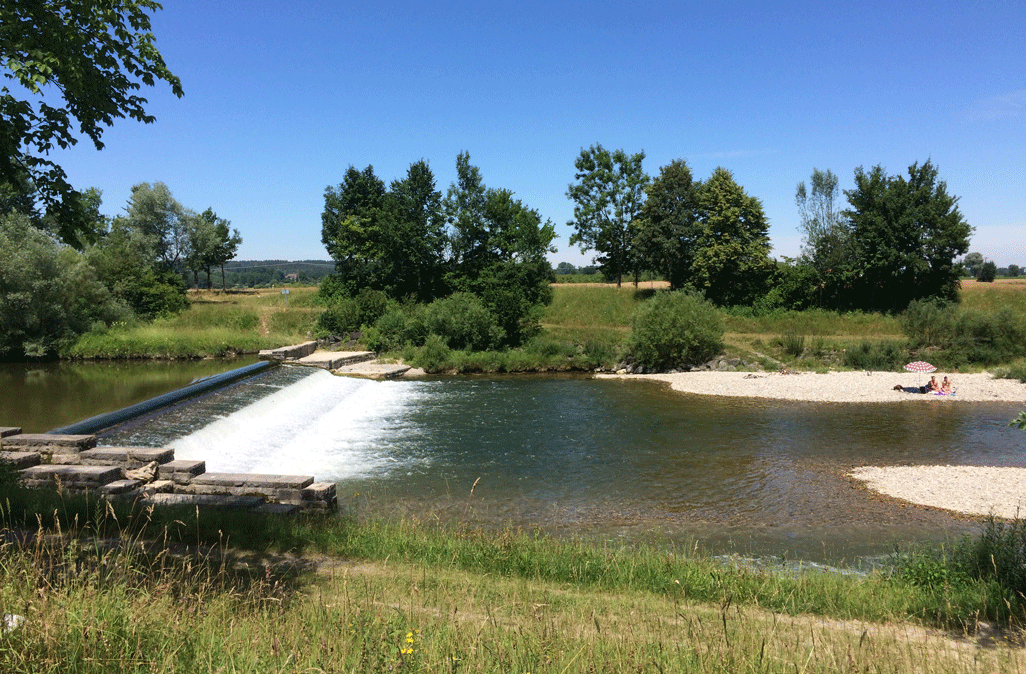
Sunbathers on the Ammersee
After that, the descent begins and for the rest of the day, it really is mostly downhill. We start following the Ammer River and often see small groups of sunbathers in the most unlikely spots.
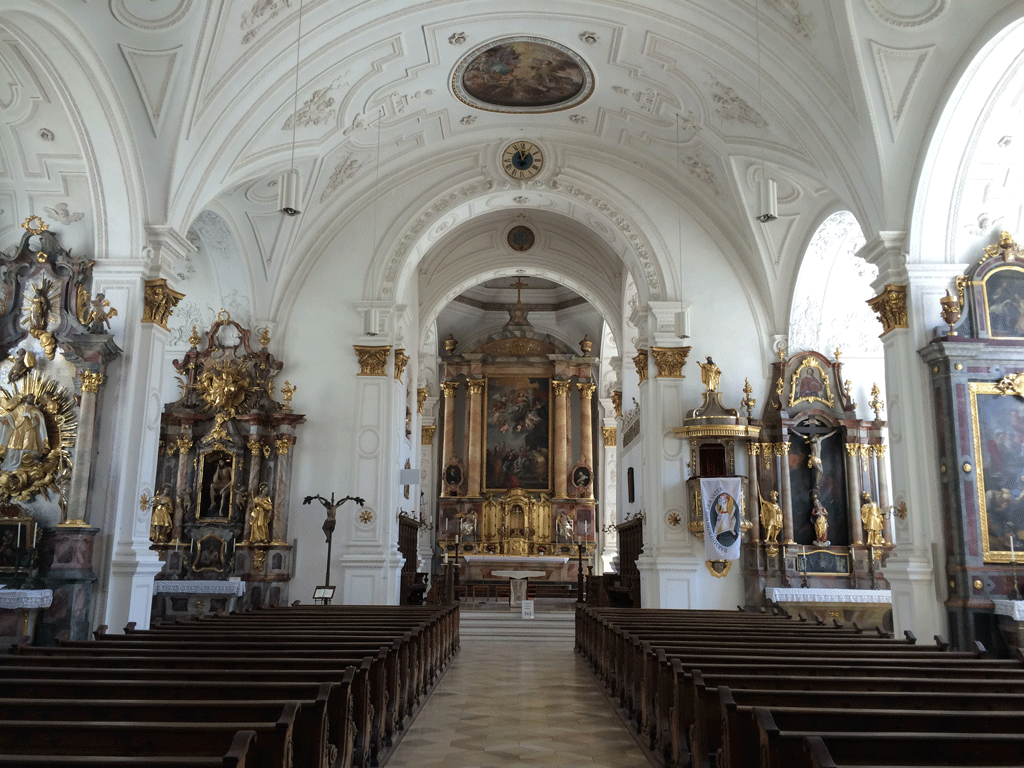
The baroque church in Wilheim
At Weilhelm, we visit another baroque church with a beautiful white stucco ceiling, much more sober than the recent churches we’ve been to.
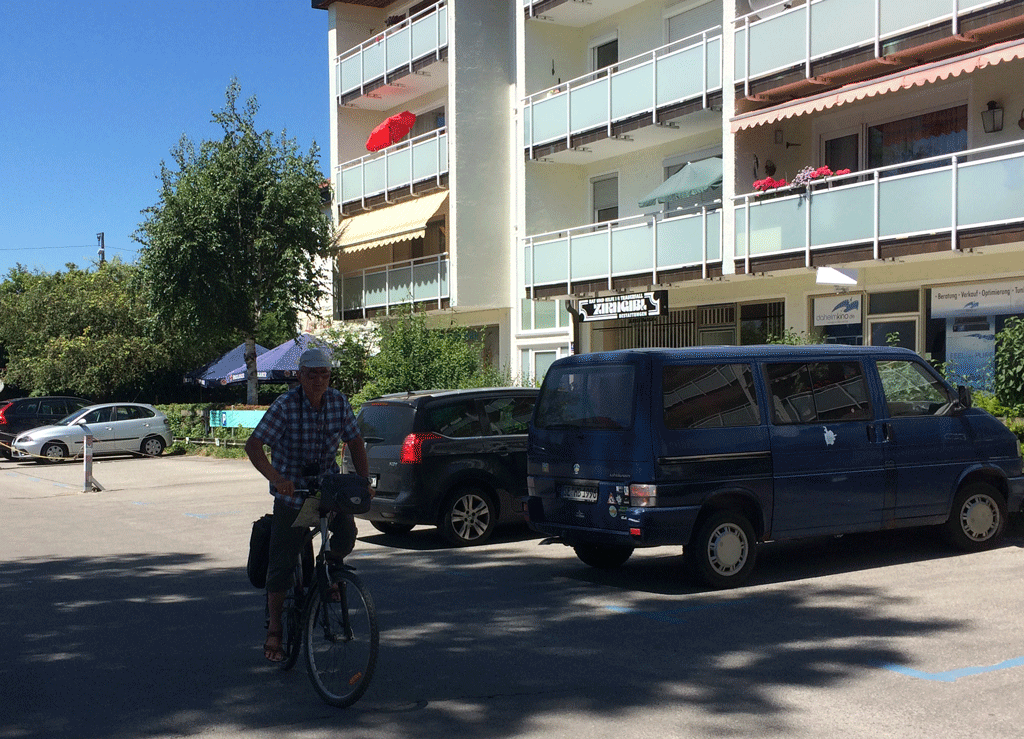
The blue umbrellas on the left belong to the pizzeria
We have decided not to be too fussy about where to have lunch today and end up eating in a pizzeria at the bottom of a modern apartment building. At least I can read what is on the menu! These German words all stuck together are a bit of a problem. It is excessively hot , about 30°C, and the cold Lambrusco is very welcome. We order entrecôte which turns out to be fillet steak.
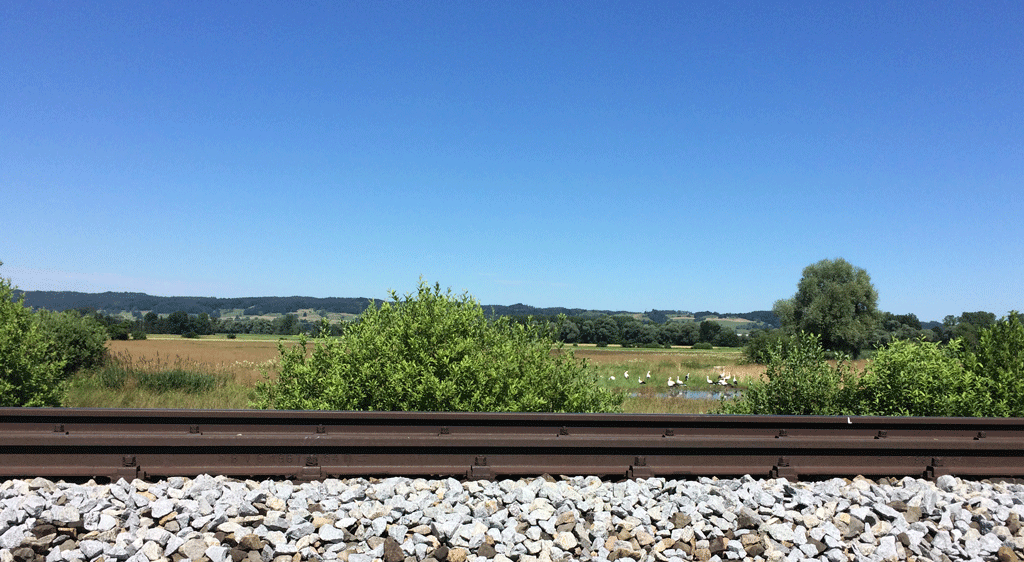
Storks along the train tracks
We are back on our bikes by 2.30 pm. Unfortunately we keep getting lost, not because of the lack of signposting, or the wine for that matter, but because there are so many different choices! We follow the train tracks for a while which is reassuring.
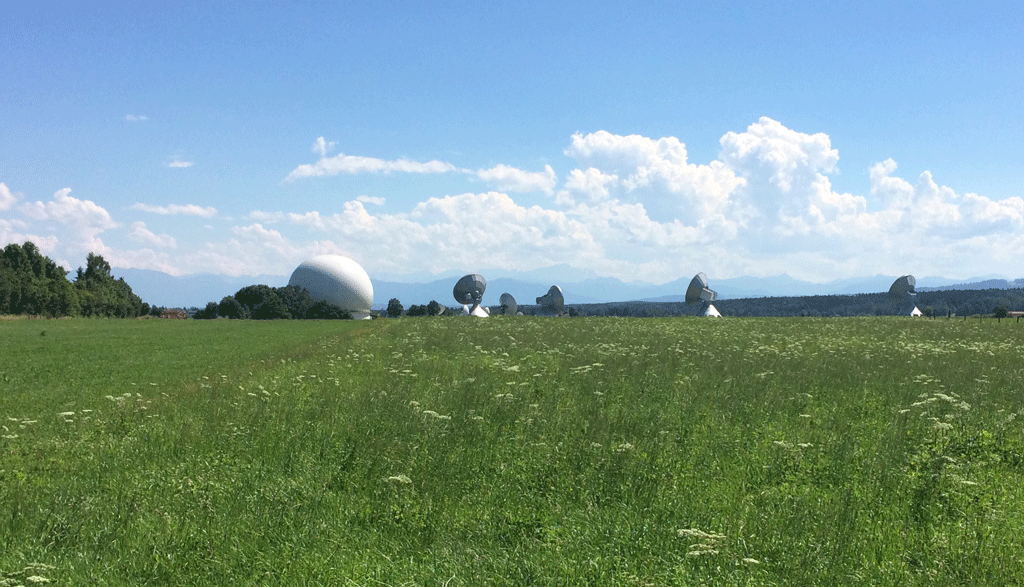
The telecommunications station in Raisting
We pass Raisting which has one of the largest telecommunication stations in the area.
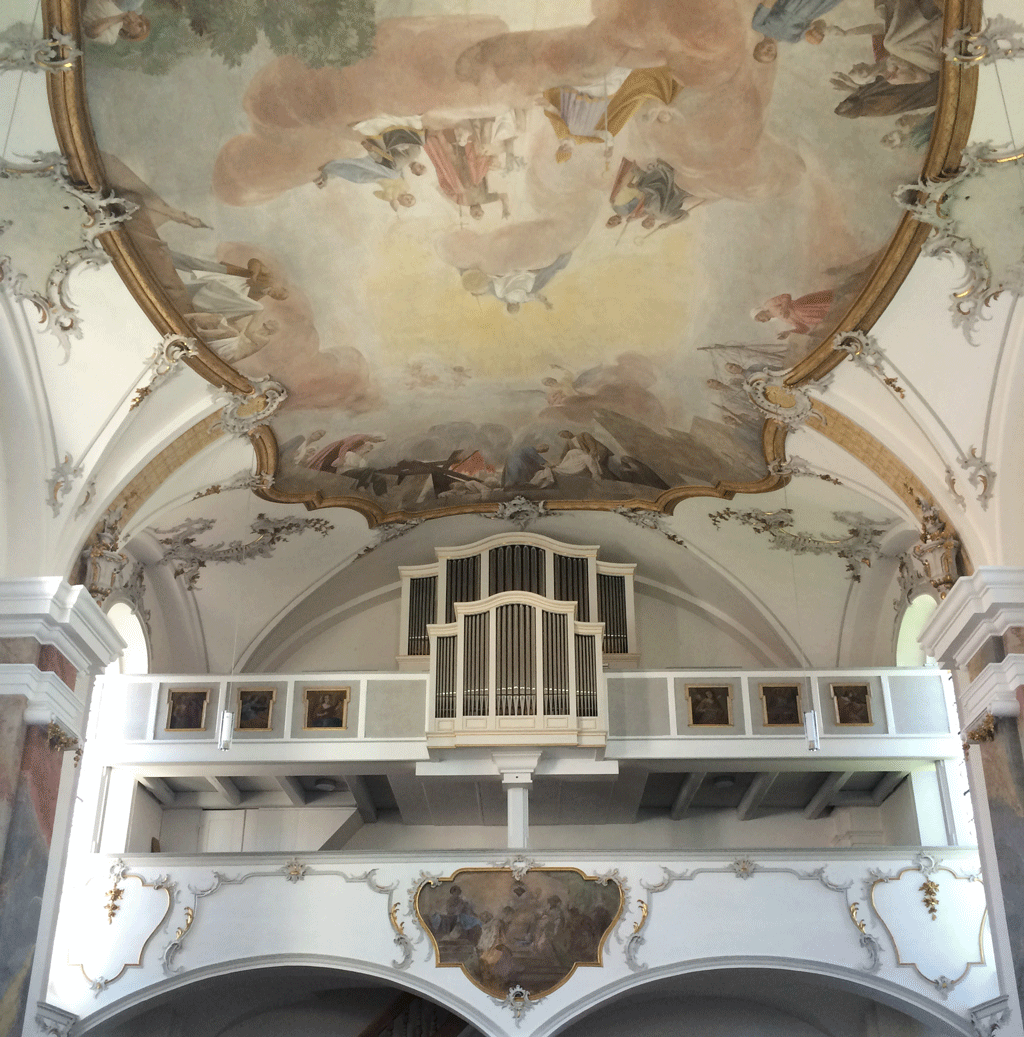
The painted ceiling and organ in the pilgrimage church of Saint Johann in Wilheim
The village of Raisting also has a rococo church with sumptuous ceiling paintings.
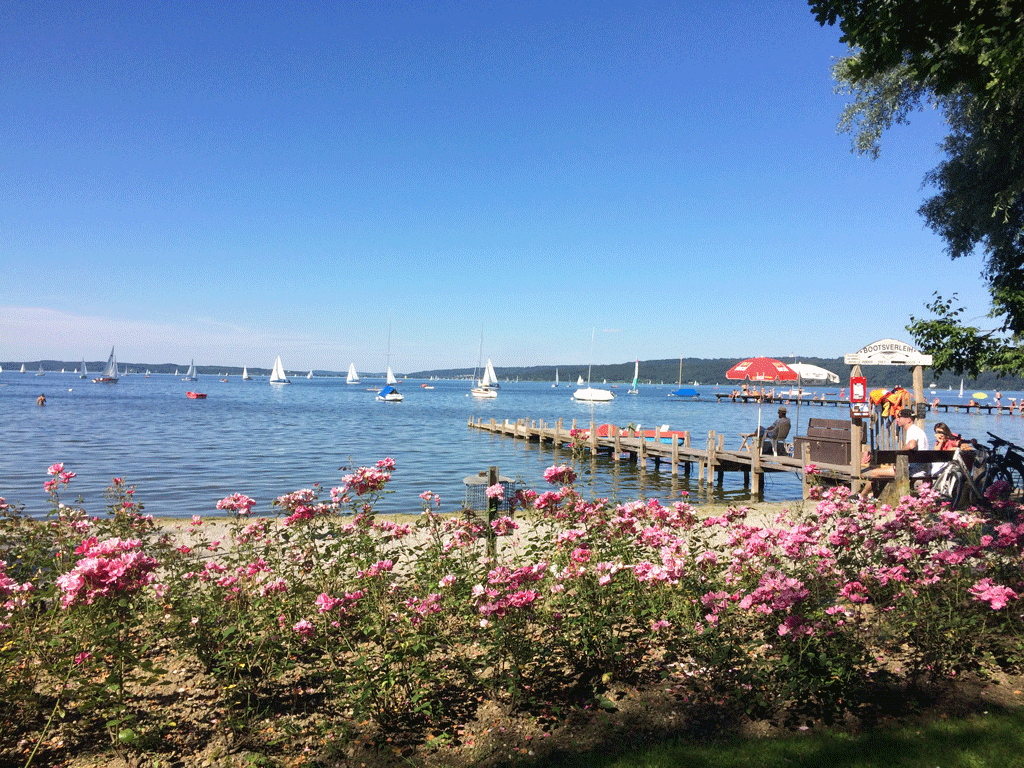
On the edge of the Ammersee in Diessen
At Diessen am Ammersee, we find ourselves an Eis Café on the edge of the lake and have a welcome ice-cream. Note to self: I need to find out how to say “plain ice-cream with nothing on it”. Unless it’s in a cone, they seem to add nuts and syrup and all sorts of other things I don’t like.
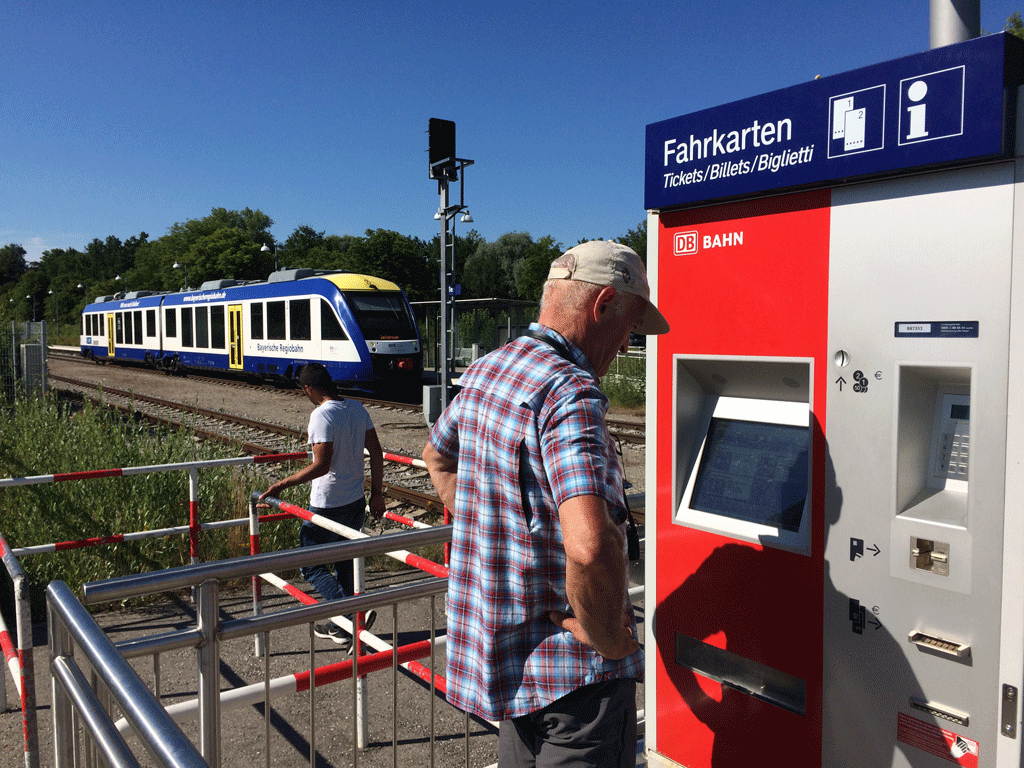
Jean Michel examining the ticket machine in Diessen
We go past the train station and think it might be wise to buy our tickets ahead of time. We are told there is an automatic ticket machine in the train but we’re not taking any chances. There is only one train every hour.
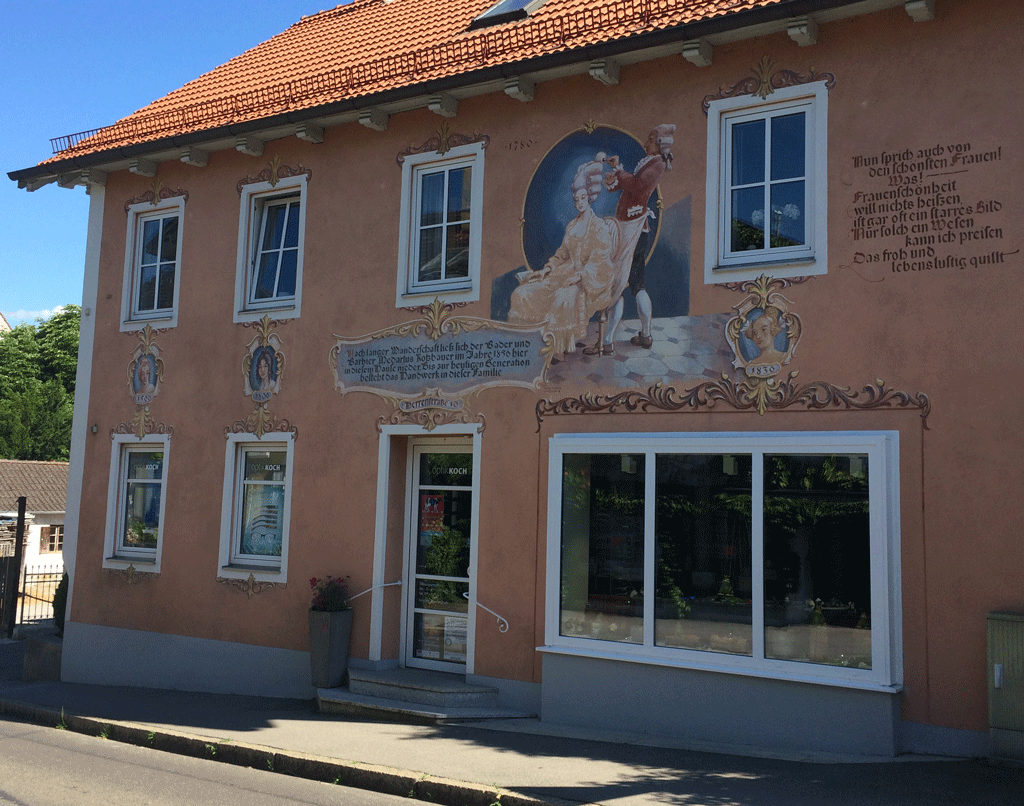
One of the painted houses in Diessen – I wish I could read what is written!
We start cycling up a hill past a number of beautifully painted houses so I spare my knees and walk up so I can admire them better. Jean Michel rides up and misses the paintings.
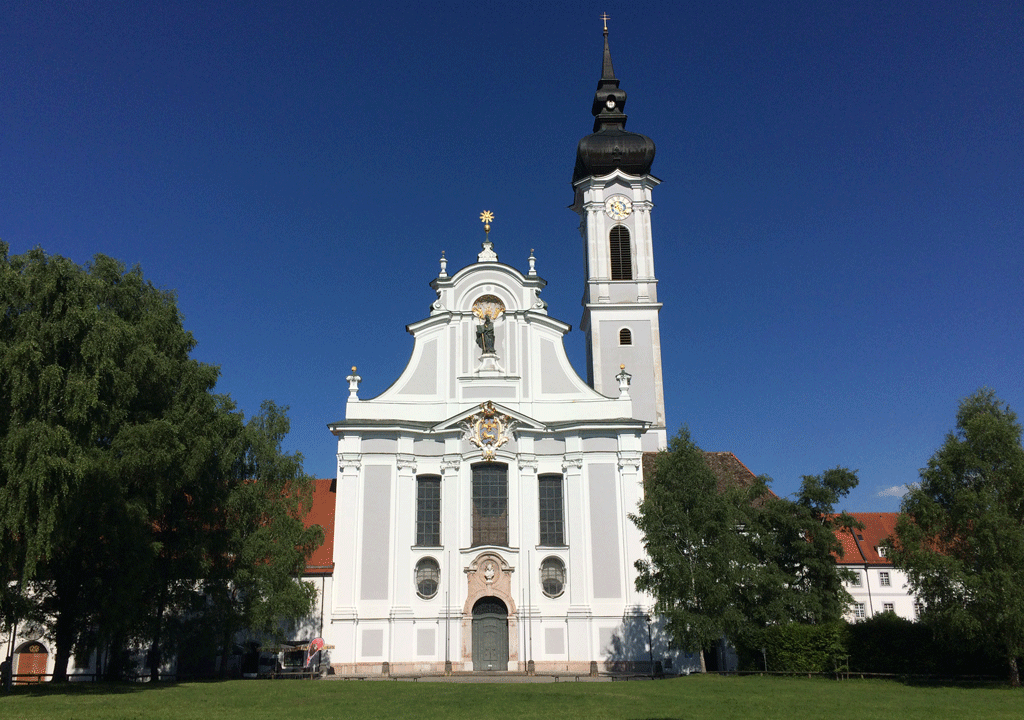
The Marienmünster cathedral in Diessen
At the top is the beautiful Marienmünster cathedral with a large expanse of grass in front and no cars which makes it easy to photograph without too much distortion.
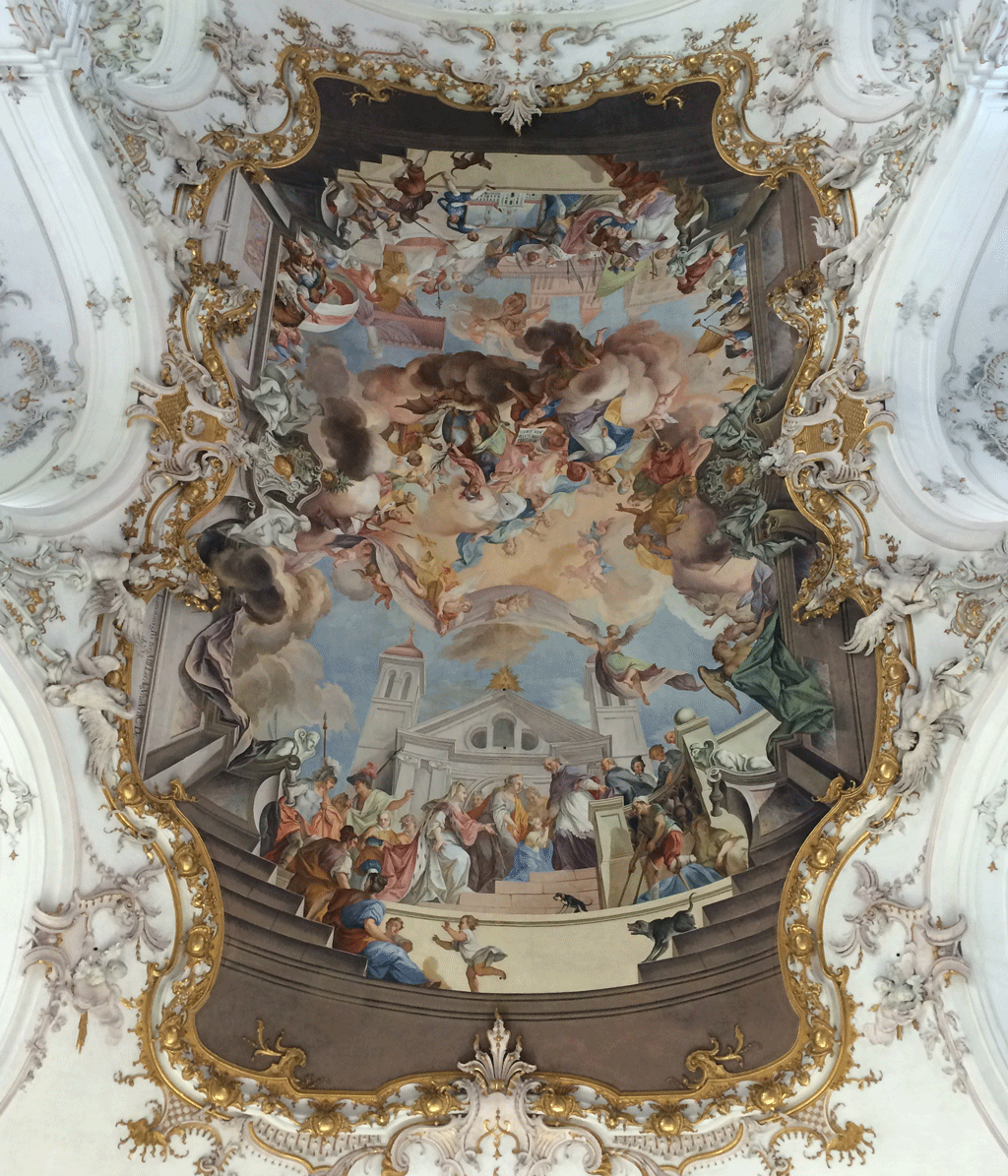
The beautiful painted ceiling of Marienmünster in Diessen
The inside is particularly beautiful and not as overdone as some of the rococo and baroque churches we have seen.
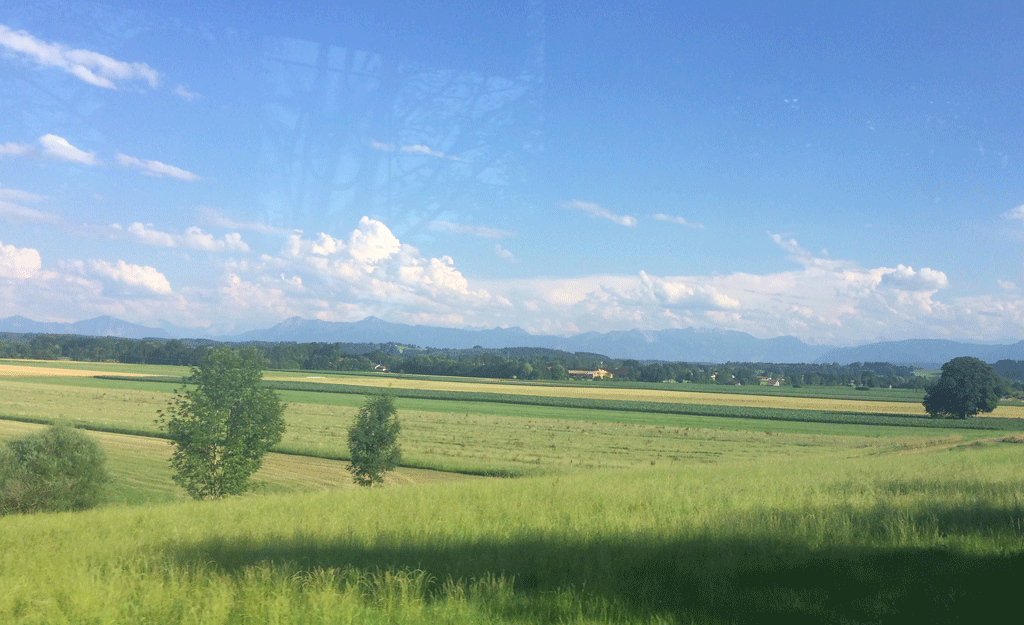
The scenery from the train on the way home
We wait for the train for 15 minutes in the hot sun and are glad when it arrives – it’s air-conditioned. We attach our bikes with the straps provided and enjoy the 45 minute journey back to Peiting. For once, the windows are clean enough to take photos!
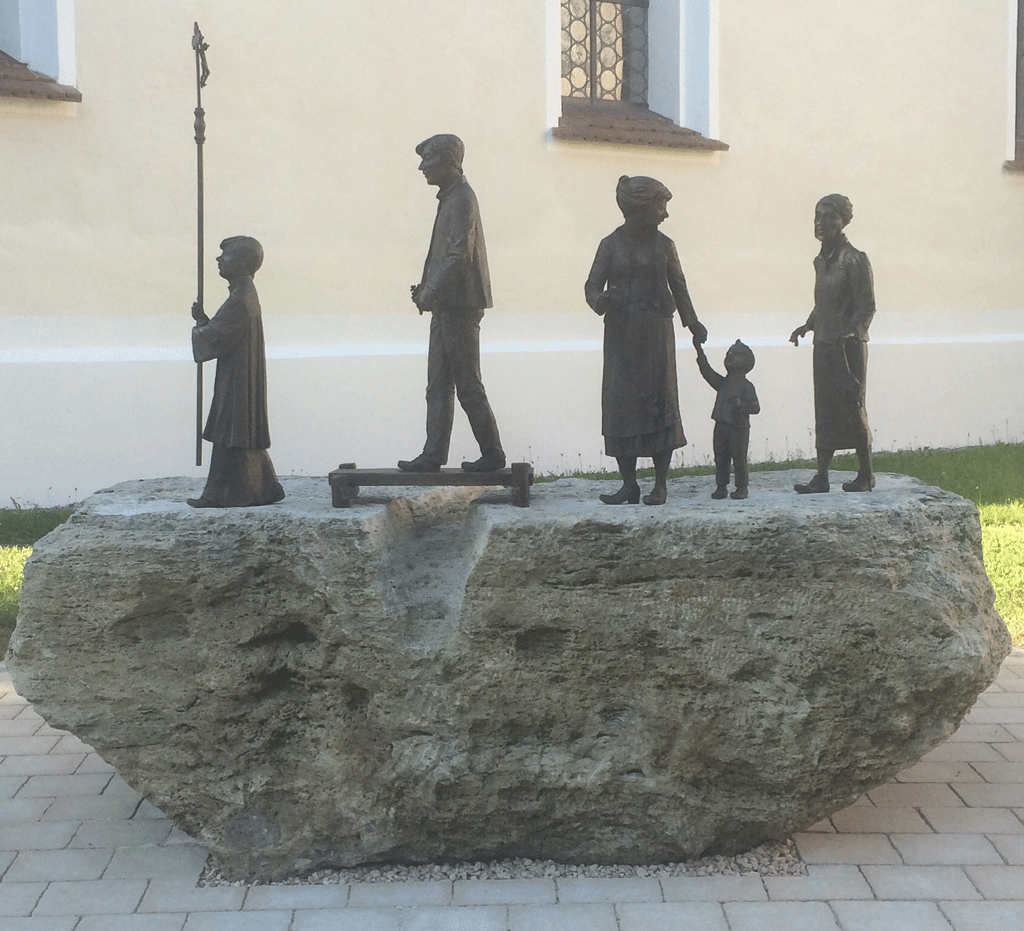
An interesting group of statues in Peiting
We’ve clocked up 52 kilometers and 4 hours by the time we get back to our Alpenhotel in Peiting at 7 pm. Another excellent day of cycling. Tomorrow we’re moving further north along the Romantic Road to Dinkelbühl.
Our route from Peiting to Dissen (Bayerische Seen bike map adfc)
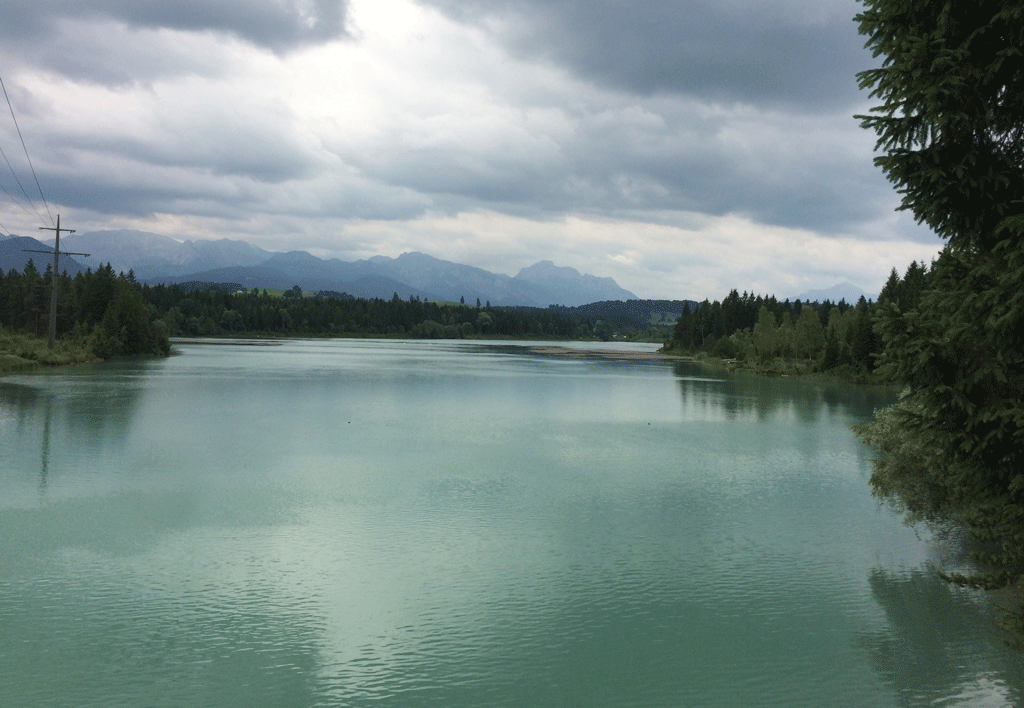
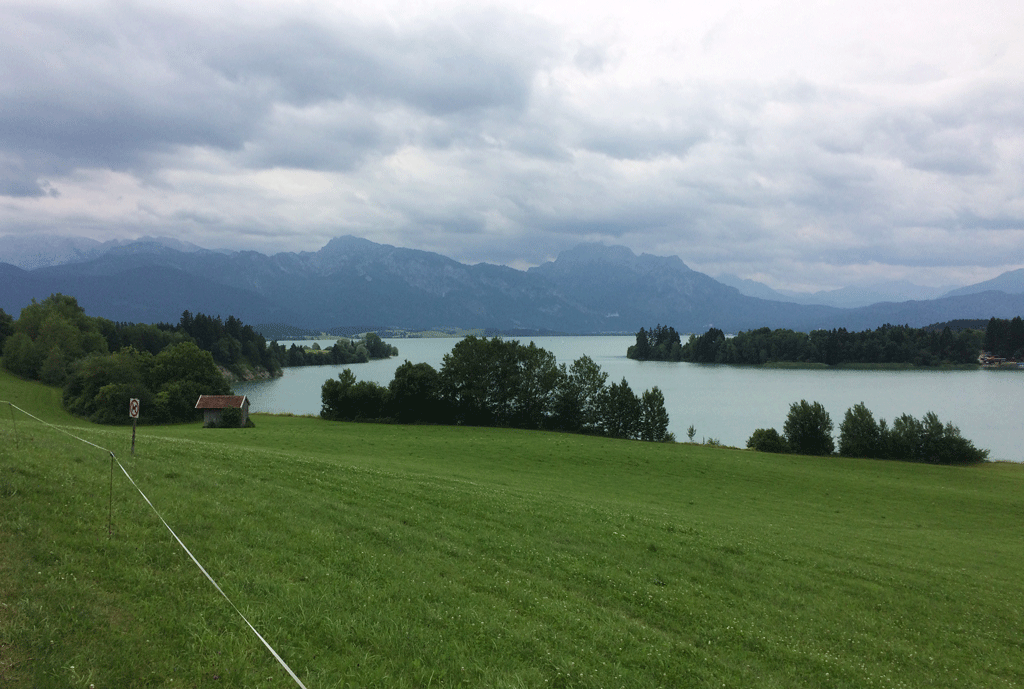
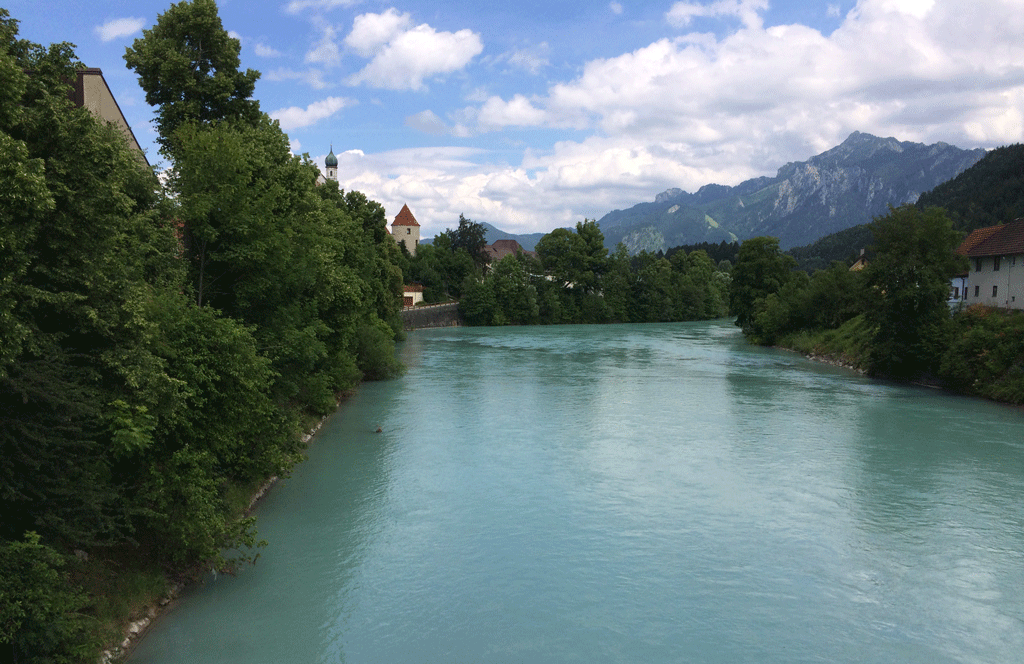
We start off on our day’s cycling on the Romantic Road in Bavaria by driving 15 minutes to Lechbruck am See and the first views of a little turquoise lake are beautiful.
Starting out from Lechbruck
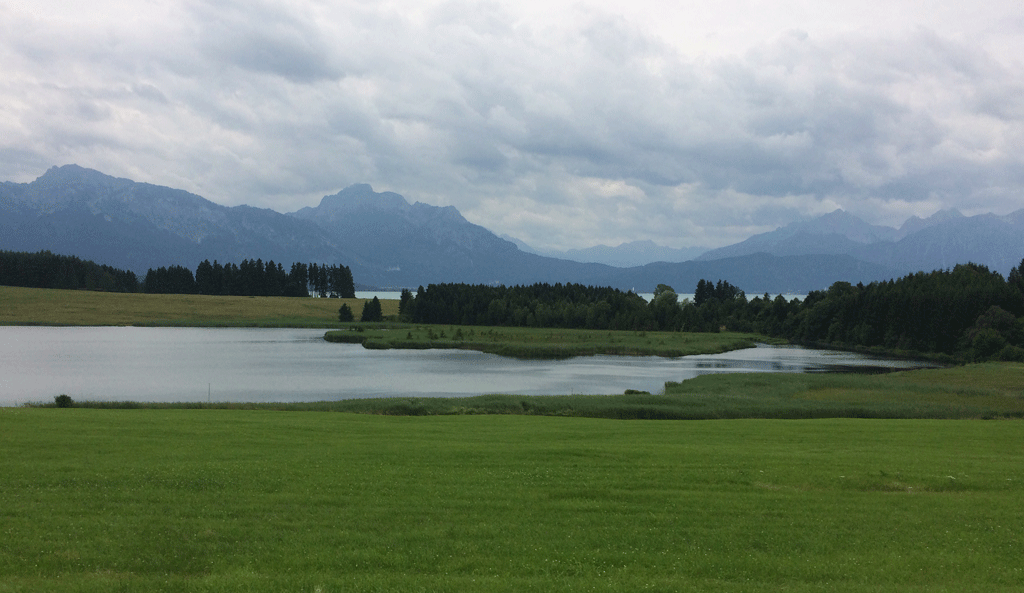
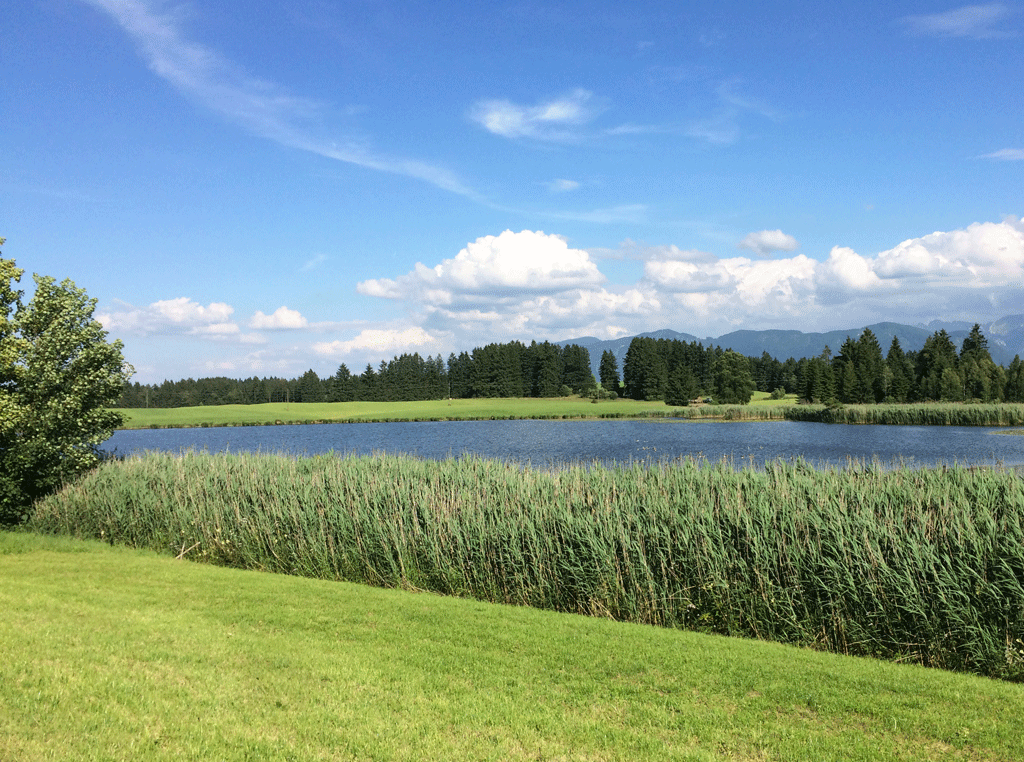
Our route then takes us along the Forggensee and past some of the most stunning scenery I’ve ever seen. Unfortunately, the photos do not do it justice. The sky is slightly overcast so it’s not too hot which makes the many hills easier!
First views of Forggensee
At one stage we can see both the Illasbergsee and Forggensee at the same time.
And the pleasure continues
We stop for coffee along with many other cyclists on the rise of a hill.
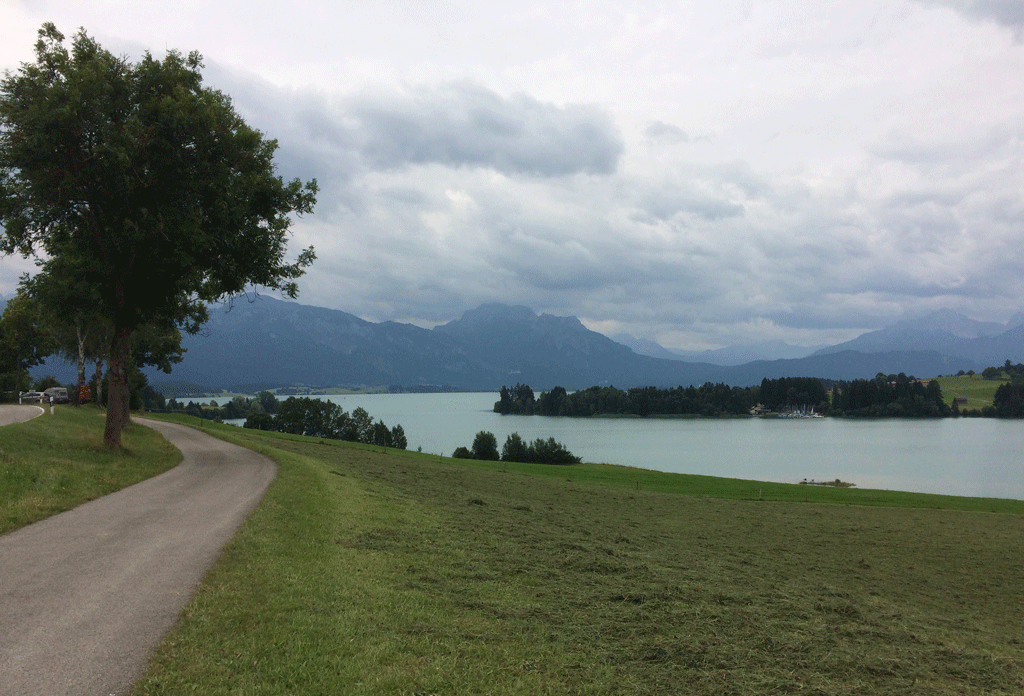
The cycle path along the Forggansee
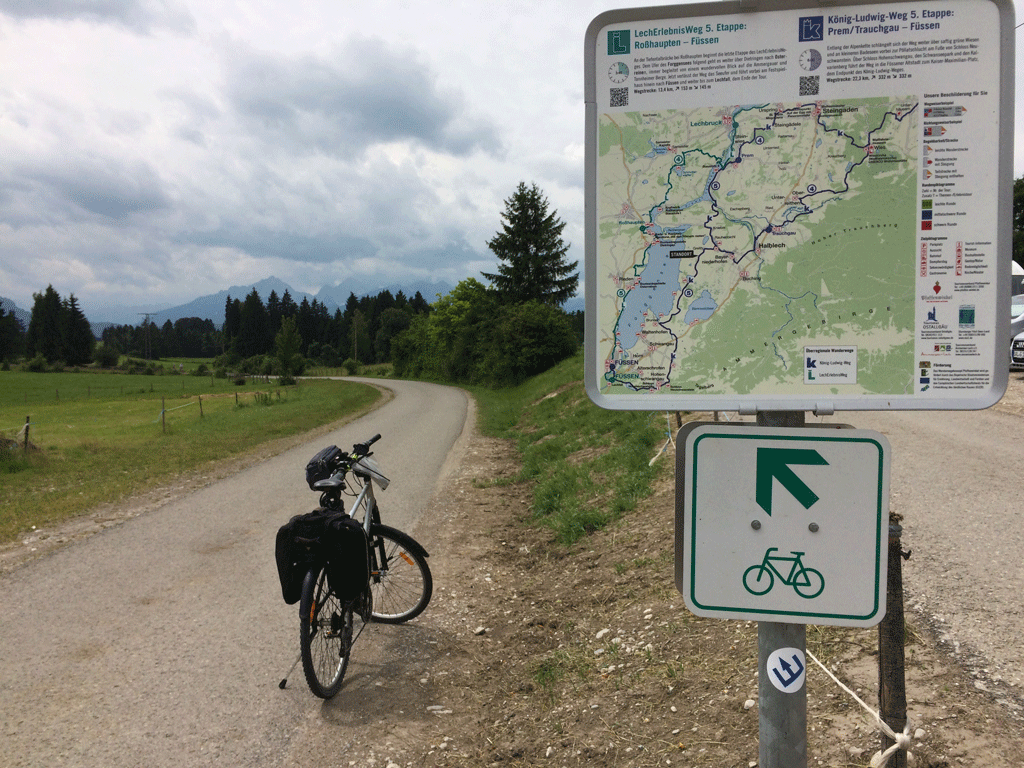
After a while we sadly quit the lake but it’s more restful for our knees. As usual the route is well signposted.
Well-signposted road for both cyclists and trekkers
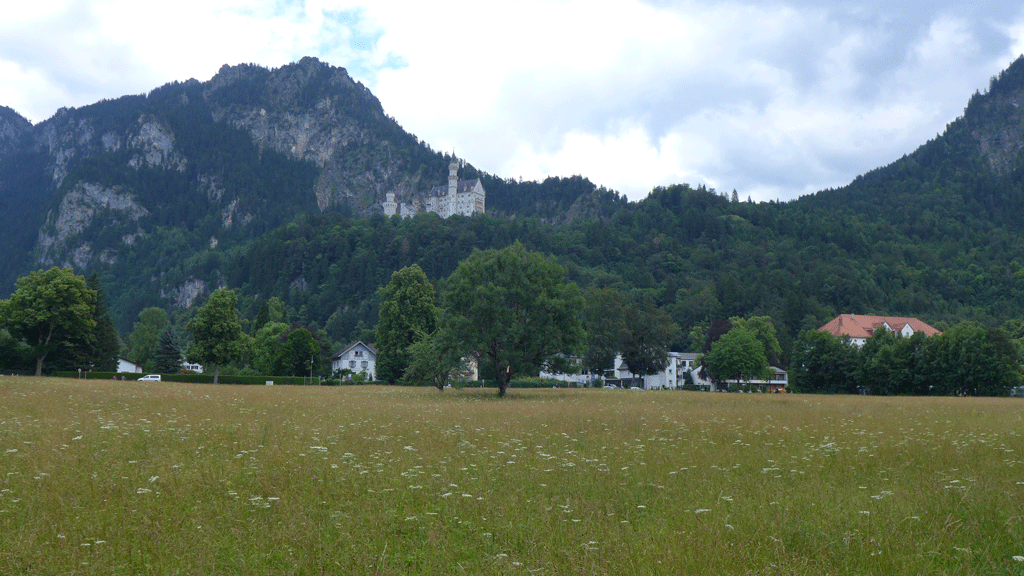
The scenery then becomes meadows with the Bavarian Alps in the background as we approach Schwangau and Neuschwanstein Castle, the Romanesque Revival palace built by Ludwig II of Bavaria as a retreat and homage to Richard Wagner. Since his death in 1886, it has attracted more than 61 million, with 6,000 per day in summer every year.
Neuschwanstein castle barely visible in the background
The last time we were here, we didn’t visit it but have decided to do so today. However we are discouraged by the milling crowds and long queue at the ticket office. Also, it’s a long climb up to the castle and not really do-able by bike.
Histsorical building on the lake at Schwangau near Neuschwanstein Castle
Instead, we cycle along one side of the little lake up to the first viewing point, which is enough for me, then turn back and continue on to Fussen.
View of the lake at Schwangau
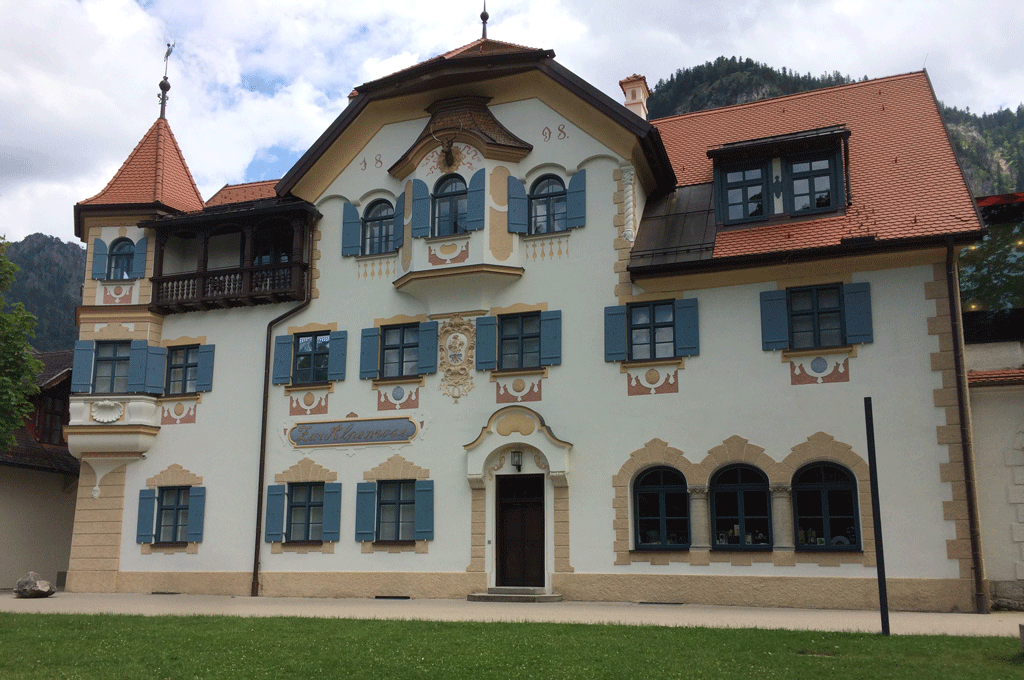
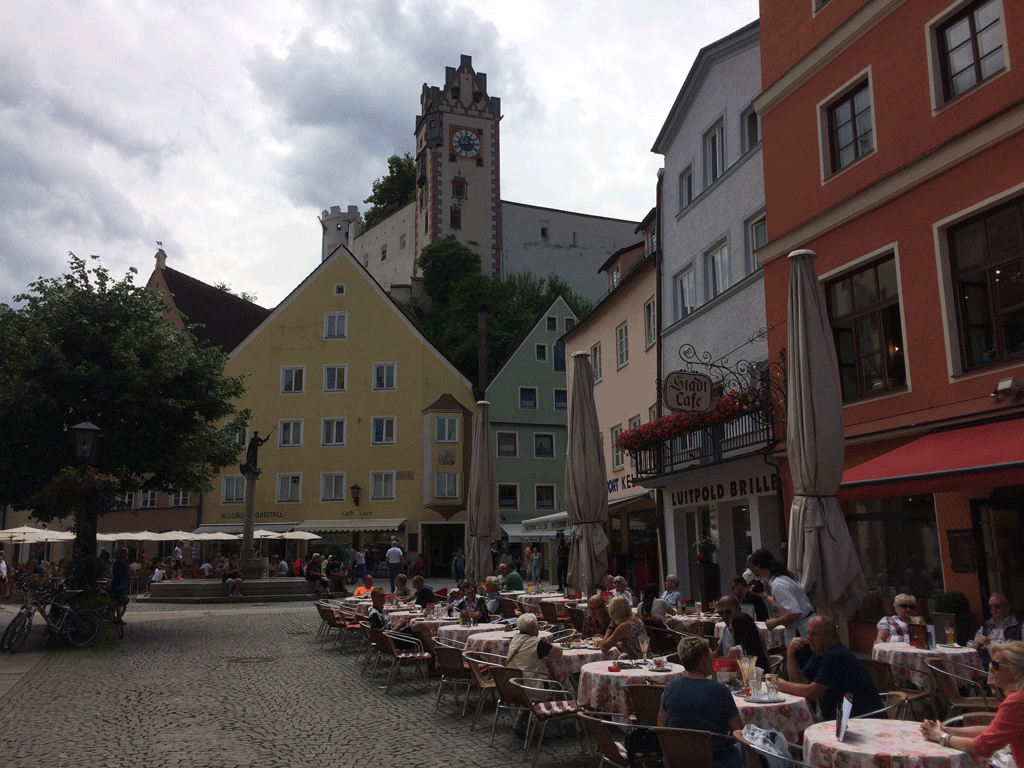
Last time we were in Fussen, we only saw the tourist office, but this time we discover a pretty little town with many beautifully decorated houses.
The main street in Fussen
It’s 2.30 pm and we think we should have some lunch but would like to find a place on the river. We have no luck so keep riding up the other side of the Forggensee in the direction of Lechbruck. The weather is distinctly improving. What a pity we didn’t have blue skies and sun in the morning!
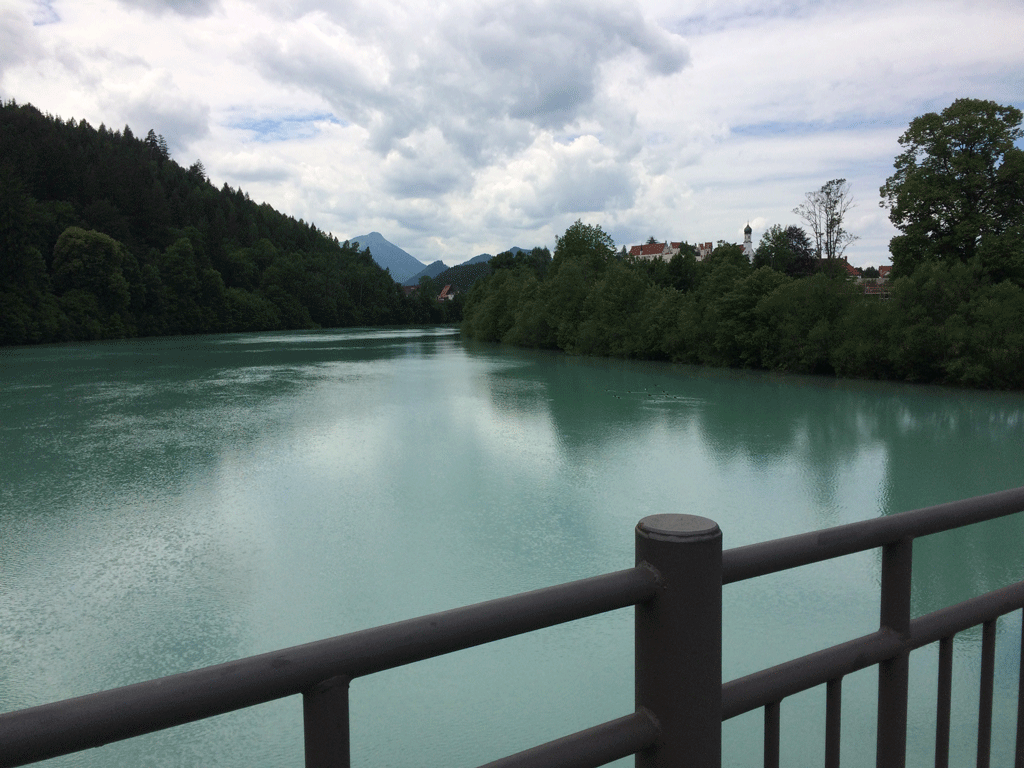
The Lech in Fussen
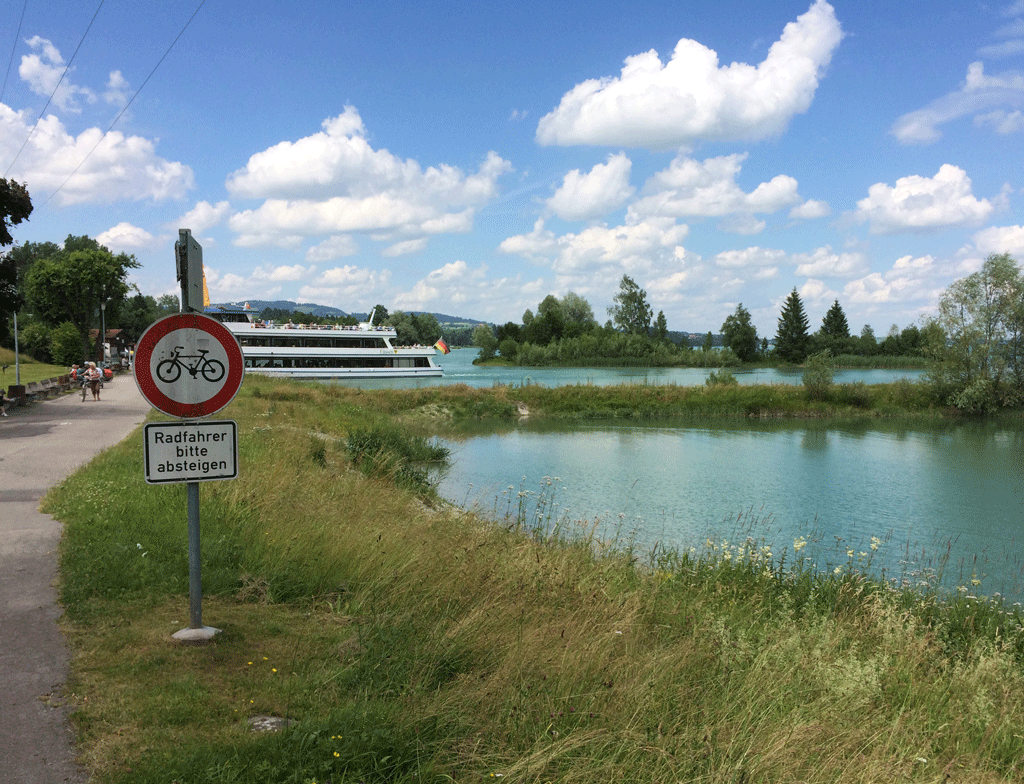
There is a landing stage for cruise boats not far out of Fussen but we don’t like the look of the restaurants. Also we can’t take our bikes.
A cruise ship near Fussen
At Dietringen – it’s now 3.45 pm – we find an Eiscafe but all the tables are in the full sun, which is now very strong. There is also a lot of wind and the owner is afraid of opening the sunshades so we keep cycling.
A cyclist’s dream!
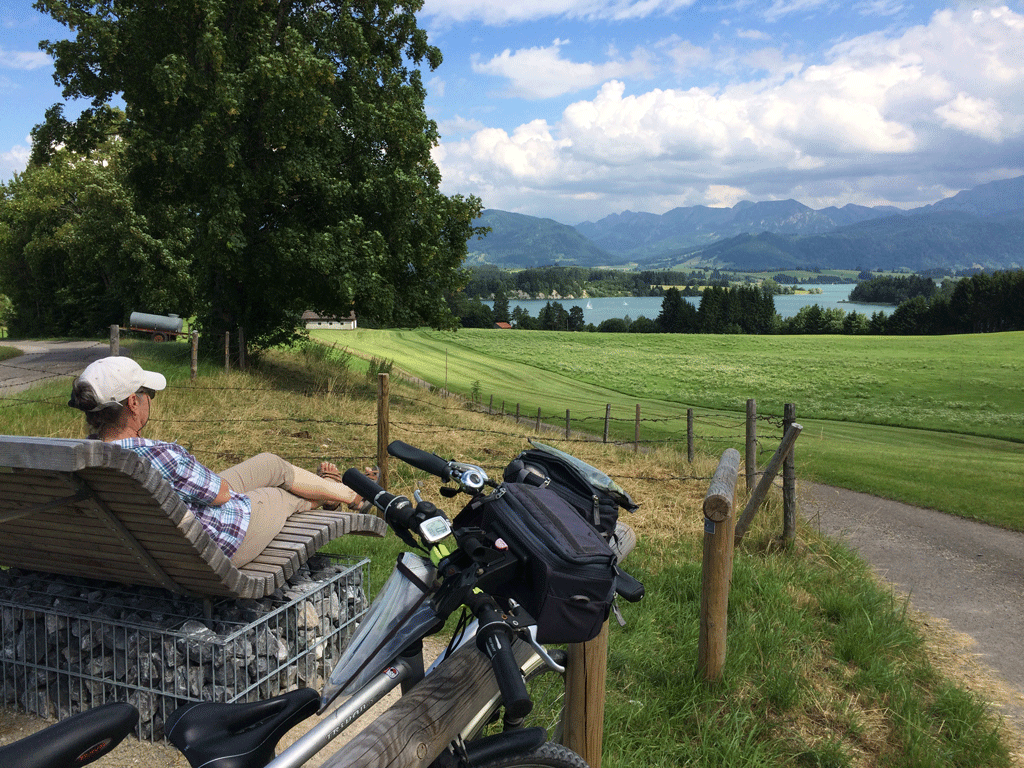
We push on towards Rosshaupten and on the way, I spy a sort of wooden armchair with a view so we have water and biscuits instead of lunch!
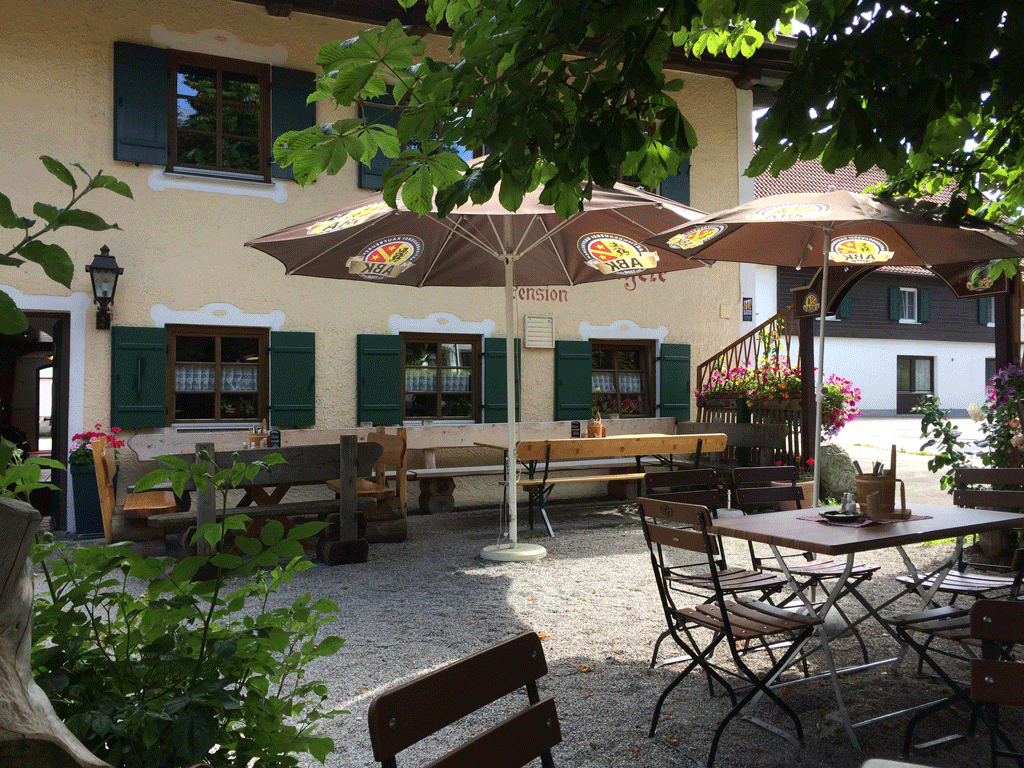
The sort of gasthaus we like with a shady biergarten
At 4.30 pm, we find a biergarten to our liking called Landgasthof Schwägele but it’s too late for lunch and too early for dinner, even if the Germans dine very early. We have a restorative glass of weiss wein instead. Fortunately there is only one steep hill during the remaining 7 kilometers.
The last few kilometers are much flatter
At 6 pm, after 5 hours of cycling and 52 kilometers, we are back in Lechbruck, just in time to go home, have a shower and go out to dinner. We are planning on going to nearby Schongau (not to be confused with Schwangau), which is too steep to visit by bike.
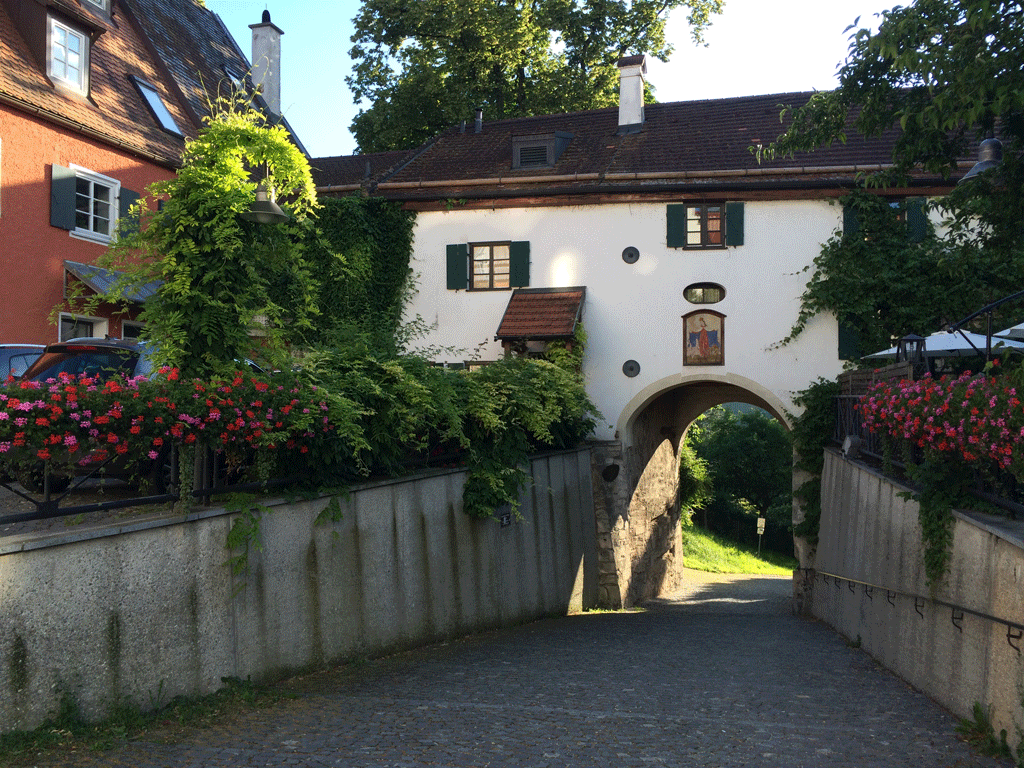
One of the gates in Schongau
What a disappointment! Apart from a promising gate in the old fortified wall and a square with a few historical houses around it, there are nothing but pizzerias and snack bars.
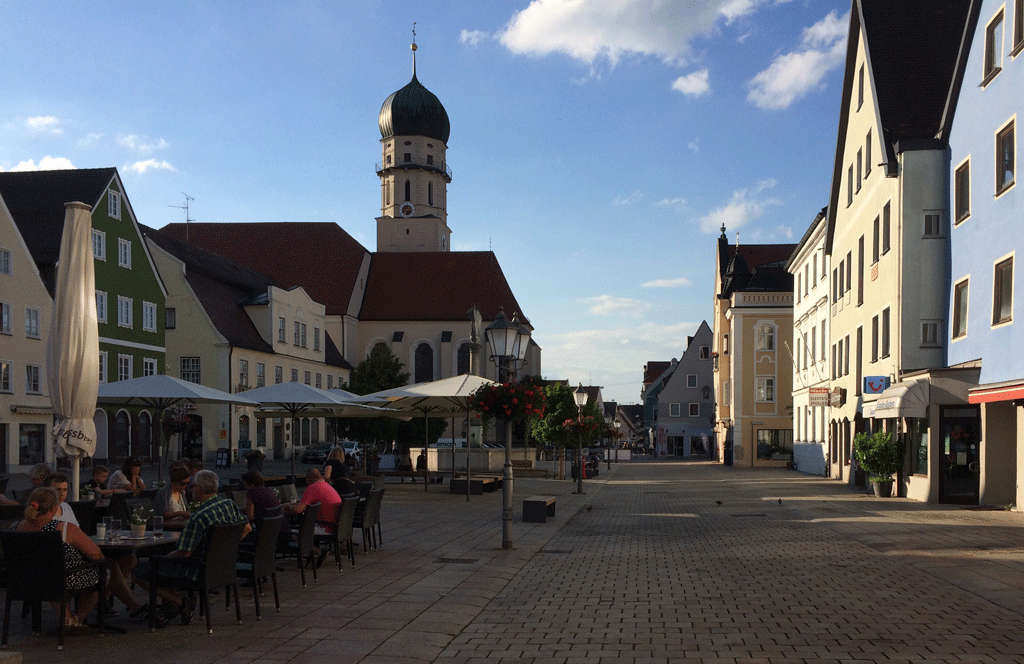
The main platz in Schongau
We drive a half an hour back to Landgasthof Schwägele and have a delicious wiener schnitzel instead. Yesterday, when we visited Wies, and today, with its magnificent scenery on the Forggensee, are among our best days of cycling ever, along with the S-bend in Austria.
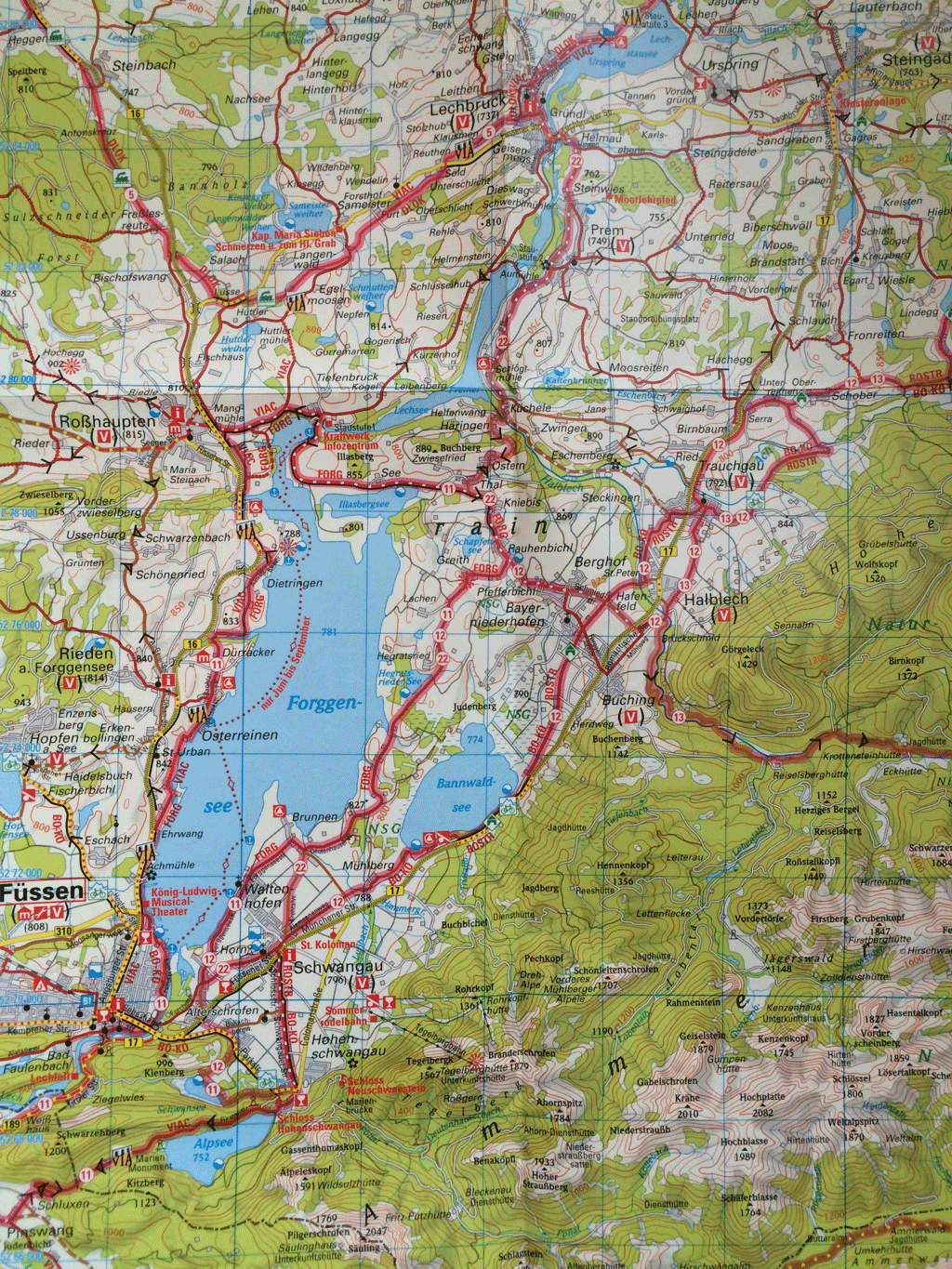
Our cycle route from Lechbruck to Fussen (Bayerische Seen map by adfc)
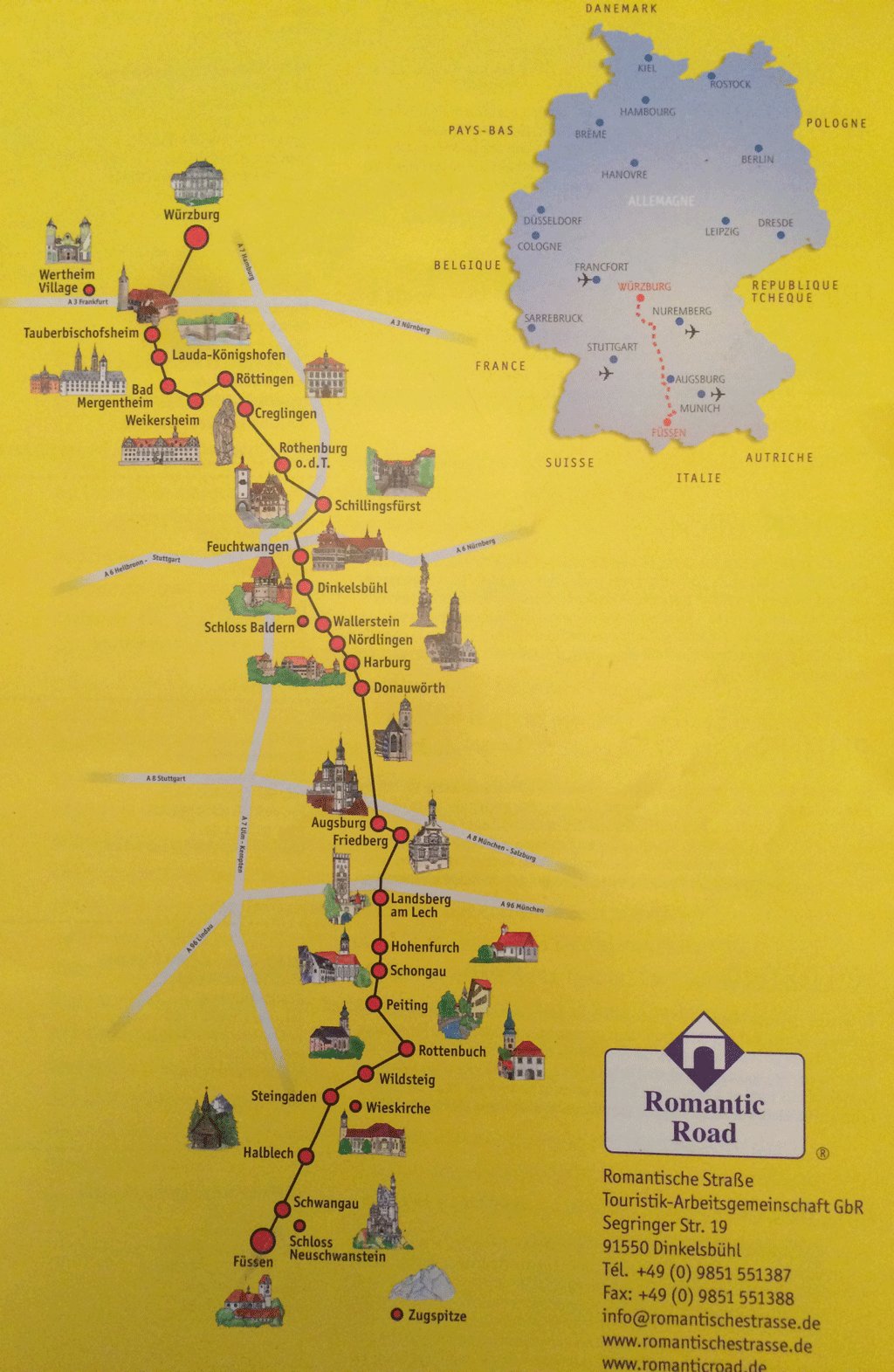
With our new Bikeline maps, we are ready to start our cycling trip along the 350-kilometer Romantic Road which starts in Fussen in the south of Bavaria and ends in Würzburg in the central Germany. Although it more or less follows the old Roman road of Via Claudia Augusta, it was really only invented in 1950 to stimulate the local economy after World War II. The trail, with its many baroque churches and castles became very popular with the families of Americans who had been stationed in Germany.
Scenery as we leave Peiting
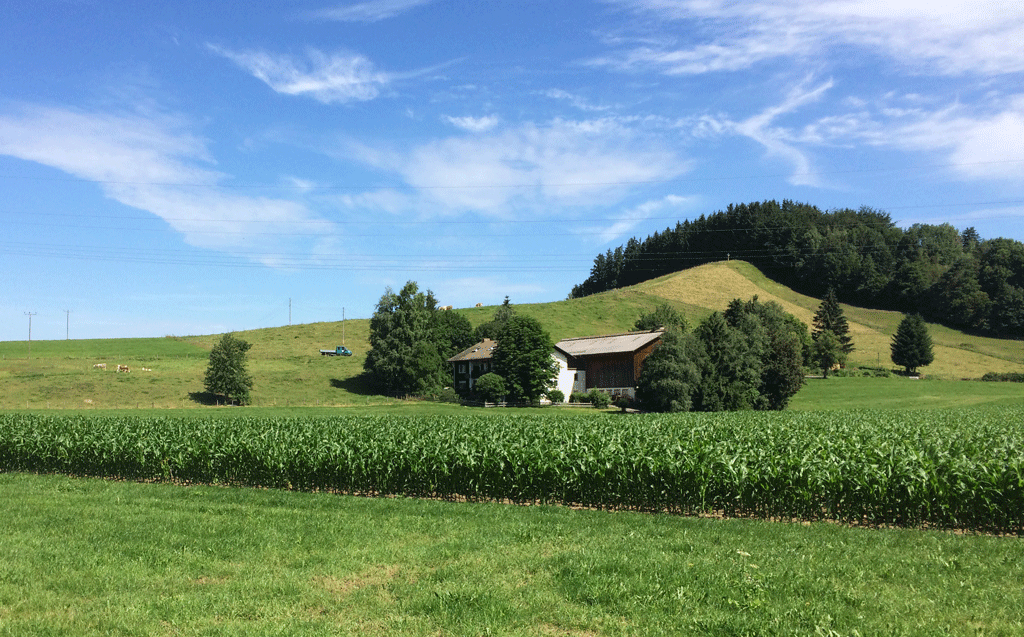
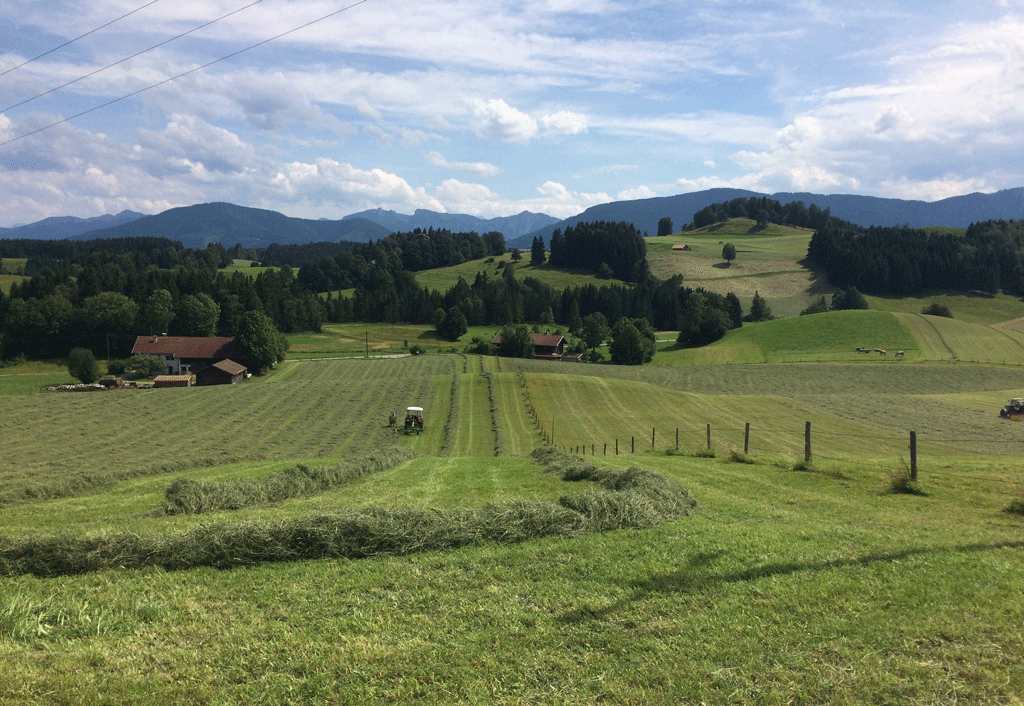
As soon as we are out in the countryside, we are delighted. The scenery is just as beautiful as I remember from our short visit in 1999: mountains of various heights in the background, rolling green hills in the foreground and an occasional house or tractor. The locals are bringing in the hay at the moment so it’s quite busy. Our itinerary is along small roads and is extremely well sign-posted. We won’t be getting lost today, unlike our recent experience in Italy.
Typical bike path, often closed to vehicles
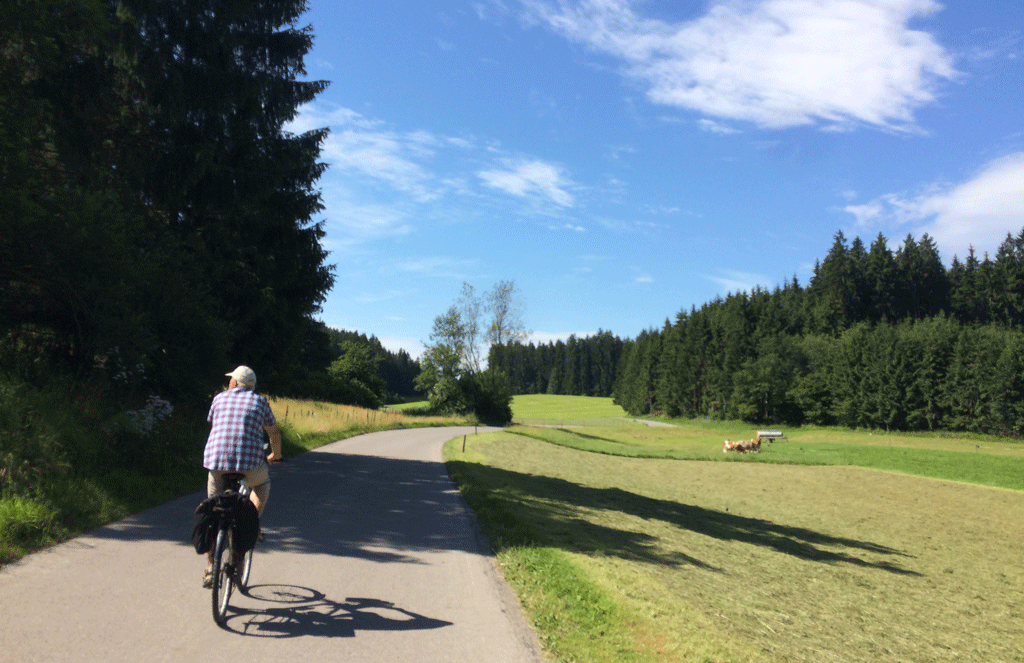
The only disadvantage is the number of hills (and the occasional march fly). Jean Michel had forgotten the hills, but I hadn’t. However we mustn’t complain. We prefer hilly roads in Bavaria where everything is a delight to the eye to the flat plains around the Po River!
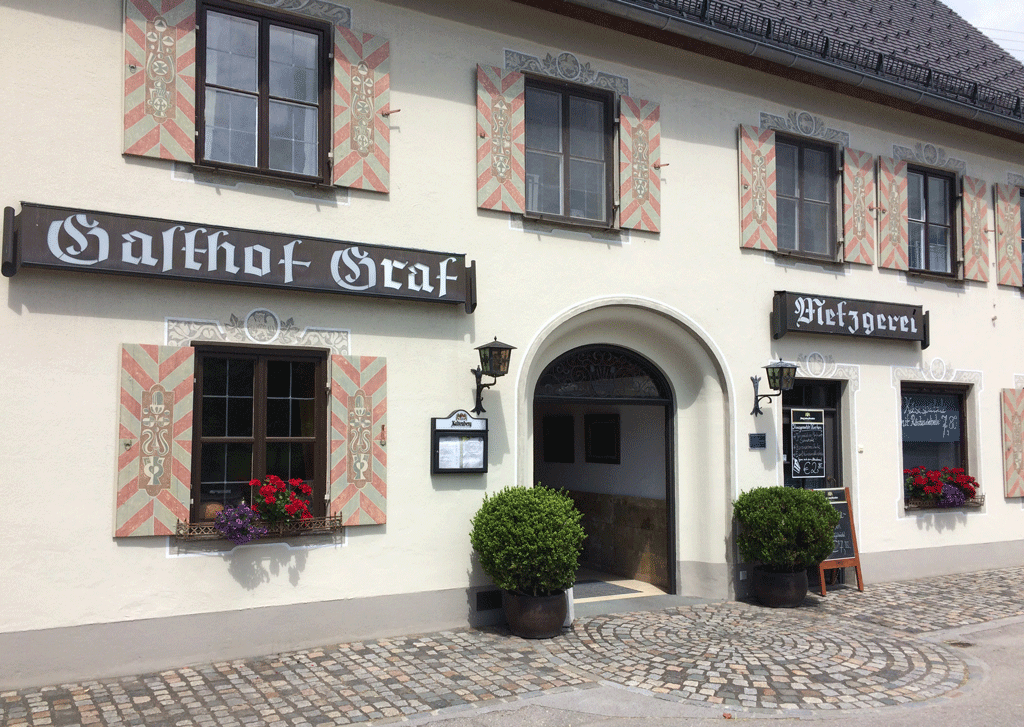
Gasthof Graf in Steingaden
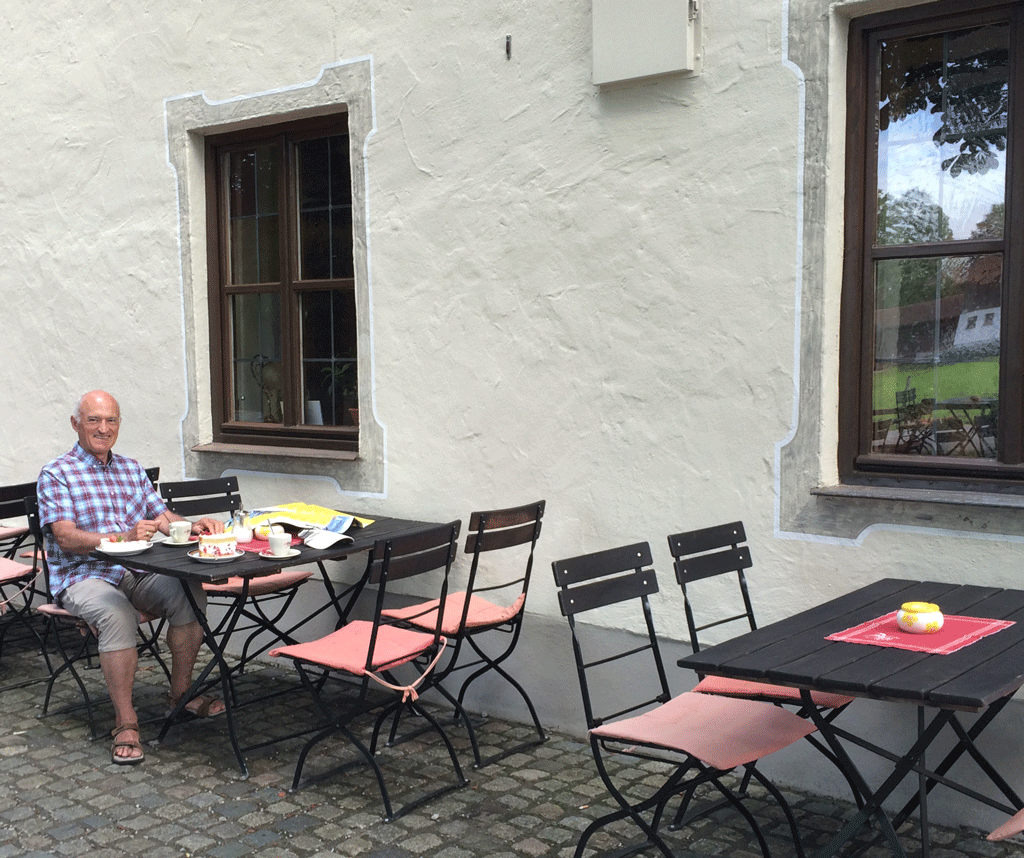
Our first stop is Gasthof Graaf in Steingaden. It’s nearly midday which is lunch time for most people in Germany. When we ask for a cappuccino, the waiter suggests “home made strawberry cake” to go with it! As I don’t really like strawberries, I decline so he suggests red currant cake instead. What can I say? Before we leave, the chef comes out and asks in very basic English if we are French. Since France has just beaten Germany in the European Soccer Cup semi-finals, we immediately apologize.
Coffee and cake!
“No, no,” he says, “you don’t have to worry. It was a good game. Fair play is more important than anything else.” Then he and the waiter say they hope France will beat Portugal in the finals on Sunday.
Andrea, our very helpful contact at the tourist office in Peiting phones to say she’s found us an apartment in the village of Wildsteig that has V-lan. It sounds good so I tell her to book for us.
The outside of Steingaden Abbey
We then visit the 12th century abbey of Steingaden with its beautiful baroque ceiling paintings and rococo puttis
The beautiful baroque and rococo interior of Steingaden Abbey
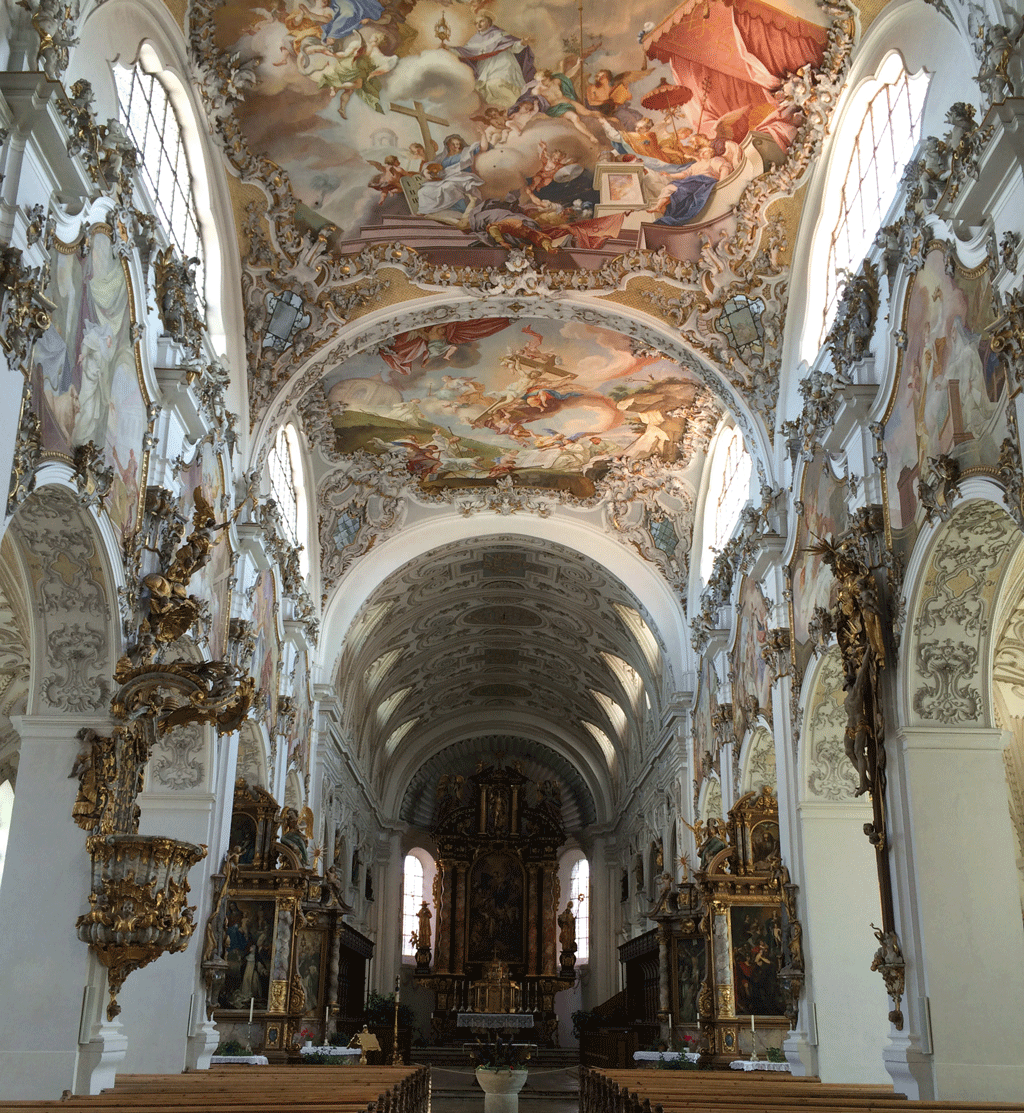
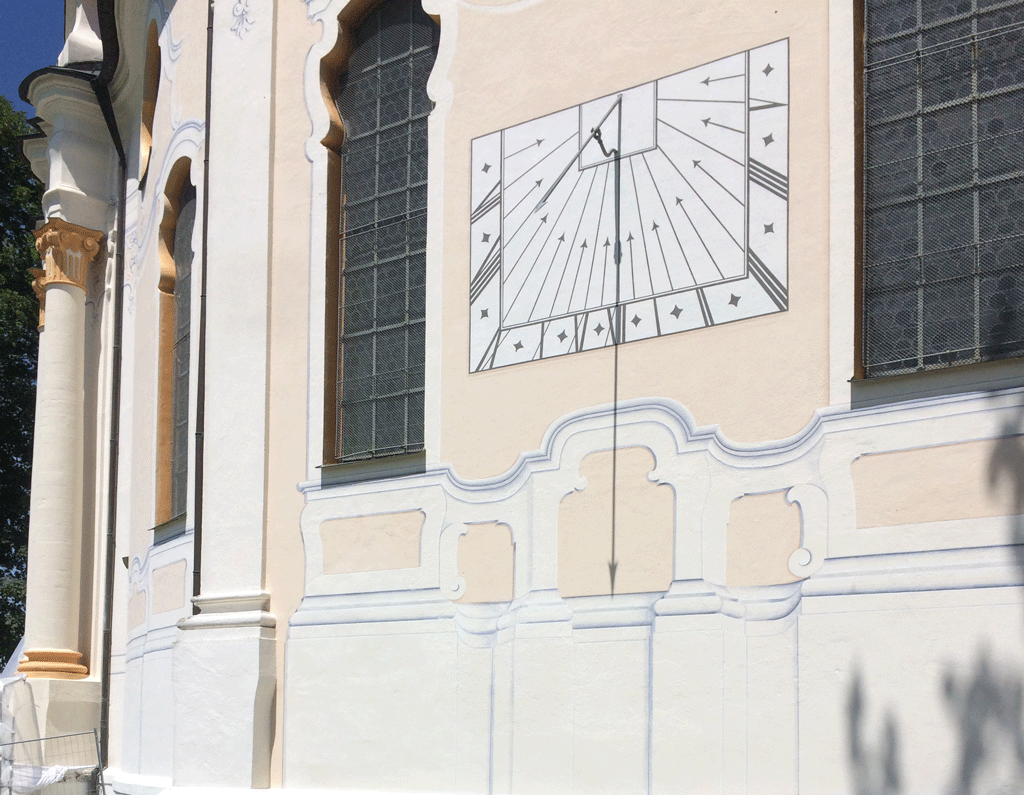
The next stop is the stunning rococo church of Wies which I wrote about a couple of days ago but which we approach from a different side. this time We park our bikes next to the sundial (it’s actually 1.15 and not 12.15) and follow the other pilgrims into the church.
The sundial on the side of Wies Church
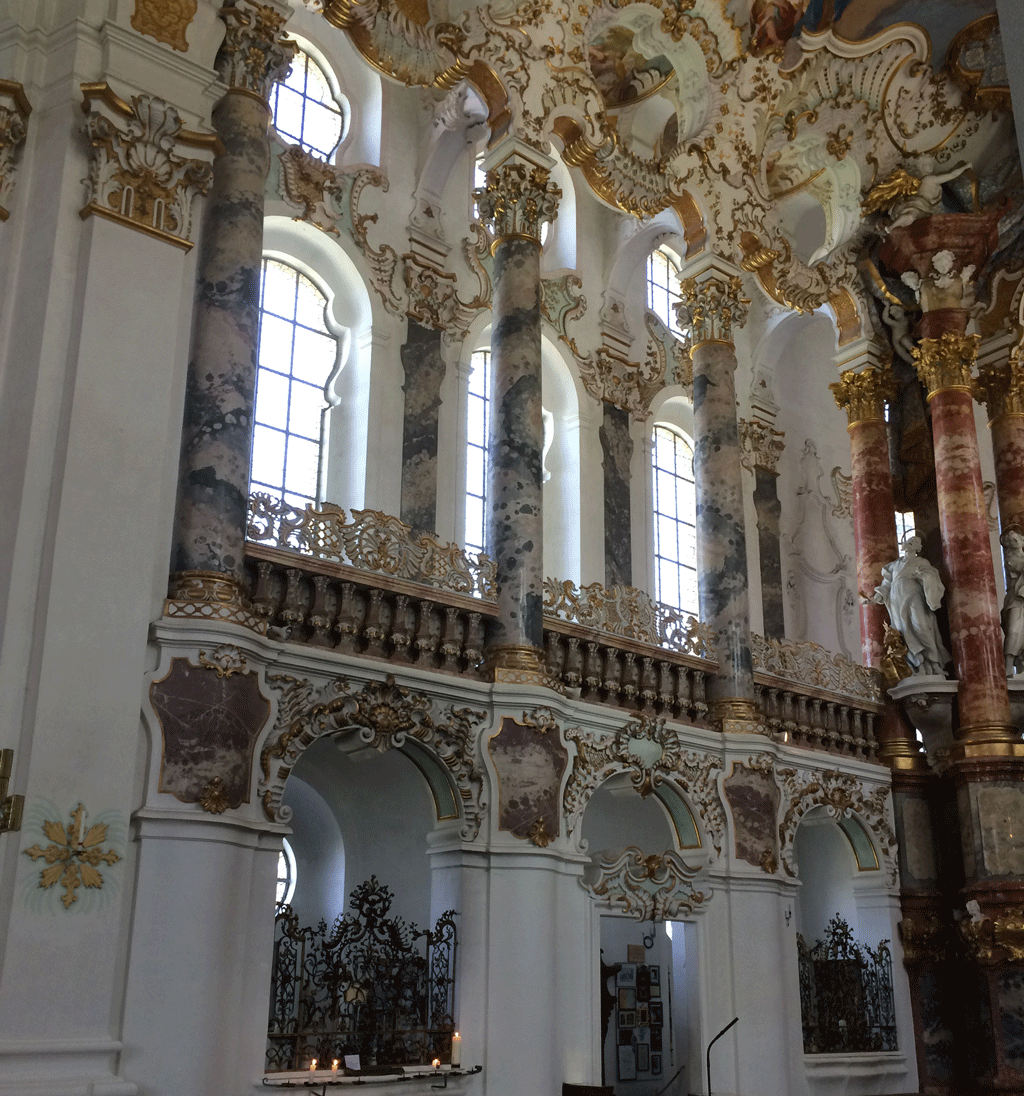
It obviously does not have the same surprise effect as it did the first time, but we still love it! Designed in the late 1740s, the pilgrimage church of Wies is one of the finest examples of German rococo and understandably on the Unesco World Heritage list.
The left gallery of the church inside
It is said that tears were seen in 1738 on a dilapidated wooden sculpture of the Scourged Saviour. Pilgrims flocked to the site as a result and a small chapel was soon built to house the statue. However, it was not big enough to accommodate the crowds so Steingaden Abbey commissioned a separate site and chose Dominikus Zimmermann as the architect.
Just as we are about to leave, we hear music. A man is playing the harmonica and the result is very moving in this grandiose setting.
The organ in Wies
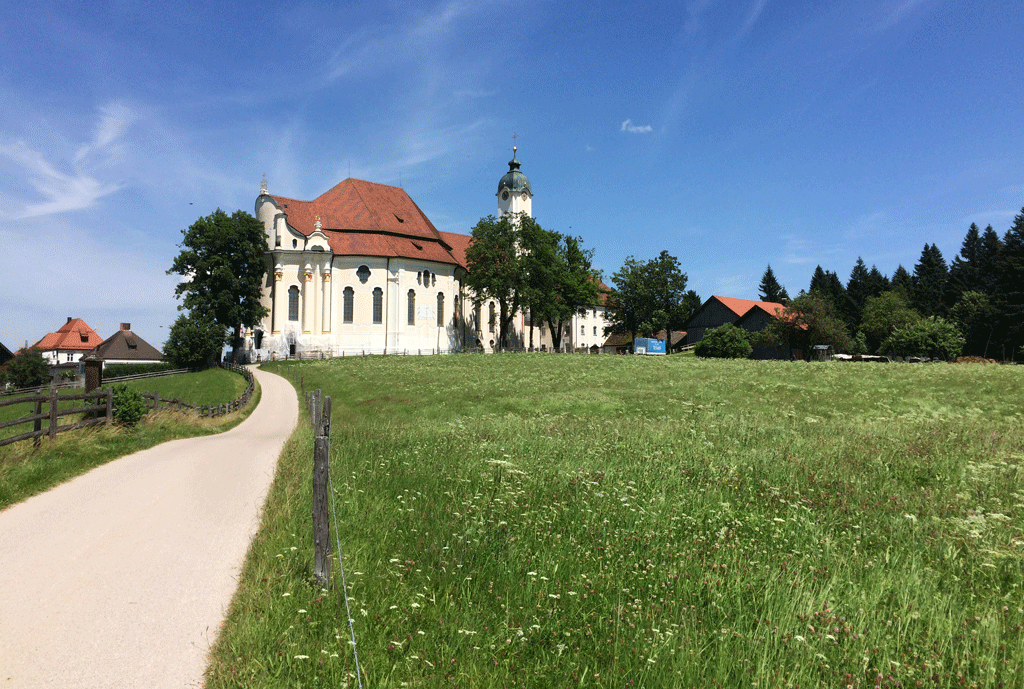
Before we leave the site, we walk down the hill a little way so we can relive our first view of the outside of the church in 1999.
Wies from the path we originally took in 1999
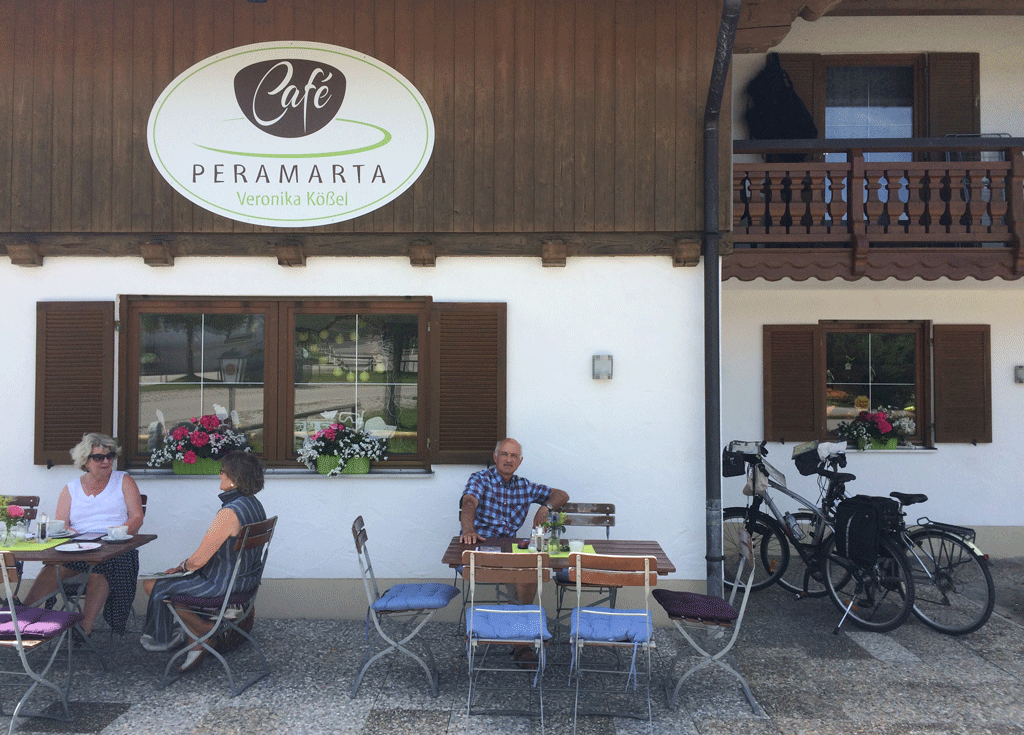
We’re starting to get hungry despite the cake (it’s nearly 2 pm) but don’t want to eat in any of the restaurants immediately surrounding Wies. The next village is Wildsteig which is at the top of a steep hill. The only place we can find is Café Peramarta where we order a large salad each.
Peramata Café in Wildsteig
While we are there we check out the apartment that Andrea has found us but we do not find either the village or the environment of the apartment very appealing so we decide to simply extend our hotel stay in Peiting for two more nights. It is perfectly located and we appreciate the room and balcony. I send an email to the owner when we get back to the hotel explaining that we have had to leave the area.
Hay making
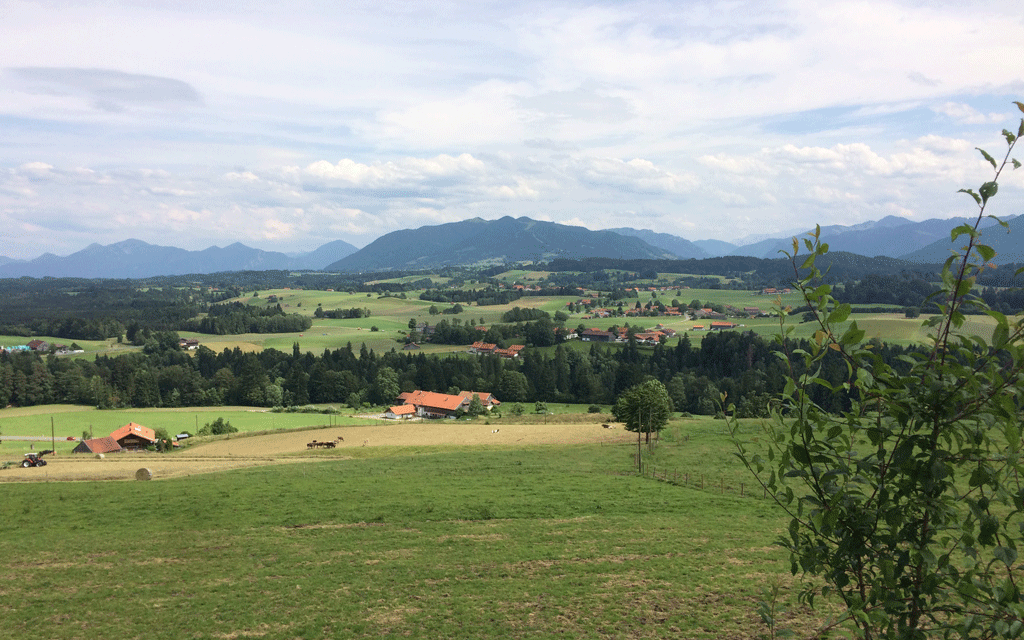
More beautiful scenery takes us down past the Kase-Alm cheese factory that Andrea has told us about. It is obviously very touristy but we appreciate the view and buy some cheese.
The view from the cheese factory
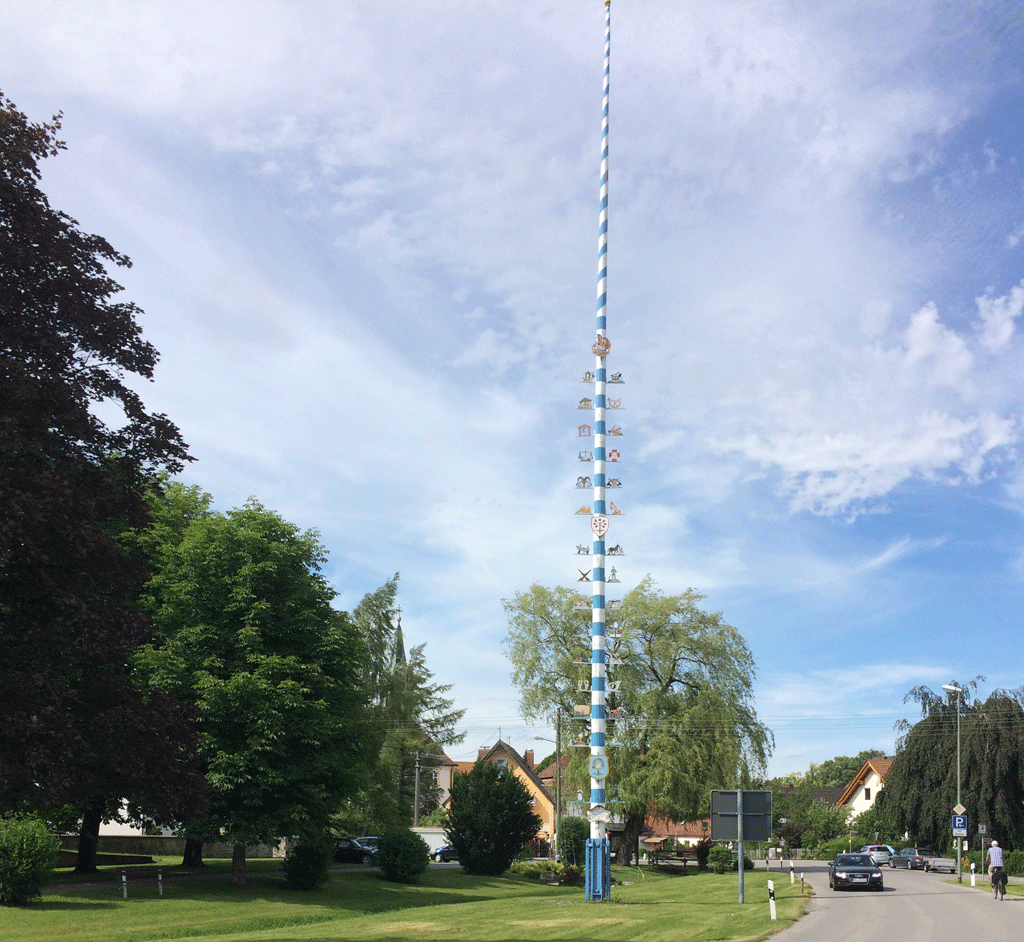
Rottenbuch with its typical maypole is next.
A typical maypole, this one in Rottenbuch
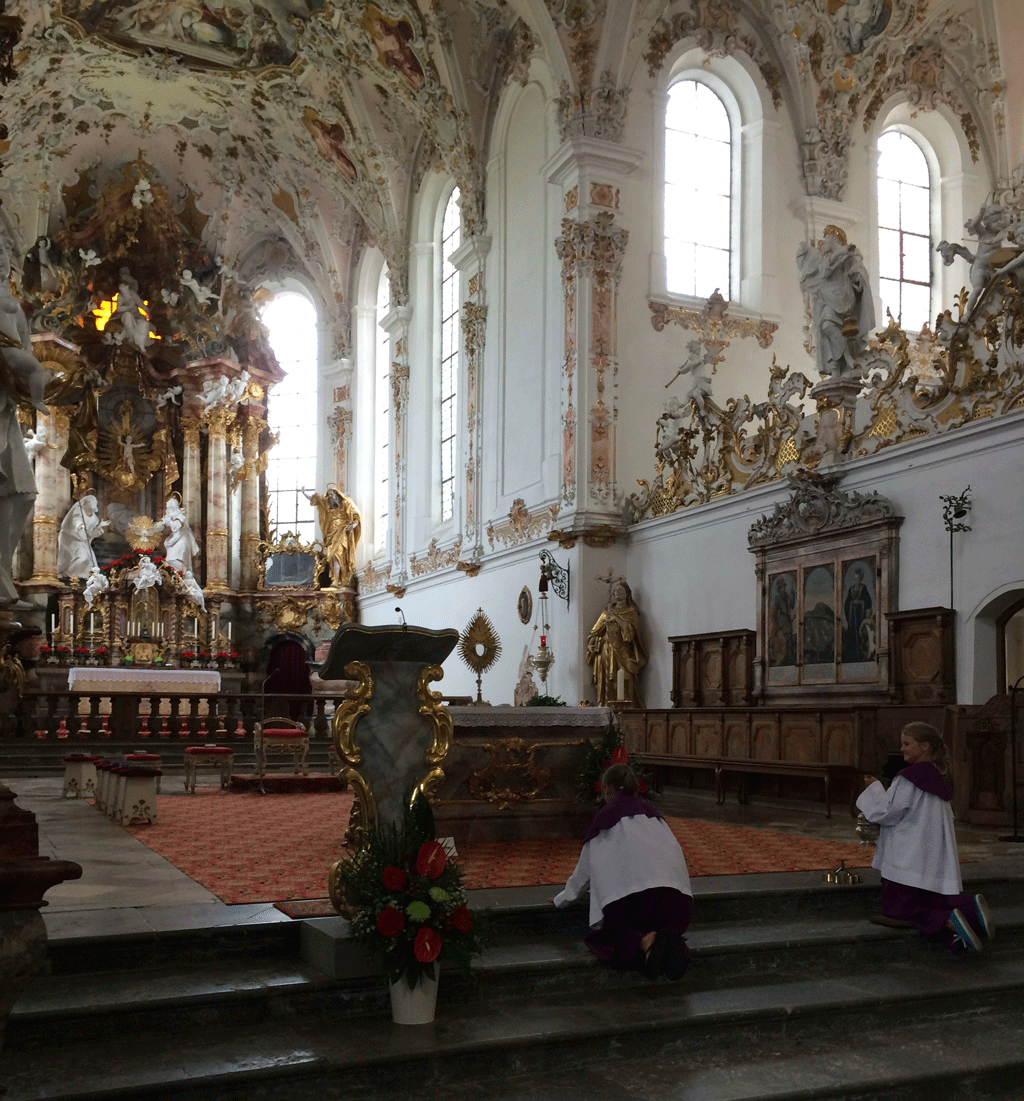
It, too, has a high baroque abbey church, called Mariae Geburt, on a smaller scale than Wies, but still very lovely. There is a priest training two giggly altar girls.
The altar girls in training in Rottenbuch church
After 44 km and 5 hours of hills and dales we arrive back in Peiting, very satisfied with our return to the mythical Wies after 17 years. Despite our wobbly knees, we can still make it to the Eiscafé!
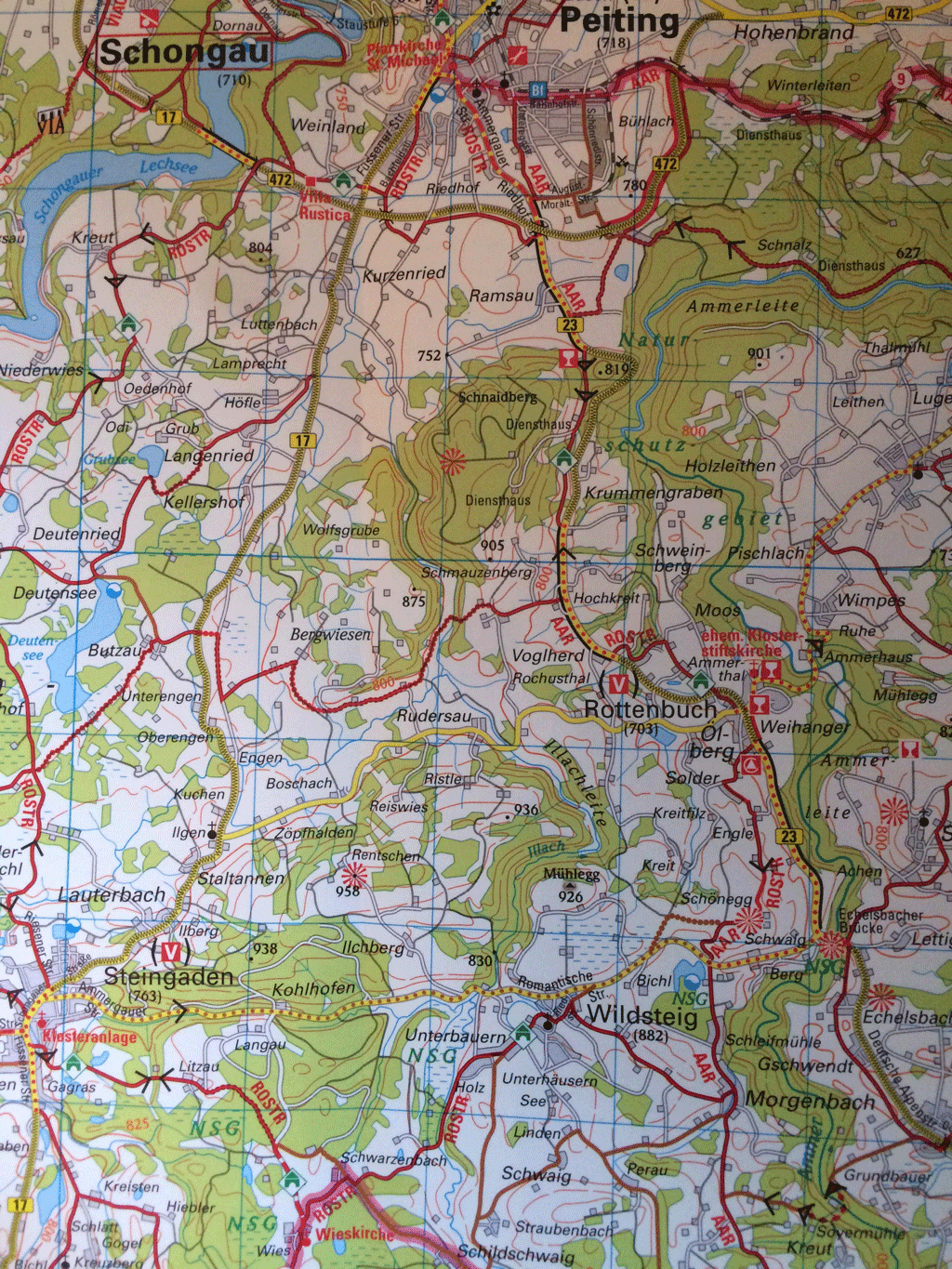
Our route from Peiting to Wies (Bayerische Seen bike map adfc)