All posts by Rosemary Kneipp

Weekly Blogger Round-Up: Safe Solo Travel Tips for Women – Supplements for Single Travellers – Family Travel Tips for Iceland

We have an all-Australian line-up for this week’s Blogger Round-Up, starting with some excellent tips from Jo Karnaghan from Frugal First Class Travel on safe travel for solo women. Carolyn from Holidays to Europe  then discusses another aspect of solo travel – why single travellers have to pay a supplement. And to end up on a completely different note, Phoebe from Lou Messugo tells us how you can take your family to Iceland on a budget. Enjoy!

Brilliant Readers’ Safety Tips for Solo Women Travellers

by Jo Karnaghan from Frugal First Class Travel, an Australian who loves to travel – especially in Europe – and who has gradually learned how to have a First Class trip on an economy budget, without missing out on anything!

frugal_solo_travellersIf you follow me on Facebook or Pinterest you will know that, like many bloggers, I repost old content periodically. It’s a good opportunity to connect new followers to some of my older content, and to share old content that is still valid and timely. Recently I re-shared a post on tips for safe solo female travellers. While I was very pleased with the content of my post, I was blown away by the comments from other women travellers. What started out as a small post on my perspective as a female solo traveller turned into a fantastic community of great ideas. Re-reading the post and the comments I’ve been inspired to create a new post – this time curated by me, but with brilliant content provided by real frugalfirstclasstravel readers. Read more

Why Do Single Travellers Have to Pay a Supplement

by Carolyn from Holidays to Europe, an Australian based business passionate about sharing their European travel expertise and helping travellers to experience the holiday in Europe they have always dreamed of

Positive smiling woman wearing sunglasses planning her vacationOne question I was asked many times over the years I worked as a travel consultant was ‘why do single travellers have to pay a supplement?’ Firstly, let me assure you that it’s not because tour companies don’t like single travellers! The reason that solo travellers have to pay a supplement on the price of their tour or cruise comes down to the accommodation component of their trip.

Let’s say a hotel room costs the equivalent of $250 per night and a tour lasts for seven nights. That’s a total room cost of $1750. If two people are sharing the room, they would pay $875 each but if the room is only occupied by one person then that person has to cover the entire room cost of $1750. In this case, a tour company would generally charge a single supplement of $875 or thereabouts in addition to the tour or cruise fare so that the full cost of the hotel room is covered. Read more

8 Tips for a Family Holiday in Iceland on a Budget

by Phoebe from Lou Messugo, a traveller, francophile, expat, mum and foodie now living in Roquefort les Pins where she runs a gîte after many years of travelling and living in Asia, Eastern Europe and Australia.

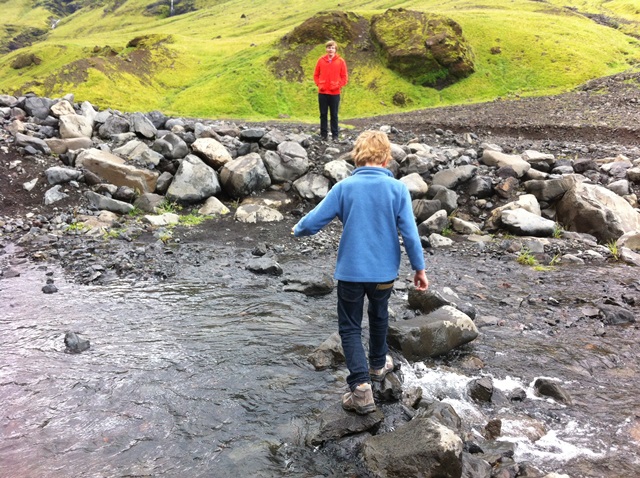
lou_messugo_hiking_in_IcelandIceland is notorious as an expensive destination and probably doesn’t spring to mind as a place to go with children, but it’s totally possible and heaps of fun for families, if you follow my Top Tips for adventure on a budget.  I spent 2 weeks in Iceland in the summer of 2014 with my husband and 2 children (aged 9 and 14) and didn’t spend a fortune, and yet we had the best holiday in a long time. This is how we did it. Read more

My Wonderful Cataract Operation in Paris

cliniqueWe’re cycling in Germany and I suddenly start seeing little brownish halos over to the right during the day and flashes  of light at night. When we arrive back in Paris at the end of July, I make an appointment with the ophthalmologue (no one says anything as straightforward as eye doctor here). In the meantime, a couple of people have mentioned detachment of the retina which is a bit worrying. I asked for an emergency appointment. My regular doctor is not available so I agree to see her colleague, Doctor R.

Dr R. discovers the cataract

Dr R. reassures me that my retina’s fine but the gel behind the retina of my right eye has got thinner. There’s nothing that can be done about it and it’s not a problem. On the other hand, I have a cataract on my left eye. A cataract? Surely I’m too young for a cataract? “Nothing urgent”, he says, but as we’re moving to Blois where there is a dearth of medical specialists, I prefer to schedule the operation for September.

I don’t mention it to any of my friends nor do I google it. I’m too afraid of hearing horror stories. I figure the doctor will explain everything I need to know. I don’t like the idea of having surgery on my eye.

The silicone lens

At my appointment in early September, Dr R. mentions inserting a silicone lens in my eye. A what? I thought they were removing a cataract not opening up my eye! What if he makes a mess of it and I turn blind? I start asking questions and I can see he’s getting annoyed. “I’m irritating you, aren’t I?” I say.

“No, no, but I don’t think you’re ready. We can wait and do it later.” “But I’m moving in October”, I reply. “I want to have it done now. But I also want to know exactly what’s going to happen to me.” He prints out two sheets of paper for me to take home and read. He tells me to get an appointment with his anesthetist at the G.S.H. private hospital where he operates and sets a date 10 days after our return from Lisbon. Of course, the anesthetist only consults on Thursdays and he only operates on Wednesdays which means I’m going to lose a week.

The cost of the op

I remember to ask how much it’s going to cost: 300 euro more than the regular fee reimbursed by social security plus my mutual fund for him and 75 euro for the anesthetist. A bargain compared with my 3000 euro titanium double gum implant!

I don’t read the blurb until I get back from Lisbon – I don’t want to ruin my holiday, do I? I immediately focus on the post-operative complications and learn that in less than 1 case out of 1000, you can lose your sight and even your eye. Since the surgeon told me this is one of the most frequent operations in the world, a figure of 1 out of 1000 does not sound like a small percentage to me.

The anesthetist’s appointment

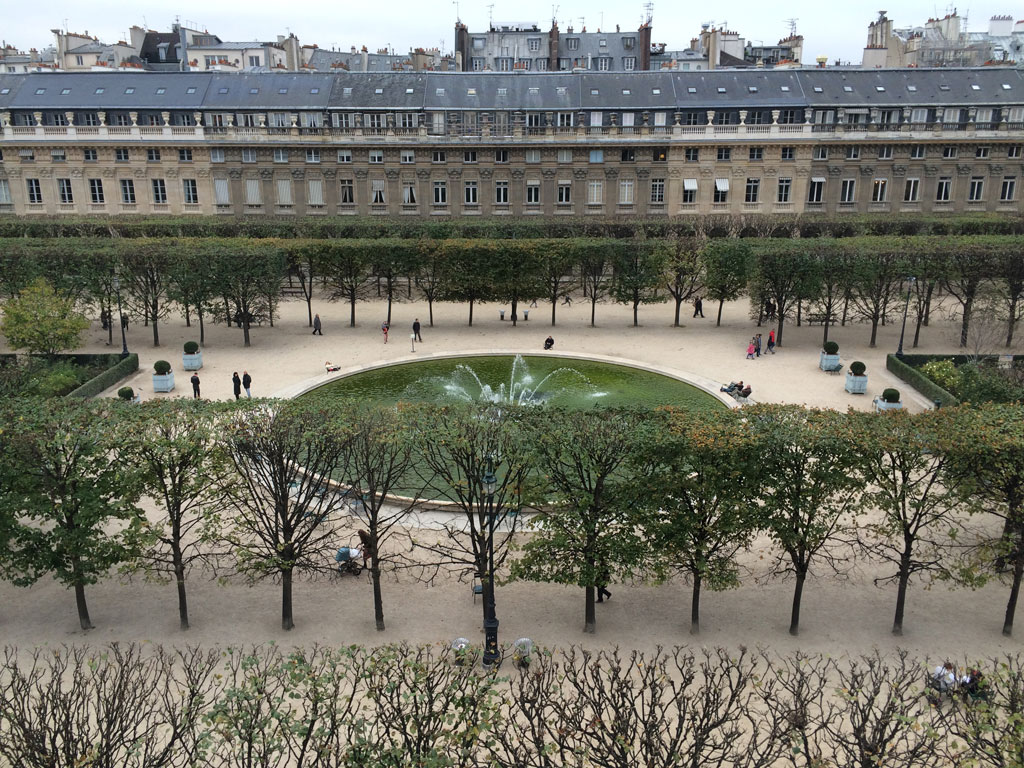
The appointment with the anesthetist at the very modern cheerful-looking G.S.H. private hospital in the 5th arrondissement goes well but she seems more interested in the fact that I live in the Palais Royal than anything else . Unfortunately, it’s her colleague Dr T. who’ll be looking after me on the Big Day but she says he’s very nice. I hope he’s efficient.

She’s tells me to have a Bétadine rouge shower the night before the operation and again the next morning. The operation is scheduled for 1.30 pm. “Bétadine“, I say, scandalised. “Yes, you’ll see”, she answers, “it foams just like soap.” I also musn’t eat after 9 am or drink water after 11 am. I’m used to intermittent fasting, so that certainly doesn’t bother me.

A pharmacy strike

It’s Big Day-1. I go to the pharmacy and it’s closed. Strange. I go to another pharmacy. Closed. Something’s going on, I think. I check my iPhone and discover there is a strike because of a project to let supermarkets sell aspirin and other OTC medications. The pharmacists say they’ll lose too much money and that it’s dangerous for the public to have free access to aspirin. The closest pharmacy open today is miles away so I ask my stepson who’s an intern and lives down the road if he has any Bétadine rouge. He does, so the problem is solved.

Well, not really. It’s obvious that what he’s given me may be red but it does not foam. I google and learn that it’s a different product and that I’m even supposed to wash my hair with it. I do not have a good relationship with Bétadine. When Black Cat was (intentionally) born at home, the doctor managed to knock over a whole bottle which ruined the carpet (and his leather doctor’s bag) forever.

I see I can use Hibiscrub instead so next morning at the crack of dawn (for me anyway), I set out to find a pharmacy that is open. The first one only has Bétadine rouge so I buy that for 1 euro just in case. The next pharmacy can have Hibiscrub delivered for 2 pm. Too late. The third pharmacy says “Of course we have it. We have everything.” I bet they don’t really. It costs 8 euros.

I rush home and get in the shower. Hibiscrub is pink which annoys me because I’m getting increasingly stressed. At least it’s better than red. I wash my long hair hoping it will dry in time because I don’t have a hair dryer.

What time’s the op?

Suddenly I am no longer sure of the time of the operation. Is it 1 pm or 1.30 pm? I haven’t written it down and I haven’t been given an appointment card. I phone the hospital but they can’t tell me. They can’t even find me at first (it turns out they are using my married name). I ring the doctor’s secretary but she can’t tell me either. I start panicking.

I do a little rant on Facebook and get lots of nice encouraging friendly replies so I start feeling a bit better. I talk to my brother and family in Sydney on skype which cheers me up as well.

I decide to aim at 1 pm and take my Kindle with me. Jean Michel is driving me there so we set out at 12 pm and arrive at 12.45. It later turns out I should have been there at 12 – I later discover an instruction sheet in my bag that I was given the day I went for the anesthetist’s appointment – but fortunately it doesn’t matter.

The procedure begins

I’m sent up to a waiting room on the 6th floor, where I edge away from the lady who is intent on telling everyone about her previous experience. My particulars are taken, I pay the 18 euros not covered by social security which will be reimbursed by my mutual benefits fund and sign a form putting my future entirely in the hands of a doctor that I’ve seen exactly twice.

A nurse takes me to a changing room but there are no lockers left. She gives me a large sealable plastic bag to put my clothes and belongings in. I’m glad I’m wearing my uncrushable cycling clothes (I’ve become savvy after my recent emergency ward experience) and no jewellery other than my watch. I’m given non-woven blue pyjamas and slippers to put on.  I put my watch, phone and kindle in the bag as well and seal it up. I wash my face with Bétadine as instructed. So much for avoiding it!

The op waiting room

I’m directed to a second waiting room with nine day beds in a semi-circle around the room. Some of the other five patients have eye patches so I assume they’ve already been operated on. After a while, a nurse comes and puts drops in my eye to dilate the pupil. My vision gradually blurs and, judging from the other patients, my eye gets bigger. When the nurse goes out, I say to the room in general, “C’est un peu l’usine ici” (it’s like being on a factory line here). That breaks the ice and people chat for a bit.

All the others are being operated on by Doctor B. Now this could be good or bad. Maybe my Dr R. hardly ever does this operation so he’s incompetent or since he only has me to operate on he’ll be extra alert and careful.

There is no clock anywhere but a lady accompanying an older relative sees me look at my wrist and tells me the time.  It’s 1.15 pm. I make up stories about the other patients in my head to while away the time and not think about my eye being cut open and going blind.

An elderly lady with an eye patch arrives looking very spry and climbs onto her bed. “It was much better than I thought”, she says. “I didn’t see the time go by.” Is this a pun, I wonder. “We can invite her anytime”, I say out loud, feeling a little less anxious.

Up to the 7th floor

Eventually, a man with a wheelchair comes to get me. The other patients wish me bon courage and he takes me up to the next floor. While waiting for the very slow lift, he keeps his eyes riveted on his smart phone. I really think he should be giving me his undivided attention …

I’m wheeled into a room with about 5 beds and directed towards one of them. Everyone is very cheerful and friendly and efficient-looking. No smart phones here. Dr T. the anesthetist comes over and introduces himself. He tells me that I’m first on the list because his colleague has told him I have to be finished by 3.30 pm so Jean Michel can pick me up. JM’s on call for his technical roster this week so has to be back at work by 5 pm. (He’s checked that someone can replace him if he isn’t but I don’t tell anyone else that).
The anesthetic begins

Dr T. washes the eye area with more Bétadine (they love that stuff) then injects some sort of calming substance into the vein on the back of my hand. It hurts. After that come some eye drops that really hurt but not for too long. I explain that I’m worried about the peribulbar injection I’m going to be given in the eye area. Dr T. is very reassuring and a nurse kindly strokes my face.

In fact, it’s not at all painful and I am feeling very destressed. I hear someone say “Bonjour Dr R.” so I take a look. “Good, he’s the right man”, I say. That makes everyone laugh.  He comes over and says hello and checks I’m OK.

Into the operating theatre

I’m wheeled into the operating room and my forehead is strapped to the bed with what feels like adhesive tape (but could be anything) so I can’t move my head. I had wondered how they were going to keep me still. It’s not too uncomfortable. A slightly sticky bandage affair called a champ stérile is then placed over my face with a hole for the eye that has the cataract. They make sure I can breathe. Each time, I’m told what is happening, which is reassuring.

“OK, let’s go”, says Dr R. after the anesthetist has checked I can’t feel anything. I have a blood pressure cuff on my arm that squeezes hard every five minutes.  I tell the surgeon that I’m worried about moving at the wrong time. He says not to worry, that when I have to be super-still, he’ll tell me.

Thinking about my garden

I don’t want to think about what he’s doing to my eye so I try and make a list of all the different flowers in our garden in Blois. When I’ve finished, I imagine myself in front of our Renaissance fireplace with Jean Michel, drinking vouvray and eating foie gras.

Dr R. asks how I’m going and I tell him about the garden. He approves. I hear him ask for the lens and not long after that, he warns me that the ultrasound is going to begin. That, apparently, is what is used to implant the lens. Shortly after, ,he says he’s finished. The whole operation takes about 15 minutes. “Are you happy with the result”, I ask. “Yes”, he says, “you were perfect.” I glow. I now have a compress with a hard plastic shell over it taped to my face. I can’t feel anything.

Back to the ante-chamber

eye_patch_selfieI’m wheeled back into the ante-chamber and a male nurse comes to make sure everything is going well. While I’m recovering I look at the way the doctors and nurses wear their skull caps. Everyone has a different technique for tying it on. I remark upon this to my nurse, “Tout le monde a sa coiffe” (everyone has their own headdress). “Ah”, he says, looking pensive. A few minutes later, he adds, “Well, I guess that some days you could say that everyone has their cross to bear.”

I start guffawing. He thought I said croix meaning cross and not coiffe meaning headgear!  “You must have thought I was strange”, I say. “Well, maybe a believer”, he replies.

Back to the post-op room

I’m given the OK by the doctor and the anesthetist, together with a prescription for an eye bath and three lots of eyedrops to be used three times a day for a month (how will I ever remember?) as well as a painkiller if needed. My porter wheels me back to the lift and down to the sixth floor. There are noticeably fewer people in the room. I remind the nurse that I need to be out by 3.30 pm. “Well, that certainly won’t be possible”, she says. I explain about Jean Michel so she asks for his mobile number and passes me the phone. I should be finished by 4.

I rest for a while then my blood pressure is taken. A nurse’s aid takes me to have a collation. I feel fine except that I am having a little difficulty only seeing out of one eye which does not have 10/10 vision. I am given coffee, fruit juice, stewed apple and a little cake. Breakfast at 3.45 pm.

Going home

Then I’m allowed to go and change back into my clothes. I phone Jean Michel who’s waiting in a parking bay a few streets away and make my way downstairs. I’m feeling relieved and tired with no pain whatsoever.

When I get home, I sleep for a while then continue resting until dinner. I feel a little whoozy but that’s all. I go to bed early. I have very slight discomfort as though I had a bit of grit in my eye but certainly not any pain. I take the pain killer anyway just in case.

The morning after

Next morning, after sleeping reasonably well despite the bandage over my eye, I have an appointment with the surgeon at 11 am. I’m still feeling slightly nauseous so get Jean Michel to go and get the eye drops.

I’m able to walk the 20 minutes to the doctor. He says that all looks good and that I should only need a slight correction when driving at night, particularly in the country (as opposed to Paris where no one ever drives). He also tells me to phone him if I have any negative symptoms or questions.

I come home, lie on the couch, have lunch and then go back to bed for a sleep. I’m feeling much more tired than I expected. My vision is very, very sharp and I’m a little dazzled by the light. I can see a sort of rim off to the left that I forgot to mention to the doctor.

My vision – before & after

I just want to explain about my vision. I have always been shortsighted and have been wearing contacts for years. About ten years ago, my vision started to change. I became less shortsighted and more longsighted. My right eye in particular became much stronger and I had stopped wearing contacts or glasses at home altogether, only putting them on when I went out.

However, reading a menu or even my iPhone with its little letters, was not always easy and I certainly couldn’t thread a needle or see the tiny date on my watch. My Kindle had solved the problem of reading in bed because you can increase the size of the letters at will.

However, no one has explained to me that the little silicone lens called an intraocular lens that replaces the crystalline lens when a cataract is removed is actually a corrective lens. When the doctor said I’d see better after the operation, I assumed that he meant that the cataract had been obstructing my vision.

The multifocal intraocular lens

A chance comment from my intern stepson sends me to google. I discover that monofocal lenses were initially used to provide vision at one distance only : far, intermediate or near. Now there are multifocal lenses that allow patients to see objects at any distance, thus eliminating the need to wear glasses or contact lenses. What a bonus!

I’m supposed to wear the cover plate over my eye for 5 nights. After one night, I decide it’s not necessary.  Jean Michel hasn’t ever put his elbow in my eye when I’m asleep so I don’t suppose he’s going to start now.  The next day, I’m still feeling exhausted and don’t want to go anywhere near the computer so I have a rest day. I keep away from the packing cartons as well because of the risk of getting dust in my eye.

I phone the doctor to ask about the rim of light I can see and he explains that it’s the edge of the lens and that I will get used to it. I guess it like wearing sunglasses with different size frames.

A very positive result

It’s now four days since I had the operation and I’m feeling fine although still a little tired. I can thread a needle and see the little date on my watch. I can read a menu in a restaurant at night without any trouble. I can see the small print on my iPhone and all my photos are sharper. I will definitely need a lens on my right eye at night particularly to drive. I’m annoyed that I had just bought a six months’ supply of lenses for both eyes. Had I only known!

The only downside is that I can now see all my wrinkles!

Friday’s French – déménager, déménagement, ménager

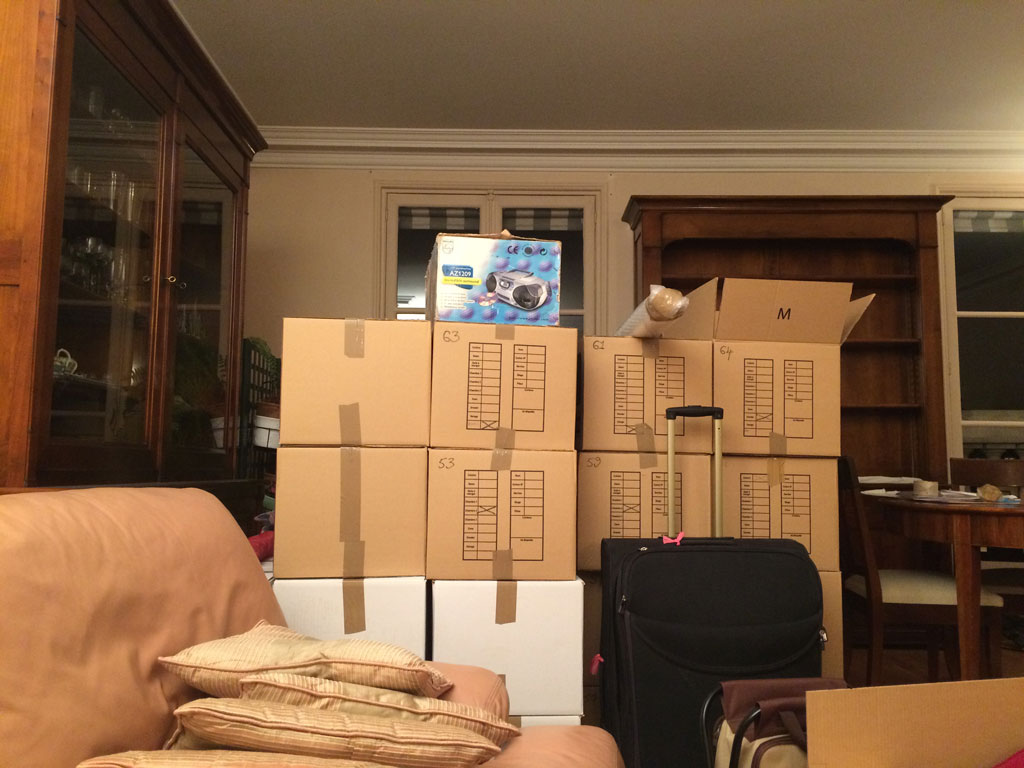
Nos cartons de déménagement

Lundi on déménage ! For some reason, it sounds more specific in French than the English “We’re moving on Monday !” I guess it’s because “move” can be used to mean so many different things but déménager always means moving house (or office or whatever).

A ménage, which comes old French mesnage, a derivative of the Latin mansio (house), is a married couple or a household, so déménager literally means “breaking up the household”. And that is exactly what is happening at the moment as I sort out and pack up our goods and chattels accumulated over the last 9 years (and more).

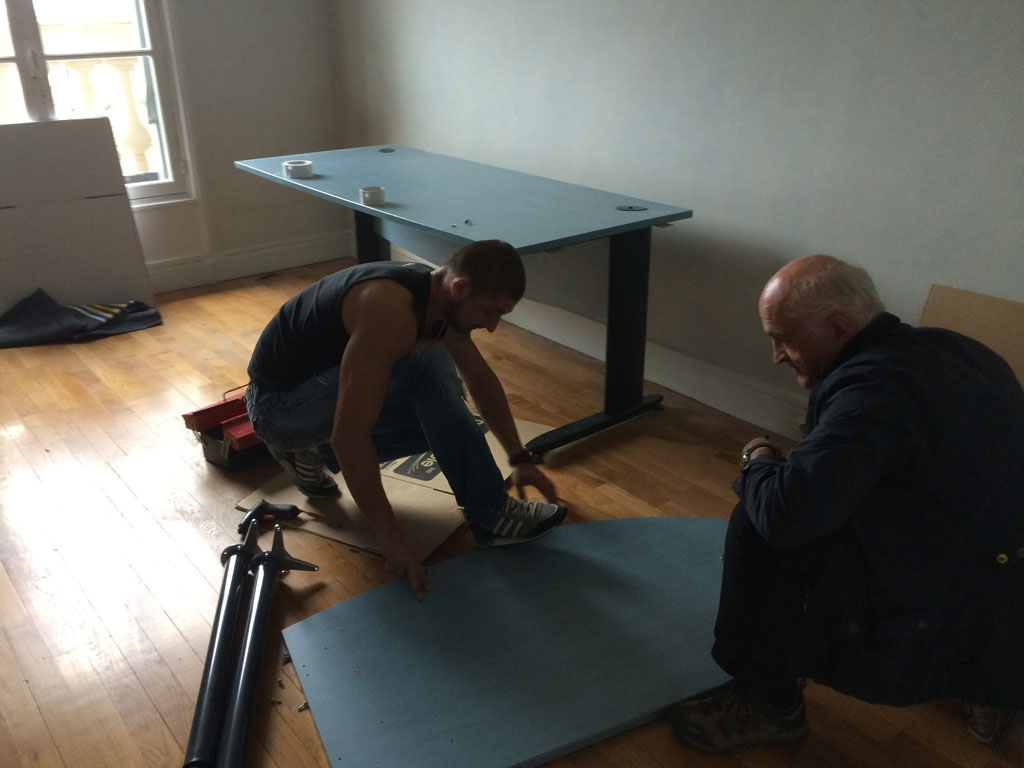
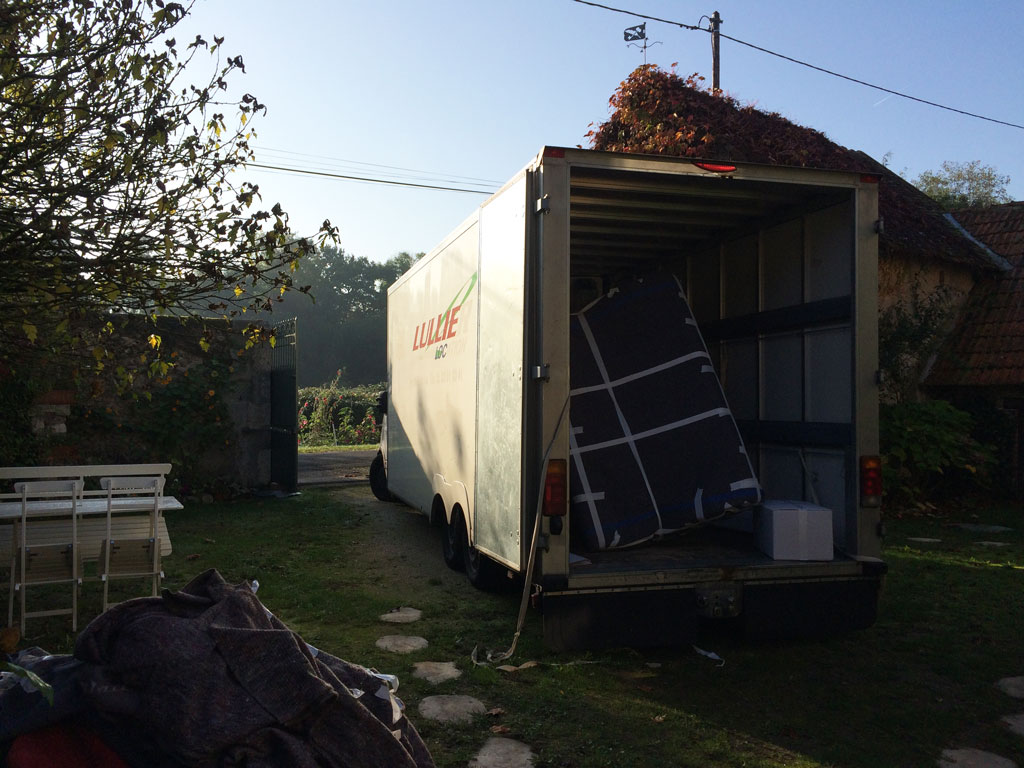
We’re having déménageurs do the actual moving with a camion de déménagement. Déménageur refers to both the removalist company and the individual person doing the moving. I had 5 devis (quotes) done. The estimated volume ranged from 52 cubic meters to 67 cubic meters, which is astonishing. And the prices ranged from 2,500 euro to 4,700 euro to move our belongings to Blois, 200 kilometers away.

I was so suspicious of the lowest quote that I rang them to find out why. They had made a mistake and quoted for Paris! They increased the quote to 3,000 euro which was still belong the next price of 3,600 euro so we chose Ultimate Déménagement. We’ll see how competent they are!

Taking the piano down 4 flights of stairs
Les déménageurs descendent le piano quatre étages

Déménageur has given the expression il a une carrure de déménageur – he’s built like a tank. But the champion of all was the single porteur who originally carried our piano up four flights of stairs on his back. It took two déménageurs to take it down again. They had heard of a porteur but never seen one in action.


Another expression that I like is déménager à la cloche de bois: to sneak off in the middle of the night. Though why there is a wooden bell involved, I don’t know!

Also, ça déménage is slang for “it’s brill/awesome”.

The verb ménager, however, means something totally different. The idea is to make sure a person is not offended.

Il faut vraiment la ménager, elle est très sensible – You have to treat her gently – she’s very sensitive.

Il faut qu’on ménage les deux parties – We have to keep both parties happy.

Si vous ne la ménagez pas, elle va beaucoup souffrir – If you don’t treat her tactfully, she will be very hurt.

Another great expression is ménager la chèvre et le chou (the goat and the cabbage) = to sit on the fence.

When applied to an object, ménager means to treat something with care or sparingly. The most widespread use is ménager ses forces or efforts = to save or conserve one’s strength.

So we can put déménager, déménagement and ménager together in the same sentence:

Un bon déménageur sait ménager ses forces pour mener à bien le déménagement. = A good mover knows how to save his strength so the move will go well.

Now I have to get back to my cartons de déménagement

Weekly Blogger Round-Up: The Urinette – Railing it in Switzerland – Oldest Basketball Court in Paris

This week’s Blogger Round-Up begins with Wendy Hollands from Le Franco Phoney who has some very interesting information for the female element, as my father used to say, but you have to read to the end of post to discover what it is. Next, a blog that I haven’t featured before called Le Chic en Rose by another Rosemary, with some very useful information on travelling by train in Switzerland during the winter. To finish off, Mary Kay from Out and About in Paris, with her usual savvy, found an unusual venue during the European Heritage days in September – the world’s oldest basketball court! Enjoy!

You just don’t see this in the city

by Wendy Hollands from Le Franco Phoney, an Australian who writes about all things French in La Clusaz, Annecy and Haute Savoie as seen by an outsider

lefrancophoney_calfSome things are a bit different here in the countryside of France. For instance, how many cities offer a calf as a prize? Here in La Clusaz, it’s a regular thing. You might remember the raffle last year, and now, if you guess the right weight of this calf, she’s yours. She’s worth €200, and if more than one person guesses the weight, the winners share the prize. I’m not quite sure how you share a calf. I guess you take a share of the money instead. Or, as a French friend suggested, meat tray time!

Hang on, hang on. Don’t get too worried just yet. For a start, this is a dairy cow, so she will enjoy eating grass for many more years yet. Also, she was on offer at the Foire de la Croix in La Clusaz last weekend, which is basically a giant cow exchange. Think stock exchange, with moos and poos. Read more

Railway Adventures: Bernina Express Switzerland

by Rosemary from Le Chic en Rose, initially from Yorkshire, now living in Perth in Western Australia who writes of the many things that inspire her including travel, fashion, history, learning languages and spending time with her family

lavieenrose_switzerlandI first went to Switzerland as an 18 year old backpacker with a couple of friends when we could just about afford to get by on bread and cheese from the local Migros. It is certainly not the cheapest destination by any stretch of the imagination! If you are planning on visiting then the Swiss Pass is a must. If you get the timing right you can often get good deals at low season (such as April between the winter skiing and summer hiking seasons). The pass gives you unlimited rail (and bus) travel for 4, 8, 15, 22 days or one month, “free” travel on the boat services on the lakes and admission to 470 Swiss museums. Read more

The World’s Oldest Basketball Court is in Paris

by Mary Kay from Out and About in Paris, an American by birth, Swiss by marriage, resident of Paris with a Navigo Pass for the metro that she feels compelled to use

outandaboutinparis_basketballIf you would have asked me the whereabouts of the world’s oldest basketball court, I would have never guessed that it’s in Paris. Not only does the YMCA court on rue de Trevis hold the distinction of being the world’s oldest, it’s also where the first basketball game in Europe was played.

The court is an exact replica of the one in Springfield, Massachusetts where the game was played for the very first time. On January 20, 1892, Canadian doctor James Naismith introduced basketball, a game intended to keep the students of the International YMCA Training School active during the winter months. Read more

Lisbon – an iconic tram, a hilltop castle, La Fontaine’s fables and a sublime view

It’s an intermittent fast day so we prepare a picnic to eat in nearby Estrela Gardens with their exotic trees and shrubs and 19th century bandstand, obviously a Saturday rendez-vous for the locals.

The bandstand in Estrela Gardens
The 19th century bandstand in Estrela Gardens, originally located on Avenida da Liberdade and moved here in 1936.

There’s even an outdoor cinema. What a pity it’s in Portuguese or we could come back in the evening and conjure up childhood memories of sitting under the stars on canvas seats at Magnetic Island in North Queensland, particularly with all the tropical trees around us.

Open-air cinema with the Estrela Basilica in the background

Just opposite the park is the imposing Estrela Basilica but there is a mass inside so we don’t visit – it doesn’t look any different from most of the other churches we’ve seen in Lisbon anyway.

Basilica da Estrela built in the 1780s
Basilica da Estrela built in the 1780s, impossible to photograph without the tram lines!

Instead we take the famous n° 28 tram which is a great favourite with tourists so is usually completely full. But this is the terminus even though the tram does a loop so we manage to get a seat. If you are on the tram and want to continue you have to get out and walk to the next stop a few metres further on.

Alfama in the sun
Alfama in the sun – with lots more people!

As we’re almost at the beginning of the queue, we both get a single seat on the right. It takes us up the hill to the cathedral and through the Alfama quarter we visited in the rain but as today is fine and sunny, there are a lot more people. We decide to stay on the tram until the second terminus.

Tram 28 at the Graça terminus
Tram 28 at the Largo da Graça terminus

With a big clunk, the tram stops and the driver announces finished. Some of the people look completely bewildered because they don’t know about moving along to the next stop. Jean Michel checks the map and says we’re in Largo da Graça and we can walk to the Miradouro Sophia de Mello Breyner Andresen, which we also visited in the rain. It, too, is full of people today.

You can see the castle on the hill on the left from the esplanade in front of
You can see the castle on the hill on the left from Miradouro Sophia de Mello Breyner Adrensen, the esplanade in front of Graça church

However, it still offers the best view of the castle on the next hill over. Up and down we go until we reach a very decrepit area that is part of the Alfama but last time we came from the opposite direction and it didn’t look nearly as bad.

The Disoriented Pavilion
The Disoriented Pavilion by Camila Cañeque, 1984

We walk around the ramparts of the castle but they are hidden by more delapidated housing. We walk through a tiny street and come out on an a vacant alotment with masses of artificial flowers. This, we learn from the sign, is a work of art called the Disoriented Pavilion by Camila Cañeque, Spain, 1984.  Taking “disappointment as a starting point, the sign explains, her art interrogates unending paradoxes on how humans create and modify the cultural/material landscape they inhabit”. Yes, well …

Crowds in front of the entrance to the castle walls

The castle is surrounded by souvenir shops and cafés. There is a long queue even to visit the grounds so, instead, we decide to go to the nearby 17th century Mosteiro de São Vicente de Foro (Monastery of Saint Vincent outside the walls), renowned for its azulejos and in particular a collection illustrating La Fontaine’s fables.

Bougainvillia-coverd courtyard of Monastero
Bougainvillia-coverd courtyard of Monasteiro de São Vicente de Foro

We give the church a miss and enter the monastery via a bougainvillea-covered courtyard. Inside are two-storey cloisters with blue and white azulejos on every wall. There is virtually no one in sight.

The two-storey cloisters with their azulejos

Various rooms lead off the cloisters, including a lugubre royal pantheon of the Braganza monarchs and a marquetry marble chapel.

The mausoleum at the Monastery
The mausoleum of the Braganza monarchs in Saint Vincent’s Monastery

A staircase with azulejos on both sides leads up to the La Fontaine collection on the first floor. I don’t recognise any of the 38 fables but our guide book tells us that many of them are relatively obscure. I like the one about the astrologer who is so busy looking at the stars that he falls into a well.

The astrologer falling in the well because he's looking at the sky
The astrologer falling in the well because he’s looking at the sky

By now, my feet are aching but we remember that the lady who sold us the tickets said there was a good view from the roof terrace. Good is not the word – it is breathtaking. We can see the National Pantheon, Alfama, the Tagus River and rooftops of Lisbon spread out before us.

The view of the Tagus and rooftops of Lisbon from the Monastery

There are lots of columns on top of the balustrades that remind me very much of Gaudi’s chimneys, especially the ones on Guell Palace. This is not the first time that I am reminded of Gaudi in Lisbon.

The pinacles on the rooftop of the Monastery

We walk back to Largo da Graça to get the n° 28 tram down to our bus in the historical centre. We’ve only been in it for a few minutes before it comes to a stop. The driver climbs down to check the tyre of a big black stationwagon badly parked halfway up the pavement next to us. We can’t get past because the tyre is turned outwards.

Inside tram n° 28
Inside tram n° 28

As the passengers don’t believe we can’t get past, the driver, who seems very young, gets out with a template and shows that it’s impossible. He blows his horn very loudly for a long time but nothing happens.The next tram soon pulls up behind us so the drivers have a conflab. Our driver gets back into the tram and phones the police. There is a lot of photo-taking and questioning from the passagers, most of whom are tourists.

Too close for comfort!

I whip out my dictionary and ask the Portuguese lady behind me if this happens frequentemente. She shakes her head. Eventually the driver tells us in English that it’s going to take an hour for the police to come and tow away the car.  People start to leave the tram including ourselves.

Not enough distance between the tram and the car tyre

Then several men all try to lift the car out of the way. Jean Michel joins them and they manage to move it enough to let the tram go past. Everyone cheers. The driver gets back into the tram and edges his way forward. We all breathe a sigh of relief!

Friday’s French – taxi, fiacre, taxis de la Marne

parisian_taxiI’m very excited because yesterday, I discovered the origin of the word taxi! And it’s Parisian. Who would have imagined that?

I learnt about it while taking some Australian friends on a walking tour that included the oldest houses in Paris.

Paris has lots of street signs explaining its history and we came across one that talked about the invention of the fiacre.

In 1612, a coach company from Amiens rented a house in rue Saint Antoine in Paris, bearing an effigy of Saint Fiacre, the famous barefoot friar (carme déchaussé, if you’re interested) who predicted that Anne of Austria would have a son (one chance out of two, as my friends pointed out). He’s also the patron saint of gardens.

fiacre


In any event, Saint Fiacre eventually became a sort of Saint Christopher and his image was displayed on coaches all over Paris to prevent accidents. Ever since, coaches have always been called fiacres. Just before the French revolution in 1789, there were about 800 of them parked on 33 stations including more than 650 under shelters called remises.

The coach drivers had a terrible reputation and the police did everything they could to control them. Each driver had a number that cost a fortune to buy and a booklet containing their licence to park and drive the coach. After reaching their zenith at the turn of the 20th century, horse-drawn carriages declined and were replaced with the automobile.

The name of taxauto was soon adopted, followed by taxi, which is an abbreviation of taximètre and designated not the taximeter, but the vehicle containing it. The term taxi took over completely after a famous historical event in the first world war known as the “Taxis de la Marne“.

taxis_marne

On 7th September 1914, in order to reinforce the Maunoury army, General Galliéni requisitioned 700 Parisian taxis to ferry the 7th division troups from Sevran, Livry and Gagny in the east of Paris (i.e. the Marne) to Nanteuil-le-Haudouin and Plessis-Belleville in Picardy, which represented a distance of about 40 kilmeters . The meeting point was boulevard des Invalides.

During the night, with four men to a taxi, most of the division was transferred, totalling more than 5,000 combatants, a somewhat modest number compared with the Maunoury army’s total of 140,000, but the story has gone down in history. You can find more details here.

And would you believe, when I was taking my photo of a Parisian taxi, I accidentally took one of a Taxi de la Marne, even though I had never heard of it before! But since it’s a modern cab, I checked it out and learnt that during the recent centenary – 7th September 2014 – a reconstitution took place with 10 originals taxis and 120 modern ones bearing the  insignia shown on the photo as well as a number of military vehicles as you can see from the video below on the France 3 regional television website.

I wish I’d known at the time!

Weekly Blogger Round-Up: A Florentine Pig – An Australian in Paris and Provence – Snapshots of Europe

 I’m back from Lisbon (but there will still be more posts) so am resuming my weekly blogger round-up, beginning with a wonderful story about a Florentine pig from Margot from The Curious Rambler.  Next, Andrea from Rear View Mirror, is celebrating her second anniversary on the road with a wonderful photo giveaway that I’m sure you won’t want to miss. And to end up, The Good Life France tells us the story of an Australian from Queensland who finally saw her dream come true with a visit to Paris and Provence. Enjoy!

The Bronze Pig of Florence

by Margo Lestz from The Curious Rambler, who lives in Nice, France where she likes to bask in the sunshine, study the French language and blog

closeup-of-pigI’m back in Florence studying Italian and my courses seems to be going better this time. I’m not confusing Italian and French anymore (at least during the first week). We rented a beautiful little apartment in a 15th century palazzo which has painted ceilings, huge windows, and terracotta floors. Florence is full of these wonderful old buildings and it’s such a pleasure to stay in one of them.
While I’m in Florence, I thought I’d take a break from writing about France and write about some of the curiosities of this city. Hope you enjoy the story of the Bronze Pig. Read more

Snapshots of Europe

by Andrea from Rear View Mirror (formerly Destination Europe), a fellow Australian who, after 6 years of living in France, has given up her Paris apartment to live a nomadic life slowing travelling around Europe, experiencing each destination like a local.

budapest-parliament-1-300x200It’s coming up to the two year anniversary of me handing in the keys to my Parisian apartment and hitting the road to travel full time. Two years of living out of suitcases, countless hotels, Airbnb apartments and one barely habitable hostel.

I’ve been fortunate to visit most of Europe’s capitals, wander quaint villages, swim in turquoise waters, go zip lining in a national park and hiking through gorges. I’ve found my way to the top of mountains and dipped my toes in glacial lakes. My hard drive is at capacity with sunset photos and even the occasional sunrise. Read more

Visit to Paris and Provence

Written by The Good Life France, an independent on-line magazine about France and all things French, covering all aspects of daily life including healthcare, finance, utilities, education, property and a whole lot more.

Les-Baux-de-Provence-CC-Carolyn-AnskyMany of us dream of visiting France, especially Paris, the most visited tourist destination in the world, and Provence, high on the wish list of places to visit for so many, we talk to a lady whose dream came true…

We meet Carolyn Ansky from Queensland, Australia who says “for years I played the Marianne Faithful song ‘At the age of 37… she realised she’d never been to Paris”. I felt that at the age of 54 it was now or never for me. Read more

Sintra – A Lovely Palace and a Yellow Monster

We’ve checked the weather and it looks like it isn’t going to rain. We walk down to Rossio Station to take the train to Sintra. We’re amazed to see the long queue of people, even at the ticket machines. We soon understand why – the system is quite complicated because of the Via Viagem travel card.

Rossio Station
Rossio Station with its neo-Manueline façade built in 1886 with its interesting intertwined horseshoe portals

If all these people are going to Sintra, I think, it’s going to be very busy. However, we easily get a seat, the windows are clean (unlike the train to Charles de Gaulle airport in Paris!) and it is a comfortable 40 minutes to our destination. As soon as we get out of the train, it feels like we’re in a different part of the world.

Sintra Station
Sintra Station

The charm that is often lacking in Lisbon abounds in Sintra. It’s cooler and we are surrounded by what looks like a tropical forest. We stop for coffee and a cake at a little café opposite a house covered in bougainvillea. I order a cappuccino for the first and last time. Jean Michel wants a bigger cake than the pastel de nata that I choose. It turns out to contain ham …

House with bougainvillea opposite our tea shop

To quote the Unesco World Heritage Site: “In the 19th century Sintra became the first centre of European Romantic architecture. Ferdinand II turned a ruined monastery into a castle where this new sensitivity was displayed in the use of Gothic, Egyptian, Moorish and Renaissance elements and in the creation of a park blending local and exotic species of trees. Other fine dwellings, built along the same lines in the surrounding serra , created a unique combination of parks and gardens which influenced the development of landscape architecture throughout Europe.”

An unusual building near the train station in Sintra
A very romantic-looking building near the train station in Sintra

We start walking up the hill towards the castle. The promenade is quite delightful, with forest on both sides and modern sculptures and views of the palace and town along the way.

Our first view of the castle

The white royal palace with its two tall chimneys looms into sight. It was probably constructed on the site of the Moorish Alcazar and its buildings result from two main periods (15th and 16th centuries). We buy a double ticket to the palace and nearby Pema Castle for 22 euro each and begin our visit.

Sintra National Palace

The first thing I see are what look like leather Henri II chairs and a table, similar to those in Blois castle. We go from one room to the next, admiring the beautiful azulejos tiles of which there is a different set in each room, the unusual ceilings and intricately carved furniture, harmoniously blending Gothic, Moorish and Renaissance elements.

Henri II table with azulejos in the background
Henri II table and chairs with azulejos in the background

Lovely little patios lead off the main rooms and there are views in every direction.

A typical patio in the palace

My favourite is the breathtaking Heraldry Room, built in 1515 to 1518, with its magnificent coffered domed ceiling. It reminds me of the beautiful rococco libraries along the Danube, such as Melk and Wiblingen Abbeys, except that the scenes on the walls are blue and white tiles.

The Heraldry Room with its beautiful blue and white azulejos

I also love the Galley Room whose painted ceiling depicts various sailing ships representing the great discoveries.

The ceiling of the Galley Room

By the time we finish it’s 1.30 and time for lunch. We wander off into the very touristy old town, with its steep little streets and I eventually see a sign saying Miradouro (panorama) providing an excellent view of the palace and surrounding countryside, including the steeple in the second photo.

View from the Miradouro
View from the Miradouro da Villa restaurant

There is also a little restaurant called Miradouro da Villa that still has a free table on the minute terrace. We are soon esconced on our high stools and can watch other people coming to “ooh” and “aah” over the view and take selfies.

A little cherub on the road up to the restaurant

We order pork spare ribs, rice and salad and a ½ bottle of local red wine. There are no half-bottles left so the waiter suggests wine by the glass, although he warns us to drink it slowly so it won’t go to our head! One glass doesn’t seem to do much harm and although it has no nose it is a dark red and full bodied.

My favourite azulejos in Sintra National Palace

At 28.40 euros for both of us, including olives and coffee, the restaurant with its beautiful view and quiet surroundings is an excellent choice.

Now we’re ready for the next part of our visit – Pena Palace, the most visited monument in Portugal. We take a return ticket for the local hop on, hop off bus which stops at the train station and in front of the tourist office in Sintra (tickets on board) (5 euros each). For the entire 15-minute ride to the palace, up a steep winding road, it pelts with rain! Just as we reach the bus stop, the rain stops. Good timing indeed.

The forest road up to Pena Castle

We have the choice of either walking for 15 minutes up a pleasant path to the palace or taking a 3 euro bus. We walk of course.

The path up to the castle

By now, the palace is more visible. It looks like a pink and yellow Walt Disney castle and I think it is ghastly. Built in the 19th century, it is considered to be a work of pure Romanticism, designed by the Portuguese architect Possidónio da Silva.

Mist at the top of the castle

Inside, however, are the richly decorated church, two-storey cloister and refectory of the monastery built by King Manuel 1 and donated to the order of Saint Jerome following a visit by King John II in 1493, accompanied by his wife Queen Leonor, who made a pilgrimage to a chapel dedicated to Our Lady of Pena built, it seems, after an apparition of the Virgin Mary.

The cloisters of the original monastery over which Pena castle was built

For centuries, Pena was a small, quite place of meditation, housing a maximum of eighteen monks. I wonder what they would say if they could see the Disney castle and swarms of tourists today!

Both the monks and royal family certainly enjoyed a wonderful view

Lightning first damaged the monastery in the 18th century but the famous earthquake of 1755 reduced it to ruins. The marble and alabaster chapel, however, remained relatively unscathed.

The "family room" with its Islamic arches
The “family room” with its Islamic and Renaissance features

It was left to rack and ruin until 1838 when the young prince Ferdinand who was a bit of a nature lover acquired the old monastery and much of the surrounding land. He turned it into a palace to be used as a summer residence for the Portuguese royal family. The work was entrusted to a German mining engineer, Wilhelm Ludwig von Eschwege, which is why it is reminiscent of some of the castles along the Rhine.

One of the beautiful vaulted ceilings inside the castle

The King suggested that vaulted arches and mediaeval and Islamic elements be included and Queen Maria looked after a lot of the decoration and symbolism.

Monserrat Castle
Monserrat Castle

We decide not to visit the nearby Palace of Montserrate designed for Sir Francis Cook by the distinguished British architect, James Knowles Jr, an example of mid-19th-century eclecticism, combining neo-Gothicism with substantial elements derived from the architecture of India. Two palaces are enough in one day.

The art work inside Rossio Station

Instead, we walk down a fairly steep path to pick up the hop on hop off bus at the second last stop as we think there might be quite a few people waiting at the main entrance at this time of the day, but we needn’t have worried. There is plenty of room. We arrive at the station just as our train is about to pull out. Back at Rossio Station, we have time to enjoy the artwork on the walls.

How to Get to Sintra: Trip Advisor has excellent advice. Click here.
To use the Via Viagem card: See the metrolisboa website

Five Unforgettable Places I Have Visited

When we discovered Jeronimos Monastery in Lisbon recently, I added it to the list of places that have left an indelible mark on me because they were totally unexpected and totally overwhelming. At the same time, I was asked to participate in the Booked.net  Top Destinations to Go challenge by Anda from Travel Notes and Beyond. Choosing just five places was a hard task so Jean Michel and I pooled our favourites, which include both man-made and natural wonders.

The Sagrada Familia in Barcelona

The interior of Gaudi’s Basilica of the Holy Family is absolutely dazzling, breathtaking, overwhelming. There are no words to describe it and no photo to do it justice. It is the most amazing well of light imaginable. The brightly coloured stained glass windows that would be gaudy anywhere else are quite superb.

sagrada_familia

Gaudi was only 31 when he began working on the cathedral in 1883. It evolved considerably during his lifetime, becoming more and more audacious. Sadly, he was run over by a tram at the age of 73 and nearly all the plans destroyed by fire during the Civil War in 1936.

The pillars, which split into two halfway up to remove the need for flying buttresses, represent trees in a forest with leaves at the top. The pillars themselves have a special spiral design with fluting that increases in number as it gets higher and take us soaring up to the highest point, 45 metres above the ground. An unforgettable moment.

Plitvice Falls in Croatia

And to think that I nearly missed Plitvice Lakes National Park as a result of eating tainted prawns in Dubrovnik!

croatia_plitvika_2

Never had I seen colours like those in the Plitvice Lakes. Each view was more marvellous than the one before!

At 10 am, before the floods of tourists arrive, the upper path is simply an hour of magic to remember forever.

Tasman National Park in Australia

Our trip to Tasmania was somewhat disappointing, due to cold rainy weather. But the sun came out at last and we set off for Port Arthur. On the way, we followed a sign saying Blow Hole, Devil’s Kitchen and Tasman Arch.

Tasman's Arch
Tasman Arch

And what we saw was mind-blowing.

These natural formations along the rugged coastline about an hour and a half south of Hobart are dramatic and grandiose, leaving a impression of immensity that you will never forget.

Rila Monastery in Bulgaria

The initial impression of Rila Monastery built halfway up a mountain and surrounded by forest is quite fabulous.

View of Rila Monastery as you walk in

Founded in the 10th century by the hermit St John of Rila, it was destroyed by fire in the 19th century and rebuilt between 1834 and 1862. Although characteristic of the Bulgarian Renaissance (18th-19th centuries), which symbolises the awareness of a Slavic cultural identity following centuries of occupation, it is quite unique.

The monastery museum contains the most fabulous carved cross I’ve ever seen produced painstakingly by a monk called Rafail, with 104 religious scenes and 650 miniature figures and 12 years in the making. It was hardly surprising that Rafail lost his sight in the process. Just one more reason to remember Rila.

The S-Bend in Austria

Cycling along the Danube from its source in Donau-Eschingen to Budapest was a magical experience in itself. One areas stands out in particular, the Wachau world heritage site in Austria between Linz in Austria and Passau in Germany and the S-Bend in particular.

The S-bend in the Wachau in Austria

The single most remarkable moment of the trip was the view of the S-bend from Schlogen blick.

We had spent the day cycling along tranquil car-free paths, going back and forth across the Danube on a series of little ferries, and now we could see our day’s journey spread out in majesty before us. A truly unforgettable moment.

So tell me, if you were asked to name your five most unforgettable places, what would you choose?

And if you’re a blogger, why don’t you join the To Destinations to Go challenge (and the chance to win an iPhone 6)? Click here for more information.

A Marvellous Monastery in Belem, Lisbon

What I love most about travelling is coming across something that is totally unexpected, totally overwhelming and totally unforgettable. It can be the Rheinfalls in Germany, the Sagrada Familia in Barcelona, Tasman’s Arch in Tasmania, the Cathedral in Reims, Plitvice lakes or the S-bend in Austria. Today, it happened in Lisbon with the Jerónimos Monastery.

First view of the Jeronimos Monastery in Belem

After a good night’s sleep, we leave the apartment around 10 am, take the 758 bus to its terminus then the 714 to Belem. When we get out the bus at 11.30 am, it is pouring with rain. We put our rain jackets on, open our umbrellas and walk towards the Monastery.

Sun comes out on the Monastery
Sun comes out on the Monastery but there are crowds of people

There are so many tour groups and individual tourists under the porch leading to the church that we abandon ship and decide to go and see Belem Tower first. Maybe at 12.30 pm, all the tour groups will be gone.

Empadas
Empadas at Casa da Cha de Belem

On the way, we stop off at Casa da Cha de Belem and have two empadas, one with spinach and fresh cheese and the other with cod, washed down with freshly squeezed orange juice to keep us going until a late lunch.

Belem Tower from a distance

As Belem Tower comes into sight in the distance, we cross a footbridge over the tram lines and walk down to the Tagus and the Tower, one of Portugal’s greatest icons.

Belem Tower seen from one side

Built in the early 16th century, it is an excellent example of the Portuguese Manueline style, which is sumptuous late Gothic incorporating maritime elements and representations of the discoveries brought back by Vasco da Gama and Pedro Alvares Cabral, mainly financed by the proceeds of the lucrative spice trade with Africa and India. Surprisingly, the tower, built on a small island in the Tagus, was not destroyed by the famous earthquake of 1755.

The Monument of Discoveries
Padrão dos Descobrimentos – The Monument of Discoveries

We walk back along the shore towards another, much later construction, called the Monument of Discoveries (Padrão dos Descobrimentos) built in 1960 for the 500th anniversary of the death of Henry the Navigator.

An Aussie in Portugal

In front is a giant marble wind rose. A world map in the centre charts Portuguese explorations showing the most important dates in the Portuguese maritime history with ships marking the locations where Portuguese explorers first set foot on land.

Panoramic view of the Jeronimos Monastery from the park opposite

By now it’s nearly 1 pm so we’re hoping all the groups have hopped back on their buses. I take a photo of the monastery from the Praça do Imperio gardens.

The fountain in Parque
The fountain in Praça do Imperio gardens

Just as we leave, Jean Michel looks back and says, “It’s a pity you missed the fountain.” So I go back and take a second photo.

The intricate gold altar on the right as you go into the church

We arrive back at the entrance to the monastery and there is not even a queue! We think that due to the heavy rain this morning, the groups probably rescheduled their visits with everyone arriving at once.

The monastery was built by King Manuel I at the beginning of the 1500s on the site of a hermitage founded by Prince Henry the Navigator, where Vasco da Gama and his crew spent their last night in Portugal in prayer before leaving for India.

The columns inside the church at Jeronimos Monastery

When we step in side, I am immediately reminded of the soaring columns of Gaudi’s Sagrada Familia. The vaulting is quite extraordinary and the octagonal pillars are covered with intricate sculptures.

Vasco da Gama's tomb
Vasco da Gama’s tomb

Vasco da Gama’s tomb is just inside the entrance, opposite that of the poet Luis de Camões, author of the epic The Lusiads recounting the exploits of Da Gama and his compatriots.

Cloisters at Jeronimos Monastery

As we leave the church, Jean Michel says that his guide book says the cloisters of the monastery are worth visiting. We pay our 10 euros each, walk up a flight of stairs and turn to the right.

Beautiful lacework on the arcades

And there it is! The most magnificent cloisters I have ever seen.

Just one of the beautiful columns

First, they are two storied, which is most unusual. Second, the columns intricately sculpted, each with a different motif – coils of rope, sea monsters, coral and other birds and beasts all evocative of the great Portuguese sea discoveries.

The dome of the church seen from the cloisters

The monastery was founded by the Order of Saint Jerome (Hieronymites) whose spiritual job was to give guidance to sailors and pray for the king’s soul.

We see a door on the right and walk in. It looks like a smaller church, with more vaulting and a gallery at one end.

The refectory with its blue and yellow azulejos

On the opposite end, I come to the refectory. These monks did not dine on bread and olives, I’m sure. Around the walls are magnificent azulejos scenes.

Close-up of one of the wall scenes

Jean Michel remarks that the fireplace at one end would not have heated the room very much in winter! I imagine the monks with their own private braseros.

We follow a staircase up the gallery. It resembles the one we saw at Fontevraud l’Abbaye but what we find when we come out is certainly very different!

So many details!
So many details!

We wander around in amazement, looking at every arch and every pillar. The details are amazing. I can’t take enough photos but none of them do justice to the splendour before our eyes and I only have my iPhone with me. We stupidly forgot our Lumix in Blois!

The capitals, unfortunately, have become worn with time

I’m not surprised to learn that it is a World Heritage Sight. The magic of Jeronimos Monastery will remain with me forever.