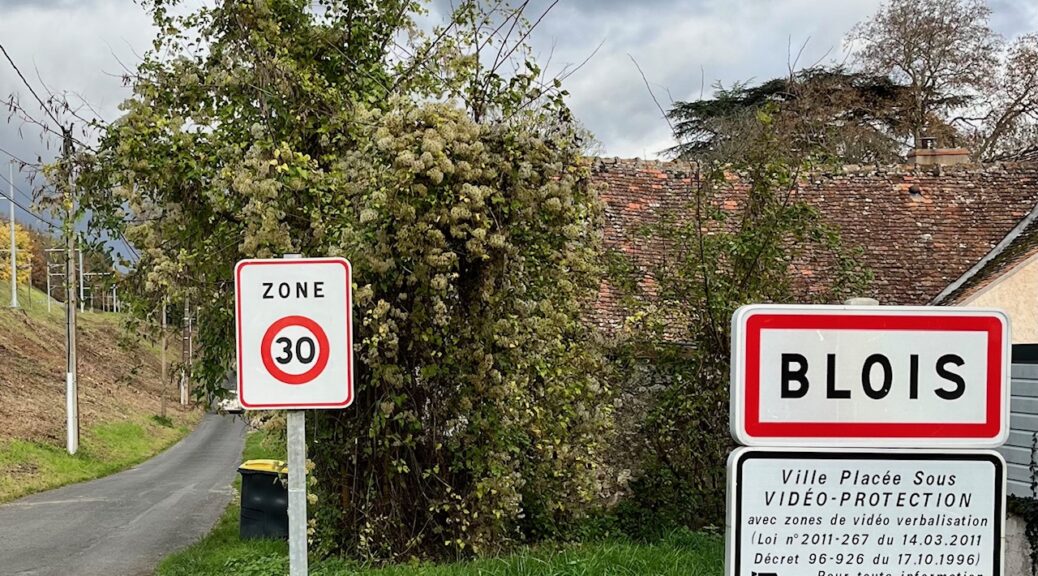
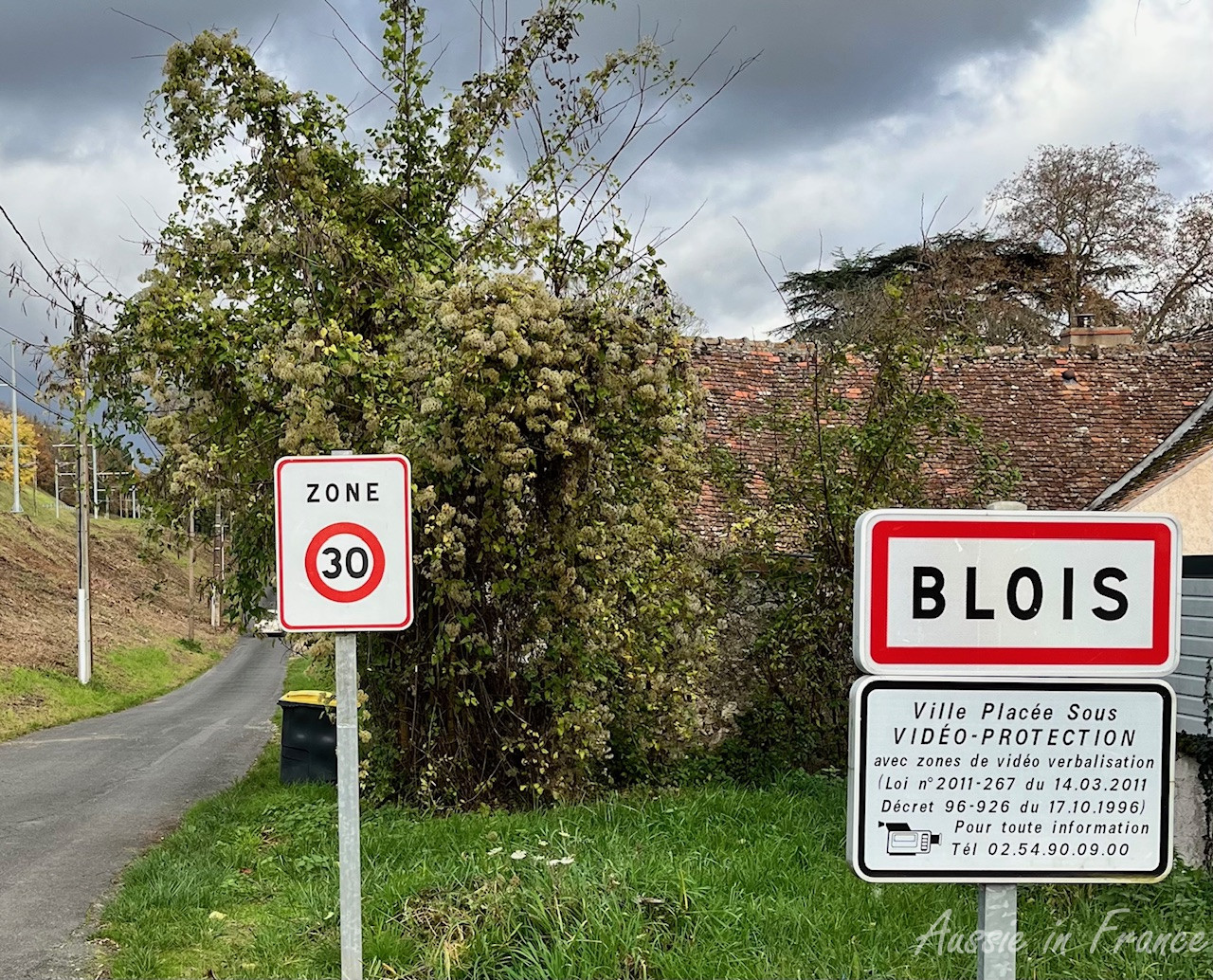
I was talking to an Australian friend about having to go to the commissariat to register a proxy vote for the forthcoming municipal elections and she said that she hadn’t quite worked out the difference between policier and gendarme.
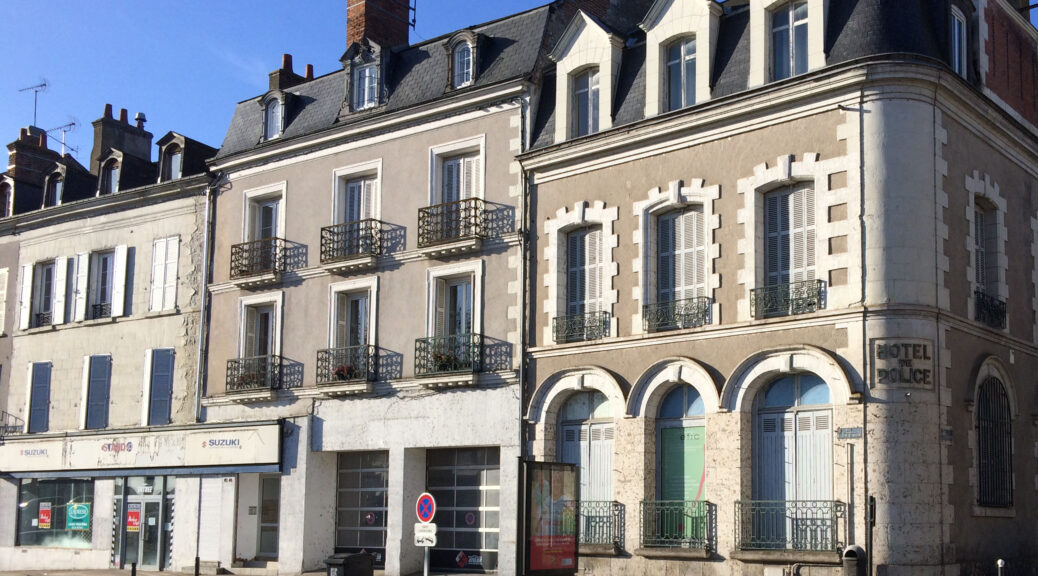
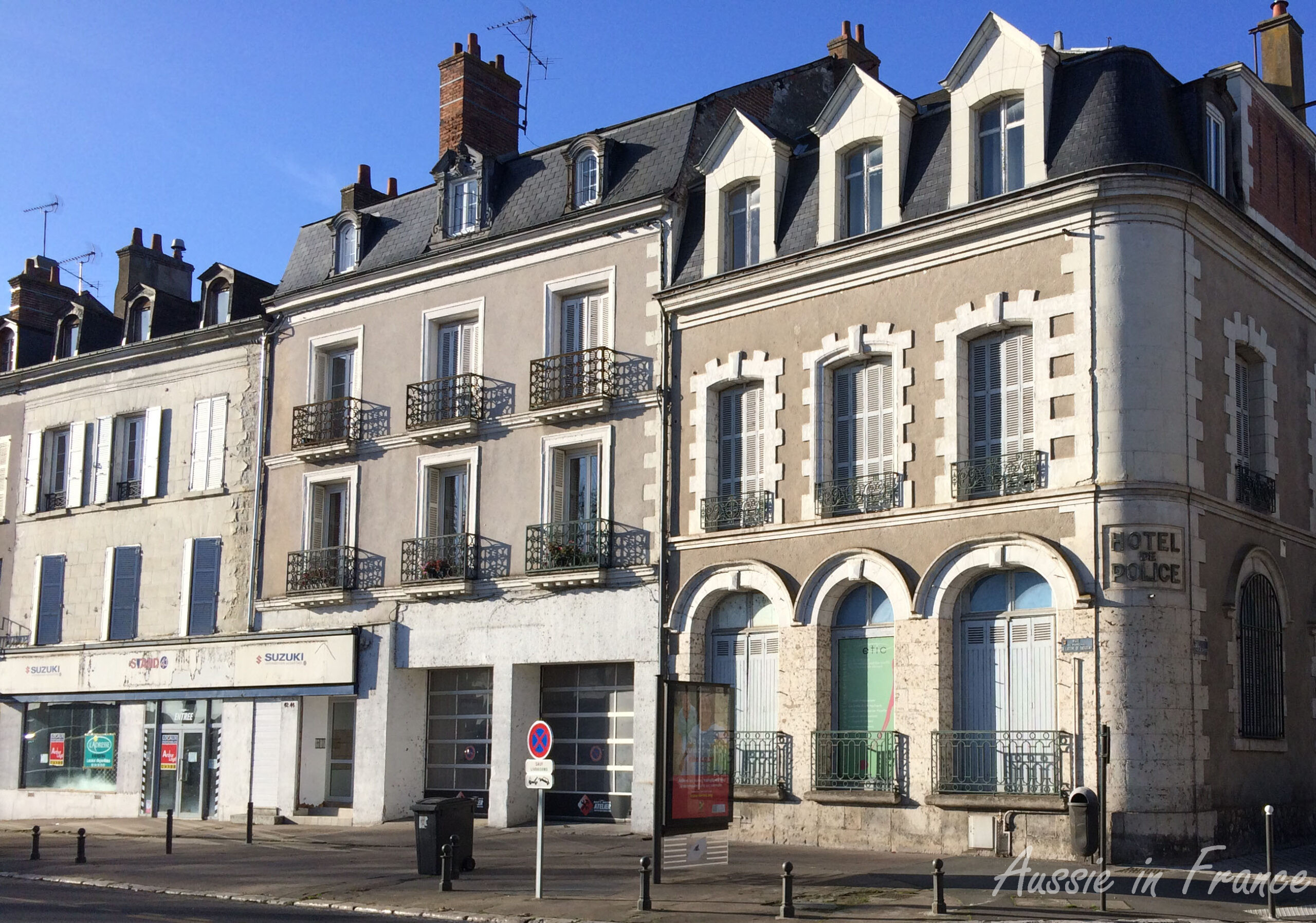
Former Hôtel de police in Blois
Gendarme v. policier
The gendarme, of course, with his képi, is well-known in French films and literature and can be seen, for instance, in the French expression jouer aux gendarmes et aux voleurs (to play cops and robbers).
But not all police officers are gendarmes. The difference is simple: the gendarmerie is a military force and part of the French army, while the national police is a civil force. Gendarmes are therefore soldiers while policiers are simply civil servants under oath. Gendarmes look after rural areas and policiers look after towns. The gendarmes are part of the gendarmerie and the policiers are part of a commissariat.
Commissariat
A commissariat is a unit of the police force consisting of policiers, and generally headed by a commissaire. In each département, the commissariats report to a public security directorate called the DDSP (Direction départementale de la sécurité publique). These are attached to a central directorate called the DCSP (Direction centrale de la sécurité publique) which is part of the Ministry of the Interior. The building that houses them and contains staff offices, police vehicles, temporary detention cells and interrogation rooms, is commonly referred to as a commissariat. It is open 24 hours a day.
Policier municipal
There are also municipal police who, as the name suggests – policiers municipaux – are under the authority and responsability of the municipality, looking after surveillance, law and order, peace, safety and public health. Towns of more than 5000 people can create a municipal police unit. In smaller towns, permission has to be sought from the Ministry.
They can consist of various specialised brigades including motorcycle, quad, bike, nautical, canine, equestrian, public transport, nighttime safety, island and impounding units.
Garde champêtre
Another category of municipal police, called garde champêtre are a sort of rural police. They work alongside the gendarmerie, with the assistance of a number of specialised wardens (fishing, hunting, woods and forests, etc.). They have a wide range of legal powers at their disposal to investigate and issue fines for offences and crimes involving property, with the right of pursuit, as well as offences against municipal police regulations and orders, issued by mayors and prefects.
Hôtel de police
If you live in a large town which is also a préfecture, you may have seen a sign saying Hôtel de police. This is not a hotel, as my brother once thought, but the commissariat for the entire département, headed by at least one divisional commissaire, but often a contrôleur général. The hôtel de police comprises the DDSP mentioned above.
Weapons
Up until 2025, only gendarmes and national police carried weapons, but now, at the request of the mayor, municipal may be authorized individually by the State authorities to carry a weapon, under a specific agreement.
A new law was passed on 10th February giving both municipal police officers and rural police officers new powers and resources. In municipalities that choose to participate, these officers may be assigned expanded judicial police duties (such as issuing fines for driving without a licence). The law also covers pooling of resources, training and professional ethics
We have come to the 9th and last part of our Croatian Itinerary. After a very pleasant stay in Innsbruck, we headed for Germany via Lichtenstein, simply because we had never been there, it seemed a good place for lunch and wasn’t too far out of the way. It was mainly full of tourists doing the same thing as us. There was nothing in particular to see. We had a mediocre meal at a Restaurant called Residence.
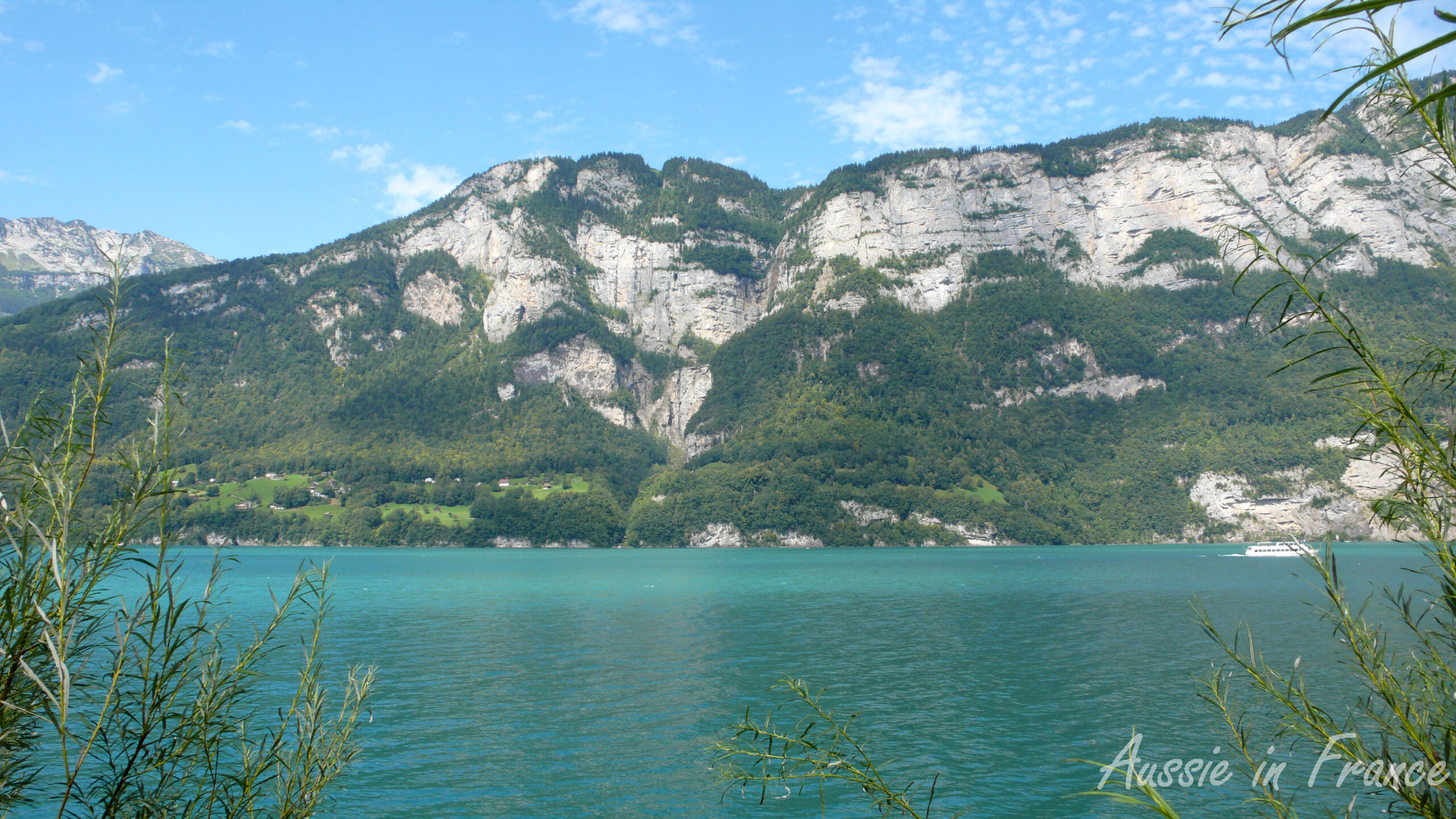
Walensee Lake
Afer leaving Lichtenstein, we continued on to our destination in Germany where we were to spend the next three nights. We drove past two very pretty lakes called Walensee and Zürichsee, skirting around Zurich until we reached Hohentengen am Hochrhein.
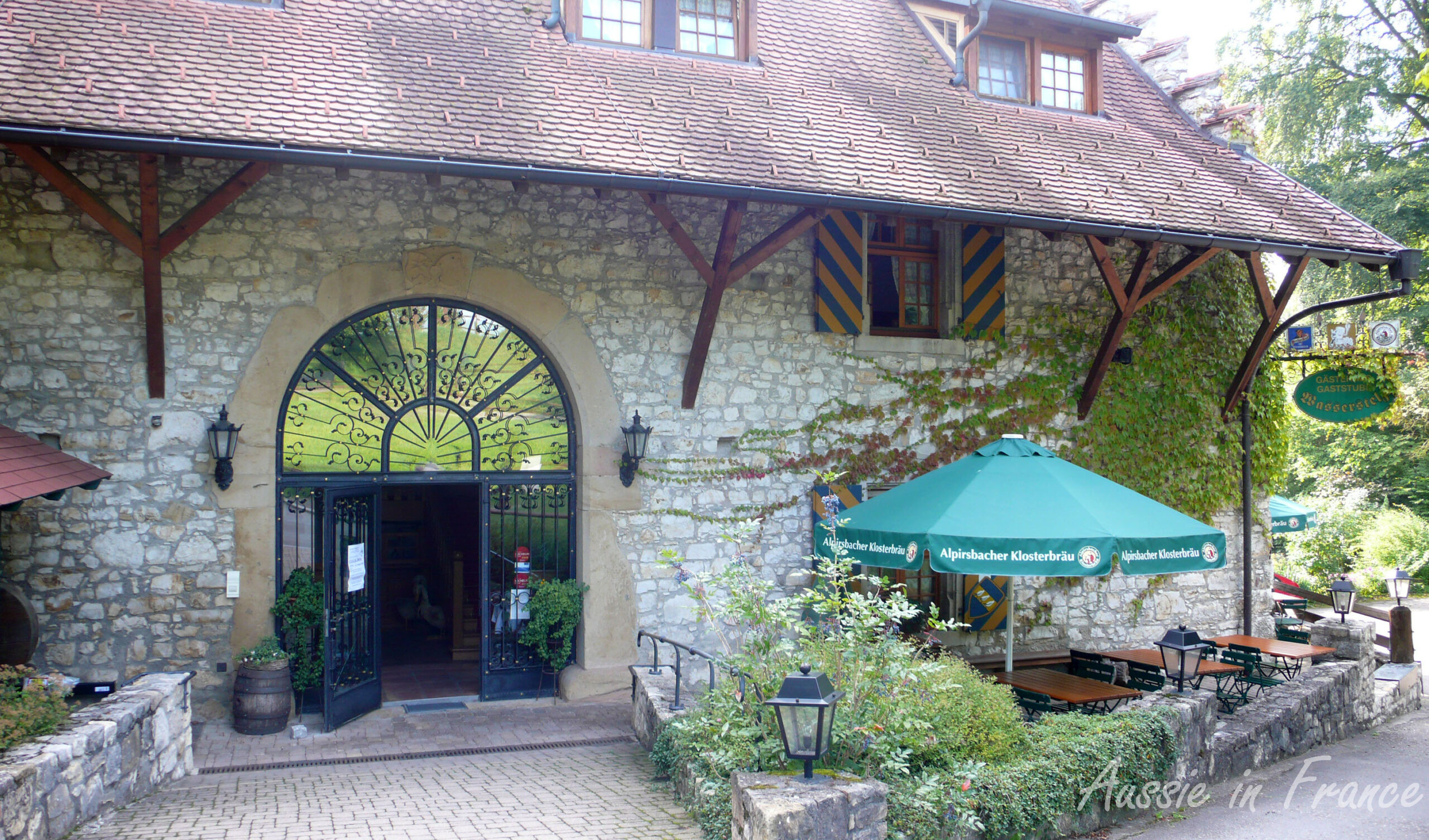
Gästehaus Wasserstelz
Our hotel, Gästehaus Wasserstelz, is surrounded by nature, with a weinstube underneath. We even had a suite. However, the evening meal at the hotel was rather dissappointing.
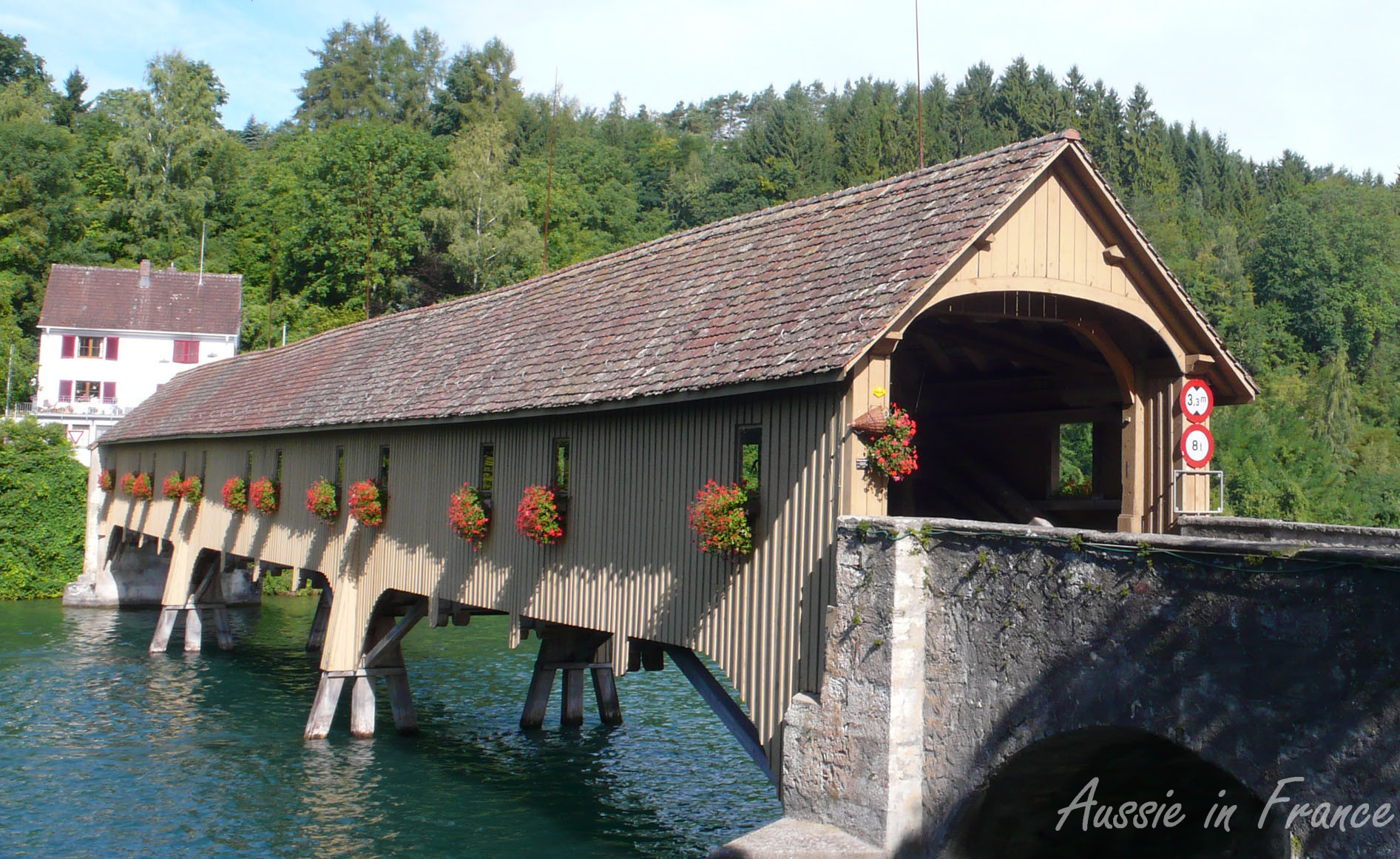
Covered Bridge along the cycling path
The next morning, we drove to Jestetten then cycled along the Rhine which separates Germany from Austria. A long sloping path took us down to the covered bridge at Rheinau. Then up again to Altenburg and down again to the river bank. We had to get off our bikes and walk along the path.
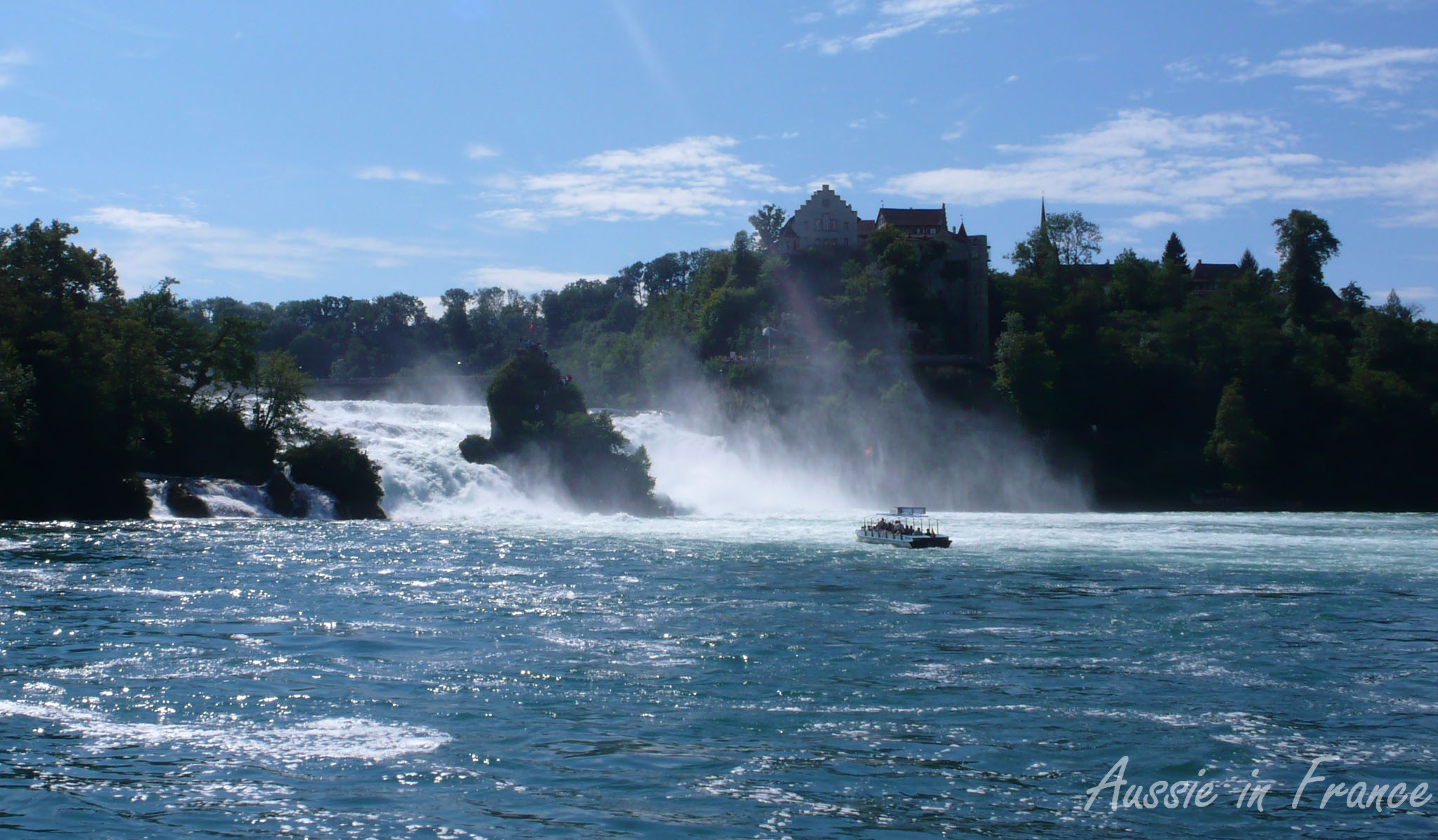
Rheinfall
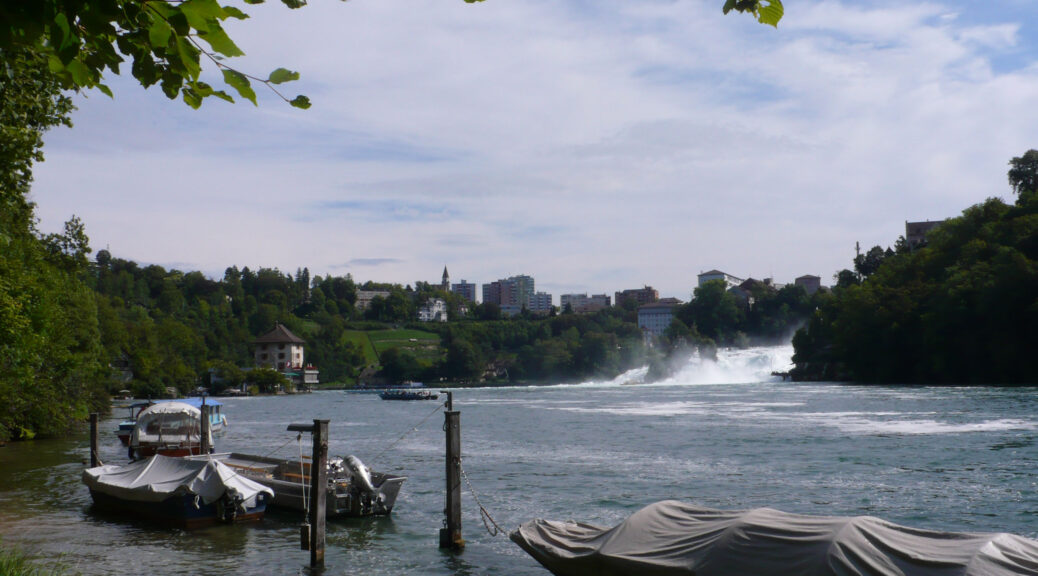
Around a bend we suddenly came upon the magnificent Rheinfall, a waterfall on the Rhine in Switzerland. The falls, 150 m wide, 23 m high, are quite stunning. It was 11.30 am by then and very crowded.
Schaffausen
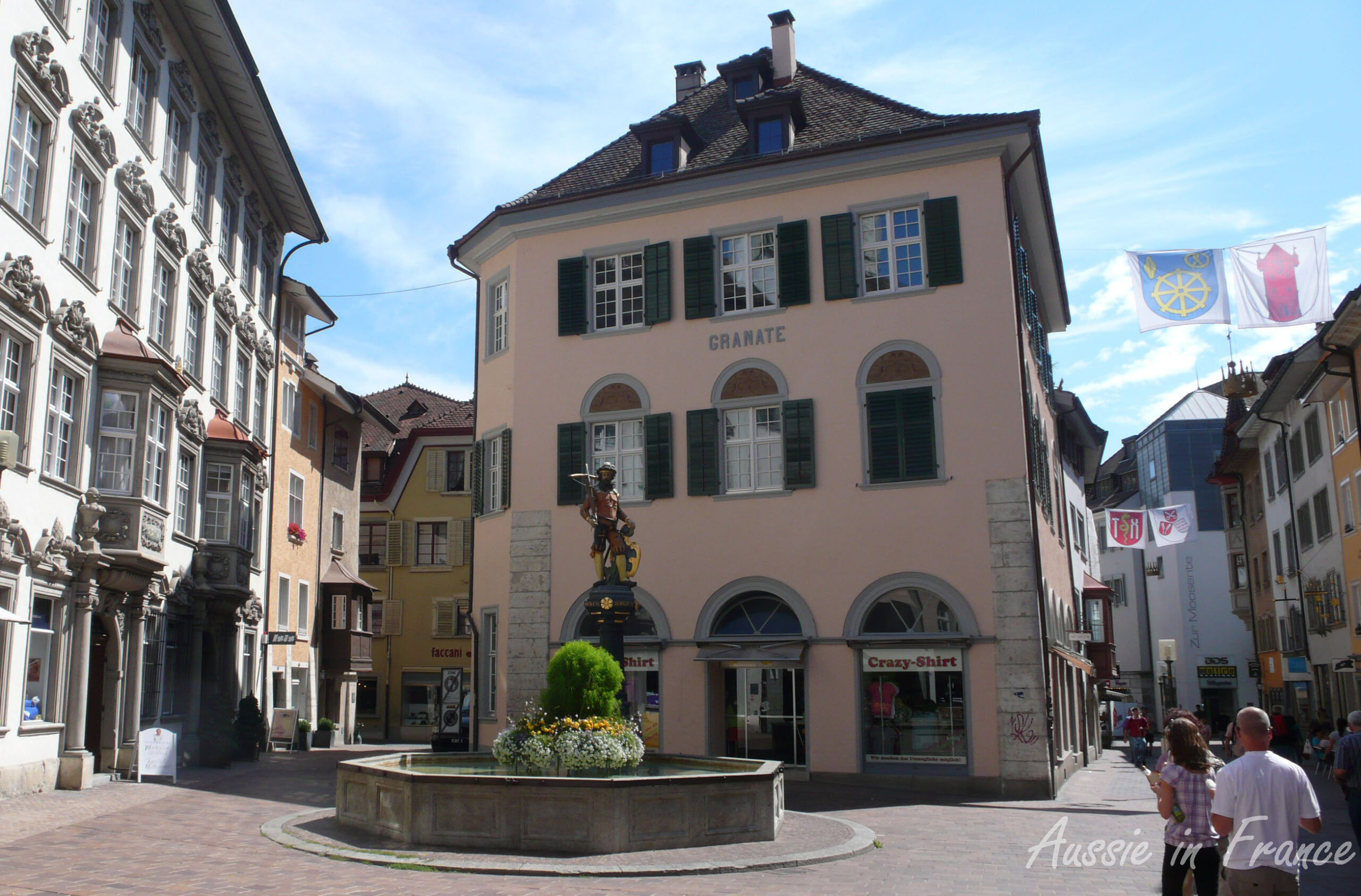
We then pushed our bikes up to the old town of Schaffhausen with its magnificent baroque façades. As it, too, was very crowded, we continued cycling along the Rhine until we reached Gasthaus Krantz at Büsingen.
Klosterkirche
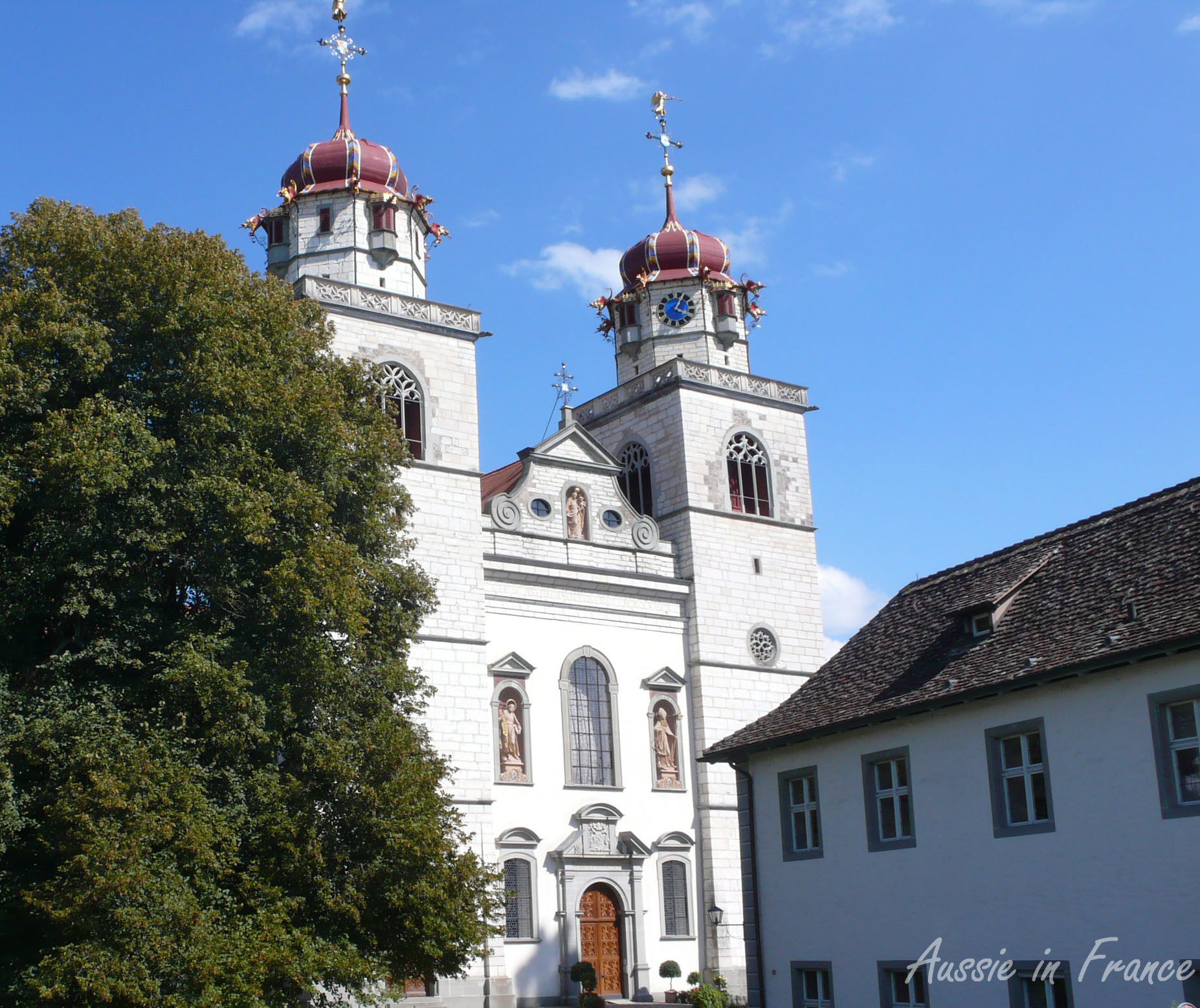
Our return route took us past the falls again. On our way back in the car, we took a different route and discovered the Klosterkirsche baroque church built on an island in the middle of the Rhine.
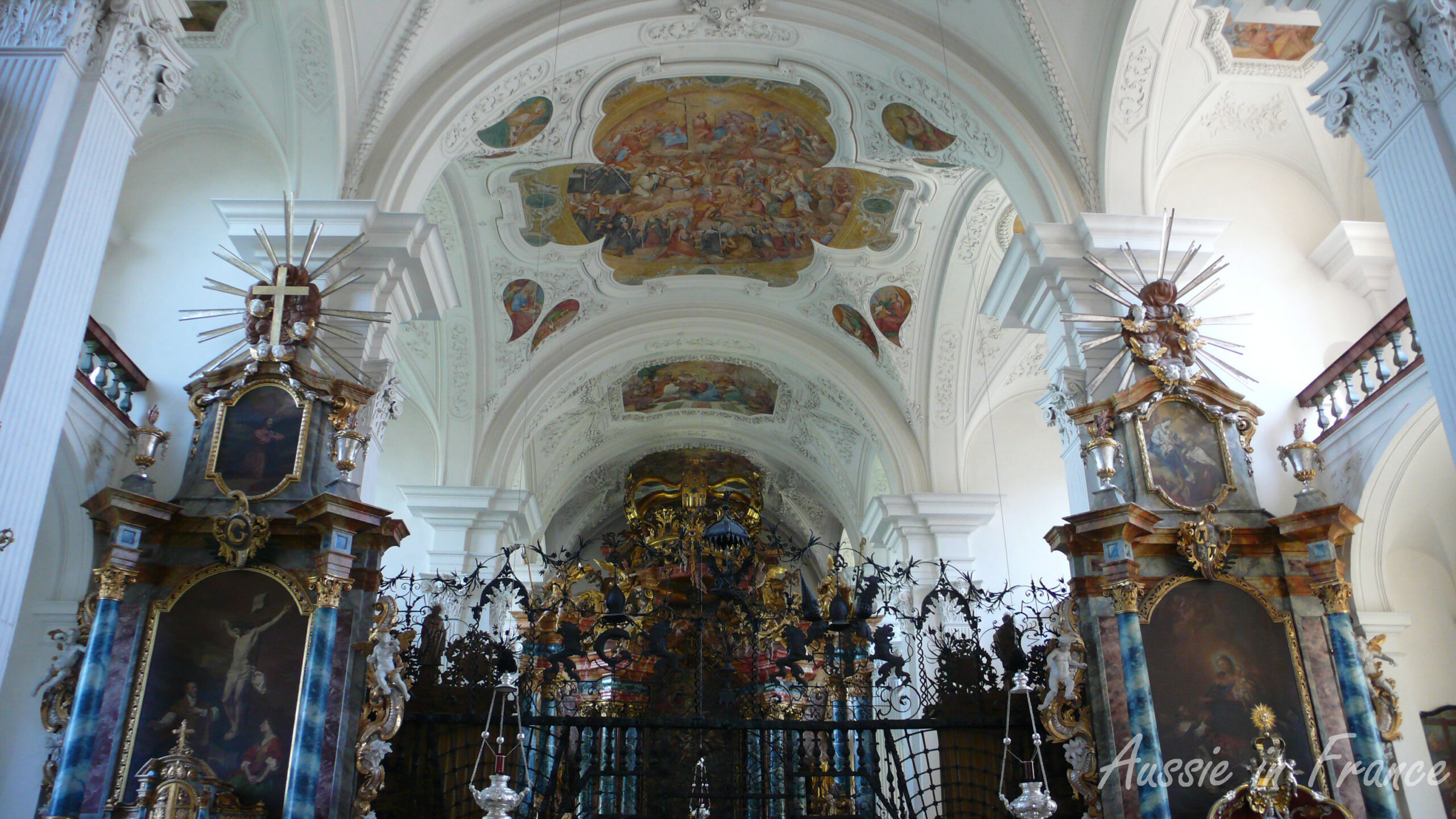
Baroque interior of the Klosterkirche
The tourist office the day before had told us about the hot spa at Bad Zurzachs which turned out to be a wonderful experience, with all sorts of different pools, one of which had a whirlpool.
We then had dinner at Kadelburg in Germany at a restaurant called Zorbas. I now know that if I want to eat lamb chops in Germany, I will always go to a Greek restaurant!
Stein am Rhein
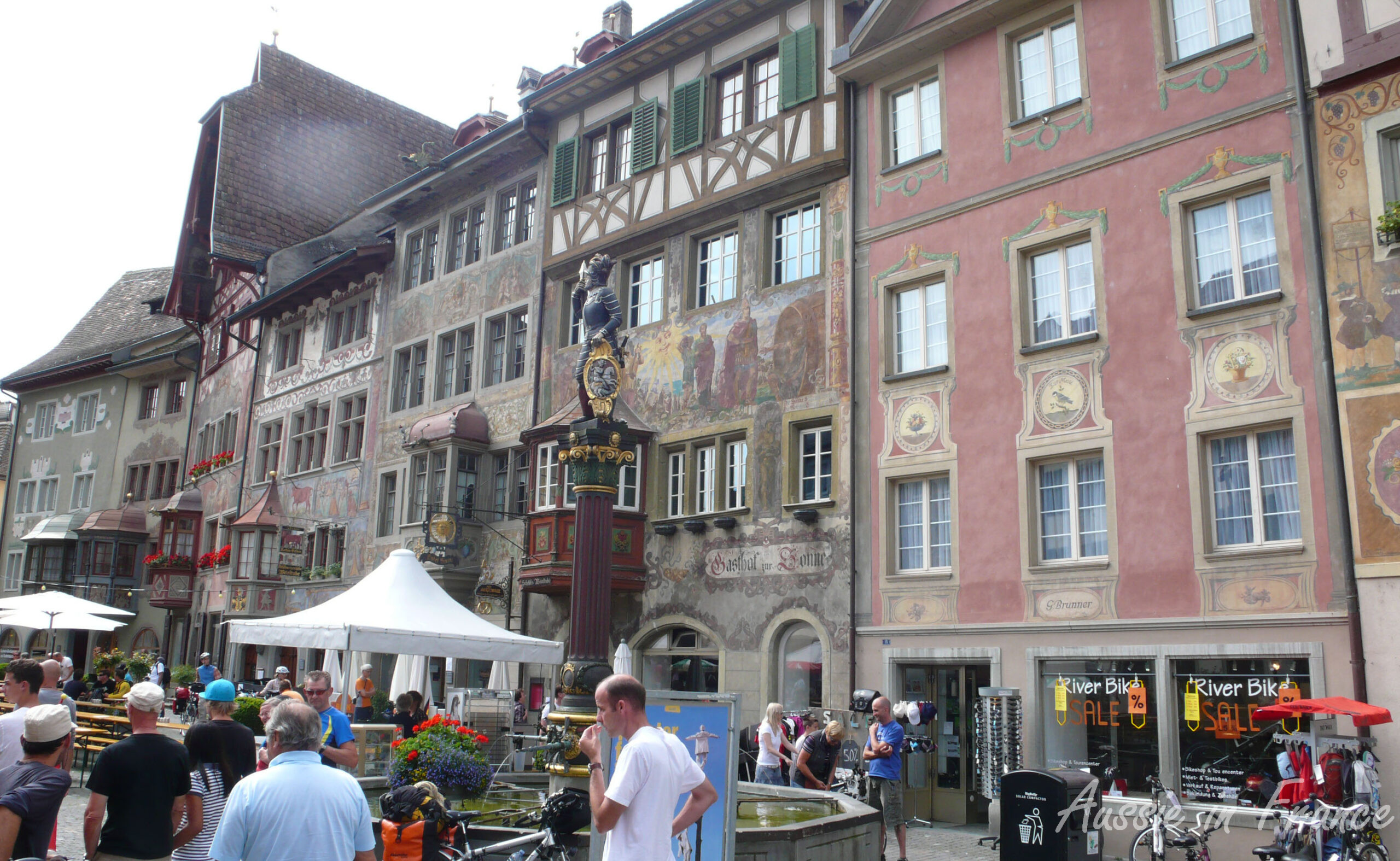
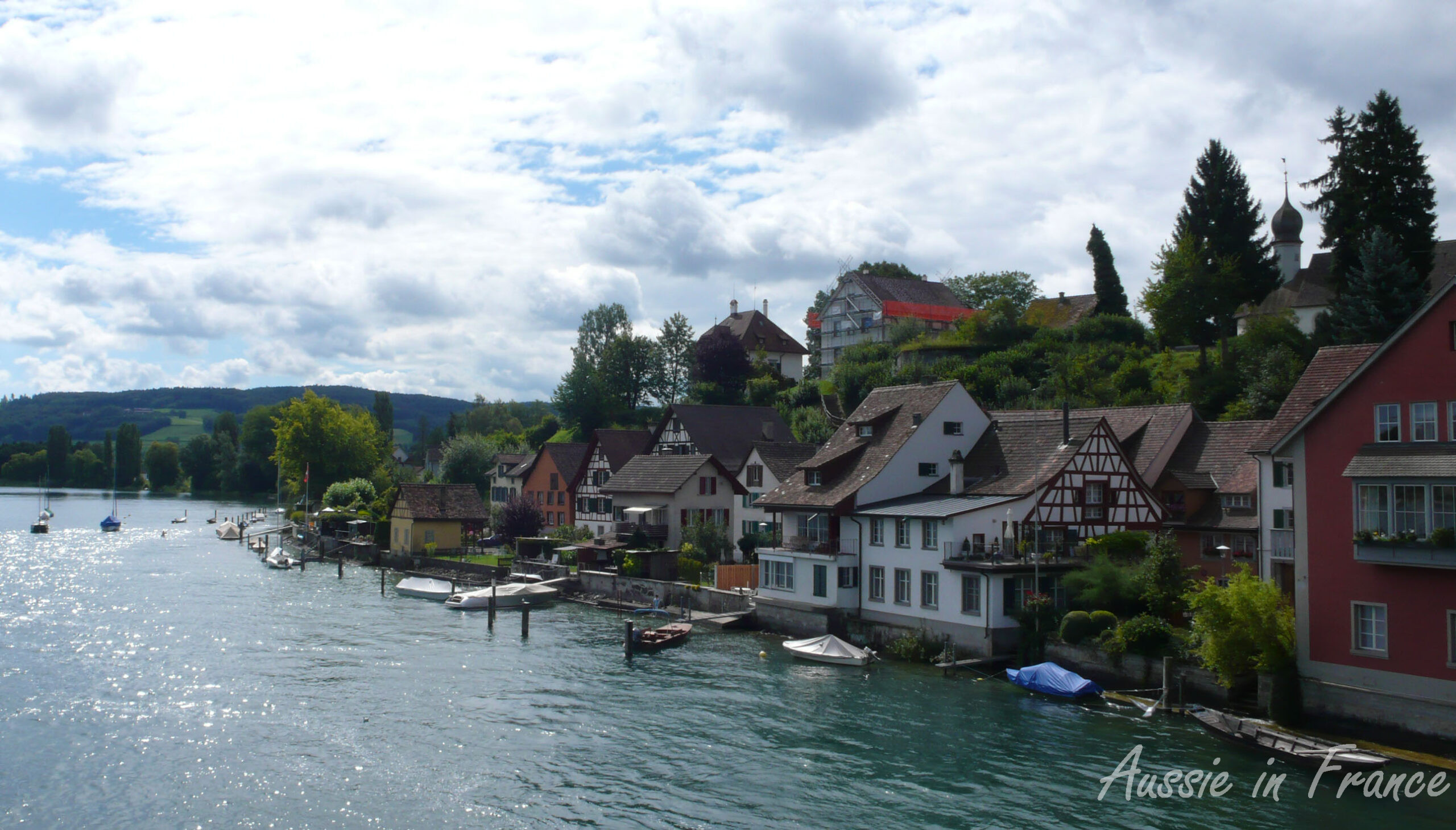
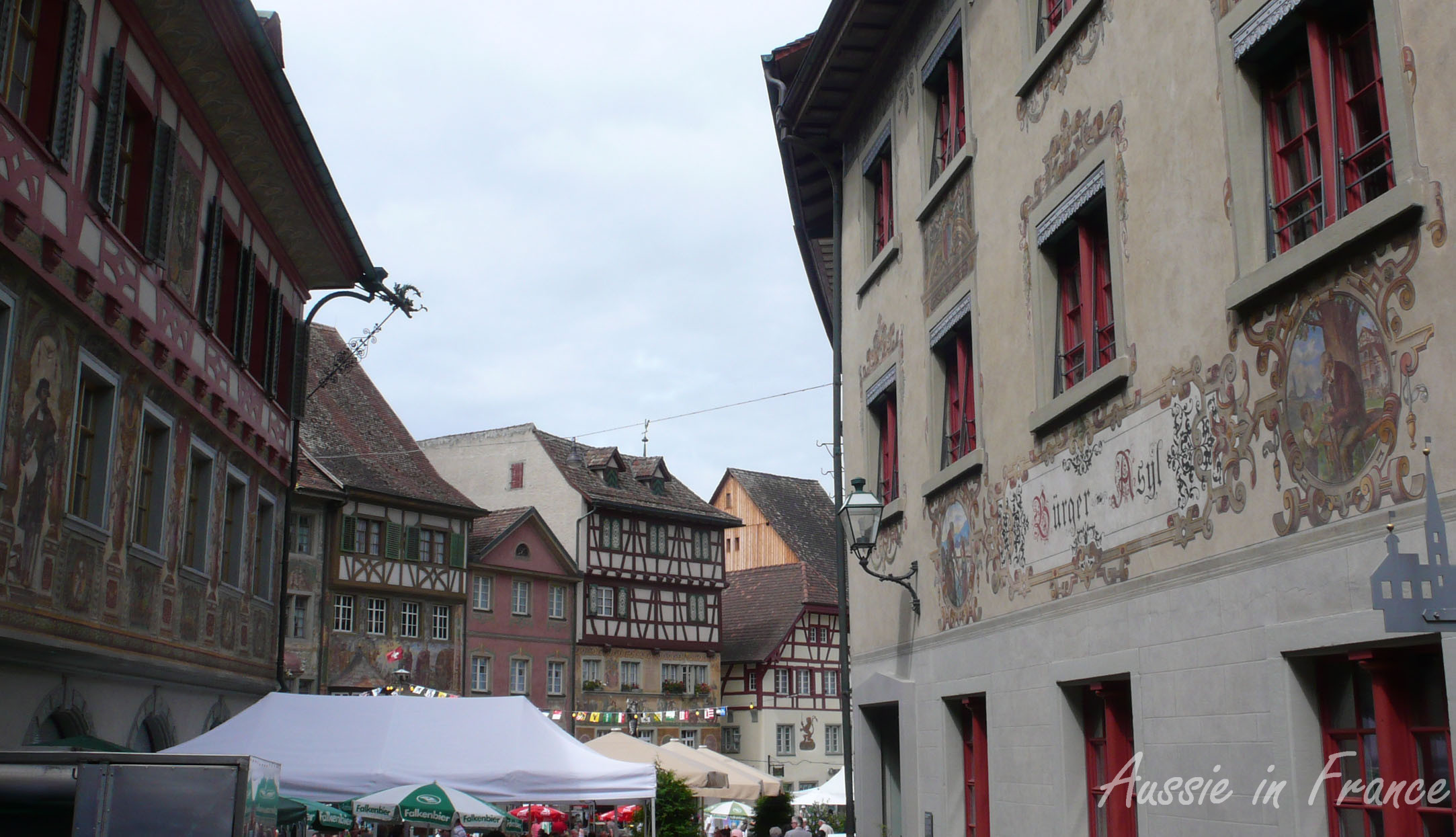
Next day, we joined the bike route at Kaltenbach, on the southern bank of the Rhine. Stein am Rhein. wonderful façades again – band in front of the Rathau with an Asian woman singing Swiss folk songs.
View from the bikepath
After a cup of coffee at Zum Felsen on the Rathausplatz, where we chatted with the Swiss ladies at the next table, we walked down the main street until we got to the bell tower, then left on our bikes via the north bank towards Lake Constance.
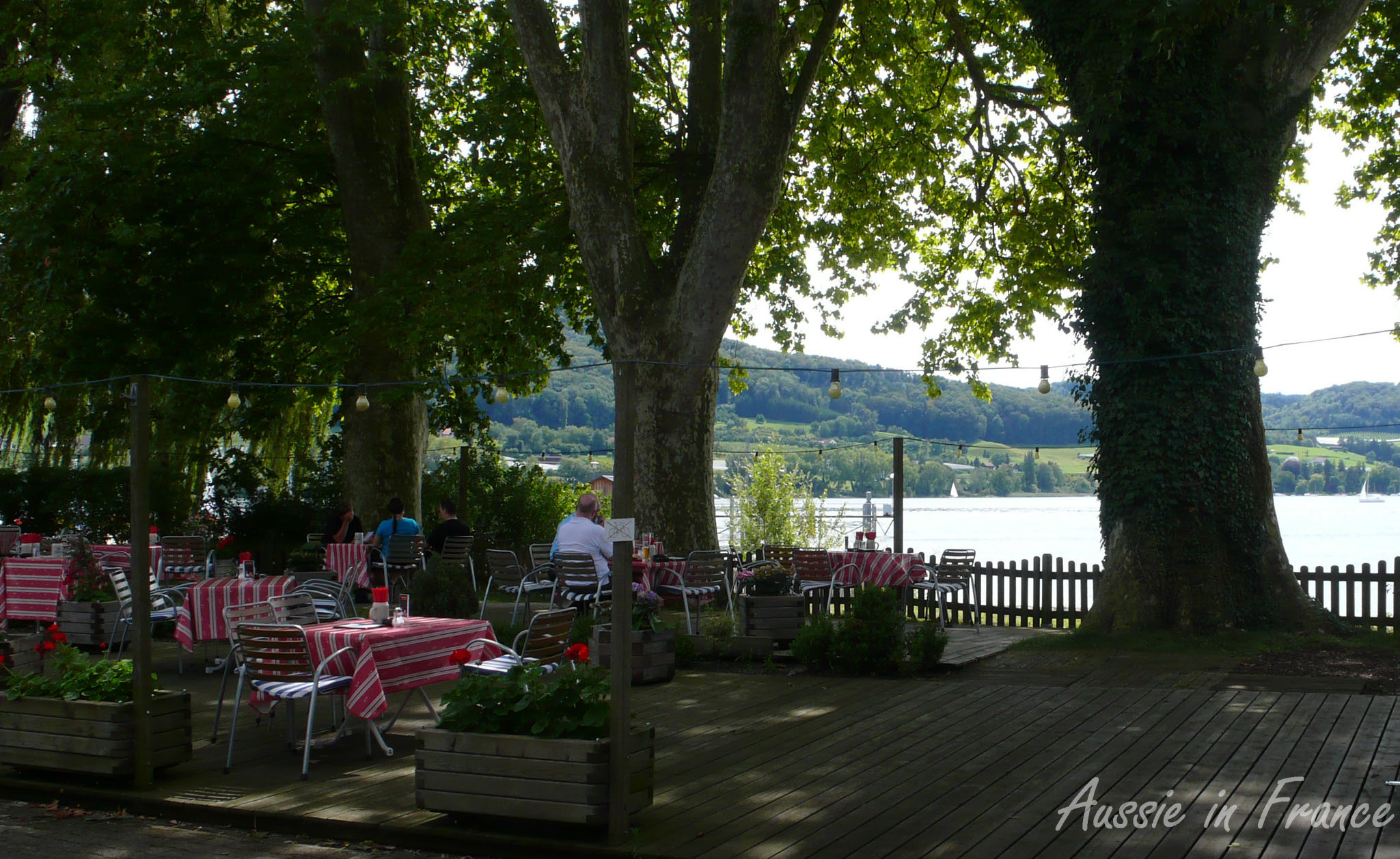
Shady terrasse of Residenz am See
The views of the lake were magnificent and we eventually had lunch in an idyllic setting next to the lake on a shady terrace at Residenz am See in Ohningen.
Stein am Rhein
We then cycled on to Horn and back via Stein am Rhein where we stopped for a drink again, this time at Konditorei Spath where I had a delicious cake called Cappuccino!
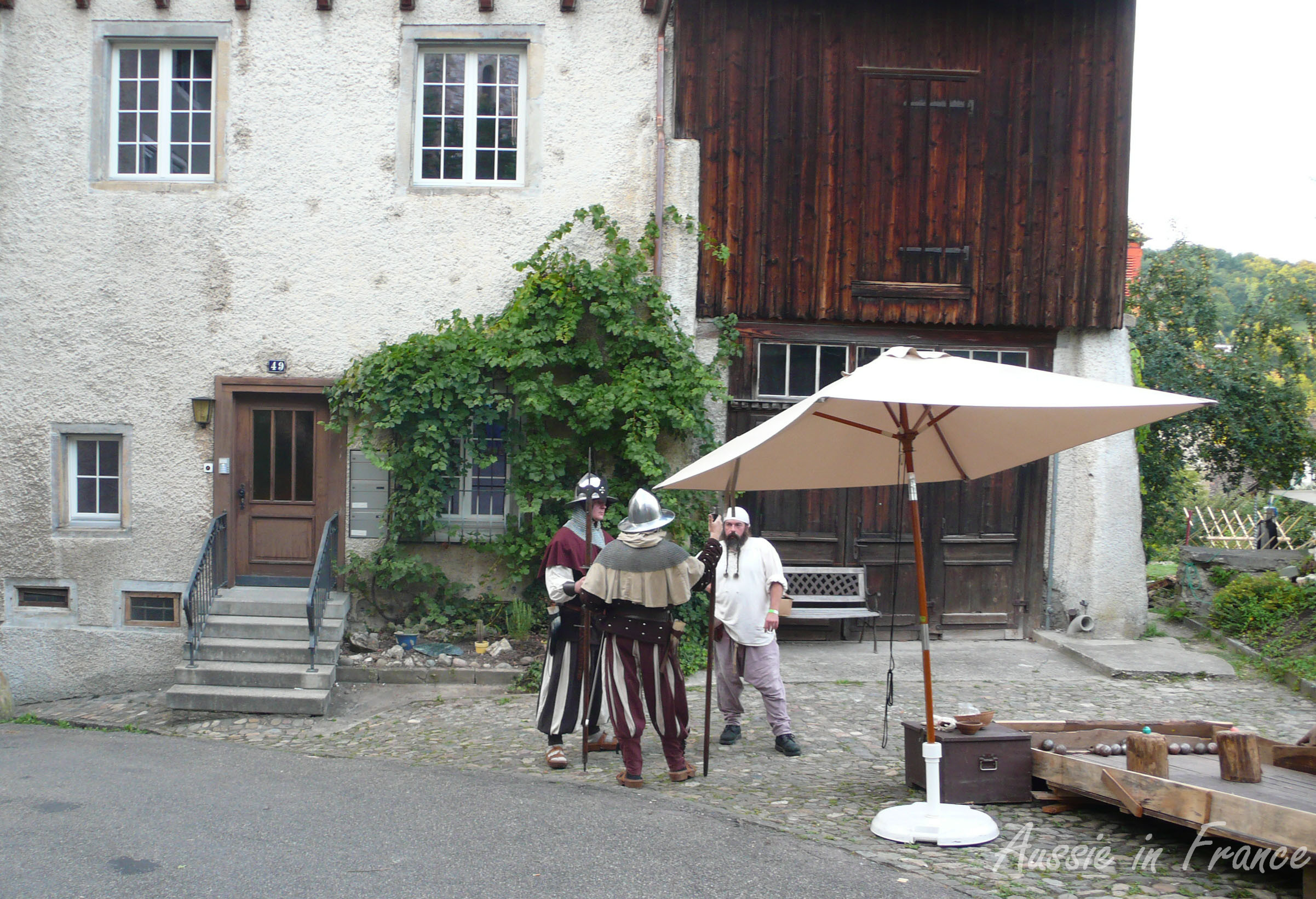
Amateur mediaeval festival
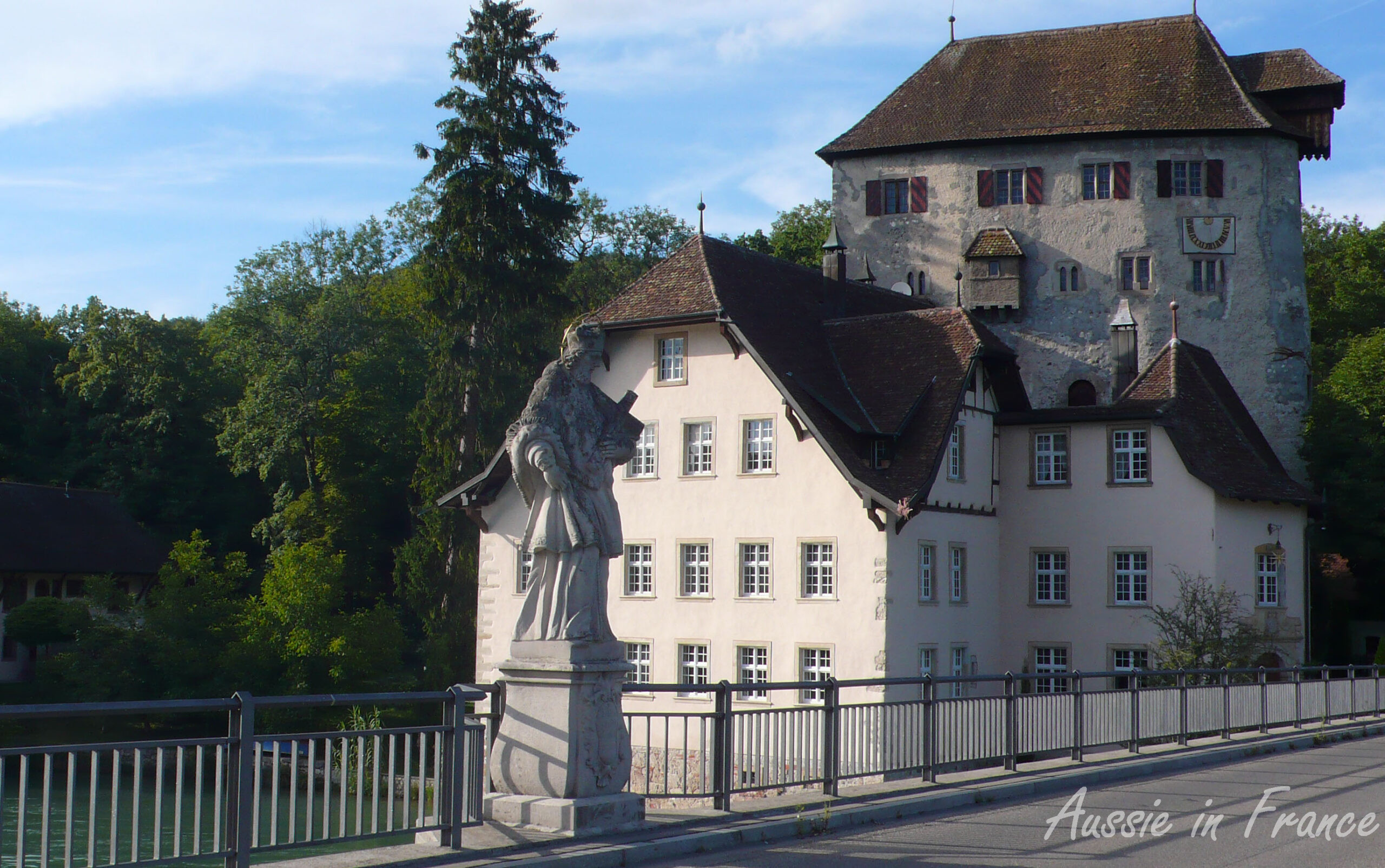
Back in the car, we crossed bridge at Hohentengen am Hochrhein to see Schloss Rötteln castle, just opposite Kaiserstuhl. We came back to Kaiserstuhl to see their Mediaeval festival as recommended by the hotel, but it turned out to be a very amateur affair, with only sausages to eat.
Schloss Rötteln
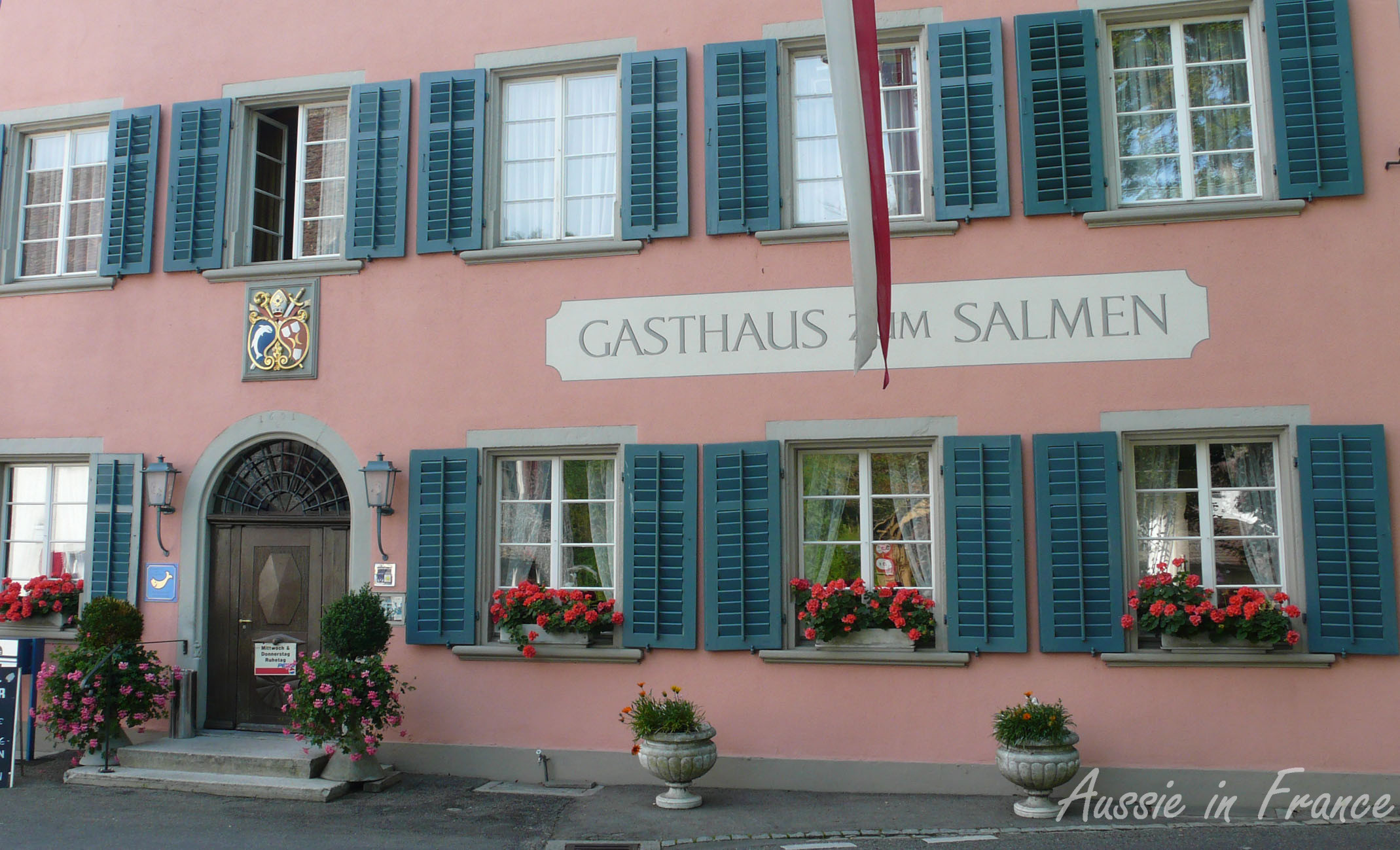
After going through four customs booths, due to the fact that the road crosses back and forth from Germany to Switzerland, we arrived in Rheinau for dinner. The restaurant, Gasthaus zum Salmen, which I had noticed earlier in the week on the Swiss side of the river, had a lovely view of the covered bridge but the meal was very expensive and not very good.
Gasthaus zum Salmen
Next day we drove back home to Paris via Bâle and the unprepossessing town of Monbéliard, where we had lunch.
We had visited a total of 9 countries, with 4 languages and 3 currencies and clocked up 5200 k, not to mention many kilometers of cycling.
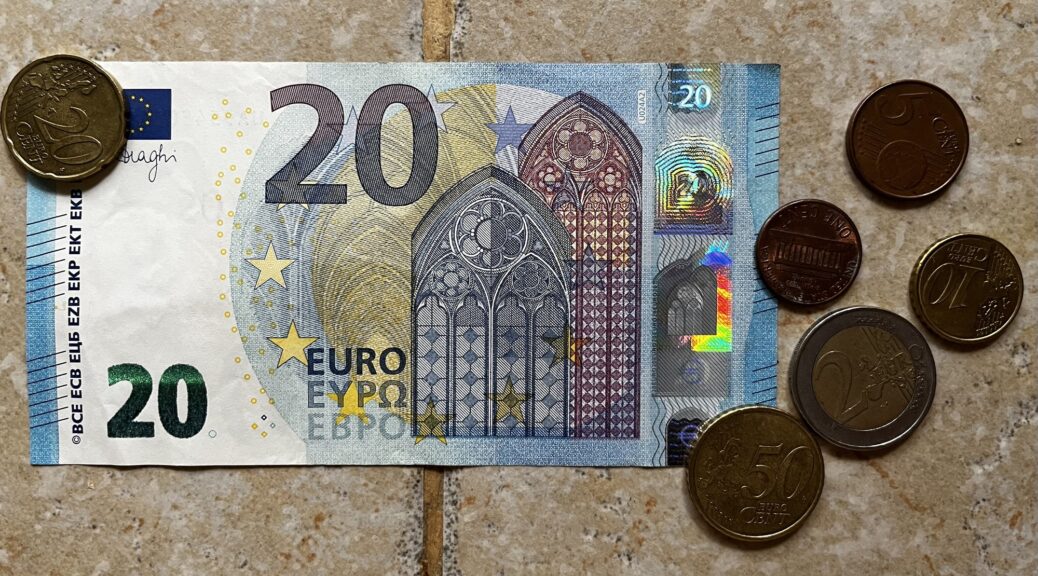
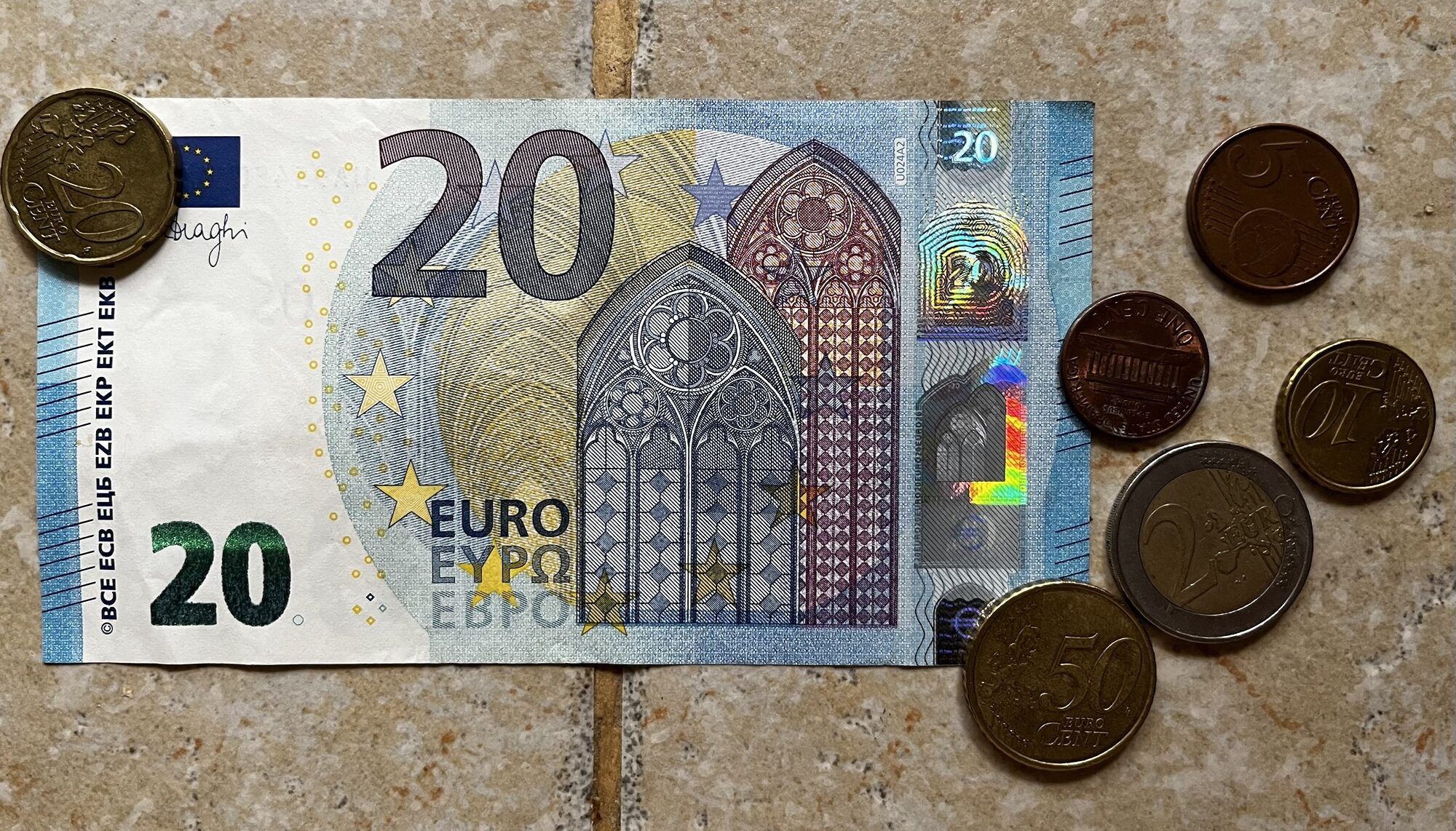
Last week I talked about liquide, espèces and cash. A reader’s comment has set me thinking about other money-related words, starting with money itself.
Monnaie
Both the French word“monnaie” and English “money” come from moneta, which initially referred to the goddess Juno in her aspect as Juno Moneta, in whose temple at Rome money was coined. The French“monnaie” refers to a coin or piece of stamped metal used as a trading medium, which is the exact meaning of money, only the words are not really synonyms and are not used in the same way.
“Avez-vous de la monnaie?” does not mean “Do you have any money?” but “Do you have any change” i.e. coins. There is no one word in French for “a coin”. You have to say “une pièce de monnaie”.
Currency
Monnaie also means currency, just as we can use money in English to mean currency. “Avant l’introduction du dollar australien en 1966, la livre australienne était la monnaie de l’Australie” = “Before the Australian dollar was introduced in 1966, the Australian pound was the currency of Australia”.
Interestingly enough, the word “currency” comes from the Latin currens, to run, i.e. money in circulation in a given country. The same origin can be found in the French expression “monnaie courante” (click here for information on the meaning of “courant“)which means the currency in circulation. It’s also a very common expression introduced by the encyclopedist Diderot in the 18th century “C’est monnaie courante” = It’s normal practice.
Silver and gold
Let’s go back to “Do you have any money?” If the correct word in French is not “monnaie”, then what is it? Well, it’s “argent” (silver). “Avez-vous de l’argent?”
A very rich person in French is said to “rouler sur l’or”, the same idea as “being made of gold” or “rolling in money”. The expression developed in the 18th century, initially as “se rouler sur l’or”, that is, rich enough to roll in a pile of gold the way you might roll in the grass. However, a normally rich person “a beaucoup d’argent”, silver not gold!
Riche comme Crésus
If a person is really really rich, they are said to be “riche comme Crésus”. The expression dates back to the Renaissance, in reference to the legend of Croesus recounted by the Greek historian Herodotus and renowned for his immense wealth.
« Il peut être riche comme Crésus, avec beaucoup d’argent, mais jamais de la monnaie pour payer le parcmètre. C’est même monnaie courante ».
Although the word “cash” is widely used in French today, the real term is “argent liquide” or “espèces“.
The origin of the term “liquide“
The term “liquide“, from the Italian meaning “fluid” came into use in the 14th century as a way of designating fully-paid up assets such as farming land and houses that could be easily transferred from one person to another.
Money also becomes “liquide“
Then, in the 17th century, the term “liquide” started to be used for money that was readily available and in large quantities, a bit like water coming out of a fountain. Today, it is also used to mean coins and paper money
Au-tu assez de liquide pour le marché ? – Do you have enough cash for the market?
Les frais de notaire doivent être payés en liquide. – Conveyancing fees must be paid to the notaire in cash.
N.B. This doesn’t actually mean that you hand over thousands of euros but that you transfer them to the notaire‘s bank account i.e. they are not part of a mortgage.
Liquid assets
This soon led to the use of “liquidités” to mean money in a bank account that can easily be withdrawn, which is exactly the same meaning as “liquid assets” in English.
Espèces
So why are bank notes (billets) and coins (pièces de monnaie) also called espèces?
The expression goes back to the Middle Ages and comes from the Latin “specie” which means “spice” (épice). Back in those days, spices, and pepper in particular, were imported from foreign countries and were rare, and therefore valuable.
As a result, they were often used to barter. Venetian, Portuguese and Spanish merchants paid “en épices” which gradually became “en espèces” which has the same Latin root.
Lorsqu’on achète d’occasion, il faut souvent payer en espèces. = When you buy secondhand, you often have to pay in cash.
The origin of cash
Our word cash to mean coins or paper money actually comes from the Old French casse, a box, which has evolved into the modern-day “caisse”, used to designate, amongst other things, a cash box or cash register. And the person at the check-out is called a “caissier” or “caissière“.
So the use of the word “cash” in French has come full circle!
Now that I am a proud hydrangea owner, I want to know how to dry them properly. Last year on the market, I bought a big blue hydrangea, hung it upside down in a cool dry place. It dried beautifully and I was able to use it for about six months as a decoration in the bathroom of Closerie Falaiseau before it fell apart.
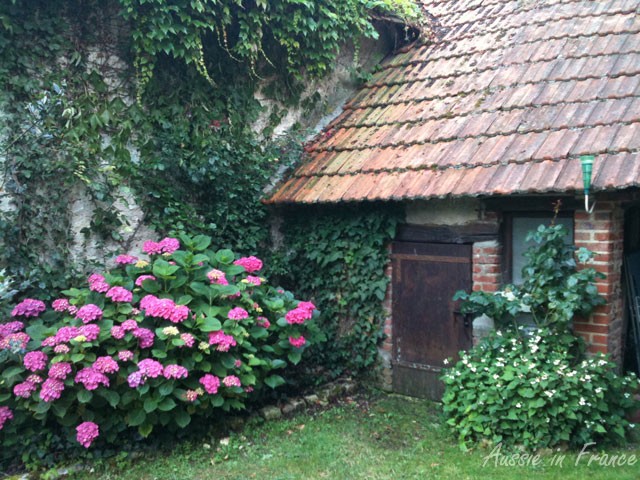
My pink hydrangeas next to the former pigsty (now the rubbish bin)
To replace it, I cut off one of my own pink hydrangeas and did the same thing. Only it shrivelled up and went brown. I thought maybe you needed special hydrangeas so I bought one at the market again. I explained I was going to dry it and that I hadn’t been successful with my own hydrangea.
Blue hydrangea with mostly open flowers and a couple of closed ones
The lady told me the secret. Those blue petal-like things are not actually petals, but bracts (pointsettias have them too). The flowers are the tiny things in the middle. You can see that most of them are open but that a couple are still in the form of a closed ball. You have to keep the hydrangea in water, changing it twice a week, until all the flowers are open.
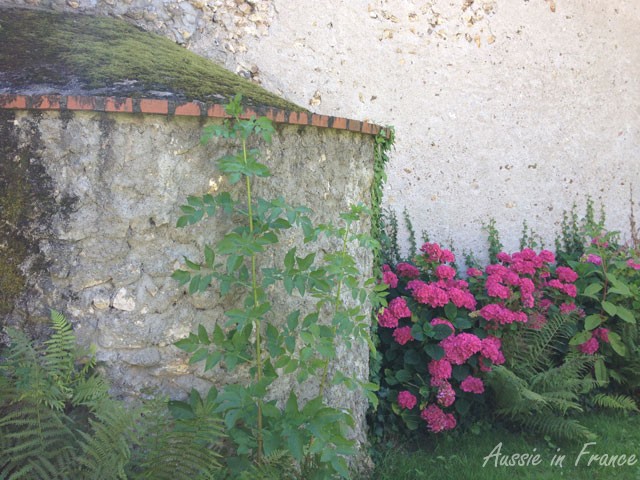
My pink hydrangeas at the back of the bread oven
That’s when you take it out of the water, strip the leaves off and hang it upside down so that it will be evenly shaped. I can’t wait to try out the same technique on my pink hydrangeas. Any other hydrangea lovers out there?
If you enjoyed reading this, don’t forget to subscribe to new posts – that way you’ll get them directly on your smart phone or in your mail box! And I love to hear your comments!
One of the most useful lessons I have learnt from Jean Michel is to give as few explanations as possible if there is something you can’t or don’t want to do and feel uncomfortable explaining why.
So, instead of making up a vague reason for not going somewhere you don’t want to go, you can just say “Ah, j’ai un empêchement“. And nobody will ask what it is!
Empêchement comes from the verb empêcher meaning “to prevent”, and from low Latin impedicare, to trap so the meaning is quite clear. However, we don’t really have anything in English that is quite so neat.
Speaking of “prevent”, there is a French word prévenir which sometimes means “prevent” but often has quite a different meaning. Prévenir, like prevent, comes from the Latin praevenire, meaning to anticipate or forestall.
Prévenir une catastrophe = to prevent a catastrophe
Cette mise au point préviendra toute objection = This clarification will prevent any objections
BUT
Elle ne va bien, il faut prévenir le médecin = She isn’t well. You need to call the doctor.
Ils sont venus sans nous prévenir = They came without letting us know beforehand.
Il est attentif à prévenir mes moindres souhaits = He is very attentive and anticipates my slightest wishes.
On m’avait prévenu contre lui = I was warned against him.
Un panneau doit prévenir les habitants de laprésence de dispositifs de videosurveillance = The inhabitants must be warned of the presence of videosurveillance equipment.
These are all very different translations of the same verb but there is an underlying idea of anticipating what could happen in the future and forestalling the consequences.
I finally retired at the end of 2024 after semi-retirement 5 years earlier. I worked full-time for 40 years in France as a freelance technical and legal translator, in the days before AI. I also lectured in the Masters programme at ESIT, which for many years the only state-run translation and interpretation school. I was there for 15 years, including 6 years in a part-time position.
Our house in Blois
After I retired, I continued to work part-time as an auto-entrepreneur, mainly as a sworn translator. I loved my profession and the transition to part-time sworn translator kept me in contact with a lot of interesting people as my main work was translating documents such as birth certificates, naturalisation applications, driver’s licence exchanges and real estate transactions. Last year, I did two interpretations for property sales at the notaire’s. I am happy to be finally retired but I would still be happy to do the odd interpretation.
When I get up in the morning, I can take my time. It’s a wonderful feeling! No more deadlines to meet! And it’s surprising how much time it takes to do nothing in particular. Do I get bored, you may ask? NO!! I have plenty to occupy me. First, I have a long list of things I’ve been meaning to do for a long time such as updating this blog :). I am currently making digital photo albums to have them turned into a printed book.
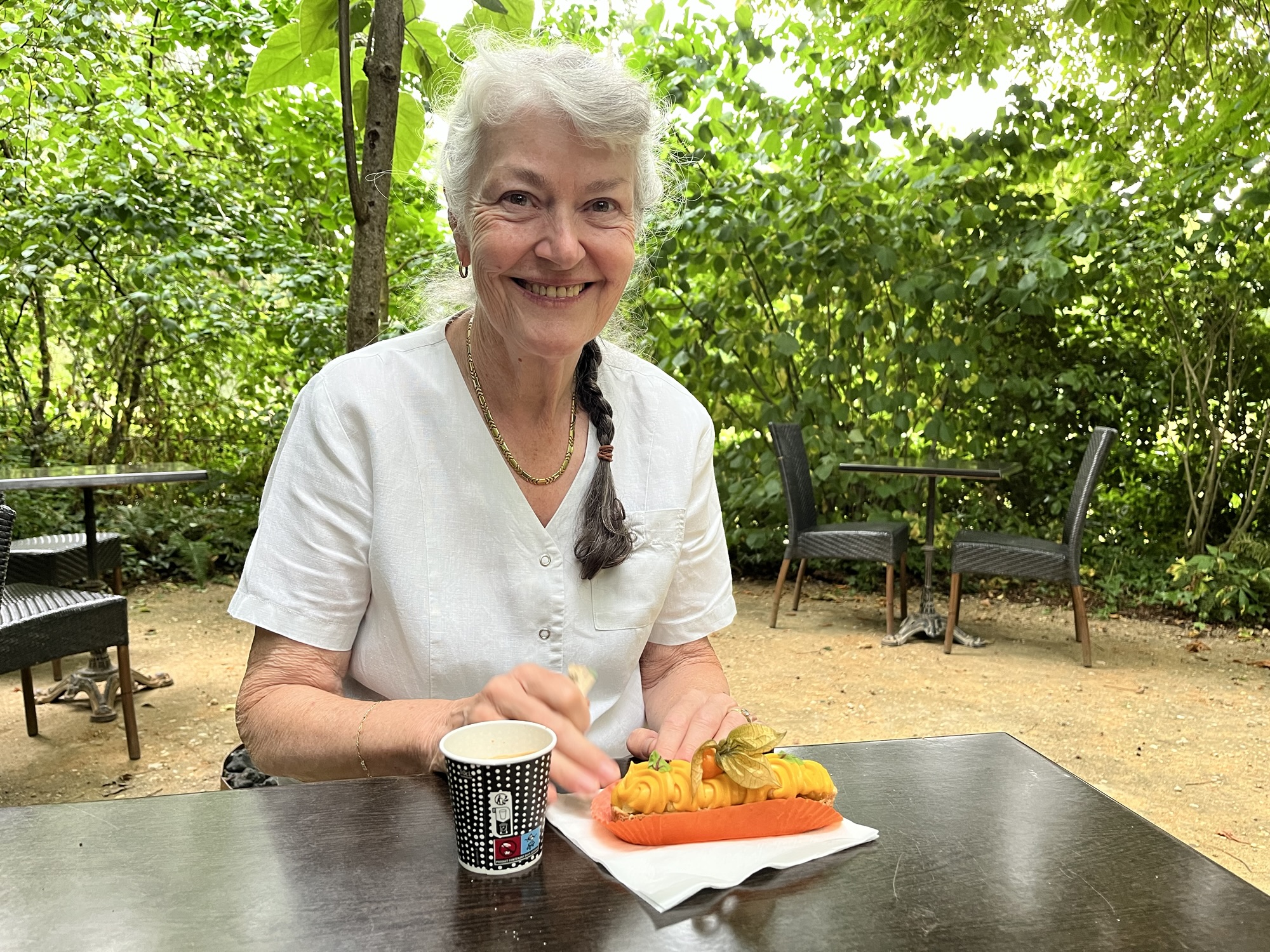
Enjoying a house-made cake at Château de Chaumont on a Sunday morning
One of our great pleasures is our daily wordle – 2 wordles and one quordle in French and the New York Times wordle for me, which I play with friends from my old school days in Townsville where I was born and brought up.
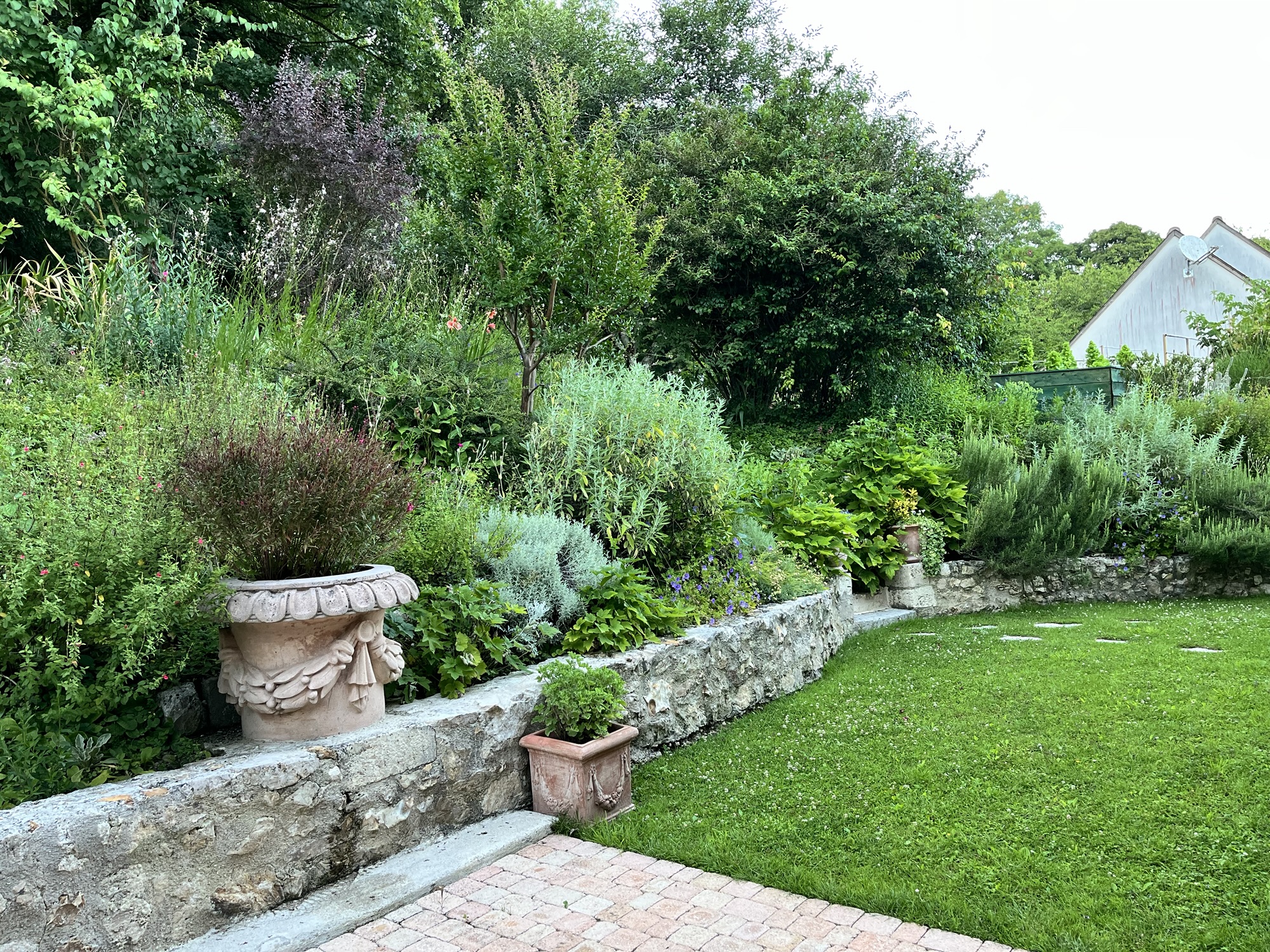
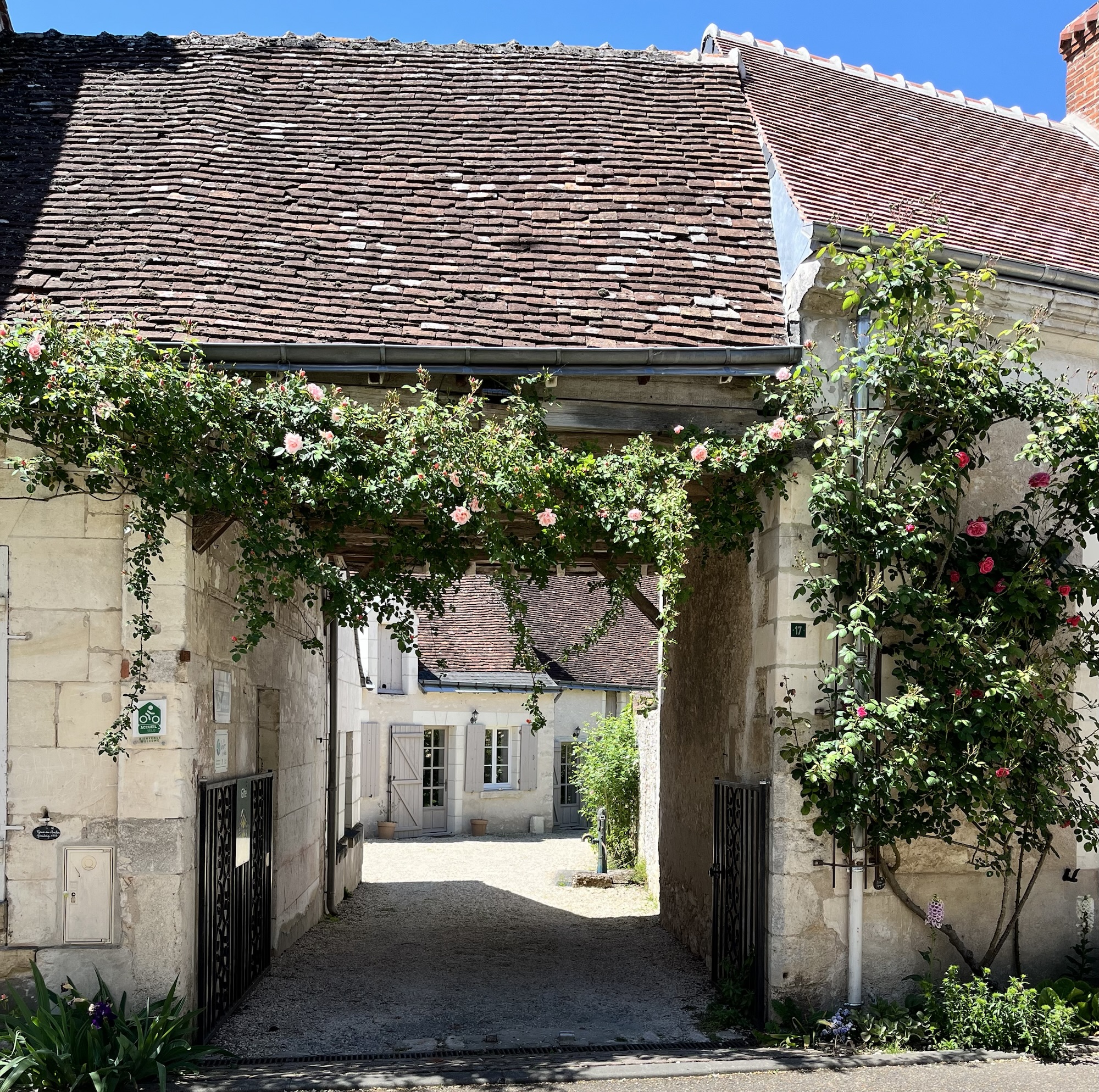
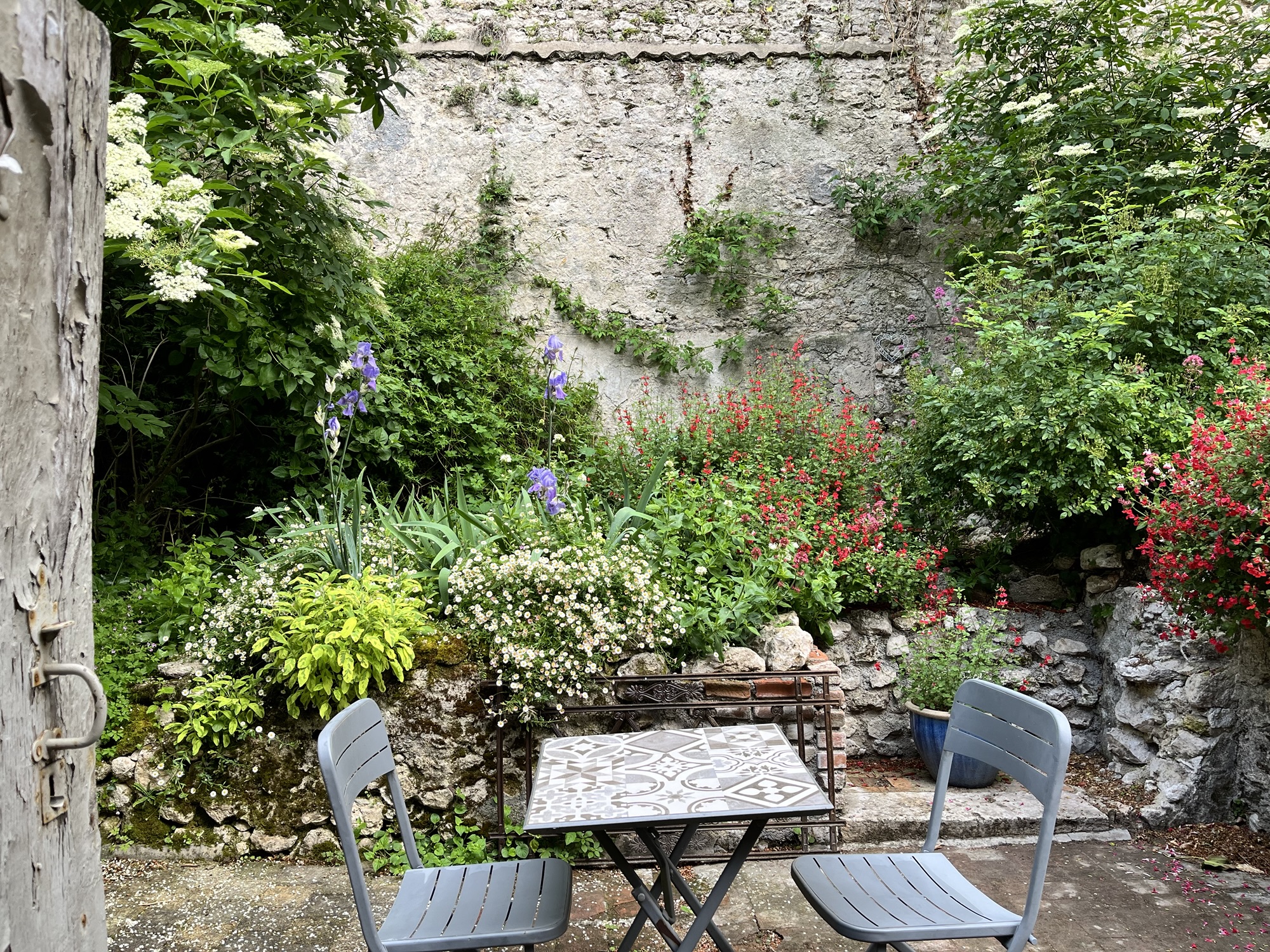
Apart from our own garden, I look after a shared garden that is attached to Châtel Rose, my holiday rental studio in Blois. It’s a very different sort garden – completely flat – unlike our own garden which is clay and mainly on sloping ground. I practically started the shared garden from scratch, with flowering perennials that need very little water as we don’t have a water supply. So far, it’s doing very well. It keeps me busy as I am virtually the only gardener! Our garden at home is practically a full-time job but I am working towards less maintenance as it becomes more established. We have a watering system from a well at the back of the house.
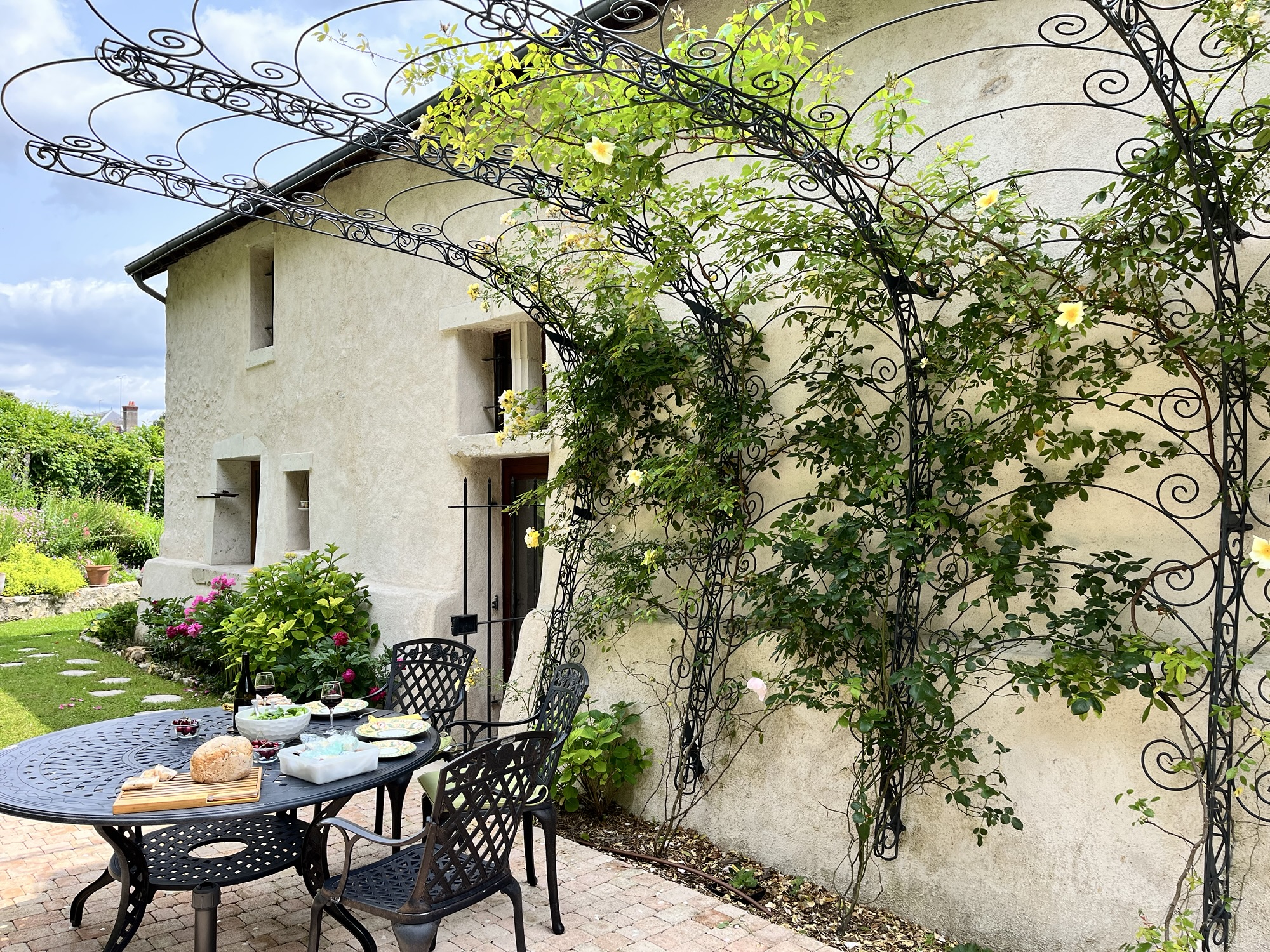
Jean Michel is an extraordinary renovator. We have added a paved terrace and wrought-iron pergola behind our house which will soon be covered in climbing roses. My talented husband has also made a laundry, added custom-built staircases to the garage and wood shelter and redone the entire rear façade of the house. His current project is renovating the barn and adding a greenhouse to the back of the non-functional little house on one side of our property. I help when I can but concentrate more on the garden.
Lunch on the terrace in the summer
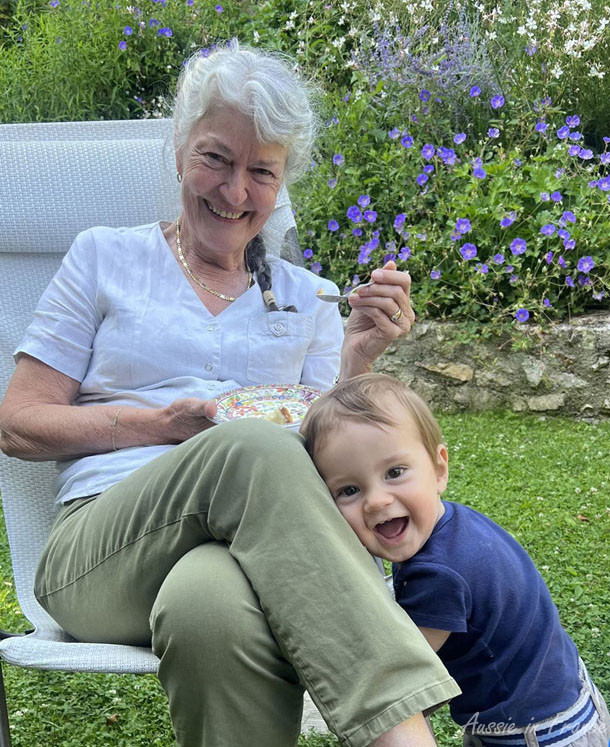
We do a lot of travelling, especially to Boston where my darling little grandson, Eric (five in August) and beautiful little granddaughter Sophie (2 in March) live with my son and his American wife. My daughter and her Dutch husband live in New York with Lucas who turned one in October. We have been doing a lot of home exchanges for which we are very thankful as it really the only viable way we can visit for three or four weeks at a time.
After living in the Palais Royal in the middle of Paris for ten years, we moved to a beautiful house in Blois in the Loire Valley when Jean Michel retired 11 years ago. The house, built in 1584, was in excellent condition on the whole. We (and this means mostly Jean Michel) have mainly renovated the monumental fireplace in the upstairs living room, completely redone the downstairs kitchen, adding a picture window, fitted out a small upstairs kitchen and added skylights.
Our back garden
To keep fit and healthy, we both practice 5:2 intermittent fasting twice a week and I walk briskly for an hour every day. I try to get the household chores, including making my own yoghurts and bread, out of the way by 11 am. Fortunately I have a cleaner.
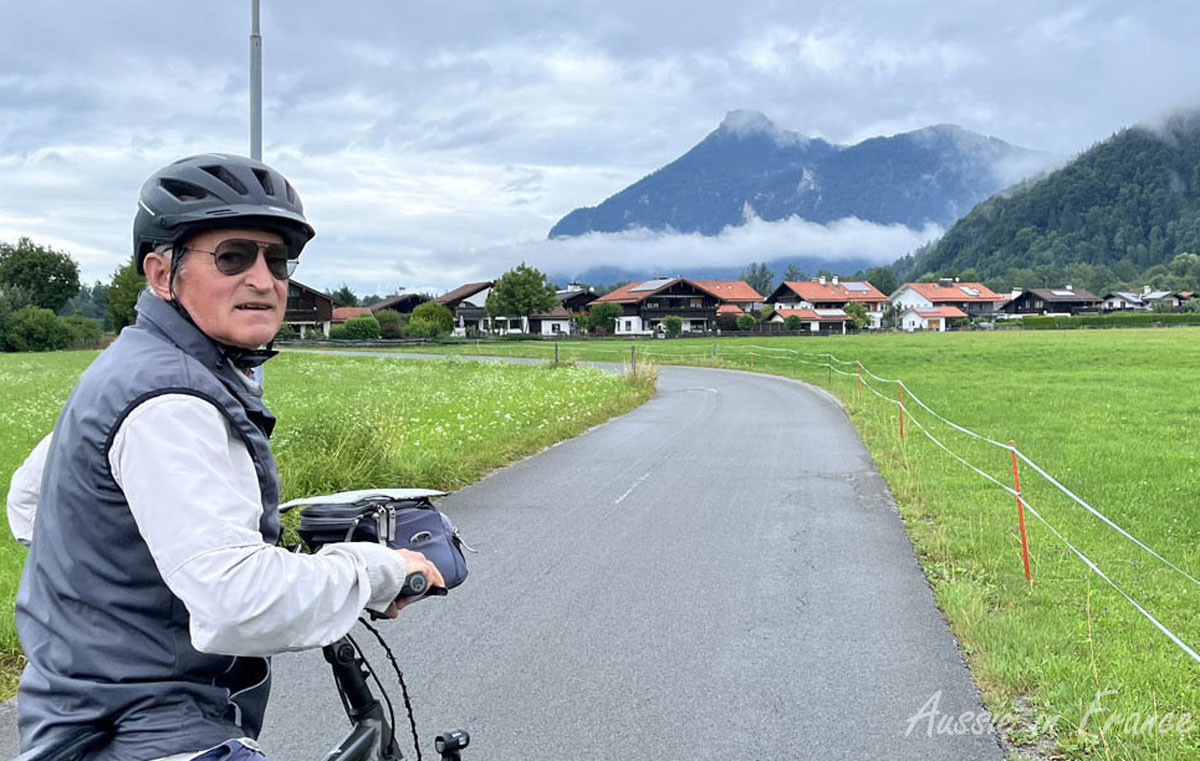
When the weather gets warmer, we cycle on our e-bikes as much as we can, sometimes driving to further locations with the bikes on a rack at the back of the car. We have now visited all the main châteaux in the region and most of the smaller ones. There are many bikes routes in the area but with our e-bikes, we are not limited. We have favourite places such as the rose village of Chédigny that we visit a couple of times a year.
The rose garden in the village of Chédigny
We have annual passes to Château de Chaumont and go there for coffee, cakes and a walk every Sunday morning we are in Blois. From April to the end of October, there is an annual garden festival in the château grounds which gives us endless variety from one season to the next. The château has frequent photography and art exhibitions.
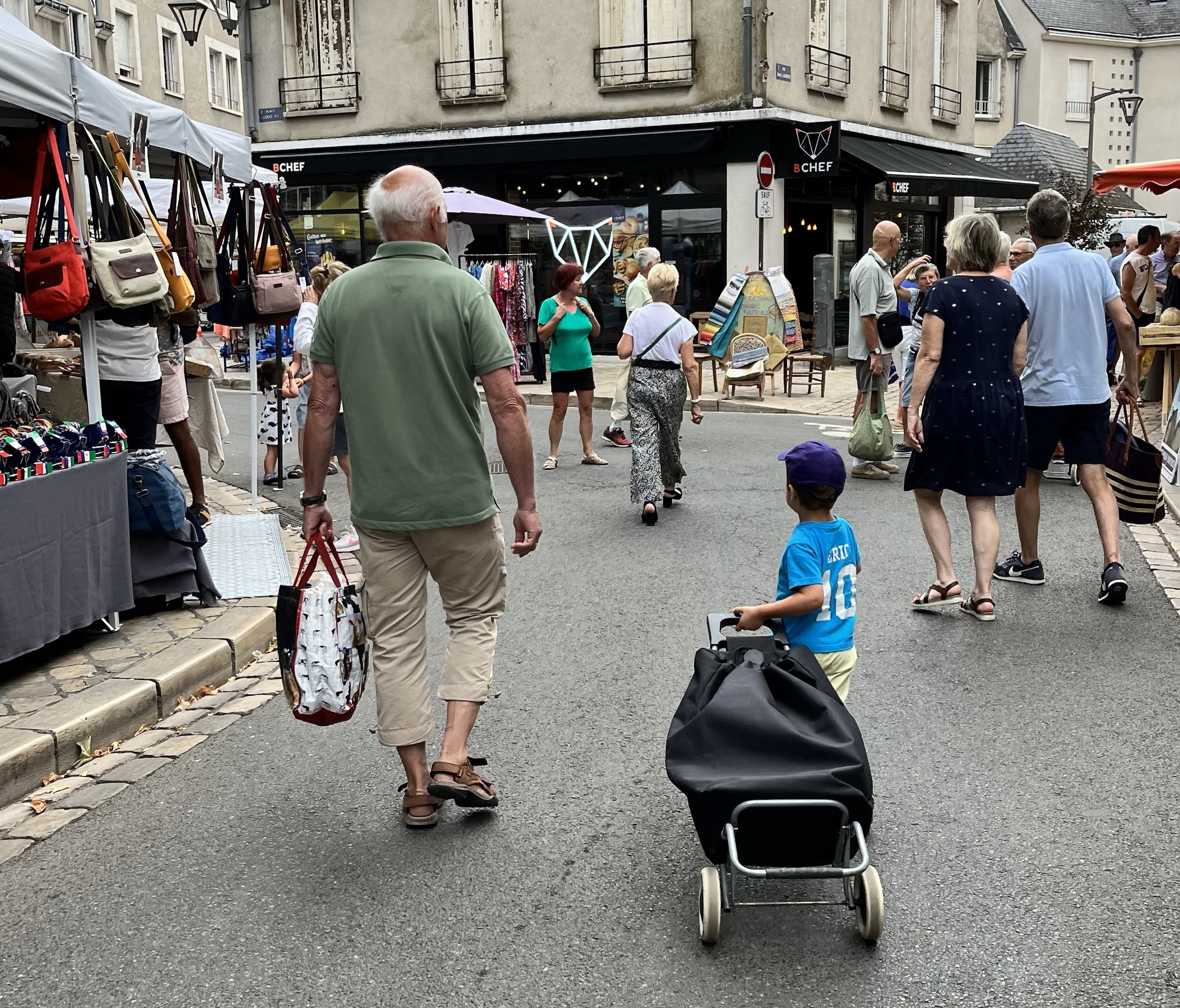
Every Saturday morning we go to the local produce market in Blois which gives us the opportunity to catch up with locals we have come to know over the years. We have coffee at Jeff’s outdoor stand in warmer weather and at Le Baroque on the corner of Place Louis XII the rest of the time. From October to April we buy oysters to take home for lunch.
The Saturday morning market on Place Louis XII in Blois
As you can see, we are creatures of habit! We usually find a warmer destination in February or early March to spend a week exploring other European countries. In recent years, we’ve been to Rome, Cyprus, Malta, Sicily, Andalucia and Crete. We track the weather and book our airline tickets and accommodation at the last minute.
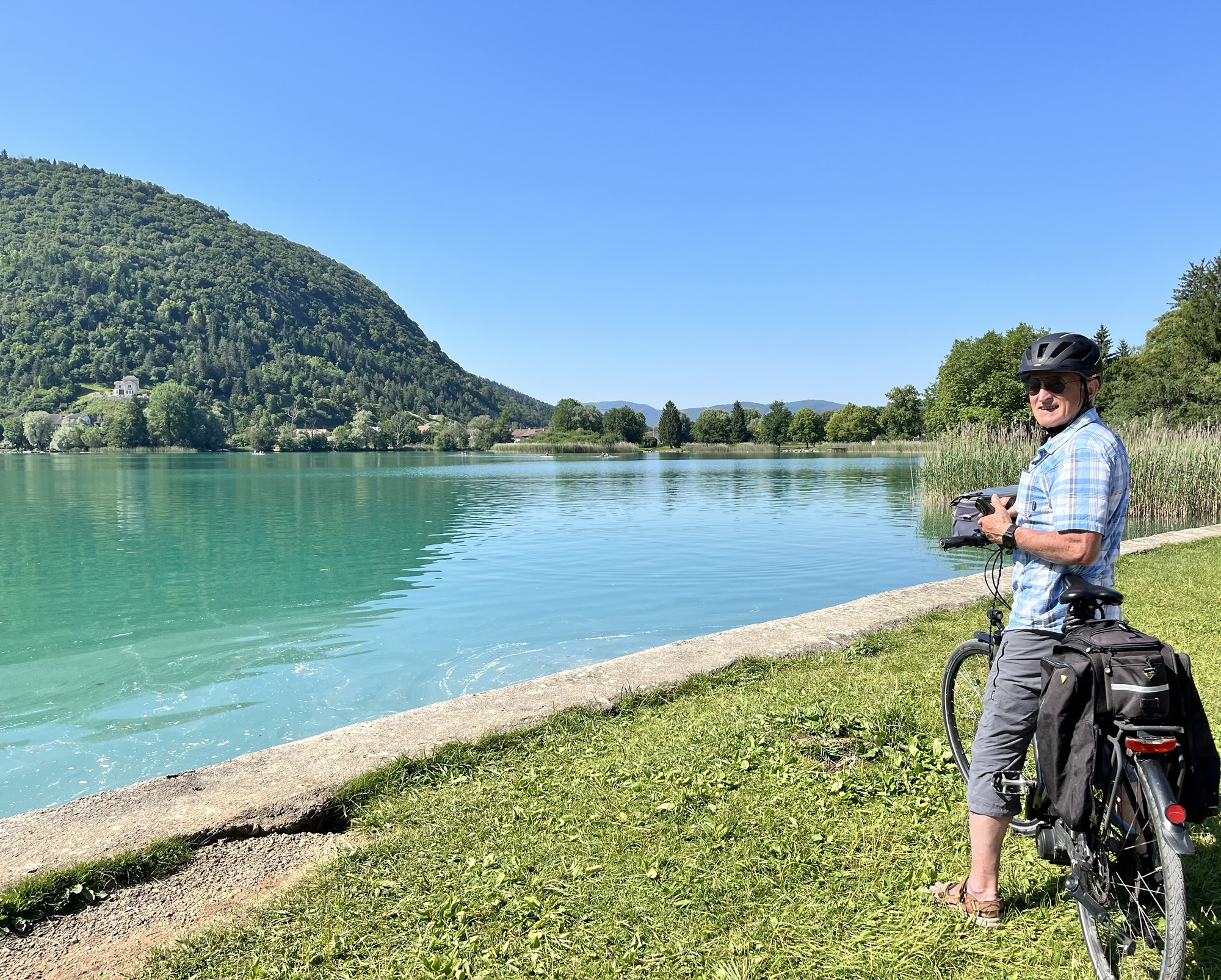
Towards the end of June, we usually set off on a 3 or 4-week cycling holiday, choosing the destination and departure date according to the weather, once again. We do not like cycling in the rain although an occasional rainy day can give us some R&R! We have now covered most of Europe. Our method is to rent an appartment for 3 or 4 nights and cycle in different directions.
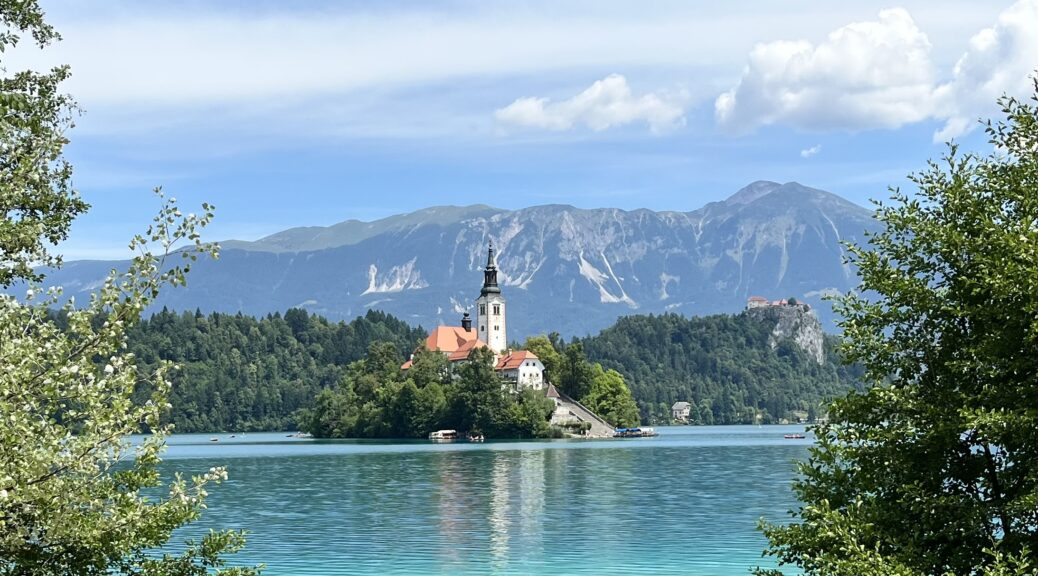
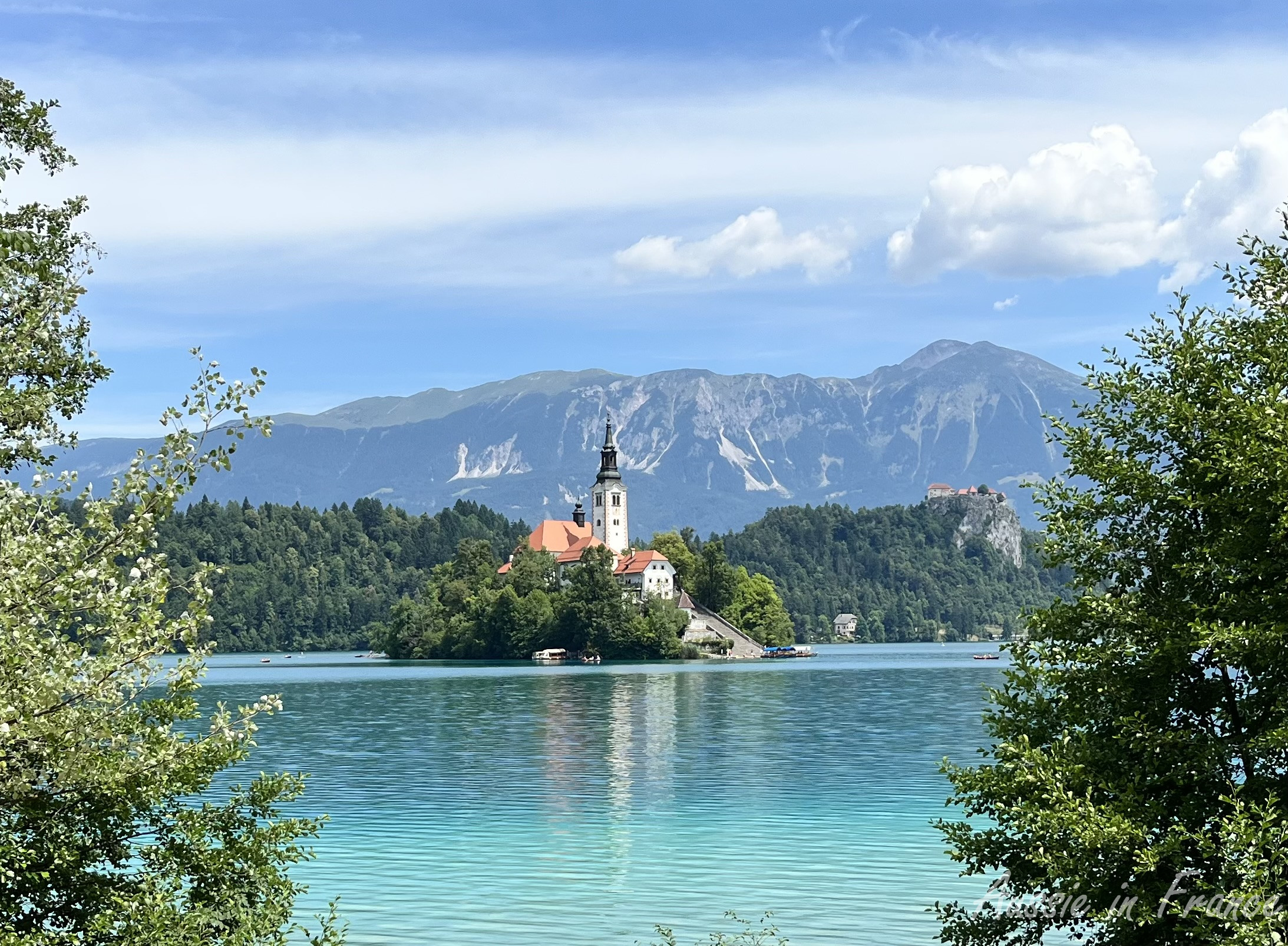
Cycling around Lake Bled in Slovenia
Last year, for example, the ultimate destination was Lake Bled in Slovenia. We went via Cerdon in the Jura mountains in France, Lake Iseo in Italy, Porec on the Istrian peninsula, then Lake Bled itself. We returned via Radovlijica in eastern Slovenia, Ebbs in Austria and Saint-Hippolyte in Alsace. We usually book the next apartment on the second day of our stay in each place. That way, we can make the best choice weather-wise!
The rest of the summer is spent making the most of our garden, interspersed with cycling excursions.
As there is a severe lack of medical practitioners in Blois, we go to Amboise or Tours if we need to see a specialist. We usually make a day of it to catch up with some shopping and take in a restaurant.
The shared garden of my holiday rental in Blois
One of our great pleasures is making the most of the local gastronomy. We choose a Michelin-starred restaurant in the area four times a year to celebrate our birthdays and anniversaries. Fortunately, they are well spaced out – April, June, October and December! At the other end of the scale, we go to “workers’ restaurants” when we are cycling. There are plenty of other occasions to enjoy all the other great restaurants in between!
I realise that overall, we are not very social beings but we do see friends from time to time and have had quite a few visits from our children and grandchildren in the last couple of years. I have a lot of virtual contact with friends as well, some from my childhood.
All I can say is that we are never bored and that our days are always full!
I see that I have not published a New Year post since 2021! Life has kept getting in the way.
This, my first full year of retirement was very much focused on grandparenting with a 5-week visit in February/March from my baby Lucas and his mum, 3 weeks in Boston in April to visit my son, his Amercan wife and two children Eric (now 4) and Sophie (nearly 2). I was joined by Lucas and his parents for a week. Lucas and his mum came back to Blois at the end of July and stayed for 6 wonderful weeks! We then went back to Boston in October and looked after Eric in Cape Cod during his school holidays. We stayed a total of three weeks, during which time Lucas and his parents joined us for a week.
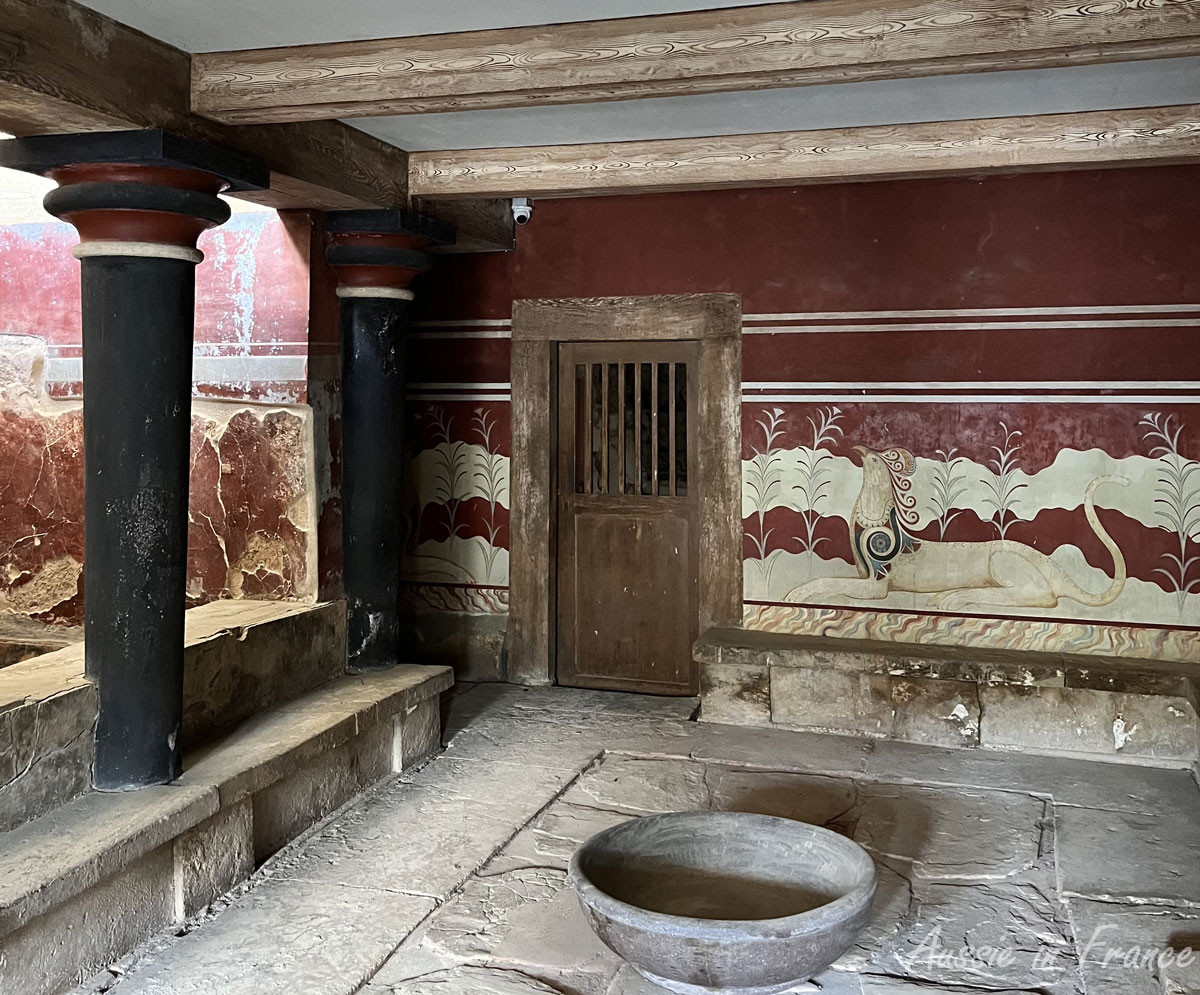
We still did some real travelling, starting with a week in Crete in February, where we took up from where we left off in February 2020, when we had to cut short our visit due to Covid. It was great to have a change of scenery and some sun but apart from the visit to Knossos, it seems that we had already seen the best of Crete the first time.
The end of June saw us heading off on our annual cycling holiday, with Lake Bled in Slovenia as the ultimate destination. We started in the Jura, followed by Lake Iseo in Italy and on to the Slovenian side of the peninsula of Istria (we had already been to Porec and Pula in Croatia on a previous trip). The weather was very very hot and we continued to have high temperatures throughout our stay. We restricted our cycling hours to the morning whenever possible. Fortunately we had air-conditioning in all the apartments we rented. We no longer stay in hotels, preferring this option with a 3 to 4 night stay each time. As we don’t like riding in the rain, we usually book the next accommodation on the second day of each stay. This may limit our choice, but we always suitable accommodation.
We had fond memories of Slovenia from our past trip fifteen years ago but it has now become a favourite tourist destination for Europeans and we were disappointed with the over-exploitation of the Lake Bled region. The lake itself, however, was picture-perfect and we had an apartment at the top end of the lake with a mountain and garden view. After visiting the Tomin Gorges, where we accidentally found ourselves in the middle of a marathon, we headed for Radece in the south east, on the Sava River, touted as having the country’s best cycling paths. Apart from the fact that we made the acquaintance of cvicek, a unique Slovenian red wine, which has a maximum alcohol content of 10 degrees and is always served chilled – perfect for the hot summer – and the best folk museum I have ever been to in Brezice, there was not much to see and the bike paths were way below German or Austrian standards, let alone Dutch!
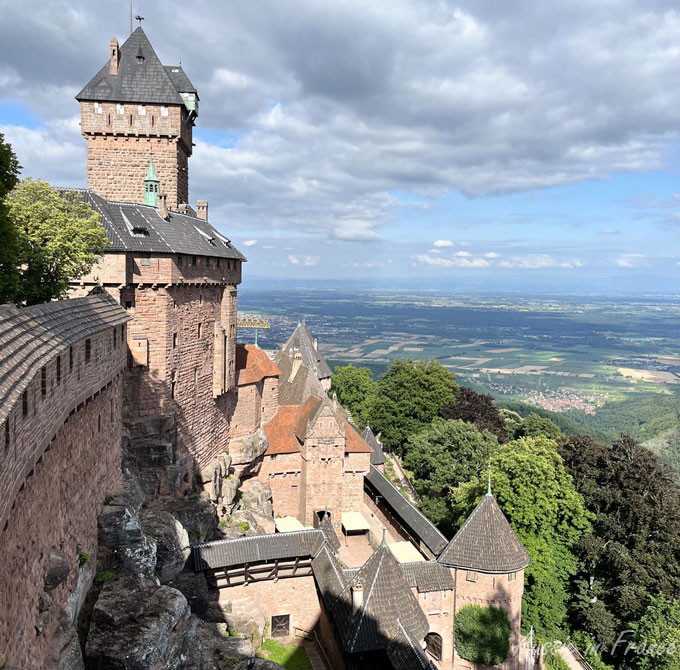
We left Slovenia and moved onto the Tyrol area of Austria. These were our best cycling days, drinking in the beautiful mountain vistas, painted houses and baroque churches. Even the many climbs did not diminish our appreciation of the region. Our last stop was near Selestat in Alsace, where we cycled through vineyards and visited the amazing castle of Haut-Koenigsbourg.
After the constant heat, we were delighted to come home to our beautiful garden!
We have continued to be active members of Home Exchange, mainly so that we can visit the family in the US. We stayed for the sixth time with Matt and Jery in Belmont, near Boston. My son now has a new home with a guest room so we will not be staying with them anyone. We will however be visiting them as they have become good friends. We also took Eric to a wonderful home exchange on Cape Cod for four days. We will be returning there in April.
Healthwise, we spent most of January at the physotherapist’s – JM for a back problem and me for a shoulder problem, but I did manage to avoid surgery thanks to shock waves and physiotherapy. Unfortunately, 2 days before we left Boston in October, I tripped over a root and landed with my shoulder on another root, dislocating it very painfully. It was put back in place in the E&R– a pain far greater than childbirth: – and only now, more than two months later, am I pain-free. At least it didn’t make the existing problem any worse and I do not need surgery as the Boston specialist predicted. As a result, I am making sure that I walk briskly for at least one hour a day and doing senior stabilizing exercises so that this will not happen again!! I do not recommend getting older …
Our plans for the coming year are a week in Athens in February, a month in New York and Boston in April/May, a cycling holiday somewhere in Europe in the summer (Ireland or Portugal perhaps), and another visit to the US in October. The summer choice is very restricted theses days as we have now cycled extensively in France, Germany, Italy, Spain, Austria, Belgium, the Netherlands, Denmark, Czech Republic, Poland, Slovakia, Hungary, Slovenia, Croatia and Romania. I don’t know how much longer we will be able to have this type of holiday, but we will keep going as long as our energy and health permit. We no longer cycle all day, every day, and our e-bikes definitely help but we still find this is the best way to get to know a country and its people outside the main tourist areas.
I would like to wish everyone a healthy, happy and fulfilling 2026.
All property transactions in France take place in two steps: first, after the seller has agreed to theprice offer, the seller and buyer sign a promise to sell in the form of either a promesse de vente (unilateral promise to sell) or a compromis de vente (bilateral promise to sell). This can take place privately, in a real estate agency or in a notaire’s office. Then, usually about 3 months later, when all the conveyancing has been done, both parties sign the acte de vente to close the sale.
Which is better?
The first time I purchased a property in France, in the early 1980s, I was told that it was better to sign a compromis de vente rather than a promesse de vente so I was surprised to learn recently, when asked to interpret during the signing of a promise to sell in a notaire’s office that it was a promesse de vente and not a compromis was better.
An estate agent can only process a compromis de vente
Despite my research I was not able to really determine the difference between the two so I asked the notaire, who told me that he only used the promesse de vente agreement. His explanation did not fully satisfy me, apart from the fact that the promesse de vente would appear to be in the purchaser’s favour and the compromis in the seller’s favour. Also, a real estate agent can only use a compromis de vente agreement which probably explains why I was told it was preferable. Real estate agents who have obtained the corresponding certification can prepare the compromis without going through a notaire and the price of drawing u p the agreement is included in their commission. The promesse de vente is which is called an acte authentique which means that it is always signed in front of a notaire.
After looking at my own records (my husband and I have bought or sold 8 times, 3 times with a real estate agent and 5 times privately), I discovered that there was a compromis de vente each time a real estate agent was involved and a promesse de vente all the other times. However, I have since attended a training course on the subject for court sworn translators and have updated my knowledge on the subject. Here are my conclusions.
Promesse d’achat or purchase offer
This must not be confused with a promesse de vente or compromis de vente!
Whether referred to as a purchase offer, unilateral promise to purchase, or simply a price offer, this document presented by some estate agents should be treated with caution. Its main feature is that it is binding only on the buyer, not the seller. It is certainly not compulsory.
Promesse de vente or unilateral promise to sell (the least common)
The seller promises to sell the property to the future buyer at a price agreed upon by the parties thus giving the future buyer exclusivity for a pre-determined period (usually two to three months).
During this time, the seller cannot promise to sell the property to anyone else whereas the future buyer can cancel the sale if they wish to, the only drawback being that they will lose the indemnité d’immobilisation or reservation fee (which roughly corresponds to non-refundable earnest money) if they do not go through with the sale. The reservation fee is usually 10% of the sales price.
If the future buyer does go through with the sale, the 10% is deducted from the price still to be paid.
To be valid, the promesse de vente must be registered with the tax department within ten days of signature. The registration fee, paid by the future buyer, is 125 euros. The notaire does not charge a fee for drafting the agreement – it is included in the fee for the sale as a whole.
Compromis de vente or reciprocal promise to sell (the most common)
Also called a promesse synallagmatique de vente. The seller and the future buyer both undertake to conclude the sale at a price determined jointly. Legally, the compromis is therefore tantamount to a sale. If one of the parties wants to pull out of the transaction (except if the one of the conditions precedent is not met), the other party can take them to court and force them to do so, in addition to claiming damages. However this can be a very lengthy process.
When the compromis is signed, the purchaser pays earnest money (dépôt de garantie) corresponding to 5% to 10% of the sales price. The earnest money is deducted from the final sales price.
The compromis de vente does not have to be registered with the tax department so there is no fee. However, if there is a dispute about the conditions precedent, the parties will both be bound by the agreement, unless the dispute is settled amicably between the parties or by a court decision.
In the case of a promesse de vente, both parties are released from the agreement if the future purchaser decides not to buy. The vendor cannot change their mind and the agreement is immediately enforceable without going to court.
Cooling off period for purchasers – promesse de vente et compromis de vente
Whether you sign a unilateral promise to sell (promesse) or a reciprocal promise to sell (compromis), you have ten-day cooling-off period (délai de retractation) during which you can decide not to purchase the property. The letter stating your intent must be sent by registered letter with acknowledgement of receipt to the seller. If you go through a notaire, this can be done electronically.
Whatever the reason for cancelling the sale, any amount paid by way of reservation fee (indemnité d’immobilisation) or earnest money (dépôt de garantie) during the cooling-off period will be reimbursed. The 10-day cooling-off period starts on the day following the day on which the promise to sell is signed at a notaire’s office or, if a private promise to sell is signed, at the first presentation by the postman of the registered letter with acknowledgement of receipt containing the agreement.
For example, if the letter is sent on 10th of the month and the first presentation is the 12th of the month, the cooling-off period will begin on the 13th and end on 22nd at midnight.
Conditions precedent – promesse de vente and compromis de vente
I mentioned the question of conditions precedent (conditions suspensives) earlier on. These are conditions that must be met for closure of the sale to take place.
Whether the promise to sell is unilateral (promesse) or reciprocal (compromis), the seller and buyer can agree to insert one or more conditions precedent in the agreement. This means that if events defined as conditions precedent do not take place before the final sale, the agreement is null and void.
Examples: the purchaser’s bank loan is refused; the municipality has a pre-emption right; a serious town planning easement is discovered. In these cases, the amounts paid by the purchaser are refunded.
A compromis de vente can also contain a clause called a “clause de dédit” (retraction clause) which enables the seller and/or the purchaser to cancel the sale without giving a reason, in return for leaving the other party an agreed-upon amount. However, this practice is very rare.
The above clause must not be confused with the penalty clause, which exists in most compromis de vente according to which the purchaser must pay the seller a fixed amount in damages if the purchaser refuses to go through with the sale.
To sum up, if you are purchasing a property in France and you want to be able to cancel the sale without giving a reason (and are prepared to lose the 10% reservation fee!) or if you want to guarantee the date of sale, then you will need to sign a promesse de vente at a notaire’s office.
If you are selling a property in France and the purchaser needs to get a mortgage loan, it is also better to sign a promesse de vente because if the loan has not come through on the stipulated date, you can simply walk away from the sale and find another buyer. If you have signed a compromis, you will have to go through the court to have the sale cancelled which can be a lengthy process.
In all other cases, you can choose either a promesse de vente or a compromis de vente, but if you are going through a real estate agent, then it will be necessarily be a compromis de vente unless you specifically ask for a promesse de vente through a notaire.
Whatever you choose, you will have to sign the final deed of sale at the notaire’s office. I strongly advise choosing your own notaire (in which case the fees are split between all the notaires involved), not because of any possible dishonesty on the part of a notaire, but simply because you will always have an unbiased opinion. If the notaire also draws up the promesse or compromis, the cost will be included in the cost of the deed of sale.
My second recommendation is to make sure you understand EVERYTHING in the compromis or promesse and the deed of sale (all of which you can request before the day of signature). It can be too late if you wait for the deed of sale, which is virtually the same as the compromis or promesse. Some real estate agents are competent to explain all the details but always remember that they want the sale to go through or they won’t get their commission. Otherwise you can call on a sworn translator who can also be present during signing of the compromis or promesse and the deed of sale.
Most foreigners living in France are asked at some stage to deliver a full birth certificate that is less than 3 (and sometimes 6) months old. Why three or six months?
If you’ve even seen the French birth certificate of someone who has been married, you will understand why.
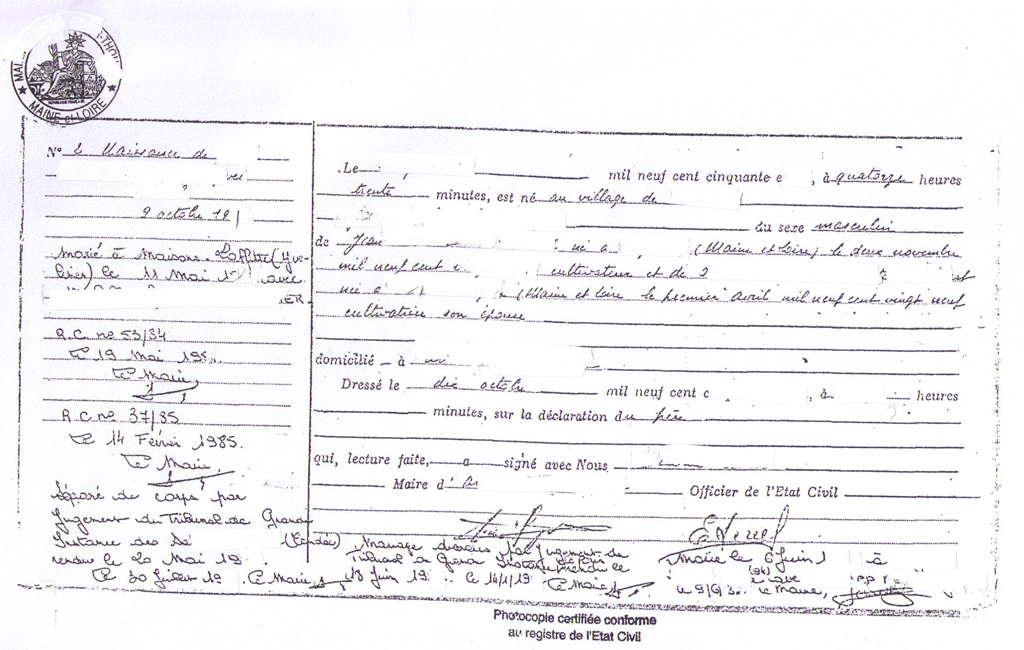
French birth certificates are “annotés” which means that any change in civil status is recorded on the birth certificate itself – marriage, civil union, separation, divorce, remarriage, death … It’s like a personal history rather than a record of a single event. This is also the purpose of the livret de famille*.
As a result, the French authorities always ask for a recent certificate, which is defined as less than 3 months old in the case of French certificates. Birth certificates are obtained from the town hall of the place of birth and are free of charge. You simply send a photocopy of your identity card and a stamped addressed envelope with a cover letter saying who you are and what you want and they usually arrive in a few days. You can also go to the town hall in person or order them online in larger towns. Since February 15th 2019, birth certificates can also be obtained in multilingual versions (i.e. all the languages of the European Union).
French birth certificates are annotated
In most countries other than France, birth certificates are not annotated. As a result, there is no reason to submit a certificate of less than 3 months, nor a translation of less than 3 monthseven if the time frame is sometimes extended to 6 months. Unfortunately, a lot of authorities are not aware of this.
I have personally used the same Australian birth certificate for countless cartes de séjour, two marriages, one divorce and a successful application for French citizenship. Each time, I explained that “les actes de naissance en Australie ne sont pas annotés.”
On the French official website service-public.fr, it says:
If the certificate is issued by a foreign authority, it must be a maximum o f 6 months old for a marriage or PACS. However, there is no time limit if the country concerned does not update its certificates which is the case of Australia i.e. a birth, marriage or death certificate remains valid as long as the information given in the certificate has not been modified.
So that, theoretically, unless your name has been officially changed, all you have to do is quote the above to an authority that asks for a certificate less than 3 months old. Good luck!
*livret de famille: this is a little booklet you are given when you marry. It is added to each time you have a child. It also records divorces and deaths.